
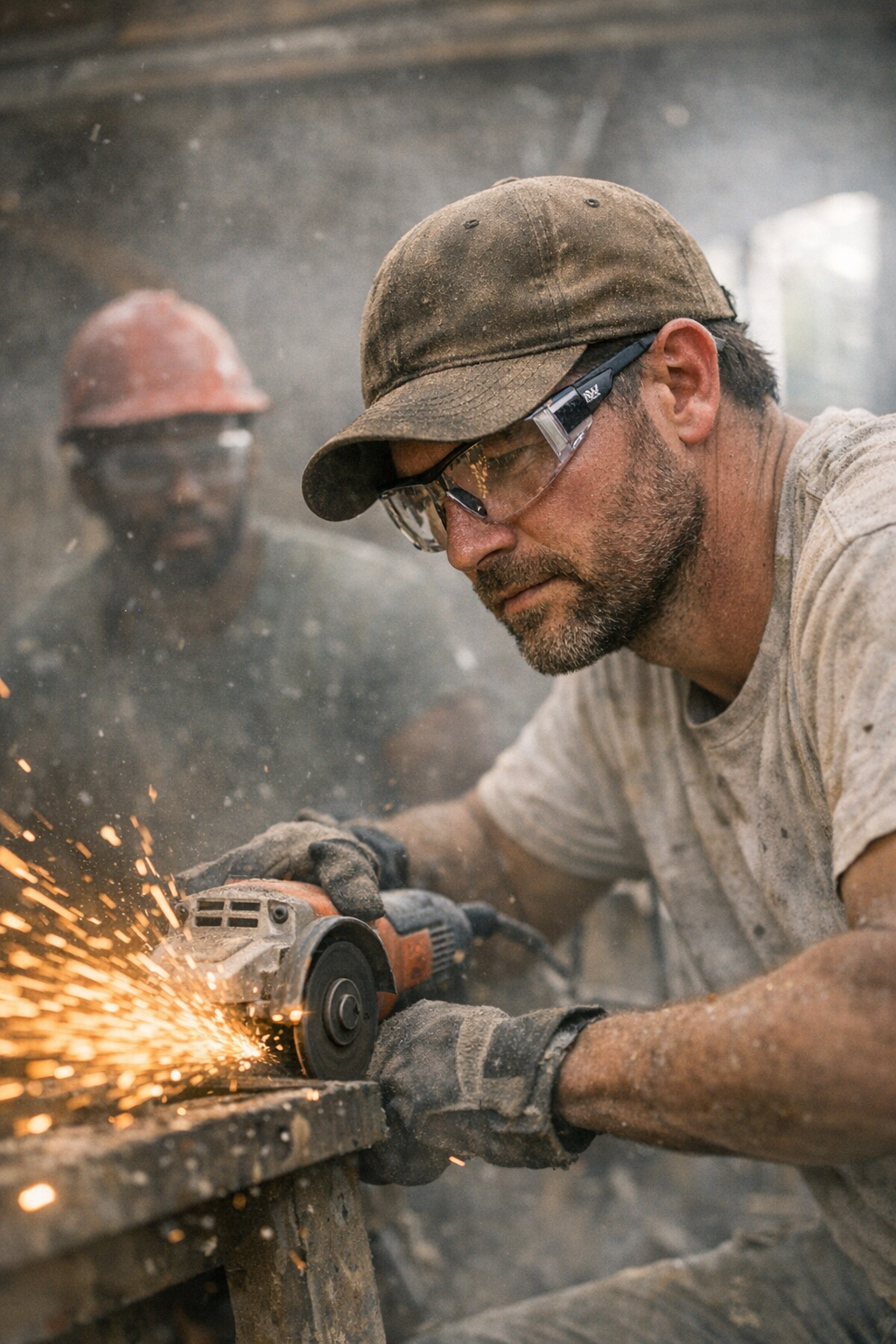
Nothing derails a workday faster than eye protection that lets you down the moment the sparks fly. If you’ve ever fired up a grinder in a tight shop or torn into framing with a miter saw, you know the routine: you reach for whatever safety glasses aren’t too scratched to see through. Maybe it’s a bargain pair from the bottom of the toolbox, maybe a set meant for lawn work, or maybe whatever was left behind by the last guy on the shift. At first, it feels harmless—just a few pilot holes, a quick run with the jigsaw, a brush pass on the belt sander. But then dust starts swirling, saw chips bounce up, and even simple tasks like fastening drywall screws become a chore when your cheap eyewear fogs, shifts, or blinds you with scratches. Suddenly, you’re working half-blind, wiping lenses every few minutes, losing your line, and the risk is no longer hypothetical. In the real world, what sits on your face can be the difference between finishing the job and finding yourself sidelined by an eye injury—or a blown cut you have to rework.
When Standard Glasses Can’t Keep Up With Real Work
Step onto most jobsites—whether you’re crawling under a deck to drive ledger bolts, running heavy timber through a circular saw, or leaning into a ceiling to hang lighting—and the difference shows up fast. Unrated, generic glasses weren’t built for repeated tool use. Cut a dozen sheets of OSB in the sun, and you’ll watch sweat drip inside your glasses, blurring each line you mark. Drill overhead into metal bracing, and fine shavings slip behind loose-fitting lenses. Switch from a router to an orbital sander, and layers of airborne grit start etching the plastic before break time. Meanwhile, a sudden kickback from a saw or a stray finish nail can crack a flimsy lens before you even react.
The friction isn’t just more wiping and less seeing—it’s the broken concentration, losing track of where your drill bit lands, hesitating on plunge cuts because your view is smeared. When a tool kicks up debris or you have to adjust your grip mid-cut, wearing weak eyewear turns every shift into a guessing game where your focus has to fight against your own gear.
Why Jobsite Standards Like ANSI Z87.1 Aren’t Just Bureaucracy
ANSI Z87.1 and EN166 aren’t for show—they’re there because real work never stays clean or predictable. Serious safety glasses are built to handle the ricochet off a spinning grinder, the fine powder from cutting cement board, and the greasy sweat that comes with all-day sandblasting. Certified pairs are tested to take impacts you can’t predict and maintain visibility when every cut adds more airborne mess to the job. Fog-resistant coatings, solid side shields, and optically clear polycarbonate aren’t marketing fluff—they mean you can step from outdoors into a muggy basement, or shift from drilling steel to trimming MDF, and still see what matters.
You’ll notice the difference when the work gets ugly. Try a full day punching holes through joist plates or fast-cutting trim against a stacked miter saw schedule. Unrated glasses end up trashed: cloudy, spotted, and so uncomfortable you want to pull them off. Certified eyewear, by contrast, usually needs only a quick sleeve wipe to keep clear, and stays planted even when sweat has you blinking through grit. You keep your peripheral vision working for the entire shift—no hesitation when measuring, marking, or pulling off tight fastening work where you can’t stop to swap out fogged lenses.
Real-World Moments That Separate Good from Useless
Picture late afternoon, jobsite corner littered with ripped plaster and bent nails. You’re perched on a ladder, aligning a light box, while below, the circular saw spits sawdust six feet across bare subfloor. You’re halfway through, sweatifying your brow in thick summer air, when the multitool flicks a chip off ceramic tile straight toward your left eye. If you’re wearing gas station wraparounds, you find out quickly if they’re just for show—the lens might crack, or a gap lets debris in. With a proper ANSI Z87.1 pair with anti-fog and full side shielding, you barely register the impact, retighten your grip, and finish the job without a pause. The work stays messy. What changes is whether your gear absorbs the chaos—or lets it through to you.
The Hidden Costs: Fatigue, Haze, and Interrupted Workflow
Eye injuries aren’t the only problem with weak gear. More often, it’s lost time: pausing every ten minutes for a lens cleaning, fidgeting to pull foggy glasses off, or working through artificial haze right when you should be watching the blade meet your pencil line. Shake a piece of maple on the jointer while squinting, and suddenly you’re chasing a crooked edge. Try fitting drywall up high with glove marks smearing your lenses, and you’re back on the ground losing pace. What disappears isn’t just vision—it’s control and accuracy, and the steady flow that gets projects done right the first time.
Making the switch to true ANSI Z87.1 gear means the difference of a few, necessary wipes per hour versus a dozen interruptions every shift. Eight-hour days on the saw, the drill press, the sander or the impact with proper glasses equal less eye strain, better focus, and fewer reasons to take risks. You keep a cleaner cut and smoother finish, whether snapping deck boards or routing cabinet doors, simply because you never have to choose between blurry vision and bare eyes to keep moving.
The Checklist That Actually Matters: Picking Job-Ready Glasses
Skip the flashy packaging—on real jobs, what counts is the marking and the fit. Before you trust your eyes to a pair, make sure “ANSI Z87.1” is molded into either the frame or lens. No stamp, no trust—it’s that simple. Look for wraparound coverage or sturdy side shields: loose ends and fine shavings come from every direction, not just the front.
Comfort isn’t a luxury, it’s non-negotiable. Glasses you can’t stand wearing end up abandoned—so find pairs with anti-fog tech, vented frames for humid days, and a fit that doesn’t slide when you’re sweating through a ladder fix. Test for compatibility: can you wear them with your dust respirator, earmuffs, or under a hard hat? The last thing you want is gear that buckles when the vibration ramps up or when you’re shifting from one tool to another mid-task.
What Reliable Eye Protection Really Delivers
The real payoff for proper eye protection is invisible: shifts that run without interruption, eyes that aren’t burning ten minutes into cleanup, a line of work that doesn’t get slower or rougher as the day wears on. The wrong pair seems fine—until a loose fastener or splinter finds your weak spot, and “good enough” suddenly isn’t.
Reliable safety isn’t theoretical. It shows up every time dust, chips, or a surprise recoil push your gear to the limit. Before you pick up the next tool, check your glasses—choose the ones ready for the day you actually have, not just the one you wish for. It’s a small decision that keeps your workflow sharp, your vision clear, and your focus exactly where it needs to be: on the cut, not on your gear.