
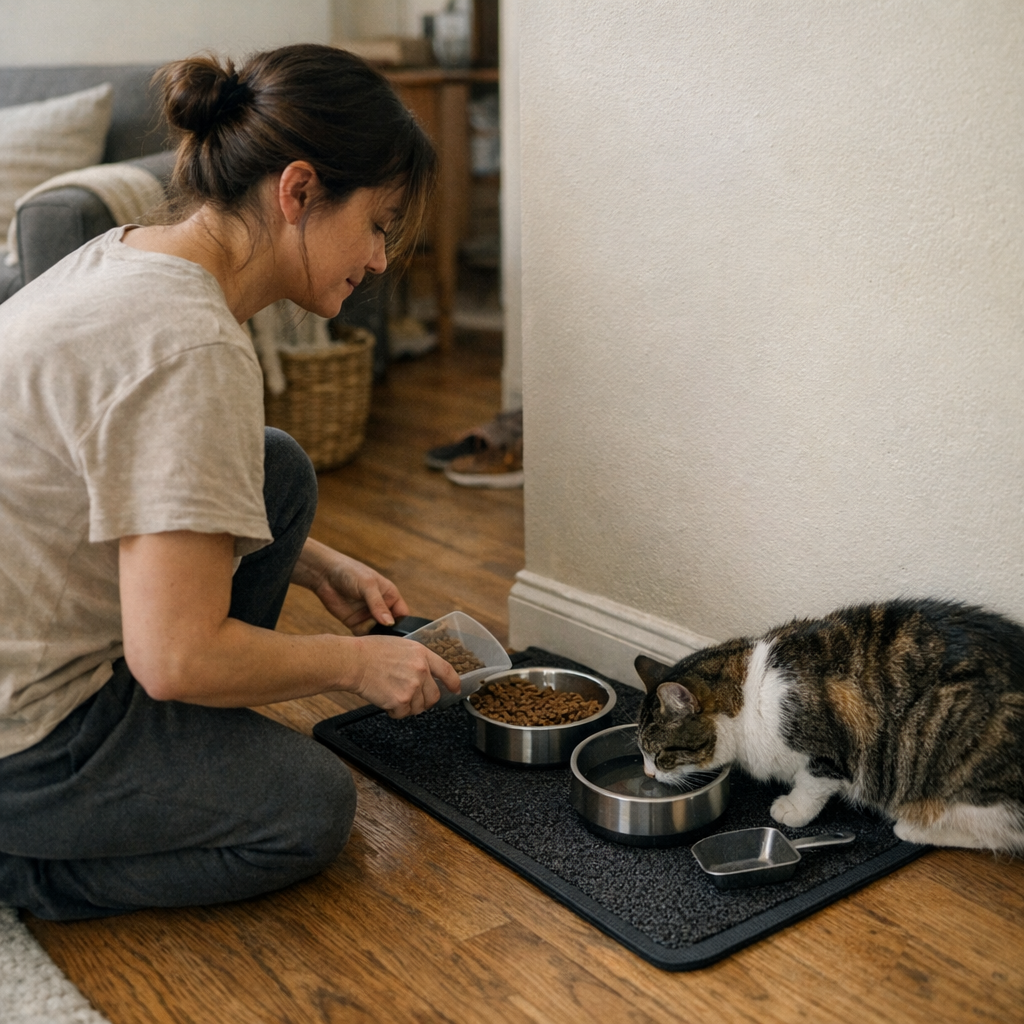
The truth about your cat’s feeding zone isn’t in how it looks just after tidying—it shows up the third time you crouch to snag runaway kibble, or when water drips again streak the floorboards by Tuesday. Any setup that seems neat for a day can quietly unravel in real use: bowls inch forward after rushed refills, mats bunch under restless paws, and the whole corner creeps into high-traffic space before the week is done. What begins as a tidy, contained zone becomes an unpredictable maintenance loop: stray food kicks under furniture, water rings multiply, and by Saturday you’re stuck reestablishing boundaries you thought would hold. The real signal? A setup that drains more time and energy from your routine instead of quietly making cat care simpler.
Why Feeding and Water Zones Drift: Everyday Friction in Indoor Cat Spaces
No matter how carefully you arrange bowls and mats on day one, friction sets in by midweek. Lining everything flush against the wall doesn’t stop bowls from nudging out when you refill them—or keep an excited cat from crumpling the mat edge in a single turn. Even minor shifts add up. By Thursday it’s obvious: bowls rest a foot from their original spot, the mat no longer covers all spills, and the “contained” area has quietly expanded into walkways you wanted clear. Every refill or bowl grab shuffles the whole arrangement, forcing more fuss than expected for a supposedly simple task.
This drift usually escapes notice in the moment. But you spot clues at breakfast: a water dish that needs dragging back, crumbs trailing halfway to the living room, and a mat that refuses to stay flat. The initial order breaks down, and so does the promise of easy, limited cleanup. You’re not getting more convenience—you’re multiplying interruptions.
Unseen Mess, Unexpected Effort: The Invisible Cost of Zone Creep
At first, one or two stray pellets seem harmless. Fast-forward: it’s Thursday and on your way to the coffee maker, you catch a new mess—dry food where nobody meant to feed a cat. This didn’t happen overnight. The bowl slowly inched, mat curled, and each tiny movement erased the invisible border meant to contain the mess. Now cleanup is a mini project: crumbs need separate gathering, a sticky water ring clings under the mat, and recentering everything delays you yet again.
That’s the hidden problem: the more you have to reset, the more each “easy” routine pulls time and focus. Through the week, small breakdowns lead to bigger ones—a quick sweep turns into a full mop, you crouch to retrieve pieces wedged behind table legs, and keeping the space “contained” becomes its own chore competing with the rest of your day.
Setup Looks Tidy—But Does It Actually Hold?
An indoor cat feeding zone can look nearly perfect after you reset it. Bowls close to the wall, mat perfectly flat, nothing out of line. But structure matters more than appearance. Within two days, does the mat still shield the floor? Can the bowls take a rushed refill or a distracted paw without sliding inches away? If not, the so-called order is just temporary—a setup that photographs clean but collapses in daily use.
Every bowl glide, mat crumple, and corner creep means the same cycle: extra maintenance, lost time, and a feeding process that keeps stretching into nearby spaces. A setup only “works” if it holds its limits through the mess and momentum of real routines—not just for inspection, but for the repeated reach, refill, and wipe-down moments that reveal its weaknesses.
How Small Shifts Turn Into Repeated Cleanup
Most cats swipe food or bump bowls as part of their charm—but every nudge has a cost. Feedings blend together: one day you sweep crumbs from the mat, two days later you’re bending to catch them along the hallway baseboard. The water bowl rotates slightly each time it’s topped off, painting that same wet crescent by the cabinet foot that is never in the right spot to catch with a mat. What seemed minor becomes a reliable pattern. The first runaway kibble seems like an accident; by the third time, you’re inventing new cleanup routines just to keep up.
What Drifting Does to Shared Spaces
This isn’t just about losing a sense of order. Drifting setups invade the rest of your living space. A bowl edge inches into the walkway where you keep tripping as you pass, mat corners ride up so you catch them with your foot, and now the cat zone interrupts human traffic and chores. Swapping routine for disarray, the feeding corner keeps asserting itself until every pass-through means another reminder that control is slipping—or requires more work to restore.
Anchoring: Turning a Drifting Zone Into a Dependable One
The real improvement comes when you anchor the setup and block the migration at its source. Simple choices matter: moving feeding and water stations to a quieter corner and picking a mat with serious non-slip backing turns drifting chaos into stability. Suddenly bowls actually stay put—through rush-hour refills, through cats testing the edge, even when you’re distracted. The mat holds flat, no matter how often paws press or bowls move, so “scatter zones” shrink and cleanup doesn’t spread. The best result isn’t that the area looks undisturbed—it’s that regular use no longer undoes your work every day.
When boundaries hold, your cleanup shrinks to a true check-in: a few crumbs swept, one quick wipe, no more five-minute retrieval searches beneath furniture. A stable structure outperforms appearances—maintenance finally stays simple because the arrangement actually supports repeated daily use, not just the occasional tidy-up.
What to Watch for: Early Signs Your Feeding Zone Isn’t Holding
- Bowls or dishes don’t return to their place after each refill—they wander with use
- Mat edges curl or bunch, letting food and water slip underneath instead of catching debris
- Signs of mess outside the feeding area—crumbs, water spots, and pet odors turning up farther from where you started
- Refilling or cleaning takes longer because you need to reposition, straighten, or clear the whole area instead of just topping up
- Visual order snaps back after each reset, but within a day or two, the zone falls apart in the same patterns
Everyday Moments: Where Setup Friction Sneaks Back
The trouble isn’t always headline-catching—it appears in those short, practical gaps between intentions and reality:
- Refill rush: Late for work, you reach for the bowl—it’s drifted out, now catching on a wrinkled mat and scattering food into open space just when you need speed.
- Wipe-down delay: Water splashes when you refill, beading on the floor just beyond the mat. It’s behind the bowl, and by the time you notice, a mark has dried into the baseboard.
- Cleanup supplies not instantly usable: Your broom’s just out of reach—not because you forgot, but because bowls and mat are blocking a clear swipe, adding clumsy extra steps to a single cleanup.
- Shared path collision: A mat edge slips into the walking route; one absent-minded step nudges the whole setup, meaning next reset will take longer—and spread further—than last time.
Structuring for Stability: What Actually Holds the Zone Together?
Real solutions aren’t about adding bulk—they’re about stopping the repeated breakdowns. What cuts maintenance is:
- Non-slip mat backing: Stops constant shifting and curling, so the foundation doesn’t undo itself multiple times a week.
- Bowls with substance: Weighted bases that don’t skate away under paws or hurried hands, limiting the drift cycle between refills and meals.
- Out-of-the-way placement: Corners or spaces outside main foot traffic means less accidental nudging, so the station isn’t set up to fail through ordinary movement.
- Easy access for cleaning: If you can sweep or wipe around the setup in seconds—without a full disassembly—routine maintenance shrinks and you dodge those tedious “fix what shifted” resets.
Why “Looks Tidy” Isn’t Enough: The Difference Structure Makes
A feeding zone that passes the eye test but fails the week test doesn’t solve the real problem. If your structure breaks under repeated reach, rush, or paws, messes will always leak back into your routine no matter how tidy you make it look. You don’t need perfection—just a setup that reliably contains food and water debris, resists small failures, and doesn’t turn every feeding into a delayed, multi-step reset. In practice, a zone that truly holds makes ordinary cat care feel lighter, quieter, and far less interruptive—so your energy goes into sharing space with your cat, not managing endless micro-crises.
Discover setups that hold their ground at StillWhisker.