
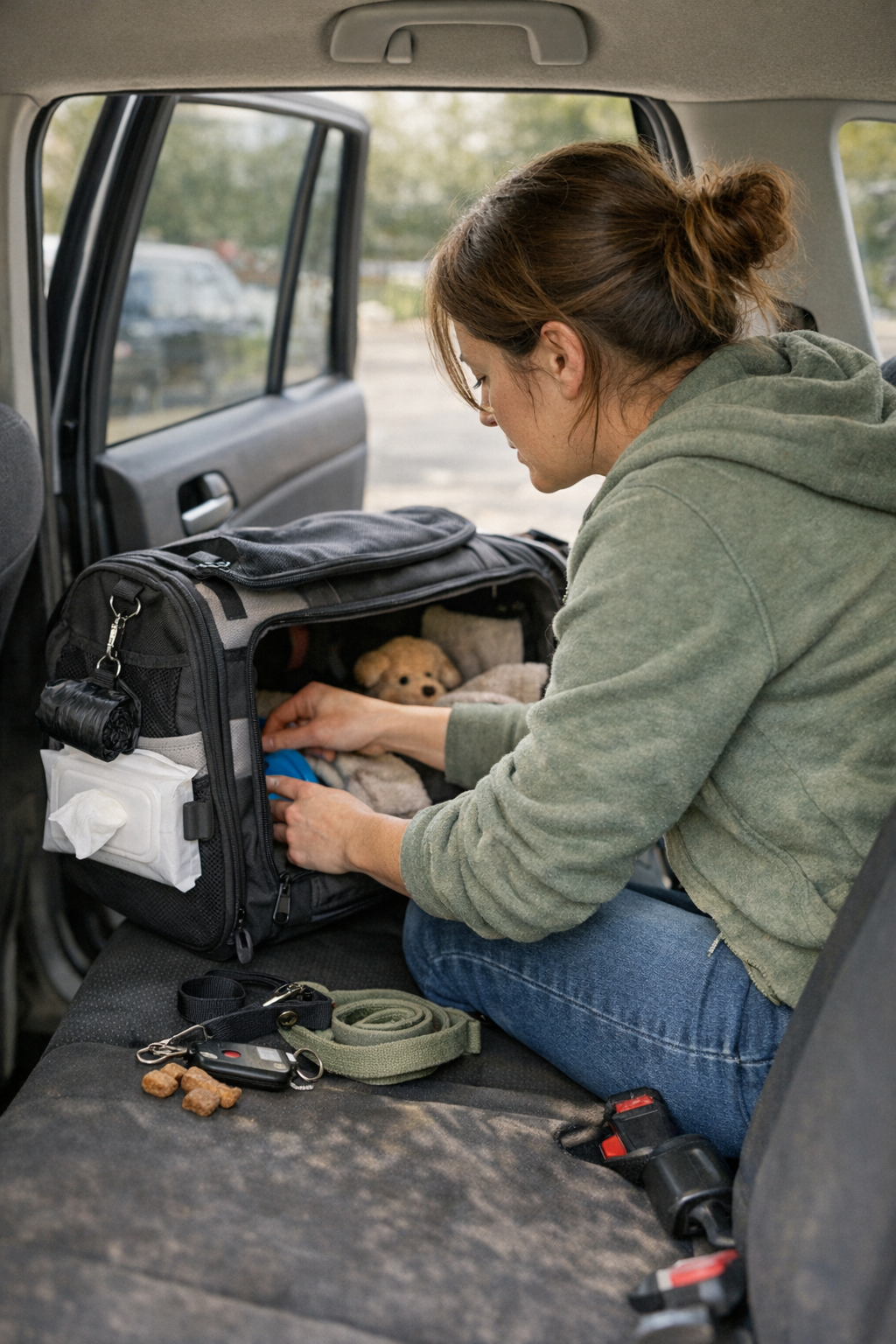
Every pet owner recognizes the scene: you start a trip thinking your pet-travel setup has you covered. Carrier closed, bowls packed, every supply in its place. But after two or three quick stops—a pharmacy run, a coffee break, a gas pump pause—your supposed “ready-for-anything” kit turns on you. Reaching for wipes, you pull up a bag of treats instead. Try grabbing your keys, find a tangle of leashes. Each pause brings a fresh scramble: sections you trusted slow you down, and a bag that once looked sorted now works against your routine. That sense of friction doesn’t fade. It multiplies. The gap between looking prepared and actually moving smoothly gets wider with every restart—and most owners don’t notice it until the mess hits mid-trip. PawGoTravel is built for exactly those cracks in real pet travel.
When “Well-Organized” Stops Meaning Well-Prepared
On paper, packing every compartment and organizing all your pet’s gear feels like checking every box. It’s only after a few real trips—school drop-offs, errand loops, multiple stops in a single morning—that the hidden costs pile up. The drag isn’t dramatic, just persistent: digging out wipes from under a spare blanket, tugging a leash loose from behind a crowded pocket, repacking after a swerve scatters items. Each snag is small, but in repeated use, the setup that started “ready” starts demanding time and attention you never meant to spend. Real-world travel exposes where your setup fails—not by what you forget, but by how often you need to fix and recover what’s already there.
Most problems don’t come from actual missing items. It’s about buried essentials, blocked access, and shifting priorities the moment things move. Wipes that sit at the bottom instead of the seat edge, leashes that migrate behind a bag divider, your own keys lost under pet pouches—every unnecessary reach or shuffle is a new point of friction. In a routine built on stopping and starting, those points stack up fast.
Why True Setup Strength Isn’t About More Gear
Adding compartments or elaborate organizers gives an illusion of control until pressure hits. The cracks reveal themselves by day two or three of routine use: a flap meant for easy access flops shut over the carrier opening, cleanup gear drifts where you can’t grab it, comfort toys slide into deep corners. The more you pack, the more you pause to repack, losing seconds at every errand stop. No matter how tidy a new setup looks, the test always comes with repeated action. When every restart demands rearrangement, the setup isn’t working for you. It’s taking over your movement, not supporting it.
The friction is realest in the middle of a busy week. Early on, your system stays together. But by the third trip, reloads get sloppy, essentials settle out of reach, and every pause feels longer—not because you lack an item, but because the “organization” no longer matches your routine. By Friday, what once felt compact and cool now pulls you out of flow every time you return to the car.
Classic Traps: The False Promise of Neatness
Surface order lulls you into thinking your setup is cost-free—until you’re forced to dig through layers when time actually matters. The most stubborn traps show up again and again:
- Buried cleanup supplies: Wipes under chews or toys are invisible when the mess comes fast.
- Owner-pet item overlap: Phones, keys, and pet gear sharing space means something’s always playing gatekeeper for what you need next.
- Side-pocket drift: Pockets packed for “quick grab” become blocked once bags settle and essentials slip out of prime position.
Visually organized systems break down in motion. Every missed grab or extra dig is lost time—and the sense of neatness quickly becomes another friction point instead of relief. The gap between how things look and how they actually function is where most pet setups start failing on the road.
What Real-World Use Reveals: The Payoff for “Reach-by-Memory” Setups
Reliability in pet travel shows up after the first mess—not at the packing stage, but at the seventh stop, when you can find a wipe or leash without thinking. A field-tested setup makes reach automatic: wipes clipped at the seat edge, treats snapped onto the carrier, comfort blankets always beneath the main zipper. Reloads get faster, not slower. Instead of resetting with each stop, you settle into a flow—no digging, no disruptions, no time wasted figuring out where things drifted in transit.
Consider a real triple-stop morning: you park, unclip your pet, and immediately have to choose—clean a spill, leash up, reach for keys. When essentials hide or cross paths, travel becomes a juggling act even on short trips. The right setup doesn’t add gadgets or pouches. It strips back, putting the must-haves literally at hand, in a structure built for quick cycle and return—not static shelf neatness.
The Cumulative Cost of Tiny Friction
Each awkward search or pocket repack chips away at momentum. Again and again you:
- Reach for cleanup and come up empty—or delayed
- Pause to fix a runaway item or reset a half-open pouch
- Untangle leashes from keys or phone just to exit or re-enter the car
- Shuffle gear to force the main zip shut when things have shifted mid-trip
It’s not the rare disaster but the repeated “mini-reset” after every stop that saps your focus and makes the entire routine feel heavier. Each snag takes seconds, but the underlying cost is the feeling—by day’s end, you’re serving the setup, not the other way around. And no polished organizer can hide that inefficiency once stop-and-go becomes your new normal.
Resetting the Setup: Practical Changes That Help
Recognition usually comes in a simple question at the end of a frazzled stop: “Didn’t I fix this already?” The fix isn’t another fancy organizer. It’s about repositioning and removing barriers:
- Externalize wipes: Clip or anchor at the bag rim where your hand lands first. If you need to fish in a main pouch for a spill, the setup failed.
- Isolate comfort items: One pouch, near the top—never buried beneath daily supplies.
- Direct-leash or key anchoring: Hang at natural grab points (handles, doors), not pockets-within-pockets that force repeat searching.
It’s a principle: keep only what you reach for every stop where you can get it in one attempt. Everything else gets deprioritized. That’s how routines stay light even when travel patterns get messy. Structure, not storage, controls the flow.
Everyday Scenes: Where Setup Friction Shows Most
Scenario one: Grocery run complete, but wipes have drifted under a blanket. When your pet muddies the seat, you dig twice—maybe more—and cleanup delays you longer than the checkout line.
Scenario two: By the third errand, your treat pouch drops out (again) as you untangle items. The space that looks “put away” is really a source of endless tidying—resetting between each stop rather than flowing forward.
Scenario three: Post-bathroom break, you fight with leash and bag straps caught around the same handle. Each untangle is a small pause, but over multiple stops, these pauses eat real minutes—just from layers fighting your movement style.
Less Looks, More Flow: The Right Structure for Repeated Trips
The best pet-travel setups win by structure, not by show. What works isn’t the prettiest or most compartmentalized option—it’s the carrier, bag, or bowl layout where each action (grab, clean, reload, move) happens with minimal interference. Cleanup gear must stay visible from stop one through stop six. Comfort needs should never block seat-side reach. True preparation is about what stays ready after a day’s worth of motion, not just when you close the zipper at home.
The proof comes after a week of short, repeated trips. When you start noticing fewer pauses and less clutter—not because you packed less, but because each part pulls its weight—you know your setup is finally tuned for real movement, not just for looks.
Find practical pet-travel gear built for repeated real-world use at PawGoTravel.