
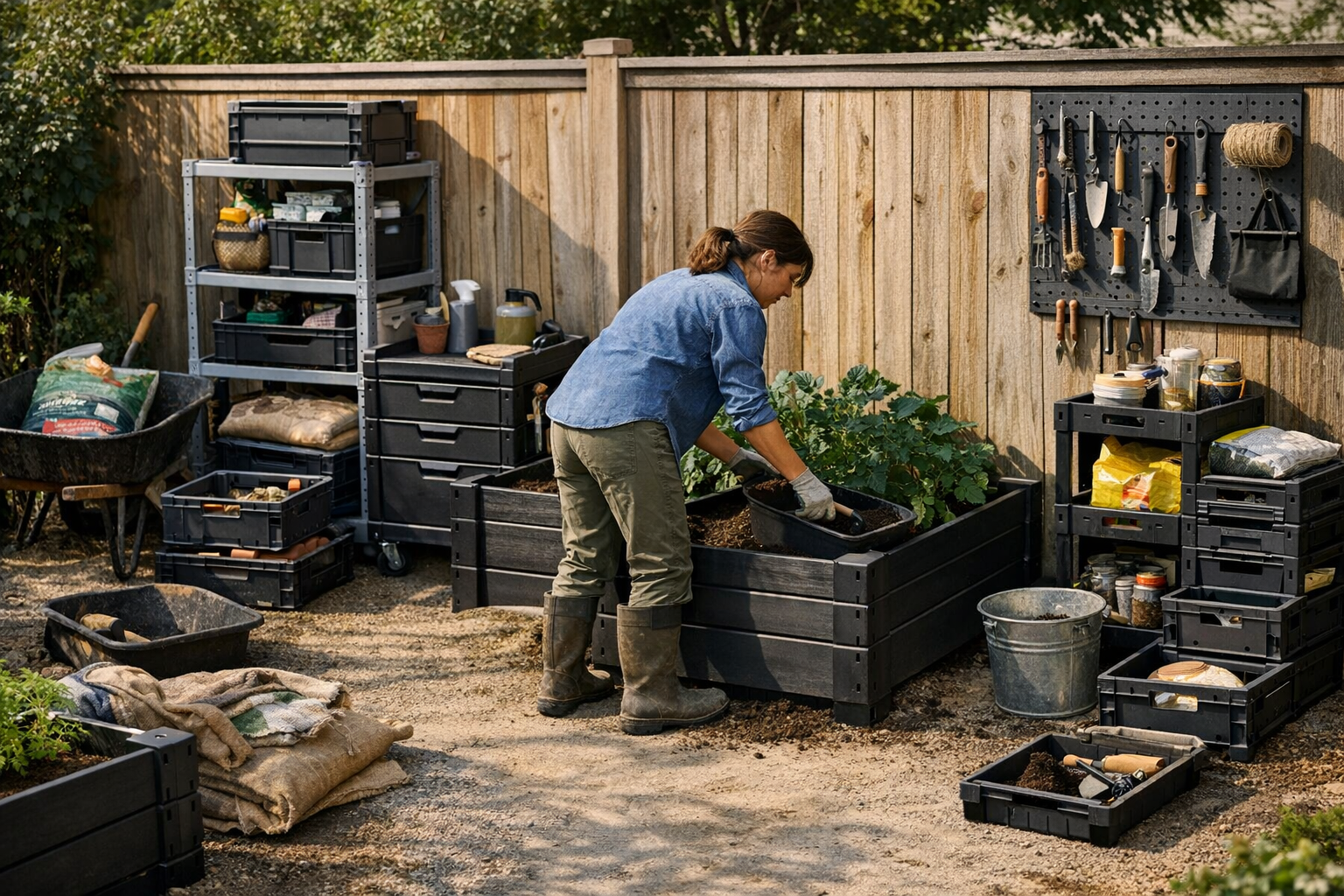
If you’ve ever tried to keep a utility garden, workshop corner, or backyard work zone running smoothly, you know the gap between “looks organized” and “actually works.” Freshly set rows of raised beds and modular shelving always seem perfect—each tool lined up, pathways wide enough, storage carts tucked against the wall. By week three, though, that crisp order starts to buckle: a surprise bulk soil delivery clogs your clear route; a stack of garden trays appear from nowhere; one more tool means shoving aside what fit just yesterday. Suddenly, the setup meant to save time becomes another source of lost minutes and awkward workarounds.
How a “Perfect” Setup Turns Into Your Daily Friction
It always starts the same way: one arrangement that makes sense for today’s tools and tasks. Then new supplies show up, fresh needs take root, and the season shifts. That storage rack fits—until you need to slide it over and wedge a wheelbarrow through. The cart you stationed near the hose? Now you have to pull it sideways just to squeeze by, watering can in hand. What began as a clean, logical layout turns into a run-around: shifting a bin out from the wall, tiptoeing around the bed’s corner, dodging the muddy mound left by last weekend’s project.
This slow slide into daily friction is sneakier than it sounds. Maybe it’s one wall hook that was perfect when you installed it—but now it’s jammed with trowels and tangled gloves. Or a modular bed whose edge pokes into your route, making every pass with a full bucket just a bit more careful. Over time, these little annoyances stack up, eating at your rhythm until the promise of “organized” gives way to second guesses and side-steps.
Where Dead Space and Overflow Collect
Every setup has its blind spots—corners that magically attract “for now” items: last month’s empty pots, extra rolls of fencing, the bag of compost you meant to use last weekend. At first, it’s harmless: just a quick pile in an unused spot. But dead corners become traps. Every time you have to reshuffle trays to get started or clear a ledge to find that one missing tool, you’re reminded the setup doesn’t really match the way you use the space.
Eventually, the area that once seemed under control collects more and more overflow. Resetting at the end of the day stretches from a five-minute routine to a small project of its own. You’re not just putting things away—you’re working around piles, breaking your momentum. And when you need the whole space clear for a new planting or major project, the “system” you started with feels more like a maze built by your own best intentions.
True Flexibility: The Real Difference Maker
The setups that keep working aren’t the ones that look sharpest on day one—they’re the ones built to shift, not settle. This means keeping at least one border loose for staging, not boxing in every inch with permanent storage. Leaving space to actually roll carts in and out—no narrow gaps or blocked turns. Shelves and beds that can shuffle a little when needed.
Real example: moving a bed just eight inches back from the usual border opened up space to pull carts straight through, not drag them sideways. That freed up the edge as a quick drop zone for muddy tools or overflow on harvest days. Tool returns and resets sped up—no more stacking or stepping around the problem corners. It’s a tweak that seems small, but over dozens of uses, it completely changes the routine. What once felt like a careful dance around pinch points becomes a direct route: unload, tidy, get back to the next job.
Knowing When a Reset Is Overdue
It’s easy to fall in love with a setup that looks perfect in photos or fits everything like a puzzle. But the real test is daily movement. If you find yourself shifting the same cart out of the way every time you refill a seed tray, or inventing new paths because of a stubbornly crowded corner, that’s the system asking to be reset. Organization isn’t about holding onto the first layout—it’s about removing friction as your daily habits and storage needs change.
When to Stop and Rethink
- One zone always piles up faster than you can clear it
- Supplies migrate into awkward overflow spots instead of returning easily
- Daily resets turn into multi-step shuffles or dreaded chores
- You catch yourself bracing for another slow workaround just to get started
Spotting any of these means it’s time to physically change the layout, not just tidy up.
Tactical Tweaks—Not Total Redesigns
Forget chasing an unchanging “ideal.” The most reliable workspaces flex continually. Plan for at least one staging zone that can absorb mess and extra supplies. Use modular beds and carts to give yourself real reroute options as your season or routine evolves. Carve out a single clear line between major workstations so you’re never forced into zigzags or awkward detours mid-job. These adjustments don’t promise showroom-level symmetry—but they do pay off with faster resets, easier tool returns, and less time wrestling with your own storage.
The goal: movement and routine that feels smoother, not just neater. A setup that works with you day after day—no matter how many trays, tools, or carts the season throws your way—beats a “perfect” plan that trips you up week after week.
See more at StackNest.