
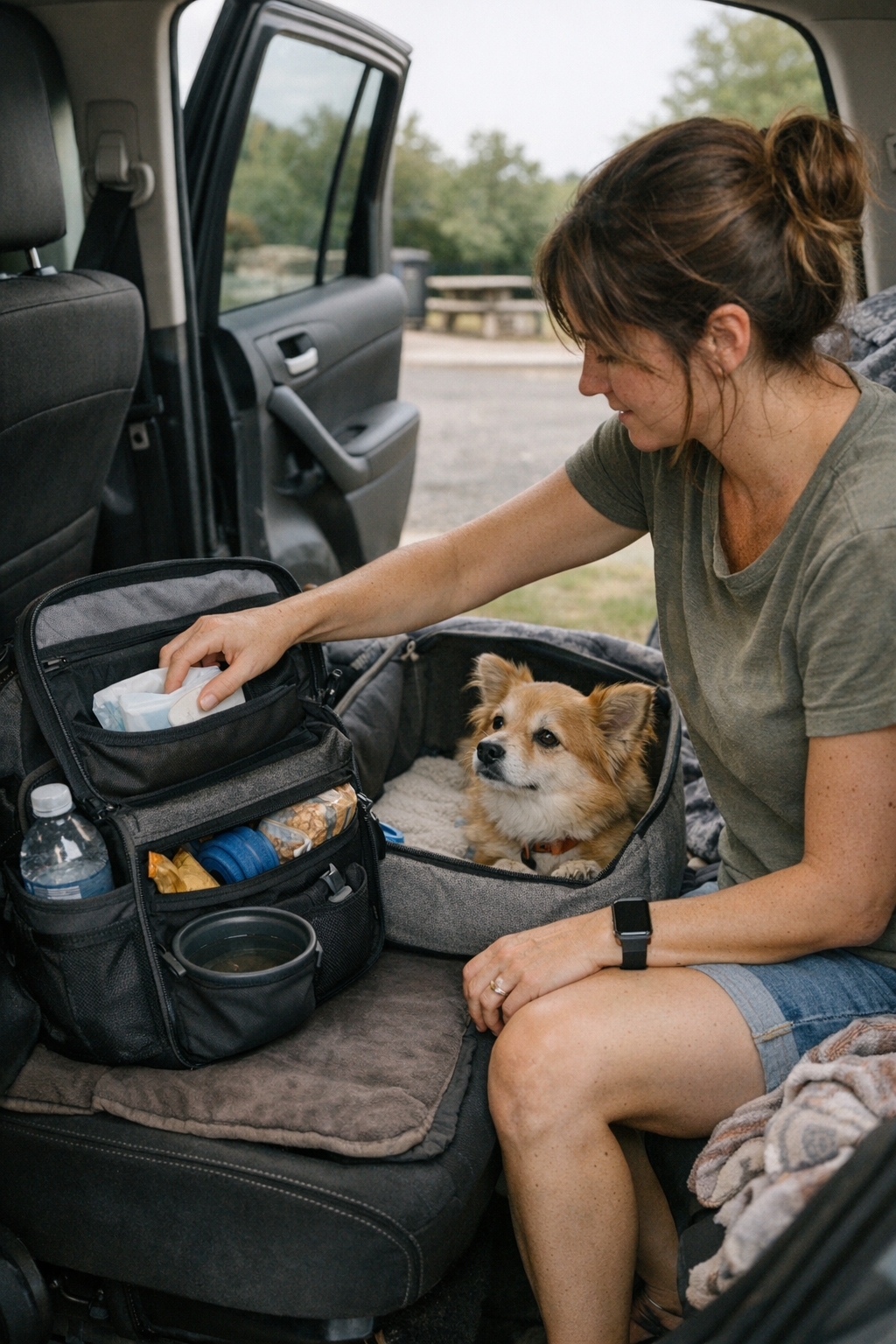
A pet travel bag may look organized the moment you sling it over your shoulder, but that tidy snapshot rarely survives a real trip—especially with a restless dog waiting to get out or a surprise spill at the stoplight. What “seems ready” as you leave home often unravels into a mess of blocked pockets, trapped leashes, or buried clean-up gear the second you actually need something fast. The difference between smooth movement and sudden hassle isn’t just about how you packed—it’s how your setup holds up after the first stop, the second scramble for wipes, or another quick return to motion. In real use, every awkward reach or hidden pouch slows you down right when calm and speed matter most—a friction PawGoTravel kits quietly but relentlessly work to solve.
When “Ready” Isn’t Easy: Why Pet Travel Setups Break Down Fast
You leave home with everything zipped and organized. Yet by your first curbside pause—maybe a gas fill, a store run, or a quick park stop—the calm crumbles. The leash is jammed beneath snacks, wipes vanish under spare bottles, and any sense of order now means shuffling gear with one hand while your pet shifts or whines in the other. Even well-packed bags become a tangle after a single stop, making each new pause a test of patience instead of a quick routine.
This repeated scramble exposes the difference between a bag “ready at departure” and one built for the back-and-forth rhythm of short trips, errand runs, and multi-stop days. The same setup that looked good on your kitchen floor now asks you to reload, reach, and reshuffle—costing you calm and costing your pet the quick comfort they need between moves.
The weakness shows not in how a system starts, but in how it handles the cycle of pickup, pause, and restart—where most bags quietly fail.
Real-World Moments Where Setup Friction Shows Up
The “I brought everything—so why does it feel harder?” Moment
At a highway rest area, you unclip your bag expecting to move. Instead, you’re crouching at the curb, one knee against the carrier, digging past snacks to unearth the leash—while your dog tugs and loses patience. Wet wipes? You packed them, but getting to them means unbuckling two side pockets first. These little friction points don’t just cost seconds—they amplify stress and unsettle your pet, making each stop less smooth than the last.
Quick Stops, Slow Restarts
Every errand or brief stop resets the deck. The “smart” organizer that promised neatness now forces you to untangle leashes from toys, sort bowls by hand, and dry a sticky bottle that seeped over everything else. Each restart means re-stowing comfort mats, wedging supplies back into pockets, and wishing for a faster way to just move. The system creates work at the very moments that should be quick transitions.
The Comfort Item That Ends Up as a Burden
Your pet’s favorite fleece mat goes in for good reason—but at every stop, it’s half-buried under food containers or tangled behind zippers. Reaching for it in a hurry turns the calm you planned into a minor struggle. What was meant to ease the ride instead becomes a slow-down, marking every restart with another awkward, avoidable delay.
Why Ordinary Bag Structures Add Up to Repeated Annoyances
Any bag with lots of pockets seems flexible enough—until real movement exposes which essentials are actually accessible and which always get in each other’s way. Leashes hooked on zipper pulls, bowls jammed in corners, and wipes lost among backup snacks: it only takes one failed reach in a parking lot to realize “looks prepared” doesn’t mean “works under pressure.” When these small fails repeat, they chip away at your ability to keep your pet calm and transition quickly, no matter how neatly you repack between stops.
Where most setups go wrong is not in storage space—but in not preventing overlap, tangle, or blocked access when you need a fast move.
Bags that rely on stacked layers or shared dividers eventually force you to dig, delay, or settle—so you either double-handle messes or put off cleanup until later. Each cycle raises the odds that you’ll start skipping steps, rushing through, or letting small messes build up just to keep moving.
Telling Scene: Cleanup Becomes Part of the Flow—Or the Next Hurdle
During a long week of daily errands, one tweak made all the difference: shifting wipes from a swollen side pocket to a dedicated seat-facing slot. Suddenly, when muddy paws hit the mat at a red light, wipes came out in a single motion—no hunting, no sorting, no “where’d they go?” After a few repeats, the pattern stood out: essentials that stay at hand keep stops clean and stress low, while buried supplies turn minor interruptions into drawn-out hassles nobody wants on a busy day.
Where Overlap Creates Real-World Travel Pain
Across countless road trips and errand days, certain repeated pain points tell you exactly what’s wrong with conventional pet bags:
- Leash trapped: You’re trying to clip in a wriggling dog—but the leash you packed “just in case” is buried under chew toys.
- Seat-side wipe delays: Reaching for wipes after a fast spill means unclipping two pockets before you can even start to clean.
- Return reshuffles: Each restart means untangling bowls and comfort mats, never quite restoring order—so the bag gets messier with every stop.
The pattern repeats: perfect prepped at home, but slowing you down and unsettling your pet after each use.
The Value of True Quick-Access Design
What actually solves these pressure points isn’t just “organization.” It’s design that lets you reach what matters right when you need it, without cross-handling or making every move a reset. Pet-travel gear that offers seat-side openings, clear top or edge access, and dedicated no-overlap zones for wipes, bowls, or leashes doesn’t just look neater—it keeps stops short, transitions quick, and frustration low. Instead of every return to the car becoming a fuss or a restart, you flow—reload essentials in seconds, keep the system in order, and never dread the next interruption.
An effective setup isn’t about showing off how much you packed—it’s about working with you, not against you, when travel routines test your system again and again.
Pet Calm and Owner Flow: Why It Really Matters
Moving wipes within reach, separating leash from snacks, or giving bowls a static spot—these minor shifts pay off every time you stop. The seconds saved mean your dog spends less time waiting, and you spend less time fixing or cleaning. Systems that reduce repeat friction don’t just make bags look tidier; they visibly lower stress for both pet and owner, keep travel smoother on days when interruptions keep coming, and let you stay focused on movement instead of mess or delay.
Build your routine around setups that truly work when you’re moving—see the difference at PawGoTravel.