
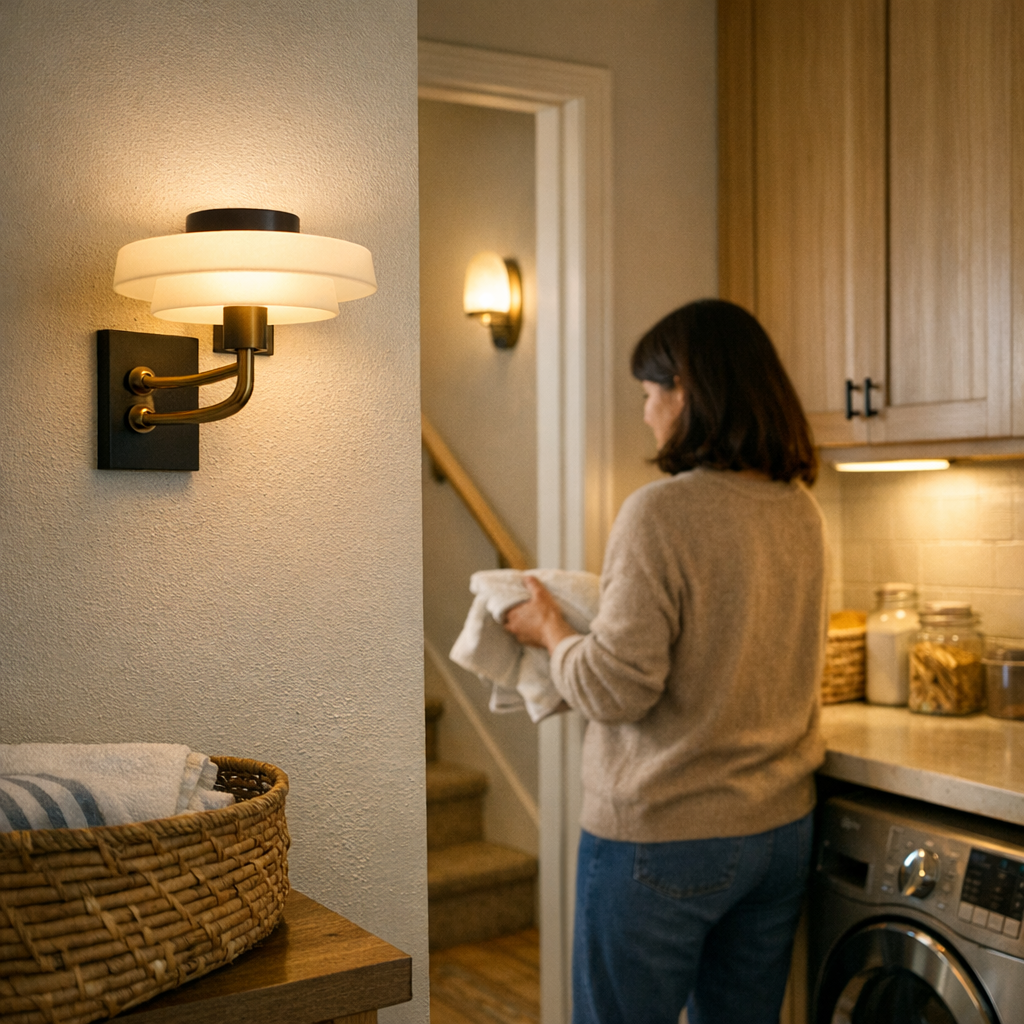
The most damaging lighting problems don’t call attention—they creep in as awkward moments and small friction: you fumble keys in a bright-looking hallway but miss what drops in dim edges; you wipe a spotless bathroom mirror, but half your face blurs in uneven glare. Most people blame bulbs or ignore the discomfort. But week after week, it’s the wrong fixture or weak placement that turns “illuminated” rooms into daily hassle zones. The issue isn’t how bright your space appears when empty—the real test is what the lighting does to your movement, routines, and comfort when you actually use the room.
When “Bright Enough” Isn’t Actually Usable
A ceiling flush mount or a slim panel can fill an entryway or laundry room with general light, and on first glance, you might think the job’s done. But walk the space carrying laundry or keys, and gaps become obvious:
- Shadows stretch across tile and wood where you need to spot small dropped items.
- Direct glare bounces off shiny door handles or appliance fronts right as you reach for them.
- The mirror over your sink splits your face in high contrast—bright on one side, dim on the other—making shaving or makeup a guessing game.
- Stair treads blur at the riser, especially at night, so you tread softer, always slightly second-guessing your footing.
These aren’t rare accidents. They’re the reason you lean in, pause, or unconsciously angle yourself several times a day—annoying enough to notice once named.
Why Fixture Type and Placement Shape Real Movement
Lighting only does its job when matched to real patterns of movement and use—not just the volume of the room. Flush and panel ceiling lights fill the ceiling and upper air, but leave edges and surfaces where you need focus in the lurch. Semi-flush fixtures add interest, but rarely reach far enough into corners. When all light comes from above, expect blind spots: the zone by the fridge, the shadowed space across a countertop, or the dark stretch at the bottom stair landing. You sense it in the way you reach forward for more light, hesitate before a sharp turn, or dart back to flip another switch. Each small compromise adds up, cluttering routines and dulling comfort.
Common Frustrations in Repeated-Use Spaces
Hallways and Entryways: Chasing Shadows
Single central ceiling fixtures turn people and bags into moving shadow-makers. By late afternoon, strong floor shadows swallow mail or shoes near the wall. Juggling laundry or groceries, you block even more of the light, leaving the path patchy just when you’re least focused.
The real upgrade: Add a well-placed wall sconce halfway down the walkway. Instantly, shadow pools flatten out. Now, you can spot everything on the run, not just in the main beam. It’s about neutralizing the hassle, not just decorating the passage.
Stairways: Edges that Disappear
Ceiling fixtures pour light from above, but stair safety depends on visible edges and turns. Most nights, overhead lights leave risers half in shadow, with the turn at the landing half-guessed. The friction isn’t just a stumble risk—it’s the background tension of not quite trusting your footing in the home you know best. A wall sconce repositioned near the stair turn quietly anchors the edge of every step. You feel the difference instantly, even more across a year of late-night climbs.
Mirrors and Sinks: Half-Lit Faces, Missed Details
Overhead lights in baths and vanities love to cast symmetrical pools on the floor, while the mirror splits your reflection. One side is washed out; the other, in shadow. You tilt, shuffle, or twist for better light—turning fast routines into a series of small workarounds. Adding sconces beside or above the mirror evens out skin tones and detail, so you stop compensating and simply see what you’re doing.
Under-Cabinet and Task Zones: When Work Surfaces Vanish
Prepping a snack or sorting laundry, even “bright” rooms can swallow the counter edge or lose the basin in dull patchiness. If the main light’s behind you, you’re working in your own shadow by default. Task and under-cabinet lights exist for these moments—targeted beams that fill in what ceiling fixtures ignore, turning awkward, crouched work into plain, visible action.
Spotting Signs That Your Lighting Setup Is Missing the Mark
Consistently noticing any of the following hints your space needs more than swapping bulbs:
- Stubby shadow patches in corners, especially after dusk
- Repeated need to lean, tilt, or squint for clarity—at mirrors, stoves, or hallway niches
- Floor edges and steps that visually collapse after dark
- Glare zones bouncing off glossy tile, sink fixtures, or even picture frames
- Hesitation about what’s on the floor or what you missed on a surface
These are signals—not just inconveniences—that your fixture type and placement aren’t mapping to real life in the room.
Layering Solutions for Safer, More Comfortable Spaces
The best upgrades have nothing to do with oversaturating a space in light. They’re about targeting tension points and backing up ceiling lights with smarter zones:
- Sconces midway down corridors take out the “shadow traps” and make crossings unbroken.
- Mirror-edge or vanity lights undo the facial split, so routine grooming or checks don’t require contortion.
- Under-cabinet task lights keep prep or folding surfaces useable, even when standing between the ceiling fixture and your own work.
- Damp-rated fixtures block the slow, silent wear of steam and drips in baths and laundry—not a detail you want to discover the hard way.
Each fix rewires your path through the room: fewer slowdowns, less eye strain, and a routine you stop having to pause, dodge, or correct mid-move.
Two Fast, Real-World Tips
1. Walk your routes at night with only overhead lighting. Carry what you usually do—bags, a basket, your phone. Notice where shadows slow you or details fade. Those marks are your real priority areas for adding targeted light, not just “extra” illumination.
2. Before you buy, check for low-key moisture. Even infrequently used bathrooms or half-finished laundry zones collect condensation. A single damp-rated fixture is usually all it takes to stay ahead of early rust or flicker down the line.
The Practical Difference: Lighting That Supports, Not Interrupts
The rooms that work best don’t just look bright—they help you move, see, and work without constant compensation. Fixing the dark landing, the mirror glare, the lost countertop edge isn’t about style; it’s the secret to routines that flow, day after day. The next step always feels clear, the next task less of a hunt. Details win out over broad gloss. And the difference, once you feel it, is hard to ignore.
For indoor fixtures that make every room easier and safer to use, explore LightHelper.