
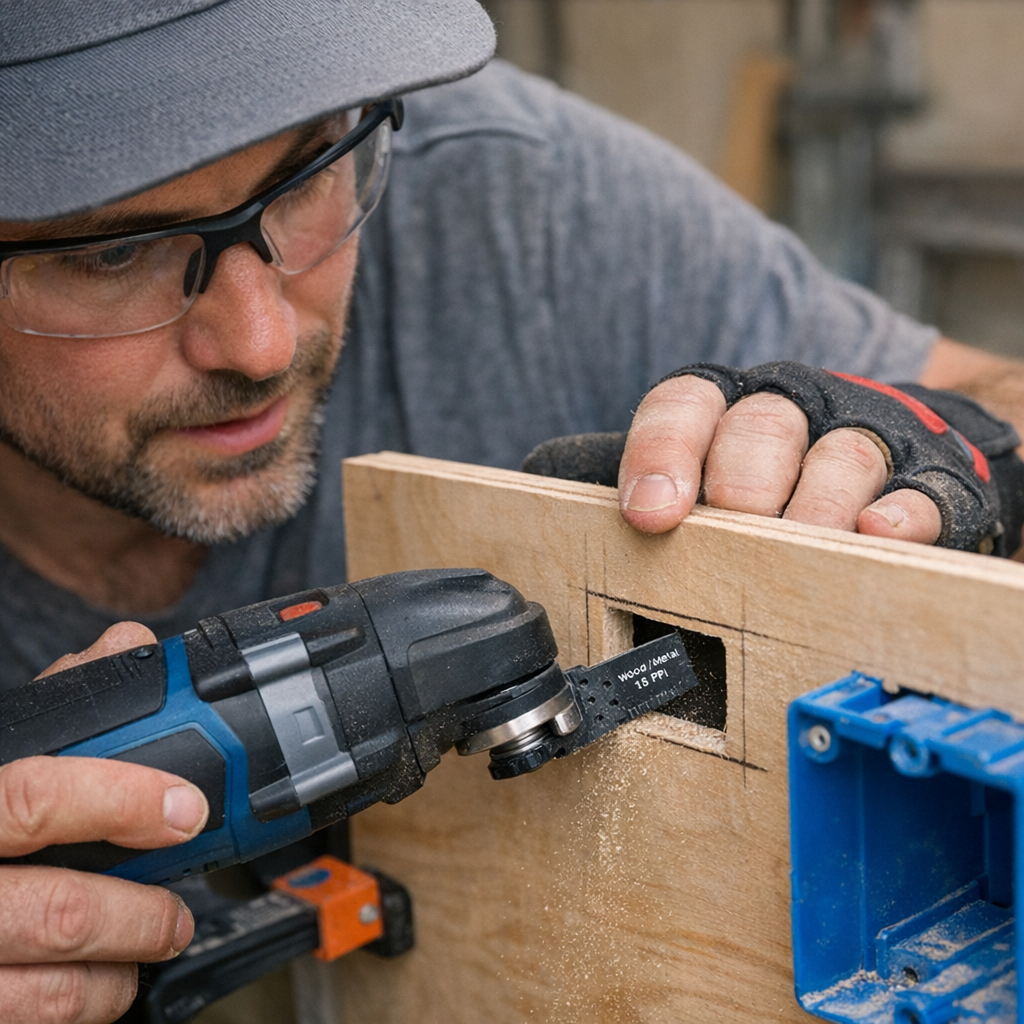
You only notice the downgrade when it’s too late. Rip into plywood or MDF with a new oscillating tool blade, and sure—your first cut looks great. The line is crisp, progress feels smooth, and your confidence builds. But the instant you start tracing that tight corner for the second junction box—when repeat cuts are coming fast, in awkward positions, on finished surfaces—reality hits. Edges fray, seams turn rough, and the time you’re saving on “fast” cuts gets burned up chasing splinters with sandpaper. The cheap or dull blade that felt fine on pass one is quietly draining your time, precision, and nerves.
Where Projects Unravel: After the First Pass
The problems rarely show up in the easy opening move. It’s when you need three, five, seven cuts identical—on-site, mid-install, or while balancing a panel against your knee—that the general-purpose blade’s flaws multiply. Instead of slicing, you’re wrestling to hold your mark as the tool drifts, tears at the grain, or sags into a jagged arc halfway through. By the third box opening or second vent notch, you’re not finishing the job—you’re stuck on edge repair, backfilling blown corners and sanding down accidental overcuts.
This isn’t just DIY frustration. On real jobs—installing window casings, running outlet cutouts, or building cabinetry—the margin for roughness vanishes fast. A few rough cuts become a pile of putty and wasted time. Fatigue grows, mistakes breed, and tidy work turns into a pro-level headache.
The Right Blade for Real Momentum
Walk the tool aisle and “universal” blades seem interchangeable. But the second you pull the trigger, design shows itself. An 18-TPI bi-metal fine-tooth blade isn’t about marketing—it’s about control, cut by cut. The teeth glide instead of grabbing. You can see it: rounded corners stay crisp, the line hugs the scribe, and there’s far less chip-out in hardwoods or laminated panels.
You know the moment—a generic blade chatters because your angle’s barely off, veers out, or binds when you hit glue or layered grain. The tool feels like it’s fighting you for control. Swap to a precision fine-tooth blade, and everything steadies: the cut tracks where your hand wants, not where the blade drags you. Corners stay sharp. Less sanding, less correction. You stay in rhythm.
Kerf, Vibration, and Consistency
When shaping vent cutouts or tight insets, blade kerf matters. Coarse teeth “bounce out” on curves, forcing you wide, making for hours of messy correction. Fine teeth mean a tighter kerf, which keeps every cut cleaner with less rattle on the tool and less vibration in your wrist. Do one, two, or a dozen inlet cuts—clean edges save you effort on every subsequent pass. Skip the kerf drama, and you’ll see it: less dust cloud, more matching lines, and no rush for filler at the end.
Blade Fatigue: Spotting the Drop-Off Early
The warning signs are subtle—but they matter. Maybe you’re working in an attic or fitting panels overhead, and after a few tight cuts, the tool suddenly feels rough. More vibration. The edge looks fuzzy. You’re forcing progress instead of guiding it. That’s the moment when bad blade choice turns a small gap into an afternoon repair job.
Swapping in a fresh, fine-tooth blade—purpose-built for under 3/4” wood—transforms the process mid-task. Instantly, the blade tracks smoother, leaves less residue, and the work speeds back up. The difference isn’t night and day, but it’s real: less effort, less frustration, less dust waiting for you at cleanup.
Tighten Everything: Clamp, Steady, Execute
There’s temptation to cut corners—hold a panel by hand, skip the clamps “just this once,” or rush setup in a tight space. That little shortcut almost always demands payback. Secure your workpiece and the blade holds its line. Vibration drops, wandering stops, and awkward corrections become less frequent—especially when working across tricky wood grain or layered material. Five minutes with clamps saves half an hour of apology sanding later.
The Real Limits of “Universal” Blades
“Multipurpose” sounds good—until you see chewed edges and can’t get a flush fit on finished surfaces. Matching blade TPI and tooth profile to your material isn’t snobbery—it’s insurance against wasted labor and re-work. High-TPI, fine-tooth blades excel on the materials where finish really matters: hardwoods, MDF, laminate, paneling. Especially when you need repeatable quality across a job, the right blade is the only thing between you and a production line of touchups.
Don’t ignore blade fatigue. Push one blade through far too many cuts and you’ll feel it sag. Consistency slips as quickly as edge sharpness. Time spent wrestling with worn teeth is time not spent making real progress. Swapping out blades faster than you think you “need” to pays off by the end of the day.
Repeatability Over Perfection
The dream of the flawless first cut is a distraction. Real work—whether in a home garage or bustling jobsite—relies on repeated performance, not one-off heroics. The question is: can your tools make the next five, seven, ten cuts match that first? Or do imperfections spiral, turning a quick run into a patch job?
Pros and careful DIYers check not just blade sharpness, but appropriateness—will this blade keep pace project after project? You can’t skip all finish work, but you can eliminate most of it by stacking repeated, clean results. In practice, that’s the best speed boost you’ll ever get.
Habits That Actually Save Your Time
Those who last in the shop or on-site work with a few unsung rules:
- Clamp your material; “holding steady” isn’t enough for good results.
- Guide the blade—never force it. Control is everything on detail work.
- Swap blades sooner than later, especially when vibration rises or results slip.
- Choose blade TPI and profile based on what you’ll cut and how many times you’ll repeat it—not just what’s on sale.
Day after day, those habits matter more than the accessory on the label. You end up with less wasted effort, less ache in your arm, and more time for actual progress instead of rework. Cleaner panels, fewer fixes, better mood at the end of the project.
Bottom line: The right blade and a few hard-earned habits do more for real jobs than any universal shortcut. You save time, you save panels, and you save your patience—cut after cut, job after job.