
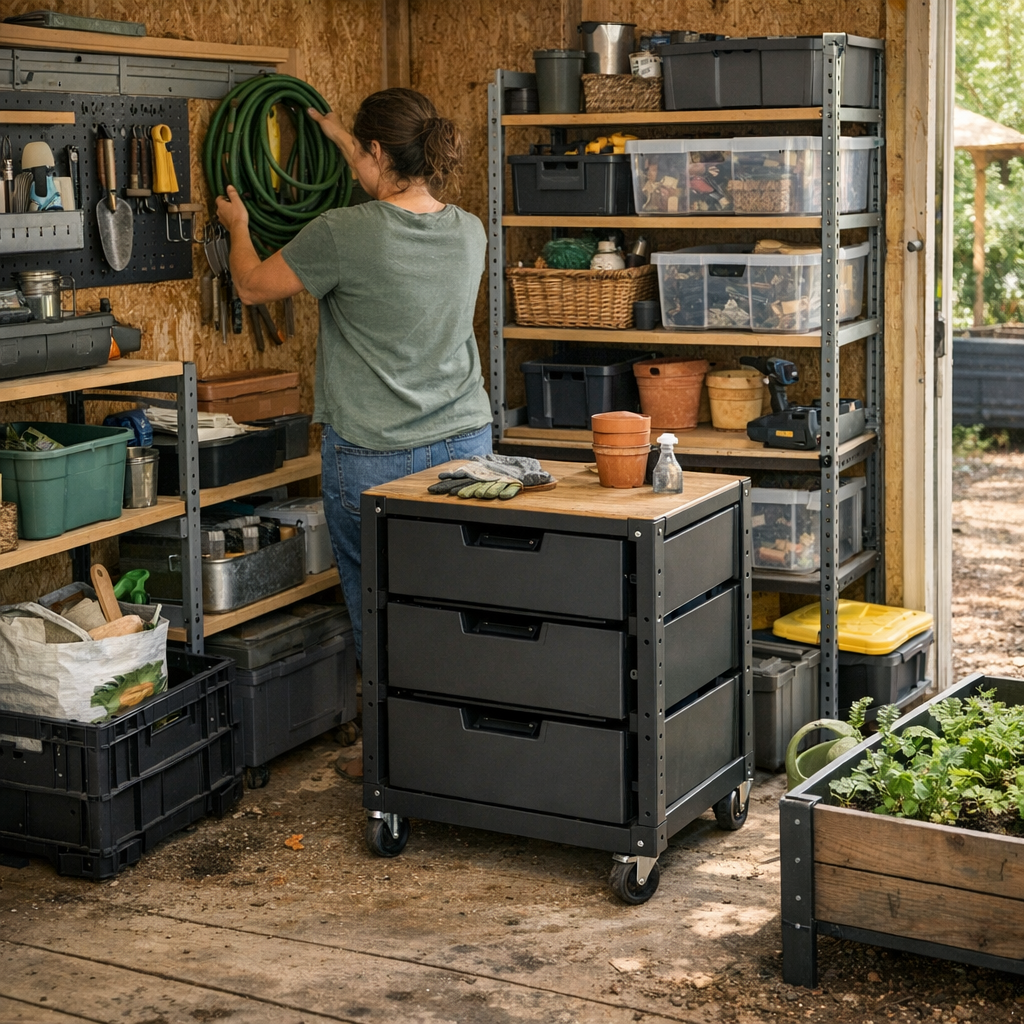
The illusion of perfect storage falls apart as soon as real routines collide with it. Your garage, shed, or workshop corner might look dialed in on day one—shelves standing crisp, every bin aligned, carts tucked neatly in place. Then actual life happens: you reach for a buried tool, squeeze around a cart that never quite moves out of the way, or lose five minutes sorting through what was supposed to be “accessible” storage. The surprising truth? It’s not clutter that sabotages good organization, it’s the slow grind of daily use exposing where your layout was designed for looks—not for action.
The Downsides That Show Up on Week Two
That first Saturday, every shovel and socket has a labeled slot, and the whole setup promises to stay easy for months. But routines always shift. Spring brings new garden trays. The kid’s bike needs a quick repair. Partners start using the space for their projects, and DIY ambitions (big or small) mean tools are suddenly needed—and put back—in a different order.
Clutter is subtle, not sudden. It’s the rake you leave by the door “just until you’re done,” or the detour around a stuck cart that only gets longer. It’s the shelf whose door never fully opens because another bin migrated into the way. Rigid storage shines for a photo—but often becomes the reason you’re shuffling, sidestepping, or stacking things out of sequence just to get by.
Where Neatness Fails to Keep Up
There’s a hard line between spaces that look organized and those that actually flex for how you work. Wall hooks and fixed shelves deliver that showroom promise: everything visible, “a place for everything.” But real utility falls apart when you’re:
- Sliding a cart sideways every time you need that back bin
- Reaching around the same clunky cabinet edge, again and again
- Noticing tidy zones merging into catchall areas you never intended
“It looks right” isn’t enough. Setups with zero slack leave nowhere for overflow—no open gap to toss a muddy glove, no place to stash that surprise supply run. Each time you invent a shortcut, stack gear “just until tomorrow,” or let a corner collect overflow, a friction point is locked in. All those micro-delays add up. What started clear can quietly become a maze: constant reshuffling, slowed-down resets, and a creeping sense that order is always just out of reach.
Shed Realities: When Storage Becomes an Obstacle
Picture a backyard shed halfway through spring. The new rails still hold labeled bins. The mobile bench is front and center, and you can still spot the floor. But the rhythm changes fast: a delivery of soil trays clogs one side, muddy boots land by the door, and the rolling cart—once a hero—blocks the only workable shortcut.
Now, putting tools away takes more steps. You squeeze past stacked boxes to prop open a wall shelf, only to discover the drawer is blocked by a poorly placed rake. Each reset feels heavier. Soon, you’re tossing things in the nearest open spot because resetting to zero requires moving five other pieces. The once-neat space starts building aversion—not habit. What was meant to help is now in your way.
What Changes When Storage Can Move With You
Shift even one piece—a fixed rack traded for a modular shelf, an open panel introduced, or a cart given space to pivot without boxing itself in. Sudden change: trays fit without cramming, the cart swings through cleanly, and returning a tool means one quick move, not three workarounds. Less sidestepping, less dented gear, no awkward shuffles between zones.
This is what makes the difference: It’s not about prettier storage, but function that cuts down on friction. When the layout absorbs new projects or last-minute changes with barely a pause, you’re less likely to fall into the trap of stacking, jamming, or dreading the daily reset. The system stays light on its feet—even when you’re not.
Minor Tweaks, Major Improvement
Sometimes, freedom is just one mobile shelf or a panel left open. Suddenly, wheel paths are clear, zones don’t merge, and it’s easier to fix a workflow before chaos settles in. Resetting is a two-minute task, not a scavenger hunt—so you stay in motion, not in maintenance mode.
Friction Finds: How to Spot Layout Breakdowns
After a truly busy week, take a scan:
- The same pile always forms where “just put it there for now” is the norm
- Carts wind up off their tracks—because turning is a pain, not a habit
- Wall storage darkens behind other gear, turning access into an event
- Reset routines that take too many steps, or get skipped altogether
If your quickest “clean up” is a new stack, your system is quietly tripping you up. When putting one thing away always means shuffling two more, or blocked routes force repeated detours, your storage isn’t adapting—it’s multiplying the grind. Every new workaround is proof the original setup just can’t keep up with you.
Why Modularity Pays Off When Things Get Messy
Modular storage isn’t about looking the part—it’s about each section, cart, or wall mount becoming movable parts in a working system. As projects shift, these components adapt. True modular setups preserve real movement paths, so even as gear cycles in and out, zones don’t blur and resets stay simple.
The payoff isn’t a perfect catalog shot—it’s reaching for a tool and finding a way open, every time. Real-life storage needs to absorb change without demanding a full reset with every season or every side project. With shelves and carts that move (and room for slack), you finally get a setup that works with you, not against you—cutting out the friction that too often comes packaged as “organization.”
See modular storage options built for real daily reset at StackNest.