
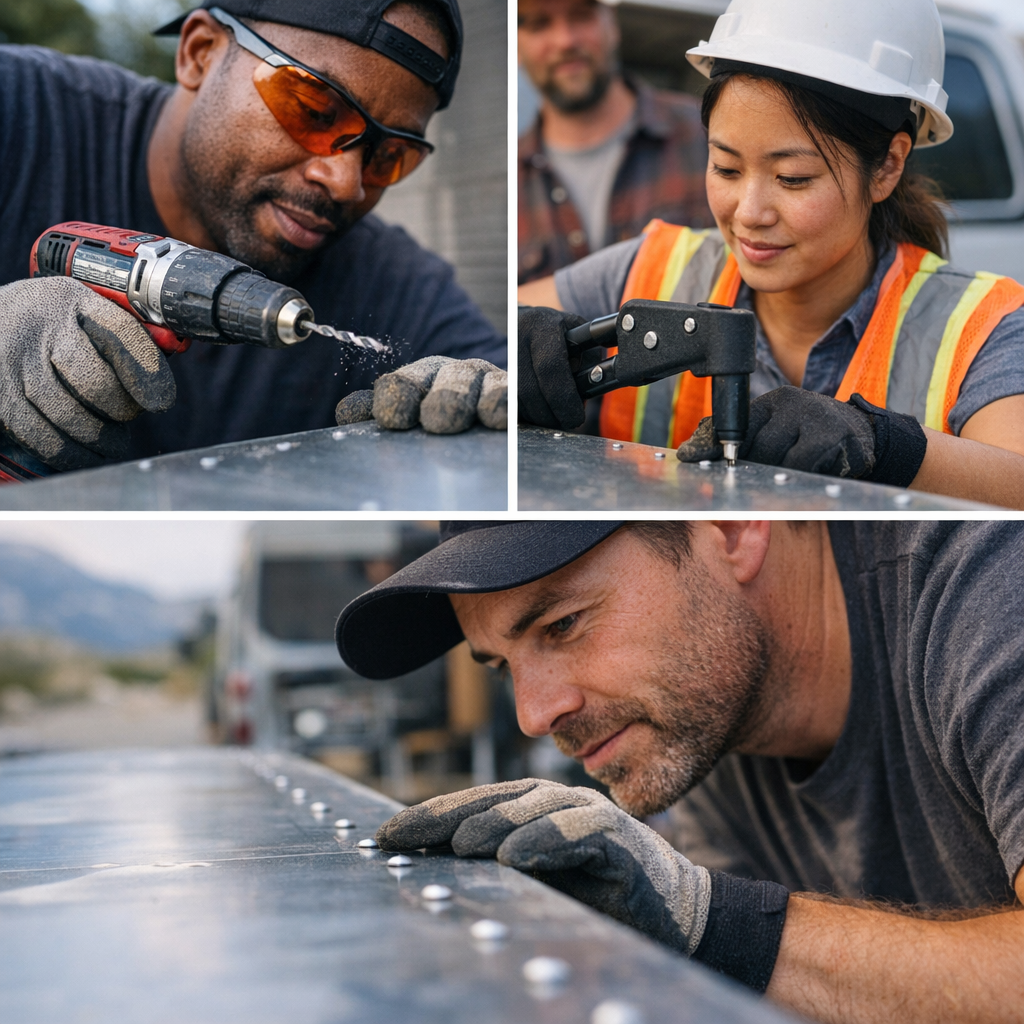
Understanding the Challenge of Flush Rivet Heads
Have you ever spent significant time aligning your rivet gun, confident that everything is set correctly, only to find the rivet head sitting proud instead of flush with your material? This is a very common frustration encountered by anyone working with aluminum, sheet metal, or plastics. It’s not just a matter of aesthetics either—improperly seated rivets can snag on clothing, compromise structural integrity, and give your work a less professional appearance.
At its core, a rivet is a simple fastener: a shank, a mandrel, and a head. When you pull the trigger, the mandrel draws the shank to create a riveted joint. Ideally, this process creates a smooth, flush rivet head. However, you might often notice a small dome or bulge instead, where the head never fully seats against the surface. Identifying why this happens and how to prevent it can save time and frustration on any project.
Common Reasons Why Rivet Heads Don’t Sit Flush
Mismatched Hole Size
The most frequent culprit behind a rivet head that doesn’t sit flush is a hole that doesn’t precisely match the rivet diameter. If the pilot hole is even slightly larger than recommended, the rivet will expand unevenly inside the material. This uneven expansion, called “blooming,” prevents the rivet head from compressing fully against the surface.
For example, using a 1/8″ (3.2mm) rivet with a hole larger than 3.2mm can cause the shank to push through unevenly rather than spreading uniformly to anchor properly. On the opposite end, a hole that is too tight can prevent full insertion, leaving the head away from the material surface and causing a raised head.
Material Thickness and Surface Condition
Material layering plays an essential role. If you have a thick bottom layer with a thinner top layer, the rivet head might not seat because the softer or thinner layer flexes or compresses unevenly. This results in a gap between the rivet head and the surface.
A practical example is riveting a 1mm aluminum panel onto a 3mm backing plate. The aluminum’s softness and thinness often let the head ride above the surface, even with the correct hole size, due to uneven compression.
Incorrect Nosepiece or Tool Issues
It’s easy to overlook the importance of matching your rivet gun’s nosepiece to the rivet size. Using a smaller or larger nosepiece than specified can misalign the rivet during installation, preventing the head from sitting flush. Additionally, dirty or worn jaws inside the rivet gun can grip the mandrel off-center, further complicating proper seating and causing a proud rivet head.
Simple Steps to Achieve Flush Rivet Heads Every Time
Use the Reverse Drill Bit Technique to Eliminate Burrs
One of the most effective but overlooked tactics is to reverse-spin your drill bit through the hole after drilling. After you drill your pilot hole with the drill spinning forward, reverse the direction and spin the bit backward for several turns.
This quick action cleans off burrs and tiny raised edges left by the forward drilling. Burrs can prevent the rivet head from sitting flush by acting as a tiny barrier under the head, akin to placing a microscopic washer where it’s unwanted.
This method costs nothing and takes only a few seconds, but it significantly improves rivet seating and surface finish. It’s especially valuable when drilling aluminum or soft metals where burr formation is common.
Maintain Proper Hole Size
Always verify that your pilot hole diameter matches the rivet manufacturer’s specifications. A high-quality brad-point bit for metal can improve hole accuracy. If you work regularly with specific rivet sizes, consider investing in dedicated bits optimized for those sizes.
Keep Your Rivet Gun Clean and Matched
Regularly clean the jaws of your rivet gun by blowing them out with compressed air and checking for signs of wear or contamination. Matching the nosepiece to the rivet diameter is crucial for proper alignment and force distribution. Avoid using mismatched parts to prevent uneven rivet compression.
Refreshing Your Approach to Riveting: Focus on Surface Preparation
Beyond hole size and tool maintenance, reevaluate your material handling before riveting. Surfaces must be flat, clean, and clamped tightly together. Even a slight gap between sheets or layers can cause rivet heads to sit proud. Taking an extra moment to clamp or use hand pressure ensures layers remain flush throughout installation.
This preparation shift not only improves rivet finish quality but helps prevent long-term issues such as loosening or corrosion caused by uneven stress.
Additional Tips When Dealing with Persistent Raised Rivet Heads
- Upgrade Rivet Quality: Choose rivets compliant with industry standards such as DIN 7337 or ISO 15977. These standards guarantee appropriate deformation characteristics for reliable seating.
- Inspect for Tool Wear: Old or poorly maintained rivet guns can misalign the mandrel. Periodically service or replace worn parts, especially if you notice a pattern of elevated heads.
- Test Material Flats: If working with warped panels, try to flatten or support them with jack screws or clamps before riveting.
Why Getting It Right Matters
Flush rivet heads are about much more than beauty—they prevent catches and snags on wiring looms, gloves, or clothing. Raised heads can also become stress points, potentially leading to cracking or failure in applications subject to vibration or impact.
The difference between a “good enough” rivet and a perfectly seated one can impact product durability, user safety, and overall quality perception. In industries like automotive upfitting or ceiling grid construction, these details separate less desirable outcomes from professional craftsmanship.
Conclusion
Don’t let proud rivet heads slow down your projects or diminish your work quality. Start by making the simple but effective reverse-drill step a part of your routine to clear burrs. Double-check hole size, tool condition, and material flats. Maintain your equipment diligently, and respect the subtle nuances of layered materials. With these adjustments, you’ll be rewarded with clean, flush rivet heads that look great and perform reliably.
Ultimately, the seemingly small details in preparation and tool maintenance distinguish a skilled craftsman from a novice. So before you move on, pause and check your rivet finish—your attention to this detail is the first step toward building something that truly lasts.