
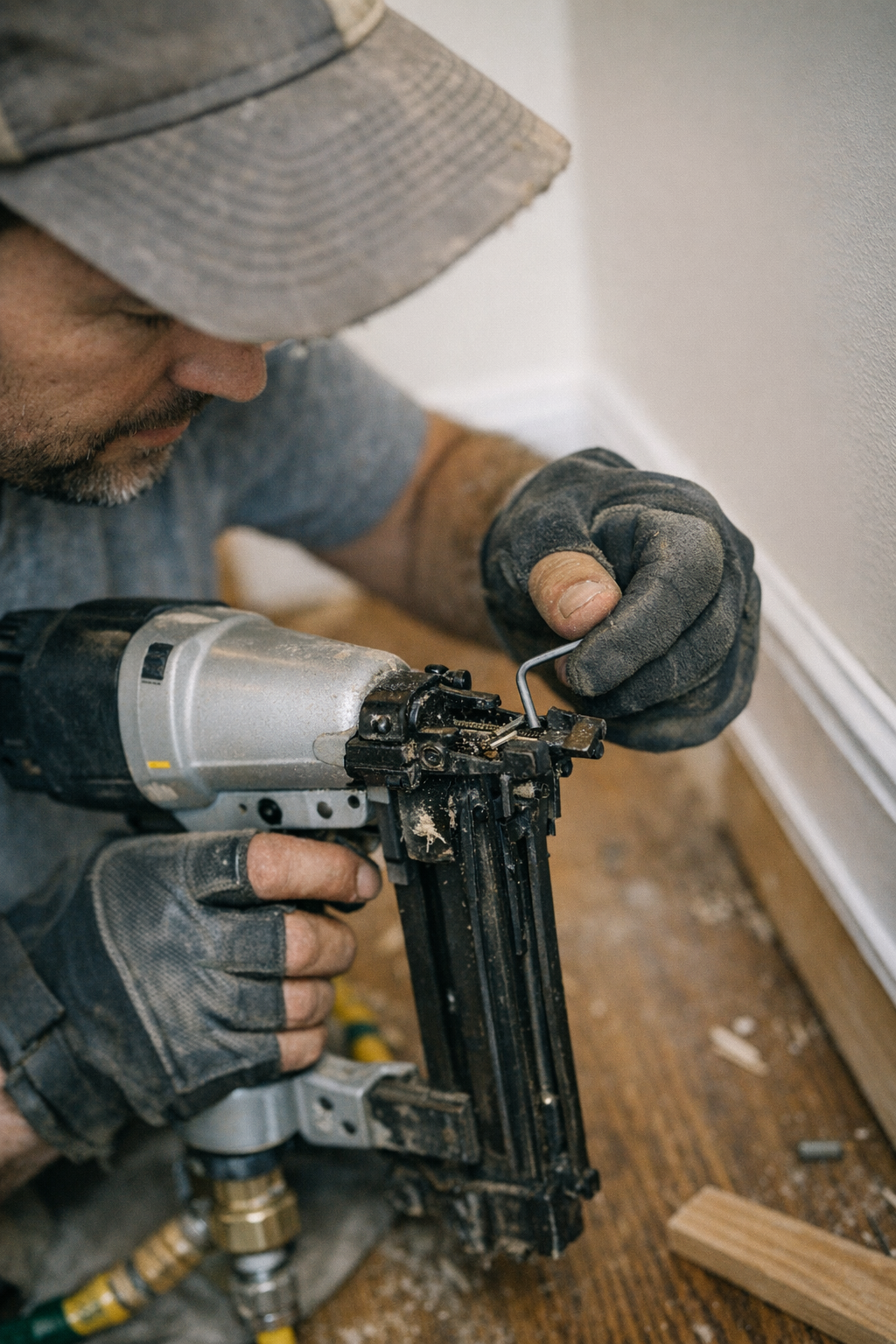
Understanding Why Nailers Jam at Crucial Moments
If you’ve spent enough time wielding a nailer, you know the frustration when it suddenly clunks, stutters, or jams—especially when the pressure is on and you’re racing against a deadline. Whether you’re installing baseboards for a client’s house or fitting crown molding in your own living room, the unexpected halt in workflow can drive your stress levels sky-high.
Typically, the culprit isn’t the nailer by itself. More often, the problem starts from small missteps we make during use or maintenance. Under pressure, tiny errors can quickly snowball, causing the tool to stumble just when you need it most. This article breaks down the main reasons nailers jam and offers practical advice to keep your projects running smoothly.
Common Causes of Nailer Jams
Contrary to popular belief, nailer jams aren’t random; they usually have identifiable and fixable causes. Recognizing these can protect you from downtime and frustration.
1. Using Incorrect Nails or Staples
Manufacturers design nailers to accept specific fastener types, gauges, and lengths. For example, finish nailers typically accommodate 16- to 18-gauge brads ranging from 5/8″ to 2″. Using anything outside of this specification—even just a slight gauge mismatch—can cause the nails to feed improperly and jam inside the magazine.
When the fastener strip isn’t an exact fit, the nails may cock sideways, or get stuck at feed points designed for different dimensions. This is especially common when mixing leftover nails from previous jobs or borrowing staples from a different tool.
2. Improper Loading and Alignment
Loading the nails quickly without ensuring perfect alignment often leads to feed issues. Even a tiny misplacement can create enough resistance for the tool to jam. For example, an 18-gauge brad nailer’s feed channel is often as narrow as 1.2mm. If a nail strip is pushed just 1mm too far forward or not seated flush against the guide, the feeding mechanism can stall.
Developing the habit of pausing briefly during reloads to nudge the nails back gently into place can prevent many jams. It’s a simple habit but saves you from tearing down your tool on the fly.
3. Dirty or Poorly Lubricated Magazine
Dirt, dust, sawdust, or old lubricant buildup can gum up the magazine and preventing smooth feeding. Regularly cleaning the inside of the nosepiece and magazine channel, and applying manufacturer-recommended lubrications, keeps your nailer running like clockwork.
4. Overfiring or Firing Too Quickly
Trying to work faster than your nailer’s cycling capability often backfires. Most consumer-grade nailers are rated around 2–4 cycles per second. Exceeding that by triggering shots in rapid succession can cause double fires, overheating, or sticking nails.
Heat causes expansion of the metal components inside the nosepiece, increasing friction and binding the nail strip. Particularly for coil nailers, which fire dozens of nails in quick bursts, proper pacing is critical to avoid jams.
5. Incorrect Air Pressure or Battery Charge
Pneumatic nailers require correct air pressure to drive nails fully and reset the driver mechanism. Running at pressures too low means the punch mechanism can stall halfway, causing jams. Conversely, operating at pressures above the manufacturer’s recommended range stresses internal components and encourages misfires.
Always check your compressor settings or battery levels before starting the job to ensure your nailer performs optimally.
Real-World Experience: How a Simple Habit Change Made a Big Difference
During a hectic home renovation, my finish nailer repeatedly jammed during a trim job. After a few frustrated disassemblies, I realized my mistake: I was loading fasteners too quickly and letting them settle ever-so-slightly forward, misaligning the strip.
A small change—just pausing to gently tap the nail strip back so it was fully seated in the guide channel—transformed the experience. This two-second habit prevented misfeeds almost entirely, saving me from stressful downtime and preserving the project’s schedule.
This taught me a valuable lesson: deliberate, mindful tool handling can prevent many headaches, especially when the clock is ticking.
Maintenance Tips to Avoid Repeated Jamming
Regular Cleaning and Inspection
Cleaning your nailer at the end of each day, especially after messy jobs, helps maintain smooth function. Remove dust and debris with compressed air or a soft brush, and check for signs of burrs or damage on the driver blade.
Check the Driver Blade
A bent or nicked driver blade repeatedly causes jams and misfires. If you notice inconsistent driving or frequent jams, inspect the blade and replace it if necessary.
Use the Correct Lubrication
Applying a few drops of pneumatic tool oil (for air tools) to the moving parts keeps the tool cycling smoothly. Avoid over-lubricating, which can attract dust.
Refresh Tip: Slow Down to Speed Up
When you’re stressed and trying to rush, your body tends to get tense, and your actions become jerky or hasty. Taking a moment to breathe and approach your nailer reload or firing rhythm deliberately can dramatically reduce errors and jams.
This subtle mental reset encourages better hand-eye coordination and precision, translating into fewer mishaps. Remember, consistently fast isn’t same as smoothly fast—patience in action ultimately leads to higher productivity.
Summing Up: Keep Your Project Moving When It Counts
Nailer jams are not inevitable or mysterious. More often than not, they’re a sign of fasteners mismatched for your tool, slight misalignments during loading, improper air pressure, or firing speed that’s too aggressive. Addressing these details with deliberate care can prevent jams from derailing your momentum.
Adopt small but effective habits—like gentle fastener seating and paced firing—to keep your tool in tune. Maintain your equipment responsibly, and watch how much smoother your workdays become even under the tightest deadlines.