
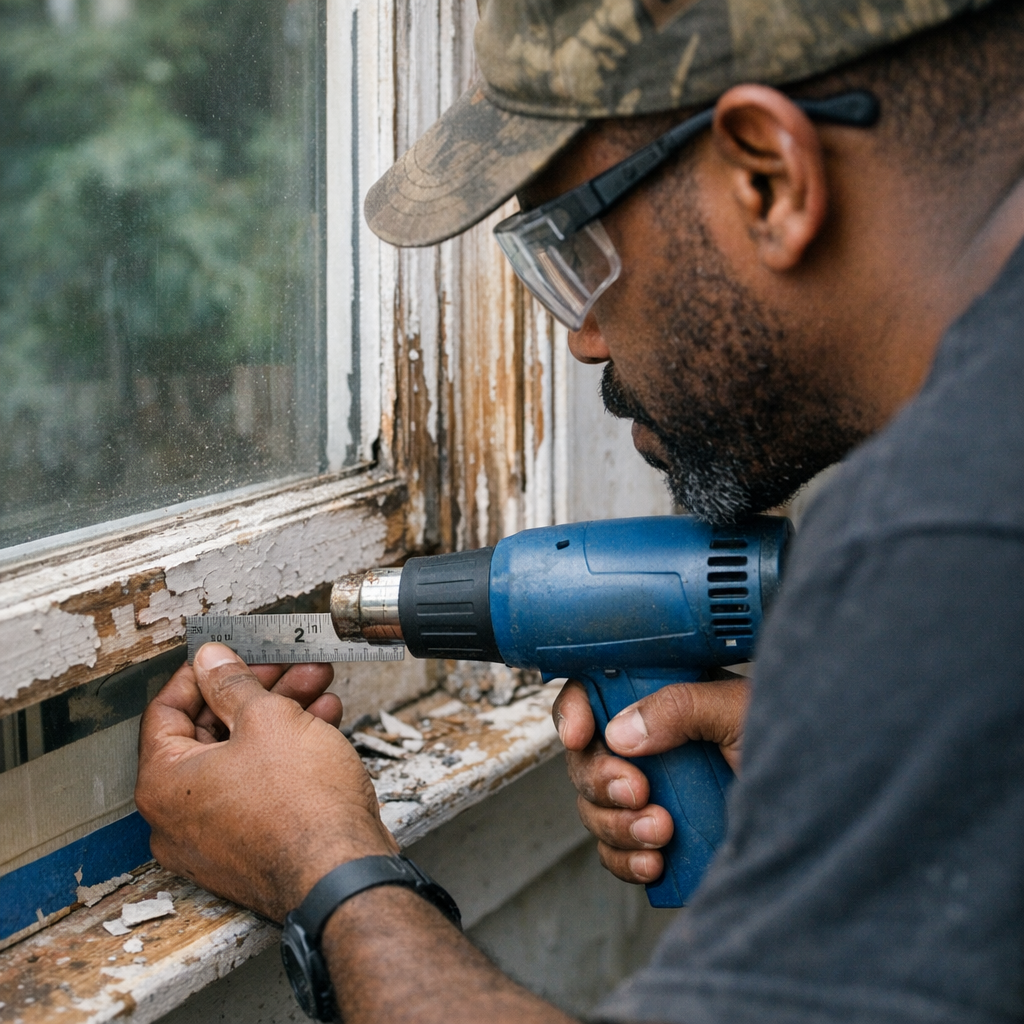
Understanding the Importance of Distance When Using a Heat Gun
There’s often a brief, silent moment just before you squeeze the trigger on a heat gun. It’s that instant where confidence meets caution. Whether you’re softening old paint on a window frame, shrinking tubing over a bundle of wires, or loosening a stubborn bolt, one critical factor determines your success: how far you hold the heat gun from the surface.
If you’ve ever scorched paint, bubbled plastic, or accidentally set off a smoke alarm by applying too much heat too close, you know the consequences of ignoring this simple but vital detail. Although wattage and nozzle choice contribute to your results, it’s the distance between the heat gun’s nozzle and the material that really controls surface temperature, heat spread, and how the material reacts.
Why Distance Matters More Than You Think
Heat guns commonly operate between 400°F and 1,100°F (about 200°C to 600°C), but that doesn’t mean your material experiences those exact temperatures. The effective heat on the surface depends heavily on your distance and how long you hold the gun in one place.
Holding the heat gun too close — say, less than half an inch (12 mm) — can quickly push the surface temperature beyond safe limits. This often causes warping, bubbling, charring, or melted plastic, sometimes before you realize it. In one restoration project, aiming the nozzle too close while stripping an intricate door panel not only loosened the paint but also lifted a thin veneer beneath. It was an expensive lesson: the margin for error shrinks rapidly the closer you bring the heat source.
The “Two-Inch Test” to Find Your Safe Working Zone
A practical starting point is the “two-inch test.” Set your heat gun to a moderate temperature — roughly 500°F (260°C) — and hold it two inches (50 mm) from the work surface. Use a ruler or your fingers to gauge distance. At this range, you’ll usually see paint soften or shrink tubing contract within 5–10 seconds.
If nothing happens, you can cautiously move closer in half-inch increments, but stay alert for signs of damage like discoloration, smoke, or bubbling. If you spot any of these, pull back immediately. For delicate materials such as soft plastics or fragile finishes, it’s often safer to hold the gun three inches or more away and reduce the temperature below 400°F (200°C). Always begin with a test on scrap or an inconspicuous area.
Movement and Exposure Time: Avoid Staying in One Spot Too Long
One of the most common errors—even when distance is correct—is holding the heat gun stationary on one spot for too long. Even a perfect two-inch distance can overheat the substrate if the gun stays still. For example, removing vehicle decals typically works best at two inches with steady, continuous motion; lingering causes paint distortion or bubbling.
An experienced warehouse technician I know swears by a checklist taped to his bench: test on scrap, measure distance, check surface temperature lightly by touch if possible, and always scan the surface for uneven gloss or early softening. His caution stems from one costly mistake, where a single pass too close ruined an entire batch of terminal housings.
Material Differences Affect Optimal Distance
Keep in mind that surface reaction to heat isn’t linear. Lightweight, low-mass materials like vinyl or thin plastics are sensitive and can bubble or melt within seconds if too close. In these cases, maintaining at least a three-inch distance with the lowest heat and airflow setting is wise.
Heavier, denser surfaces—like thick hardwood or metals—can tolerate closer proximity and higher heat, but heat guns should never be held still for extended periods. Continuous sweeping motion prevents localized overheating.
Practical Refresh Tip: Practice Mindful Heat Application
A subtle but valuable trick to improve your precision is to mentally rehearse the procedure before you begin. Visualize positioning your hand exactly two inches away, maintaining a constant sweeping motion, and timing each pass to no more than 4–5 seconds per zone. This kind of mindfulness helps reduce mistakes caused by distraction or haste.
Whenever you start on an unfamiliar material, double your usual distance and halve your heat setting for the first pass. This cautious approach lets you read the material’s response without risking damage. If everything looks good, you can then gradually adjust to optimal settings.
Additional Tips for Specific Jobs
- Shrinking tubing on wire junctions: Hold the heat gun at two inches with low to medium heat and keep moving it constantly over the tubing to avoid hotspots.
- Removing labels or decals: Start at two inches with moderate heat. Watch the edges for softening adhesive, then gently lift to peel without damaging the surface beneath.
- Stripping paint or varnish: Don’t just focus on temperature; after heating the surface, allow it to cool for at least 90 seconds before scraping. This reduces gouging or tearing, especially on softened veneers or wood.
Common Pitfalls and How to Avoid Them
Beyond distance and motion, avoid these mistakes to protect your work:
- Rushing: Trying to speed up by reducing distance or increasing heat almost always leads to scorching or bubbling.
- Ignoring smells or early warning signs: A faint burning smell or slight smoke is your cue to stop immediately and reassess.
- Failing to work on scrap material first: Every project can vary, so testing saves from damage and costly redo.
Summary: Distance Is Your Most Valuable Control
By treating the distance between your heat gun and the target surface as a precise setting—not just a vague guideline—you drastically decrease the risk of surface damage. Holding the gun approximately two inches away is a reliable starting point for most jobs. From there, slowly adjust based on material sensitivity and observe carefully.
Combine this with continuous sweeping motion, limited exposure time, and a habit of testing on scrap materials, and your results will reliably improve. Over time, checking your distance will become second nature, saving you material, time, and frustration.
So next time you reach for the heat gun, ask yourself: how close am I holding it, and what’s the safest way to control the heat to protect my work?