
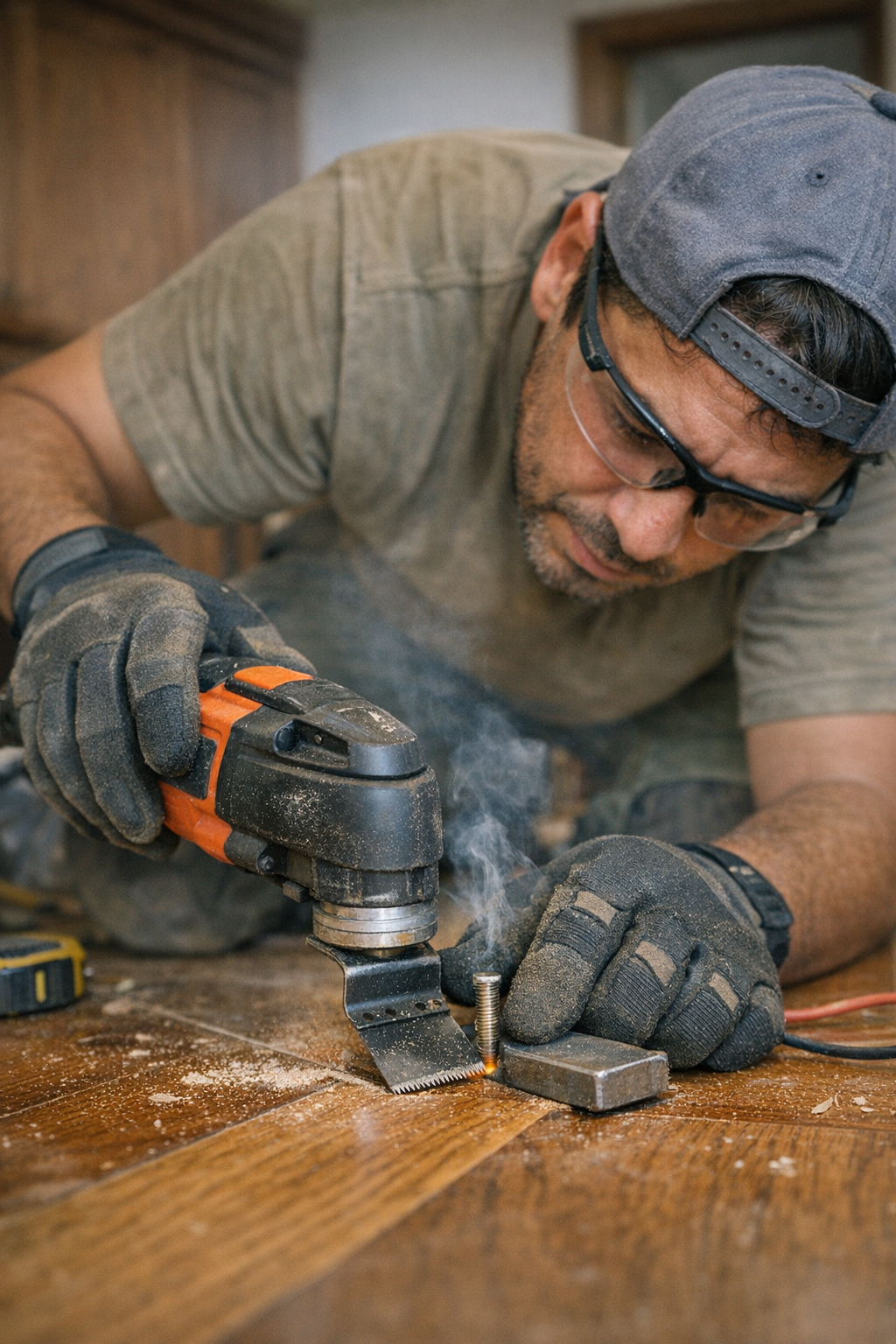
Anyone who’s worked with oscillating tools on hardwood knows the frustration: you start with a blade that cuts cleanly through thick oak or maple, but after just a few boards, the blade starts to smoke, stall, or lose its edge. Some blades barely last an afternoon, while others endure for weeks. So what really makes an oscillating tool blade last longer when working with tough hardwoods? Let’s break down the factors that affect blade longevity from a hands-on perspective.
Why Hardwood Is Hard on Oscillating Tool Blades
Hardwood species such as oak, walnut, and maple are dense and rigid materials. They often contain microscopic silica deposits within their grain structure, which act like natural abrasives on cutting blades. This density also causes the blade to heat up quickly during use, accelerating dulling and wear. The combined effect means your oscillating tool blades are constantly tested when slicing through hardwood.
Using the wrong blade is a common pitfall. For example, blades designed for softer wood or general demolition won’t hold up well on hardwood flooring or trim. High-carbon steel (HCS) blades with a low tooth count (6–8 teeth per inch) can dull within a few feet of cutting through dense hardwood. In contrast, bi-metal blades featuring a higher teeth-per-inch count and specialized tooth profiles are designed to withstand this abuse better, often lasting significantly longer.
Key Features of Durable Oscillating Blades for Hardwood
Bi-Metal Construction
A durable oscillating tool blade for hardwood typically has bi-metal construction, combining flexible steel backing with durable high-speed steel (HSS) teeth. This design allows the blade to flex without breaking and resists overheating, which can prematurely dull softer blades. Look for bi-metal blades rated for heavy-duty use, which means they’re engineered to handle prolonged cuts in thick hardwood without visible tooth rounding.
Japanese-Style Tooth Profile
Blades with Japanese-style teeth feature a fine, double-row tooth design operating at around 17–20 teeth per inch (TPI). This profile is optimized for clean, fast cutting through wood, and it resists clogging with hardwood dust. Less clogging leads to less friction and lower cutting temperatures, extending blade life significantly.
Wider Blade Profile and Thick Kerf
Choosing a blade with a wider cutting profile (approximately 1-3/4″ or more) helps distribute heat across a larger area, reducing wear. A blade kerf thickness between 0.7 and 1.2 millimeters supports straight cuts without binding or twisting, which again reduces heat buildup and dulling. Stability during the cut is just as important as sharpness.
Secure Universal Fitment
A blade that fits your oscillating tool snugly with minimal wobble preserves the blade’s attachment tabs and ensures efficient power transfer. Loose or cheap adapters introduce play, causing excess wear on the blade’s mount points and accelerating blade failure.
Practical Tips to Maximize Blade Life on Hardwood
Rotate the Blade Between Cuts
Here’s a simple but often overlooked tip: after each hardwood cut, rotate the blade slightly on its mount before starting the next. Because different segments of the blade’s edge wear unevenly during a cut, this practice exposes fresh teeth to the wood every time you start a new pass. It effectively doubles the usable cutting edge, extending blade life without extra cost. This strategy can be a game-changer on longer jobs involving multiple hardwood boards.
Manage Speed and Pressure
Running your oscillating tool at full speed (often 10,000–20,000 oscillations per minute) may feel like a way to cut faster, but it leads to overheating. I recommend using a moderate speed setting with a mild orbital action (if your tool has one, setting 2 or 3 out of 5 works well). Applying steady but gentle pressure allows the blade to cut efficiently without bogging down or generating excess heat.
Regularly Cool the Blade
Heat is the enemy of blade longevity. When making long rip cuts on hardwood, pause every 30 to 60 seconds to feel the blade temperature. If it becomes too hot to touch, allow it to cool down or press the blade tip into a scrap metal piece as a quick heat sink. This simple practice reduces thermal damage and keeps the blade sharper longer.
Keep the Workspace Clear of Sawdust
Accumulated sawdust acts like abrasive sandpaper on a blade’s teeth. Clearing dust away frequently during cutting reduces friction and wear. Using compressed air or a vacuum attachment can help keep the working area clean and your blade healthier.
A Refreshing Perspective: Quality Over Quantity
It’s tempting to push blades until they completely fail in pursuit of squeezing out the last cut, but this often backfires. Dull blades produce rough cuts, increase your workload, and stress the tool’s motor. Instead, consider replacing blades proactively—when cutting efficiency noticeably drops or you hear the tool laboring. This mindset shift means less time spent fighting your tool and more time focused on precision and safety.
Also, invest time upfront selecting blades designed specifically for hardwood applications rather than general purpose or demolition blades. This strategy saves you repeated stops and replacements throughout a project.
Conclusion
There’s no magic oscillating tool blade that lasts forever on hardwood, but selecting high-quality bi-metal blades with Japanese-style teeth, using wider blade profiles, and securing a tight fit on your tool lays a strong foundation for longevity. Combine this with smart usage habits—rotating the blade between cuts, running at moderate speeds with controlled pressure, cooling the blade regularly, and clearing debris—and you’ll notice a substantial increase in blade life and overall productivity.
Being mindful of blade maintenance isn’t just about saving money; it’s about improving the quality and efficiency of your work. By understanding how hardwood interacts with your oscillating blade and implementing these practical tips, you’re well on your way to mastering smooth, durable cuts every time.