
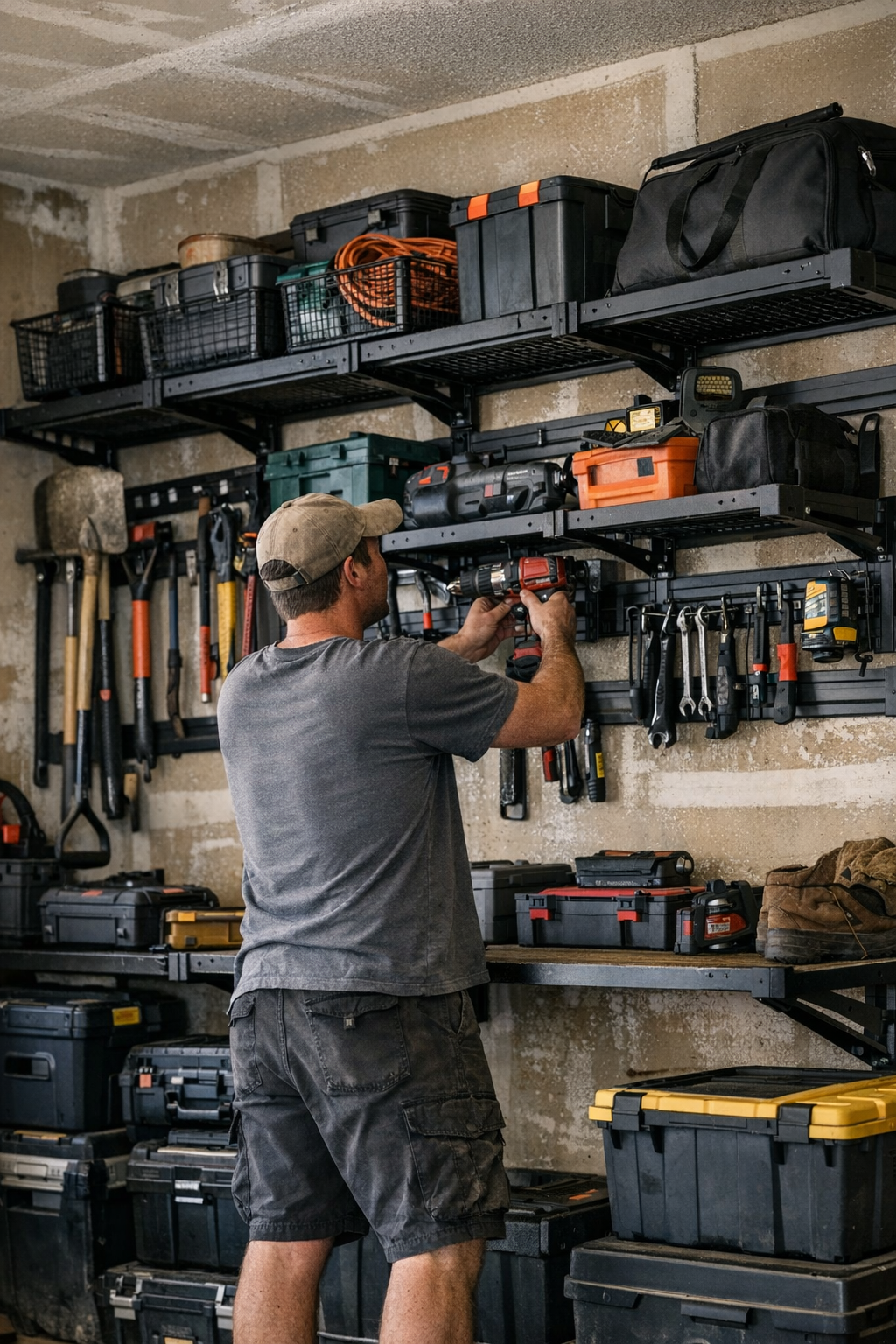
Finding Stability in Garage Organization
There are mornings when the drive to reorganize strikes just as rain softly taps the metal roof, filling the air with the dusty scent of old grass seed mixed with last winter’s salt. It’s in those moments, caught between the mower and the wall, that you pause and rethink every item’s place, wondering what might fall, roll, or get knocked over during that rushed exit out the door.
For many, a well-ordered garage carries a sense of steadiness, especially when heavy items remain grounded low against the concrete floor. Yet, the “right” spot for each tool, bag, or box rarely stays fixed for long—it’s a fluid dance influenced by weather, projects, and daily use.
The Importance of Anchoring Heavy Items Correctly
Heavy equipment and bulky items do best when stored on the floor or mounted securely along the lower walls. The key to success lies in a fully modular storage system, where every panel and bracket can be snapped tightly into a wall stud for maximum support. But even the sturdiest modular systems face real tests: an unexpected bump, a new bag of soil, or an urgent rearrangement can stress the setup in ways only visible once a shelf starts sagging or a rack clicks suspiciously under weight.
Modular wall racks promise sturdy simplicity, but their resilience depends on precise installation: each bracket must be anchored into framing rather than just the drywall surface. This often means slowing down and checking your studs carefully, even if parts of the wall appear solid but are actually hollow or soft.
How to Locate Studs for Optimal Rack Installation
Using a reliable stud finder, scan the wall several times from different angles. Look for the unmistakable ridges or slight nail dimples that indicate framing beneath the drywall. Mark these spots clearly. During installation, make sure each bracket screw bites into these solid studs to prevent sagging or accidents.
The User Experience: Engaging with the System
Slow, rainy mornings often offer time for deliberate action. Putting tools like garden shears back in their place becomes a mindful process—blade down, handles accessible, everything set with intention. In contrast, on bright busy days, we might toss battery packs or tools into whatever open slot we see, fooling ourselves that we’ll remember later.
The modular racks also highlight what’s missing—a nearly empty bin or unused hook stands out, making it impossible to ignore when a tool has gone astray. This visibility is helpful because it pushes us to maintain the space regularly, ensuring areas aren’t neglected and items don’t slip under the radar.
Tip: Daily “Touch and Reset” Routine
At the end of each workday, spend five minutes placing all tools back in their designated holders. This simple habit prevents clutter buildup and trains muscle memory to respect the system, reinforcing stability in your garage’s organization.
Handling the Unexpected: Bracket Failures and Adjustments
No matter how well installed, mechanical systems will be tested over time. For example, a loose hand-tightened screw can cause an entire rail to pop forward unexpectedly, especially with temperature variations causing expansion and contraction. Regularly checking hardware tightness and the integrity of each connection is essential for safety.
Heavy tools like sledgehammers or bags of soil challenge what the racks can hold, sometimes forcing a reassessment of which items should remain low and which can safely be stored higher up. The advantage of modular storage is flexibility—you can always re-slot a bin or shift a rail to better accommodate changing needs as seasons and projects evolve.
Refreshing Your Approach: Embrace the Freedom to Move
If your garage feels static or overwhelming, try mentally shifting from “holding in place” to “allowing movement.” Modular storage systems are designed not to lock you into a rigid layout but to give freedom to rearrange. When the urge strikes, step back with fresh eyes and move shelves or hooks to new places. Sometimes a small change in layout can reinvigorate the space, making it more efficient and inviting.
The Rewards of a Cleared Floor
Once the floor is cleared and wall racks are aligned, the garage breathes again. That patch of open concrete becomes the heart of the space, offering room not just to store but to work. Bikes hanging on marks worn from old use suddenly feel light and welcome. The space holds potential and possibility.
Planning for Continuous Improvement
Most garage improvements reveal themselves during the quiet moments—dusk, when the sun casts long, golden lines across the workbench, and leftover tools spotlight what still needs adjusting. A garage organized with modular wall racks isn’t about perfection; it’s about maintaining a thoughtful balance between order and accessibility.
Whether it’s adding bins for seasonal items or shifting the position of hooks for frequent use, the system’s modularity ensures it grows and changes smoothly with your projects and lifestyle.
Final Installation and Maintenance Tips
- Secure Every Bracket: Never anchor a bracket where there isn’t solid framing behind the drywall—drywall anchors are insufficient for heavy loads.
- Regularly Inspect Fasteners: Seasonal temperature changes can loosen screws; make a habit of checking once per season.
- Keep Similar Items Together: Group tools and materials by function or frequency of use for a more intuitive layout.
- Use Clear Labels: If you have numerous bins or hooks, labels can speed retrieval and help others respect the system.
Embracing modular wall racks in your garage offers the freedom and structure you need for long-term organization. With thoughtful installation, regular upkeep, and adaptive rearranging, your garage becomes a functional, calm space ready to meet whatever the day—and the weather—brings.