
Understanding Why Moisture Builds Up Inside Air Compressor Tanks
In every garage or workshop, certain noises become routine: the hiss of draining compressed air, the hum of the air compressor, and the clatter of tools. While some sounds fade into the background, the hiss that comes when you drain your air compressor at the end of the day deserves your full attention. Moisture buildup inside your compressor tank might seem harmless if overlooked, but over time it invites corrosion, weakens your equipment, and can jeopardize the quality of your work.
Air compressors are hardworking machines that constantly draw ambient air from their surroundings. Along with that air comes humidity — invisible water vapor suspended in the atmosphere. When the compressor pressurizes this air, that vapor condenses and collects as liquid water inside the tank. Think of the condensation on a cold glass of soda on a hot day; your compressor tank experiences a similar buildup from the inside.
In climate conditions with moderate to high humidity or significant temperature fluctuations, water accumulation inside the tank happens quickly. Even a small home compressor can collect a half-cup or more of water within one week of regular use. In my own experience working with compressors in environments where the relative humidity exceeds 50%, I’ve collected up to 200ml of water after a few days of intermittent use.
The Consequences of Letting Water Stay Inside the Tank
At first glance, water pooling inside a compressor’s steel tank may seem inconsequential. These tanks are built thick and tough to withstand high pressures—often rated around 150 PSI (10 bar) for residential models. However, the relentless presence of water sets the stage for a slow but steady degradation process.
- Corrosion and Rust Formation: Moisture is the primary cause of rust inside steel tanks. Once water is trapped inside, oxygen and moisture create the perfect conditions for corrosion to develop, causing pitting and flaking over time.
- Structural Weakening: Rust tends to form at the bottom where water settles. This hidden corrosion gradually eats away at the steel, compromising tank strength and safety—a danger that often goes unnoticed until significant damage occurs.
- Contaminated Compressed Air: Rusty water and debris can enter the compressed air stream, fouling tools and finished products. I’ve personally witnessed how rusty water expelled from a compromised tank can ruin paint finishes and delicate coatings in spray applications.
- Increased Wear on Tools: Moisture-laden air accelerates wear on air tool components such as gaskets, seals, and moving parts. Lubricants degrade faster, leading to costly tool failures and downtime.
Real-World Experience: How Regular Tank Draining Prolongs Life
Over the years, I’ve seen air compressors outlast their expected lifespan when owners were diligent about draining the tank. Conversely, I’ve encountered tanks that became paper-thin, rusty hazards hidden behind a deceptively solid outer shell because their moisture was neglected.
One of my early compressors lasted about ten years thanks to consistent draining. Usually, we drained it whenever we remembered—often enough to remove almost all the water each time. When I later bought a new unit but neglected this habit, a rusty, weakened tank formed within just two years. The base corroded, paint peeled away, and tapping the tank produced a dull knock rather than a solid ring.
That experience taught me the critical importance of accessibility: placing the tank so the drain valve is easy to reach is the best preventive measure. In many setups, the drain is awkwardly positioned underneath or on the rear, which invites procrastination. By moving mine to a more convenient spot near where I coil my air hose, draining became a natural part of the shutdown routine.
How to Properly Drain Your Air Compressor Tank
Draining is a simple yet essential maintenance step. Here’s what to do:
- Turn off and unplug your compressor to ensure safety.
- Locate the drain valve at the tank’s lowest point.
- Open the valve slowly, allowing water and moisture to escape. If necessary, tilt or rotate the tank slightly to help discharge all trapped water.
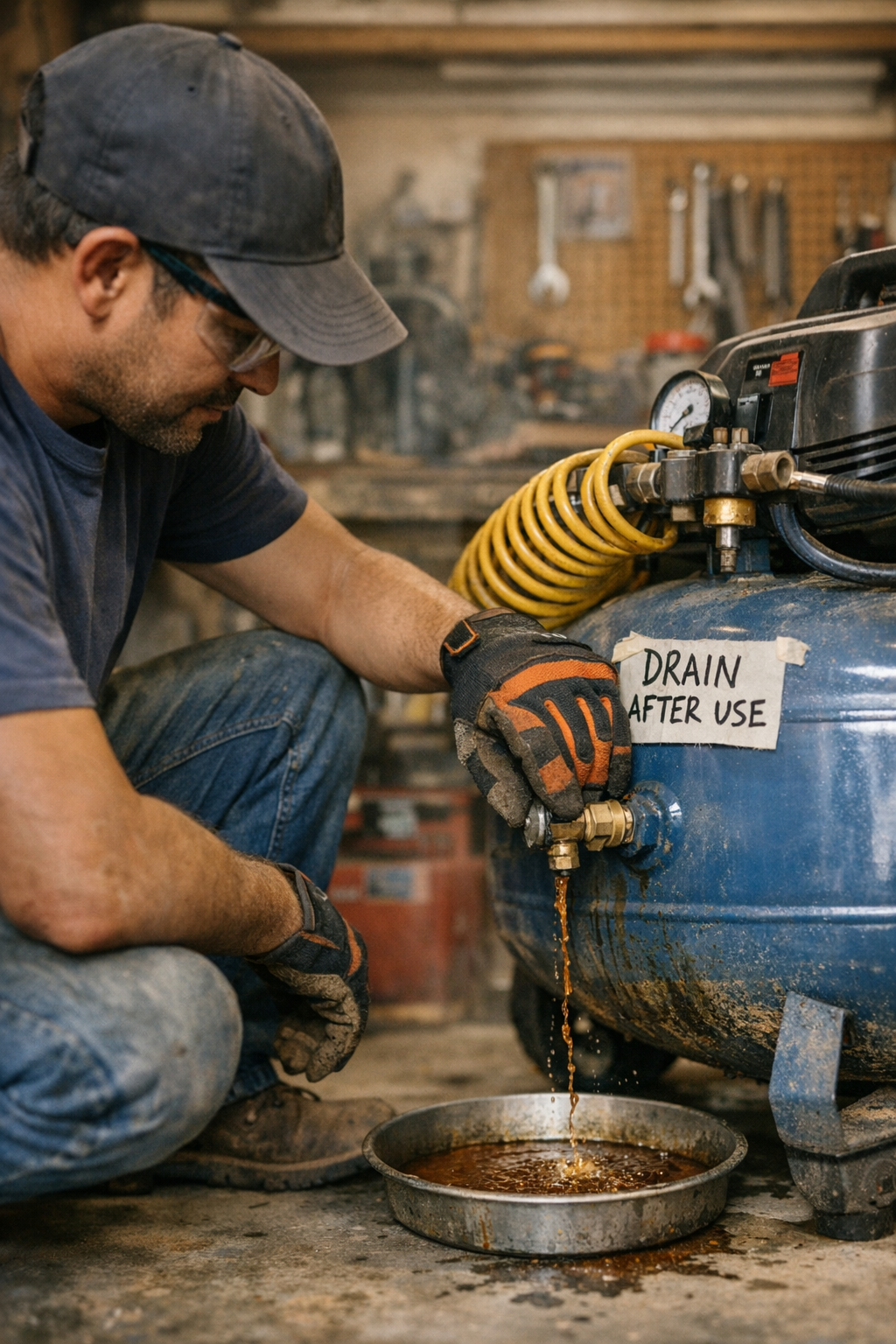
- Catch the moisture in a shallow pan or container—water may be clear or brownish from rust particles.
- Close the valve securely once you see no water coming out.
Emptying every drop of moisture is critical. Even small puddles left in the tank can reignite corrosion. The process typically takes less than one minute once you get into the habit.
Pro Tip: Refresh Your Routine
One practical habit change I recommend is placing a small reminder near your compressor’s power switch with a note like “Drain tank after use.” This nudge helps embed the task into your shutdown process, especially during busy periods when draining feels like an extra chore. Pairing this reminder with a reachable valve location makes skipping this crucial step unlikely.
Why Frequent Draining Makes a Measurable Difference
Regular daily draining can extend a compressor tank’s working life by 2-3 years in typical home or small business environments. Even if you use your compressor lightly or intermittently, draining weekly is beneficial. Moisture can accumulate rapidly during short bursts, especially in humid climates.
For professionals and heavy users, investing in an automatic drain valve or an inline moisture separator can add protection. But the most effective safeguard remains a consistent manual draining habit supported by accessible hardware.
Wrapping Up: Protect Your Compressor with Simple Maintenance
Moisture inside your air compressor tank is an invisible threat that quietly undermines the integrity of your equipment and the quality of your work. Making draining part of your daily or weekly routine takes seconds but protects your investment for years. An easy-to-reach drain valve combined with a simple reminder turns this maintenance task into an effortless habit.
Ultimately, the longevity and reliability of your compressor depend as much on routine care as on how it’s built. Whether you’re a casual hobbyist or a full-time professional, fostering good draining habits is what separates reliable machines from expensive surprises. As you finish your next project, ask yourself: did you drain the tank? If not, now is the perfect time to start.