
The clang of a nail skipping off stubborn hickory lingers long after the shop goes quiet. That sharp ring marks the line between a routine install and a job that suddenly demands more sweat, more patience, and more skill. You’re halfway through a stringer or casing, sunlight glinting off nail heads—some set perfect, others cockeyed, standing proud. With pine or fir, the work moves smooth: the tool hums, fasteners sink with a satisfying tap, and you barely think about the next step. But the minute you’re handed maple, oak, or hickory, the tempo changes. Nails bend, the drive grows tense, and you’re reminded—one slip in hardwood and the board calls the shots.
Hardwood Hits Back—And Never Softly
Every hardwood board carries its own resistance. That prized density—the reason a maple tread holds up for years—is the same quality that forces your fasteners to fight for every millimeter. Drive a nail or brad and you can feel the grain pushing back: knots redirect your aim, fibers refuse to part, and that finish nail you sent flying into pine now shudders and twists instead.
Skip the pilot hole to save a minute, and hardwood will punish the shortcut. Even an air nailer at full tilt can’t always muscle past the microscopic barricades. Whether you’re swinging a hammer or squeezing a trigger, you learn quick—hurrying the setup in hardwood just invites headaches and scavenger hunts for pliers to yank out bent shanks.
Pine Feels Like Cheating—Maple Demands Respect
Pine trim spoils you. It takes nails with an easy generosity, swallowing shanks with barely a hiccup. Maple or hickory, though, let you know with each drive where you slipped. The feedback comes fast: your wrist absorbs the resistance, the nail may decide to wander, and sometimes the board shrugs everything off—except the twisted evidence left behind.
The trouble isn’t your grip, your aim, or the brand of tool. It’s the material putting up a fight, mid-board, that turns any shortcut into extra work. Each mistake, from a split to a proud nail head, is a lesson issued by grain that you don’t see until the job slows—or breaks altogether.
Every Snap or Bend Tells You: Speed Isn’t Always Your Friend
Picture the push to finish oak treads before a lunch deadline. The compressor kicks in, fresh nails snap into the magazine, and the first runs look golden. Then—thunk—the tool jumps, the next nail drives sideways, and your pace drops as you fuss with prying out the mess. The board takes another scar, and the punchlist just got longer.
This is the job site tension: shave steps and you spend them again fixing bent fasteners, sanded splinters, or ragged holes. The margin for error is razor-thin. Real productivity isn’t speed, it’s a rhythm built from respect for stubborn wood. If you gamble on “just one more drive without a pilot,” you’re often trading minutes saved for the next hour lost.
Pilot Holes: A Five-Second Fix for a Forty-Minute Headache
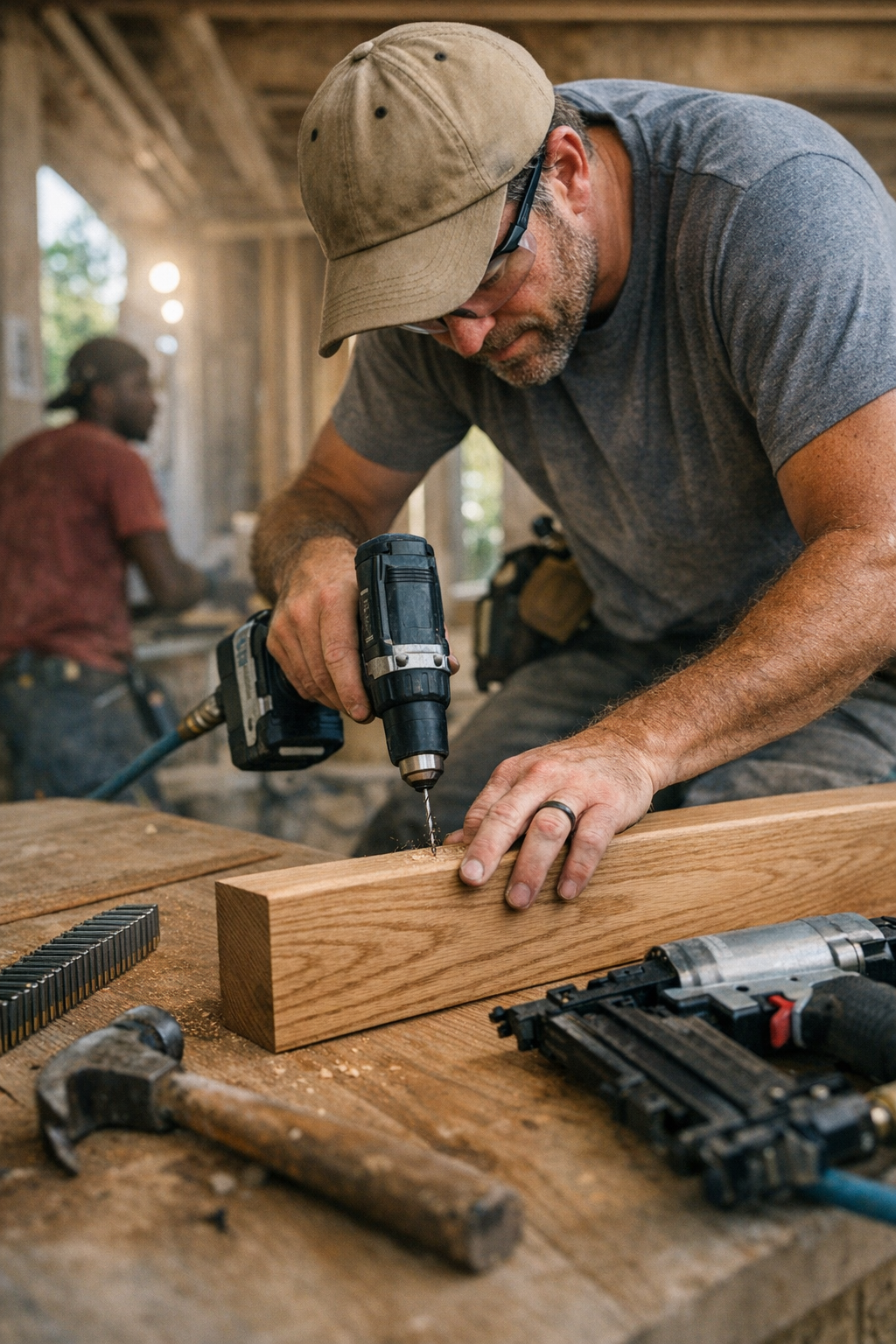
After you’ve burned time on bent screws or half-set nails, you start reaching for the drill. With anything harder than pine, pre-drilling is just cost of entry—especially on longer nails or finish pieces that need to look right the first time. Most find the sweet spot with a 1/16” bit—small enough to leave grip, big enough to guide the shank.
The payoff? Less splintering on delicate trim, fewer nails ruined and wasted, and arms that aren’t throbbing from counteracting that constant jolt. Armor-plated grain is less likely to twist your work. The workflow slows just a hair, but now you’re working, not wrestling. Higher PSI settings or fancier nailers might sell confidence, but nothing replaces clearing the way before you start driving hard into dense wood.
Why Force Fails—And What Finishing Pros Actually Do
Maxing out tool pressure can fool you into believing it will bulldoze through hardwood. But if the fastener isn’t up to the job, all the power does is turn a straight drive into a torqued nightmare—or worse, it splits the board you just spent all morning cutting. More speed gives you a faster mistake.
The real solution is knowing when to back off and adjust. Match each technique to what’s under your hands: a lighter squeeze at the tool, a bit of angle to follow the fiber, a moment to make sure the grain won’t catch you out. It’s patience and precision—instead of trying to overpower something that outlasts every shortcut.
Reluctant Boards Make Reliable Carpenters
Work with enough hardwood and you develop a bag of anti-bend rituals. Every finish nailer or pack of brads still asks for the same basics: pilot holes drilled, grain checked, and corners respected. The temptation to skip “just this once” is strong—but stubborn maple or heavy oak never lets you forget a misstep. Each finished job free of mangled shanks becomes proof that slowing down, just a little, pays off in the end.
The real difference shows up at clean-up: less rework, fewer coins spent on replacement trim, and the steady confidence—board after board—that you can rely on your results, not luck.
Bench Tips That Actually Save a Job
It’s no accident seasoned crews keep a fresh 1/16” bit close at hand. Nobody glamorizes pilot holes at the pub, but they’re what separate a day of cursing from a day that ends with a flush-set final board. If the hardwood starts heating up your bit faster than pine ever does, swap it out—dull bits invite burn, smoke, and split ends just as much as brute force does.
When fastening at the edge or near end grain, tilt that nail so it rides a little more parallel to the fibers. Even tiny shifts in angle can keep a split from running or a head from popping. These aren’t hacks—they’re just the practical choices borne of too many emergencies with pry bars and patch filler.
Hardwood Remembers Every Shortcut You Take
Finishing work in hardwood is a test of discipline, not just your tool budget. Every skipped pilot hole, every impatient drive, every angle overlooked—hard maple or solid oak keeps score in splinters, splits, and that unmistakable, metallic ring of a nail gone wrong. Over time, you develop a routine with built-in respect for the material: slower, steadier, but cleaner and with far fewer fixes once you’re done.