
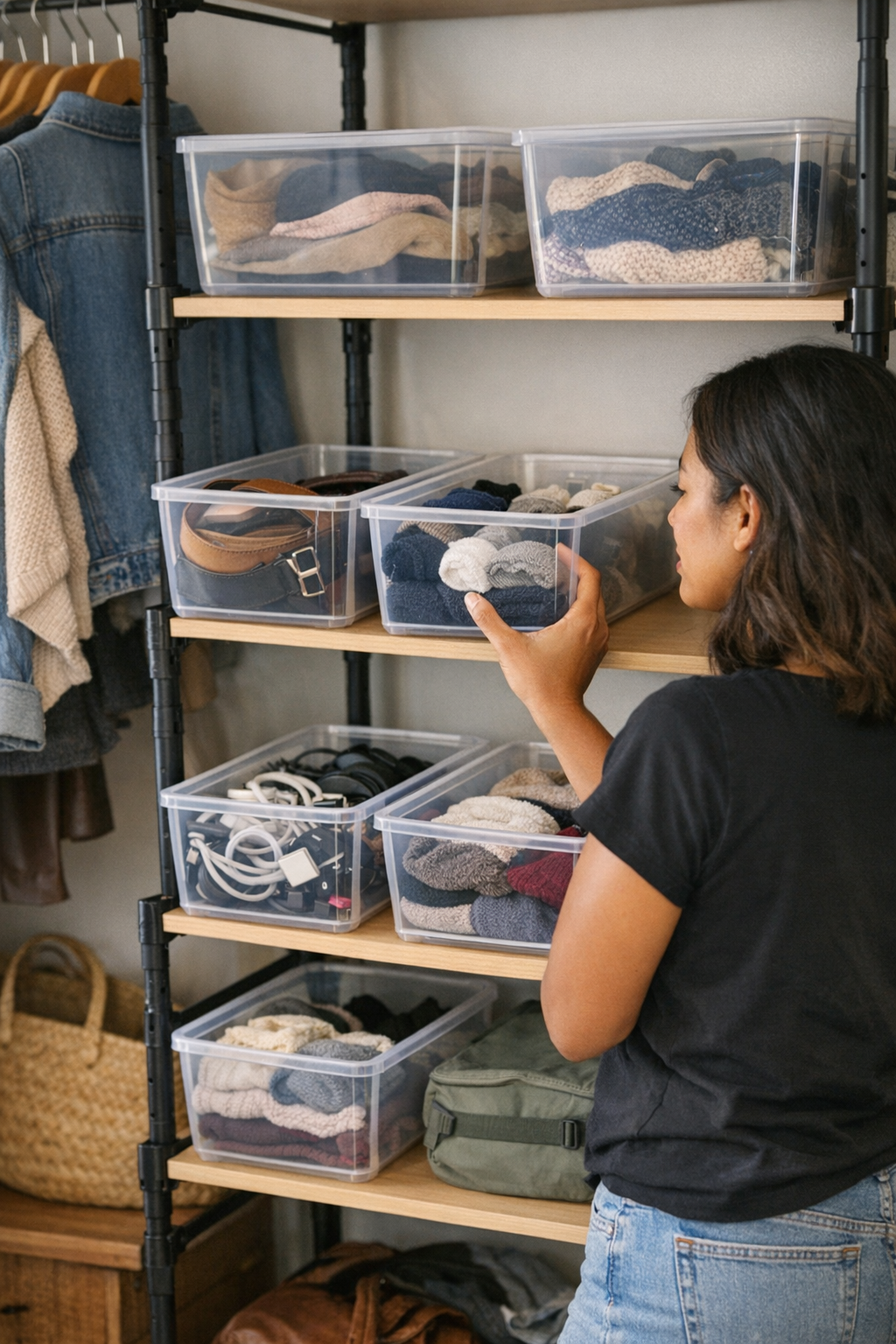
Clear bins promise instant order—a shelf with easy visibility, every sweater and tool in its place. In reality? The illusion cracks fast. One week in, lids are askew, socks spill onto the shelf, and daily items wind up perched on top of containers, not inside them. The supposed shortcut to a smoother routine ends up slowing you down: each grab for a belt or battery means awkward bending, shifting, and re-stacking. Suddenly, the bins feel less like help and more like friction—just more steps between you and what you need.
When Clear Turns Complicated: Where Bin Placement Fails
The selling point of clear bins is obvious: spot what’s inside, skip the rummage, keep chaos contained. But for most closets and utility shelves, the issue isn’t the bin—it’s the way we wedge bins into our routines. What looks sorted after an afternoon of organizing rarely survives a week of fast mornings and distracted evenings.
Think about grabbing socks before work. If that bin lives on the top shelf, stacked behind winter gloves, you’re forced into a daily dance: reach, drag a bin forward, lift a lid, catch a stray scarf—and mutter as another folded pile slumps sideways. The system asks too much. Those extra steps become the start of clutter: after the third morning you leave socks draped over the bin or dropped on an open surface “just for now.”
Everyday Clues Your System Isn’t Working
The warning signs arrive quickly. Bin edges sprout hangers and half-folded shirts. Chargers and keys pile up beside the containers you supposedly sorted them into. Entry tables that once looked minimal now collect mail, masks, and buttons, because reaching the “correct” bin takes too many moves. It’s not laziness—it’s a setup designed for the rare deep clean, not the daily grab-and-go.
The Morning Stress Test
Run through your own morning. You slide open the closet, aiming for a T-shirt, but the “daily” bin is half-buried. You hesitate, shuffle containers, maybe knock over a stack, and the rest accidentally lands on the floor. Or that laundry shelf: detergent ends up on top of bins marked for out-of-season hats just to save time. Quickly, order leaks—items migrate outside their bins, old piles mingle with new, shelf edges start to blur. That feeling of ‘almost organized’ is a sign the system isn’t matching your pace of use.
Visible Is Not the Same as Reachable
A bin that shows you its contents doesn’t guarantee effortless access. Set bins two deep or layer them in towers, and you’ve hardwired extra work into your routine. What should be a fast grab—a facecloth before a shower, a pair of gloves on a cold morning—becomes a shuffle: move a bin, pop a lid, then restore the stack, hoping the next person does the same. It’s all friction, disguised as transparency.
Stacked bins are the true hidden culprit. They block your quickest moves. Any system that turns a two-second reach into a mini balancing act is destined for breakdown. Before long, “quick” retrieval means bypassing the bins entirely and letting clutter live in the open again.
How “Organized” Storage Quietly Unravels
- You stop using bins that require two hands, extra shifting, or bending.
- Seasonal or backup items end up occupying the most convenient shelves, while daily basics drift to awkward corners.
- Piles build on entry benches, closet floors, or counters—because putting things back is more work than getting them out in the first place.
What you wanted was an effortless reset. What you get? More clutter migration—just neater, for a while.
The Usual Trouble Zones: Not Just the Closet
Bedroom closets aren’t the only casualties. Laundry rooms bog down when detergent or dryer sheets live under a heap of old linens. Entryways gather an explosion of hats and shoes when storage bins need to be shifted or re-labeled just to park a backpack. In bathrooms, the promise of a “clear, stackable system” fizzles every time dry towels get dumped onto the stacks instead of in them. Even organized garages lose the plot as bins of rarely-used holiday gear barricade tools you need every week.
Rethink the Map: Store by Routine, Not Just by Label
The real fix? Give priority placement to what you actually use daily. That bin for socks, daily skincare, or batteries? Move it to arm height or the front row—one motion, no stacking required. Push seasonal or rarely-used bins up high, down low, or all the way to the back, out of the traffic zone. The fewer the steps between you and what you need, the more the system holds up against real life.
One Adjustment, Tangible Payoff
You’ll notice the difference right away. Suddenly, things get put back where they belong because it’s just as easy as grabbing them out. The piles shrink. The reset time—those little clean-ups between commitments—drops way down. Instead of crumbling under daily use, your shelves start feeling steadier, cleaner, and more predictable.
Pro tip: For shared spaces, label bins with both the contents and a quick-use tag—“Daily,” “Weekly,” “Seasonal.” It takes seconds, but quietly cues everyone in the house to return bins to their rightful place and to keep most-used bins front and center.
Track the Sticking Points
The longest-lasting systems aren’t the ones that look perfect after an hour of sorting—they’re designed around the real patterns you repeat, under real family (or roommate) pressure. After a week, scan your shelves. Where do you hesitate or skip a step? Which bins become satellite piles instead of staying in play? Those friction points are the ones crying out for a placement rethink.
The best storage setups don’t demand constant willpower. They remove obstacles so it’s easier to keep order, even on autopilot.
Less Rearranging, More Breathing Room
Clear bins can work—if they actually serve the flow of your daily life. A shift of six inches, moving a frequently-grabbed bin to the edge, or outlawing any stacking in your “rush hour” zones can make all the difference. Instead of chasing a fantasy of picture-perfect shelves, anchor your system in how your routines really play out. When bins fit your true habits, you spend less time shuffling and more time moving through your space—without the undercurrent of “I’ll fix it later.”
Shop practical storage solutions designed for real daily routines at ClosetWorks.