
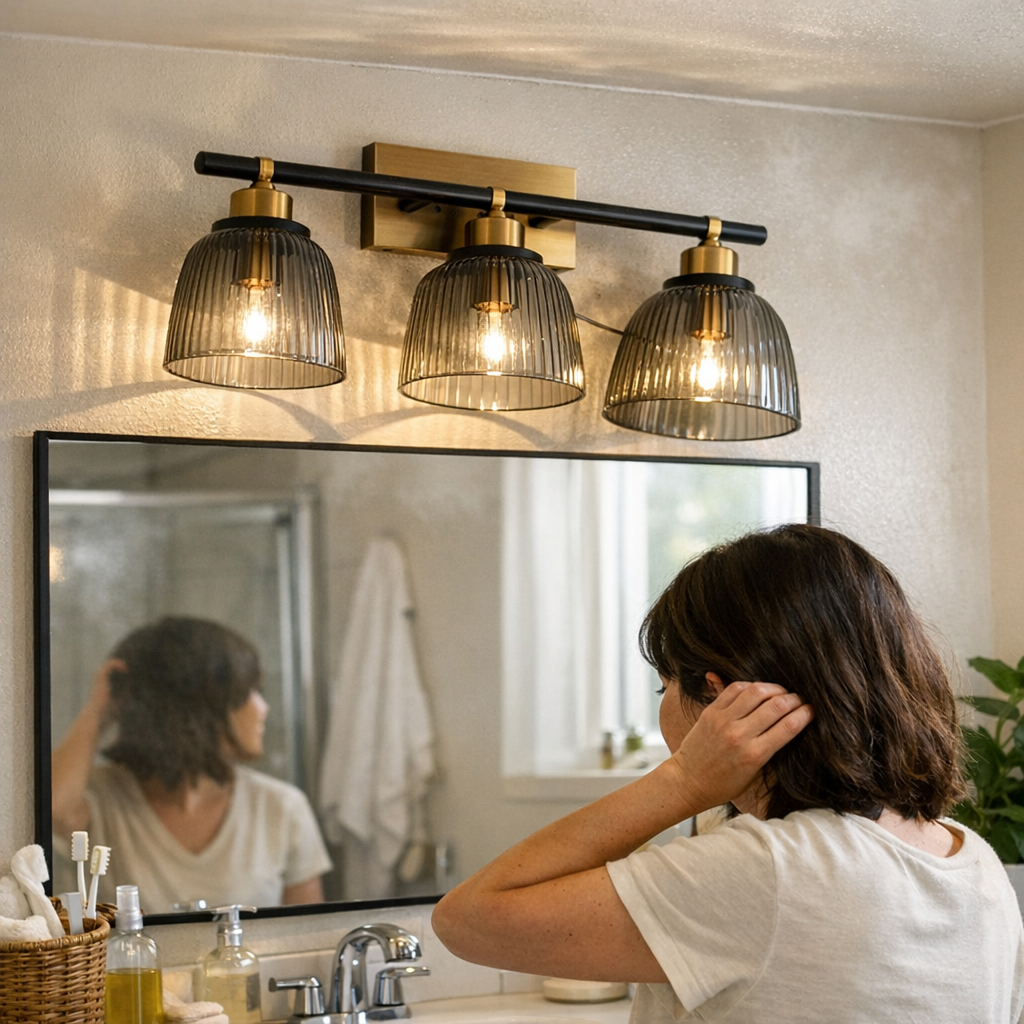
The right-looking ceiling light can become the wrong light as soon as daily life starts pushing back. You screw a flush mount into drywall, check the symmetry, and call the job done. But after a week of closing doors, steamy showers, or even carrying laundry past, the fixture begins to loosen or drift off-center. Suddenly, that “finished” lighting throws uneven shadows, casts glare at the mirror’s edge, and leaves parts of a room feeling half-lit. The disappointment isn’t dramatic—just the slow build of crooked lines, creeping glare, and the sense that bad lighting is quietly reshaping how you move or see, especially where visibility matters.
When a Lighting Shortcut Starts to Show
Problems announce themselves quietly: a hallway ceiling light rocks as you pass, or the brightest bulb in a vanity sconce edges away from your face, lighting the towel rack instead. You recognize it during routines: squinting at the bathroom mirror, nudging a fixture every time it slips, twisting at the kitchen counter to keep clear of a shadow that didn’t exist when the light was first installed.
Living with lighting exposes every shortcut. Hanging straight on drywall, a fixture stays put for a few days but rarely longer—especially in places with steam, cleaning, or moving air. In bathrooms, one shower and the screws start dropping grip. In hallways, vibration from door after door, even normal foot traffic, quietly nudges mounts loose. What you first notice as a small lean quickly becomes a daily nudge and then a routine annoyance, changing how you use the room without ever making a noise.
Room Brightness Isn’t Enough: The Trouble with Drywall Mounting
It’s easy to mistake a freshly installed light for a well-chosen one—the room looks bright and the symmetry is satisfying on day one. But the gap between “looks finished” and “works every day” widens every time the room actually gets used. When a fixture is attached only to drywall, gravity and activity win: the fixture bends, pivots, or sags, even a few degrees, just enough to change where shadows gather or how glare bites in.
Daily proof comes from movement, steam, and time. Steam works behind a barely anchored bathroom sconce, and before long, one side sinks lower, kicking out uneven shadows. In narrow corridors, a semi-flush wobbles with foot traffic, until the spread of light slips off center and a dull side appears along the wall. Even swapping a bulb puts extra strain on loose anchors, leaving a fixture permanently tilted or off-aim.
Stand at the mirror first thing in the morning: if the fixture isn’t solidly into a stud, light might shift just enough to throw your reflection off-balance or leave one side in gloom. Over time, you stop trusting the light and start working around it—leaning outside the glare, raising your chin, squinting sideways, and forgetting what “good lighting” should feel like.
Everyday Lighting Friction: How the Small Shifts Add Up
Every flush mount ceiling light installed on plain drywall becomes a suspect for small, cumulative trouble. Several hand washes or a slam of the door and the base inches sideways, pouring shadows under the mirror or casting a jagged line over the sink. A hallway fixture drifts, and you find one stair noticeably darker or a landing uncomfortably lopsided.
The irritation is physical and daily. Walk the dimmer edge of a corridor and unconsciously hug the lit side. Catch your silhouette fractured against the bathroom wall, shifting for a better angle. Grip a mirror sconce not for support, but just to keep it straight—and realize how routine maintenance, like changing a bulb, feels like a risk to its alignment. These are not rare failures, but steady reminders that the shortcut is winning.
The worst part isn’t even the flaw itself, but the repeat fix: tilting a fixture back, tightening the screws every month, or hoping one more drywall anchor will last. Every adjustment is a minute lost—and a compromise on the actual purpose of lighting: clarity, ease, and safety in your own space.
The Quiet Power of the Stud Finder
Stud marking isn’t overkill; it’s the difference between persistent frustration and invisible reliability. The real improvement often comes not from a new light, but from using a stud finder first. Tapping into a real wood backing—with a bathroom sconce, flush mount ceiling light, or linear wall unit—means the fixture doesn’t care about steamy air, shuddering doors, or aggressive cleaning. Even if it lands an inch off the wall center, the tradeoff is years of ignored maintenance and a room that works as intended each time you turn on the switch.
If you’ve ever pressed your head closer for better vanity lighting, dodged a bright spot in a hallway, or steadied a loose sconce, you already know: anchoring to real structure makes the light vanish as a source of trouble. Suddenly, you stop noticing your fixture and just see, move, clean, and work—without the small, steady interruptions of light shifting, shadow creeping, or the constant fear of something coming loose.
Where to Prioritize Structural Anchoring
Not every fixture demands a stud, but certain spaces absolutely do. Focus stud anchoring on:
- Bathrooms and utility areas: High moisture plus frequent contact creates constant stress on lighting mounts. Ceiling and wall lights here need the reinforcement.
- Hallways and stairs: Repeated foot traffic, doors, and even the tremor of a carried load mean any fixture should stay level—never wobbling as movement flows past or up a landing.
- Mirror and vanity zones: Light shape and stability matter every day; a loose sconce or mis-aimed panel defeats the point of clarity.
- Work surfaces and under-cabinet runs: Task lights that shift or tilt bleed shadows onto what should be the brightest, most usable spot in the room.
Lightweight wall fixtures or decorative sconces that never get touched may live with drywall anchors. But high-moisture, high-movement, or high-precision zones will keep exposing drywall shortcuts. Stud-mounting fixes the root—not just the wobble.
One Fix Changes Everyday Use
Lighting fixed to real structure disappears from your mental to-do list. The results aren’t flashy—just everyday clarity. Corridor lights stay put, even with a rush of footsteps. Bathroom vanities keep your face lit evenly, day in, day out, with no new shadows crawling over the sink edge. Over weeks and months, you stop noticing your fixtures entirely—right until you cross into a room with the old shortcut and the same old frustrations return.
When lights are anchored past the drywall, visibility stays even, glare doesn’t sneak in, and routine cleaning no longer threatens to tilt your setup out of alignment. Your home becomes easier to move through, with every task completed without interruption from wandering shadows or loose fixtures.
Find practical indoor lighting, built for repeated routines and real fixes, at LightHelper.