
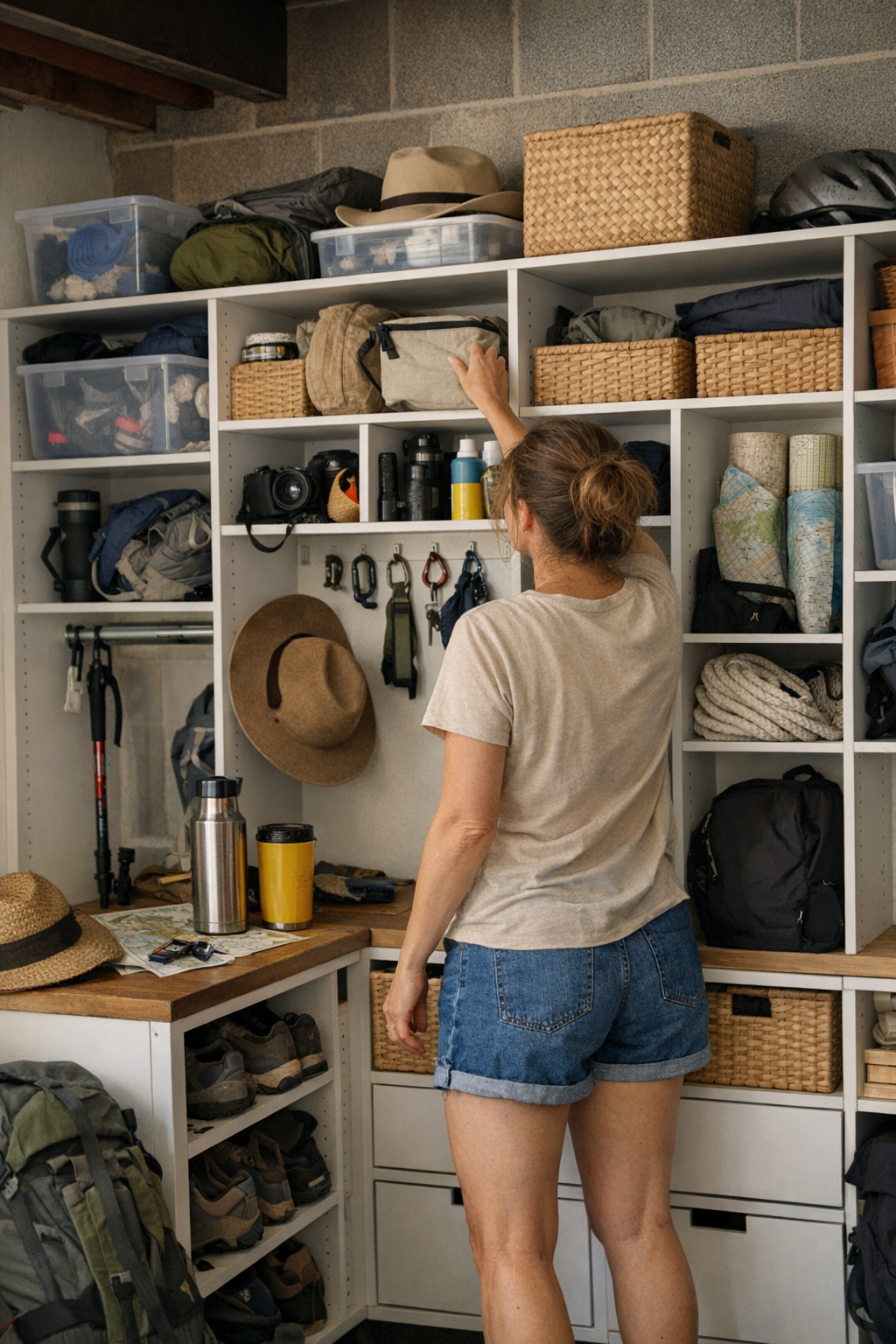
Finding Flow in Everyday Garage Organization
Mornings in a garage can hold a quiet, almost meditative rhythm. The light shifts subtly as dawn breaks—soft blues transforming into pale yellows—and the air, still cool from the night, settles in the corners and low places. Even minor sounds, like the gentle click of a screen door closing, take on a kind of calm importance in this hushed space. Leaning against an old return bin, it’s easy to map out the day’s tasks: finishing a planting project, re-coiling the half-loose hose, and rearranging tools and vehicles. The damp concrete slows your steps, and small noises—a rack shifting, a faint scrape—remind you that the garage is waking up along with you.
Establishing a Midday Rhythm
As the day progresses, routine takes hold amid the clutter and constant small adjustments. The garden hose, often left sagging after use, gets moved back onto its rail, not perfectly but sufficiently. The drop tray still bears streaks of water where the dog’s curiosity led to a spill the night before, drying slowly in the sunlight filtering from overhead windows.
Tools frequently make their way out of place yet find temporary homes through quick improvisations: a trowel tucked into a rolling cart, pruners resting on a windowsill, gloves slumped over modular shelves. The garage doesn’t demand perfection—instead, it adapts. It’s about creating a flexible system where the familiar shapes of equipment and supplies offer enough coherence to find what you need without fuss.
Maintaining Order Without Rigidity
One effective practice is keeping small, frequently used tools in a rolling cart’s shallow bin. This simple habit prevents losing items under heavier gear or random debris. It’s less about obsessive tidiness and more about minimizing frustration during busy projects. A quick sweep or glance often re-establishes a sense of order, even when the inevitable clutter creeps in.
Lunch breaks tend to happen wherever there’s standing room. Sometimes this means leaning against the wall rail, near a watering can perched in its tray, or nudging a soil bag aside to clear the path. Ambient sounds—the occasional rattle of a broom, the quiet hum of a refrigerator—blend seamlessly with light streaming through the windows, highlighting dust particles and reminding you that this is a lived-in, working space rather than a showroom.
Embracing Practical Imperfection
The garage environment rarely holds still. Gloves stiffen and smear with soil, hooks on the pegboard loosen from repeated use, and seed packets pile up with handwritten notes marking past seasons. Rather than fighting this natural disorder, there’s value in recognizing a certain rhythm—a flow to the ebb and swell of clutter that accompanies busy days outdoors.
For example, the garden hose might slip off its hook multiple times before a mindful moment returns it to its place for the evening. Tools may clang into bins with a satisfying but irregular cadence, echoing against concrete walls. Pegboard hooks occasionally give way unexpectedly, dropping a trowel or spade in slow motion. These little failures, instead of being nuisances, often add character and bring a bit of levity to routine tasks.
Tip: Practice Flexible Organization
Rather than aiming for immaculate perfection, design your garage storage around flexibility. Anticipate that some things won’t always be put back exactly right, and choose systems (like rolling carts or oversized bins) that accommodate this reality. This approach reduces stress and makes keeping a functional workspace more manageable.
Winding Down: Evening Organization Habits
As the day cools toward evening, so does the pace of activity within the garage. Shadows lengthen across the workbench and floor as tools gradually migrate closer to their homes. Trimmers find their spots on the wall rack with a practiced ease, and soil is brushed away from return bins with a quiet routine satisfaction.
Evening tidying often hinges on habitual motions more than urgent efforts. Hooks are straightened out, bins loosely sorted, and select items like gloves or smaller tools are left hanging in places where they can be accessed easily the next day. The result is a workspace that feels settled, known, and ready for rest.
Living with Organized Chaos
Complete tidiness is neither realistic nor necessary. The garage carries the marks of active use: a lone bolt left near the door, pegs that sway with the breeze, occasional dust on the shelves. These elements don’t suggest neglect but reflect a space that’s alive and serving purpose.
This coexistence of order and chaos offers a small comfort: tools are mostly where expected, floors are mostly clear, and the quiet assurance that nothing crucial will be urgently missed. Even the silence of night in the garage feels organized—each item resting in a familiar spot under dim light.
Refresh Tip: Reframe Your View of Disorder
If you find yourself frustrated with the ongoing clutter or imperfection, try shifting your perspective. Instead of viewing disarray as failure, see it as evidence of a well-used, functioning environment. This mental reset can improve your daily experience and encourage more productive interactions with your space—allowing you to prioritize what gets done without guilt about what’s temporarily out of place.
The Invisible Effect of Good Storage
Well-planned storage solutions become part of the background over time. Shelves, bins, rails, and carts blend into the environment, quietly supporting your work without demanding attention. Only when they’re missing or disrupted does their value truly shine through.
This seamless integration happens through repetition and subtle adaptation. Modular shelving, rolling carts, and carefully placed hooks create a living system that supports your ongoing projects with ease. It’s an unassuming, almost invisible foundation for the daily work of gardening, DIY, or vehicle maintenance.
Practical Advice: Start Small and Build Up
If you’re considering improving your garage organization, begin with one manageable area—a single shelf, a cart, or a pegboard section. Use it frequently and adjust as needed. Over weeks and months, these incremental improvements accumulate into a system that feels natural and effortless, reducing the friction that can hold back projects.
Conclusion
Garage organization isn’t about perfection, but about finding balance and rhythm amid a working environment. The gentle hum of daily use, the partial order, and the occasional, inevitable clutter all form part of a living space built for utility and comfort.
By embracing flexible storage, letting go of impossible standards, and seeing the beauty in everyday imperfection, you can transform your garage into a place that supports your activities with quiet grace. In doing so, what once felt like chaos becomes a kind of practiced improvisation—one where everything has its place, even when it’s not always perfectly put away.