
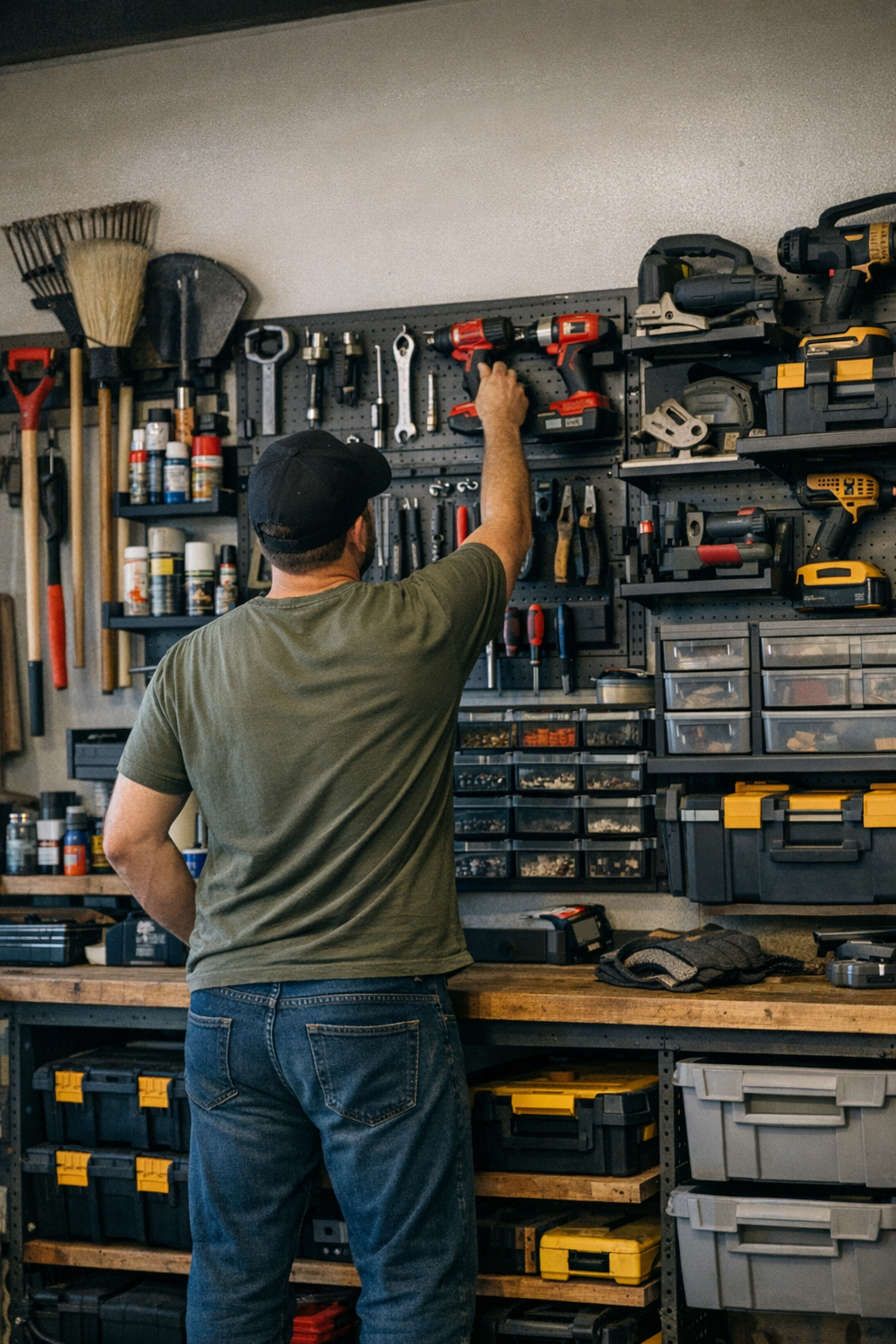
Opening the garage door on a warm spring day, you might catch a glint from a wrench hanging neatly on the wall—a momentary stop where the tool invites a reach, yet somehow the movement feels uncertain. This subtle hesitation reveals a key truth about tool storage: the difference between visible tools and truly usable tools isn’t just what’s seen, but how naturally and effortlessly your hand finds and handles them.
The Invisible Challenge of Tool Accessibility
Garage walls often showcase an impressive array of tools arranged neatly on racks, pegboards, or hanging rails. But appearance alone doesn’t guarantee function. A tool rack might hold everything in plain sight, yet when the moment comes to grab a screwdriver or socket quickly — whether to fix a bike, assemble furniture, or jumpstart a car — the setup can reveal its shortcomings.
The true test is in the “grab-and-go” speed and reliability. Tools must feel like extensions of your hand, without hesitation or fumbling. Physical ease joins mental clarity. Only then can storage be called usable.
Understanding the Wall’s Logic: Beyond Filling Space
One of the most overlooked aspects of garage organization is adapting to the wall’s natural “logic” — the flow of movement, natural sight lines, and reachable heights. Lining up brackets side-by-side or crowding every inch of pegboard may maximize visible inventory but often reduces daily efficiency.
Consider this: a rolling cart stationed beneath the hanging tools that is supposed to assist with mobility, but actually limits access when tools are stored too low or scattered randomly. Or a magnetic strip designed to hold screws and bits that instead becomes a black hole for small parts. Such layouts quickly discourage consistent tool returns, contributing to clutter over time.
Tip: Visualize Your Workflows
Before redesigning your storage, trace your most frequent task flows. Think about where you stand, reach, and set tools down while gardening, repairing, or crafting. Position key tools on the wall within easy arm’s length from those natural spots. Leave less-used items in less accessible areas. This approach honors both space and workflow.
Modular Hanging Rails: Flexibility Meets Responsibility
Hanging rail systems offer promising modularity. Components can be rearranged and customized to a user’s needs—an essential feature in spaces shared by multiple family members or hobbies. But modularity also demands ongoing adjustment and honest maintenance.
Even a sturdy-looking rail can betray you if it isn’t securely anchored or if brackets aren’t properly tightened. A sudden slip when grabbing a tool can lead to clattering chaos — scattering items across the garage floor and raising safety concerns. In real-world use, every mounting point requires periodic inspection and retightening. No shortcut can guarantee permanence.
Tip: Schedule Seasonal Resets
Set aside time each season to check your hooks, brackets, and rail anchors. Use this opportunity to clean dust off tools, rethink what you use regularly, and adjust heights for new family members or projects. Treat your tool wall as a living system rather than a one-time project.
Beyond Appearance: The Quiet Value of Space and Ease
One subtle yet powerful indicator of effective garage storage is the freedom to move equipment without obstruction. After reorganizing, you might notice, for example, that a spare tire cart can now glide smoothly across the floor without snagging on hoses or pry bars left carelessly on the floor.
Clearing floor space improves safety and makes setup and cleanup faster and less tedious. When tools return effortlessly to their places, your workflow speeds up, frustration decreases, and you’re more likely to maintain order.
Refresh Tip: Engage the Senses
Next time you tidy or reorganize your garage, pause occasionally to listen and feel. The sharp clink of a metal socket dropped onto concrete, the quiet snap of a magnet catching a screwdriver, or the slide of a tool rolling across a cart all tell you stories about your setup’s strengths and weaknesses. These small sensory observations can guide smarter tweaks that pictures or measurements alone might miss.
Making Every Tool Count
Ultimately, organizing a garage is a blend of art and science. It requires a thoughtful assessment of how space is used, how tools move through workflows, and how individual habits shape returns and retrievals. Some tools might hang in plain sight for months but become truly useful only when the setup fits daily demands. Others may need repositioning for aging hands or new projects.
Keep the balance between visible and usable by investing in the quality of your anchors and modules, planning placement carefully, and periodically revisiting your choices. Usable storage never stays perfect forever but thrives as a process that adapts with you.
When the tools become easy to grab and even easier to return, your garage transforms from a storage space into a smoothly functioning workshop, ready and waiting for your next project.