
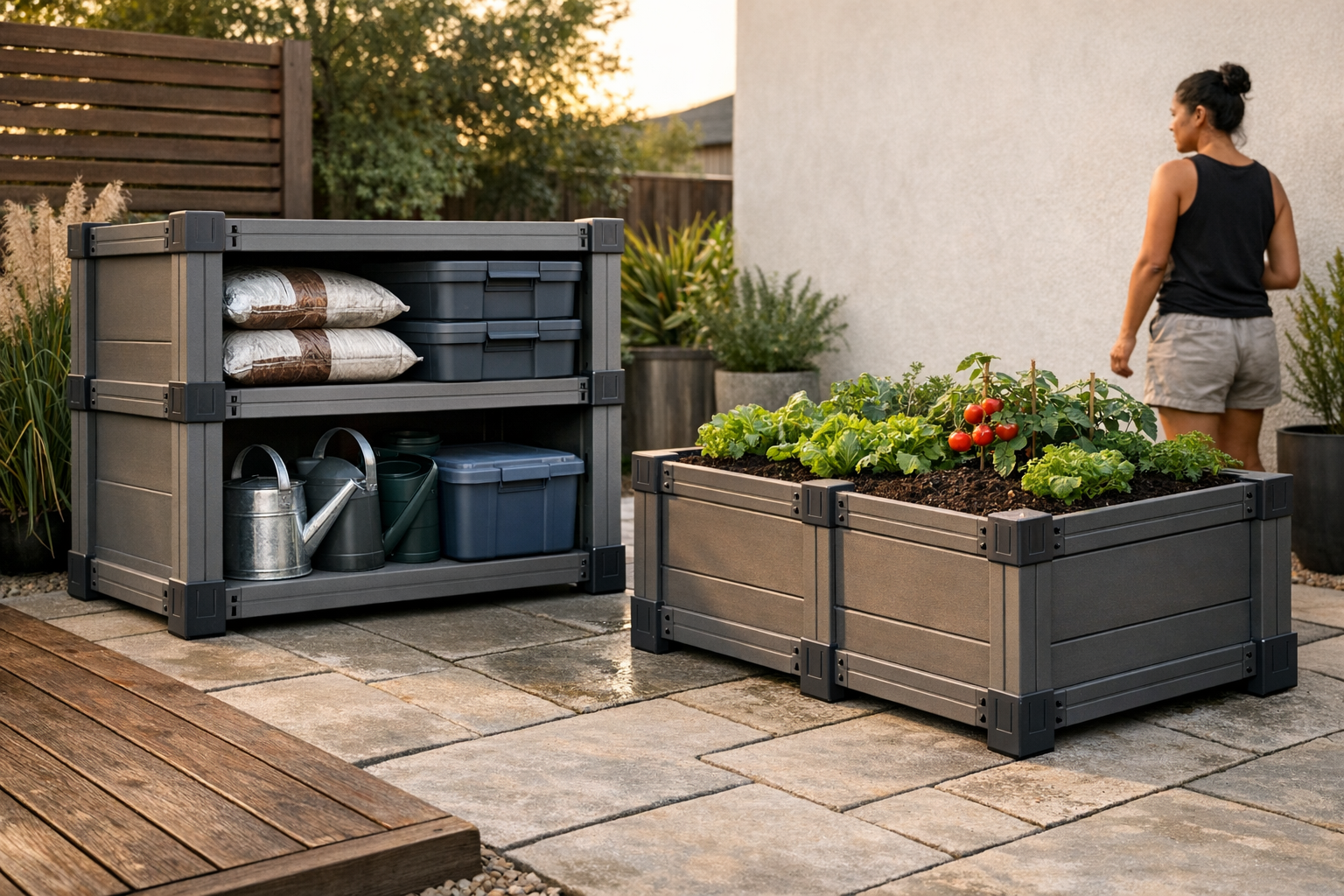
After a heavy rain, the sharp, damp smell of bark and wet earth fills the air, drawing your attention to every corner of the yard. What once looked tidy under sunny skies now reveals hidden flaws: soggy soil bags leaning against the shed, hoses trapped in puddles, tools misplaced or damp, and modular storage units losing their alignment. The wetness exposes the small failures you didn’t notice before—footprints softened in mud, water pooling where none should, and equipment slowly migrating from their assigned spots.
Why Rain Reveals the True State of Yard Storage
Organizing a yard or garden shed can feel straightforward when everything’s dry and clean, but once rain hits, that setup faces a tough test. Water doesn’t just fall—it moves, seeps, and reshapes the landscape. After rain, hoses can end up kinked in the low points, storage bins soaked from runoff, and tools shifted by wind or animals seeking shelter. What looked secure under dry conditions might bow, lean, or even spill when wet.
This reveals one unavoidable truth: no outdoor storage solution is immune to nature’s forces. Even modular cubed storage systems or sheds with multiple compartments can loosen or slide when their foundations soften. Damp gloves left on shelves invite mildew, and soil bags soaked through their paper packaging tend to crumble and scatter messily.
Assessing and Tackling Common Post-Rain Storage Challenges
When you step outside after a storm, a quick walk-through helps identify priority areas:
- Pooled Water Beneath Storage Units: Check for depressions or uneven ground where water collects. Even plastic bins resting on soft grass can sink slightly and hold moisture against their base.
- Loose or Soggy Bags: Soil, mulch, or compost bags made of paper or thin plastic often weaken post-rain, spilling contents and inviting pests.
- Misaligned Modular Units: Components of stackable storage racks can shift or tilt, especially if the supporting ground erodes or pools water.
- Wet Tools and Equipment: Brooms, rakes, gloves, and hand tools left out are prone to getting damp or muddy, making them harder to clean and store properly afterward.
To remedy these issues, start with simple but effective steps:
Elevate Storage Off the Ground
Even a few inches of clearance helps prevent water from soaking the bottoms of bins or bags. If your storage sits directly on soil or grass, consider adding pallets, bricks, or gravel pads to lift items up. This also promotes air circulation, allowing dampness to evaporate faster.
Secure Modular Units Regularly
Modular storage cubes need routine tightening of connectors and repositioning after bad weather. Making this a quick habit after every storm helps maintain their structural integrity and prevents piles of tools and supplies from tumbling down.
Use Waterproof Containers for Vulnerable Supplies
Switch paper bags for heavy-duty plastic or resealable bins to protect soil amendments and mulch from moisture. Choosing containers that snap closed or have tight lids minimizes spillage and keeps contents dry.
Refreshing Your Yard Storage Perspective
It’s easy to get frustrated when high winds or heavy rains undo your organizing efforts. Here’s a subtle but powerful shift: consider post-rain clean-up not as endless maintenance but as an opportunity for refinement. Each readjustment teaches you more about your yard’s microclimates and how materials respond to weather.
By observing which units slide or sag repeatedly, you can plan smarter arrangements—maybe shifting heavier bins to higher, drier spots or creating better drainage at trouble-prone corners. This continuous learning process converts recurring storage messes into a gradual evolution toward a more resilient setup.
Actionable Tips to Improve Yard Storage Longevity
- Install Drainage Solutions: Plant beds or raised edging can redirect runoff away from storage areas. Even simple gravel trenches prevent pools from forming near sheds or storage racks.
- Designate Tool Zones with Hooks and Hangers: Wall-mounted hooks inside the shed or on fences keep handles off wet ground and facilitate faster drying.
- Cover Outdoor Storage Areas: If possible, use tarps, awnings, or small canopies to shield gear from direct rain, reducing how often water compromises your setup.
- Regularly Rotate Supplies: Move bags and materials so the oldest get used first, preventing long-term damp storage and loss of effectiveness.
- Weekly Check-ins Post-Rain: Develop a brief routine to scan for shifted items, tighten modular connections, and air out damp gloves and cloths.
Embracing the Flux: Imperfection as Part of Yard Storage
Ultimately, a yard exposed to the elements is a dynamic environment. Every downpour rearranges the stage, and robust storage evolves from hands-on care, trial and error, and patience rather than perfect setup on day one.
Some bins will always lean, some gloves will go missing temporarily, and new piles of what was stored will demand attention. Recognizing this rhythm—where impermanence and adaptability win over rigid order—helps ease frustration and invites a more mindful approach to outdoor maintenance.
With each cycle of rain revealing what holds fast and what shifts, your yard storage system becomes a reflection of real experience—a practical combo of durable hardware, smart placement, and a habit of gentle course-correction that keeps your outdoor domain functional and welcoming come rain or shine.