
Travel doesn’t meet you with fresh possibilities. It greets you at 5:17 a.m. with cold tile underfoot and a series of small aggravations you never wrote into your itinerary. The airport pre-dawn feels like rummaging in a junk drawer—blindly pawing for one last charger, half-worried you’ll leave a lamp burning. Shoulder the bag, fumble through pocket checks, debate whether one more zipper repack might make all the difference. The friction piles up—before you’ve even made it to the curb.
Where It Starts to Unravel: Packing Fights Back
Getting out the door isn’t about feeling ready—it’s about hoping your carry-on setup won’t betray you by breakfast. Every move in this early choreography—shedding the coat for security, sliding your belt into a gray tray—feels riskier, somehow, than it should. The important things are never the biggest; they’re whatever decides to hide just when the line moves.
- Unzipping your main pocket and discovering your passport wedged under rolled jeans
- Fishing for headphones in a black hole of tangled cords, with an impatient traveler breathing over your shoulder
- Swearing under your breath as your clear liquids bag resurfaces, mysteriously, beneath snacks and last-minute toiletries
The same quiet dread repeats itself at every bottleneck: will I be the one stalling the line, or wrestling zippers while my flight information updates again—this time, for boarding?
Security Checkpoint: Where Speed is Stolen
You shuffle forward, knuckles whitening as you mentally review the inside of your bag. Every step brings potential sabotage: a toothpaste tube in the wrong pouch, earbuds tangled around your lint brush, a boarding pass swimming loose in a side compartment. It isn’t inspection that slows you down—it’s the sudden realization that what you need isn’t where you need it.
Everyone recognizes the traveler who glides through security: a flick opens the right pouch, a passport appears, nothing spills, nothing is misplaced. It isn’t luck; it’s that every item has its place—intentionally, not optimistically. They unpack and repack with almost absent-minded rhythm.
Use-Case Move: “Front-Row” Packing
Assign high-touch items—ID, charger, medication—their own reachable spot. Put them in organizers or zipped pouches that are accessible with your bag upright. You don’t need designer solutions; even a clear zip bag, carefully placed, can shift your whole tempo from frantic scramble to easy routine.
Overhead Bin Roulette: The Packing Stress Test
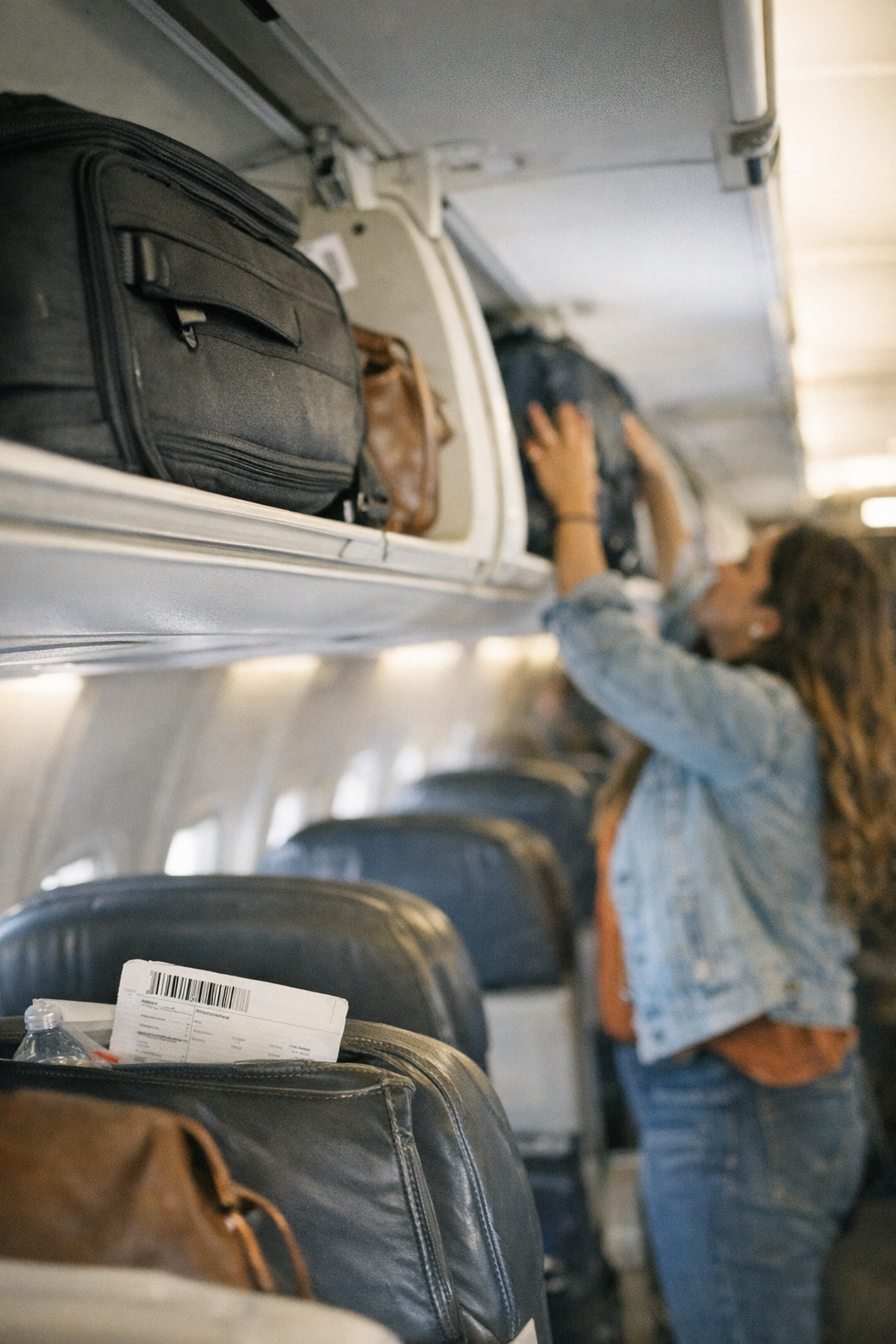
Boarding isn’t a calm handoff; it’s a mini-competition. You shoulder past other travelers, eyes scanning for an empty bin as your row creeps closer. In that moment, your bag either rewards or punishes your earlier decisions:
- Can you grab your snack or headphones before stowing your suitcase, or are you blocking the aisle in a frantic excavation?
- Did you lay your book and pillow atop, or are you elbow-deep in a chaos of sweaters and receipts?
- Will you have to beg for bin space, awkwardly cradling jacket, charger, and sandwich just to stay organized?
The overhead bin isn’t storage—it’s a sorting gauntlet. Travel isn’t just lighter with better packing. It’s sharper, smarter, defined by how fast you can get what you actually need without kneeling on the floor while the row behind you groans.
Practical Tactic: Build a “Pre-Flight Grab Bag”
Before you board, gather your in-flight must-haves—gum, book, sanitizer, tissues—into a pouch or insert you can pull out instantly. When you slide this out before overhead stow, you dodge the panic of rooting through your suitcase at 32,000 feet. One simple step can mean less apologizing, less aisle blockage, and less travel-day regret.
In the Cabin: The Fight for Personal Order
Settling into your airline seat, you enter a space engineered for minimal comfort—and maximum inconvenience. The tray table barely fits a coffee, your knees graze the seat in front, and the overhead drama lingers. Every small forgotten item now becomes a big deal.
Still, the relief is unmistakable when it works: finding a granola bar where you expect it, flipping to the right page of your book, spritzing sanitizer without a hunt. Each win untangles the stress you brought on board. When your packing breaks down, every reach—shoulder bag, backpack, under-seat pouch—reminds you of what you’d planned to do differently next time.
Landing: Your Packing Discipline Gets Graded
Arrival exposes your choices. Can you pluck your bag from a wall of black luggage and keep moving? Did you stash your house keys and transit pass where your hands remember, or will you stall in the crowd, one arm inside your backpack while the line behind you sighs?
Most often, the scramble to exit is a highlight reel of every overlooked inefficiency: too much packed, too little sorted, once-accessible items now buried. The best intentions crumble under pressure; a careless pocket choice at 5:17 a.m. now becomes a full-blown bottleneck at the taxi stand.
The Return Trip: Refined by Repetition
Coming home always feels less heavy—not just from the snacks you finished, but from hard-won improvements. You start to group charger, earplugs, sunglasses. Everything gets a spot, not “somewhere safe,” but where you can point to it with your eyes closed. Less second-guessing, less stress. You’re not pretending this is a flawless routine. You’re just not fighting your bag every step.
The city comes back into focus through cab windows. You unpack tired, but something lands a little lighter: travel gear that kept up with you. Suddenly, it’s not just about what you brought. It’s about how you moved—less fighting your own setup, more gaining ground with every repack.
One Core Shift: Pack for Movement, Not for Inventory
A well-organized bag doesn’t erase travel’s annoyances. It’s the difference between feeling constantly interrupted and almost—almost—keeping pace with your day. Access and order aren’t luxuries; they’re how the travel hour becomes bearable, even satisfying.
You don’t need a miracle system. You just need a bag that lets you surface what matters—charger, keys, wipes, ID—when you actually need it, not three minutes after. Not everything will go smoothly. But with each trip, the chaos shrinks, the control grows, and you spend less time apologizing to the clock—and to strangers in line.
Find travel tools tested in real-world movement at Carry On Supply.