
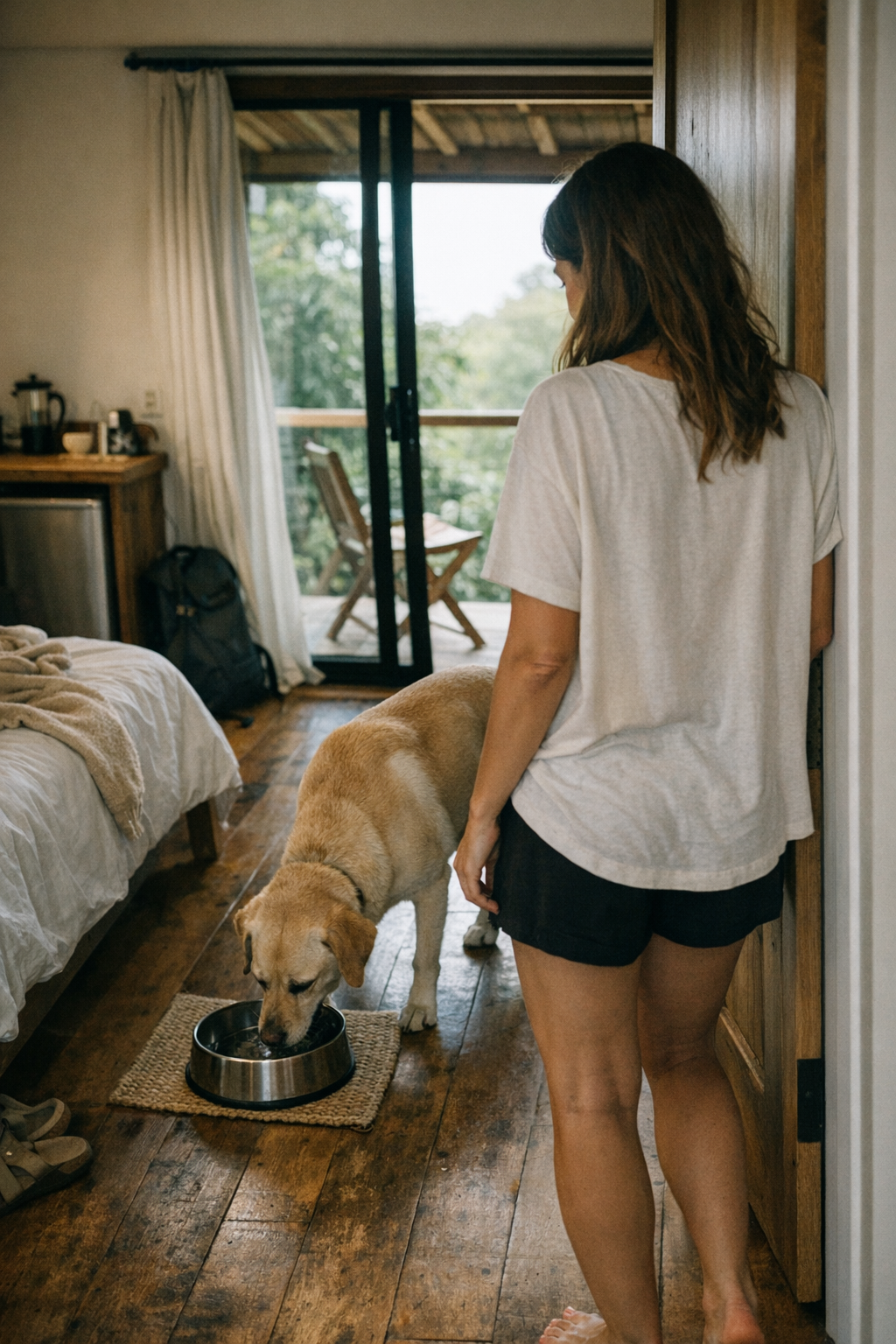
A dog that paces at night isn’t just a minor annoyance—it can quietly erode the flow of your home, especially when space is tight and every step counts. That repeated hallway shuffle, the sound of claws across the floor at midnight, your dog pausing by the door or lingering near an empty water bowl—it’s not just “dog behavior.” It’s friction that creeps into your routine, breaking restful sleep with small, persistent interruptions. In a small home, where even a soft scrape is unavoidable, these nightly disruptions don’t just fade in the morning. They stack—making everything from leash-grabbing to breakfast slower, and dragging that tired reset into the rest of your day. Fixing one weak point in your setup can flip the difference between a calm routine and a night that keeps resetting you both out of sync. This is the kind of overlooked, real-world dog-life detail DogPile is tuned to catch.
When Nighttime Restlessness Becomes Part of the Routine
The first time your dog starts the “midnight patrol,” you hope it’s a fluke. Maybe it’s leftover energy or skipped play. But when every night follows the same circuit—dog at the door, then circling back to your bed, or standing over a bowl—you recognize it’s not going away. Reaching for rest becomes a half-awake negotiation. You don’t get deep sleep; your dog doesn’t fully settle. The lag shows up as staggered mornings. By the time you look for the leash, energy is already thin, and your dog hovers in your path: restless, waiting. It’s not a crisis, but you end up repeating the same triage—refilling a bowl, nudging your foggy dog out the door, fumbling for cleanup wipes—before you can even start your day.
How Small Space Living Makes Friction Obvious
There’s no buffer zone in a compact home. A dog’s movement, from your bedside to the crate, or across to a bowl in the wrong corner, is instantly your problem. Even a water bowl three steps away is a nightly hike in a small room. A semi-closed door doesn’t just affect dog movement—it ends up with you getting out of bed to finish the job. Here, a setup that looks acceptable at first pass can become a grinding complication when you actually live with it. Tiny misplacements—bowl too far, door just ajar, bed out of alignment—get tested and fail in real-world repetitions.
Finding the Repeated Weak Point in the Night Setup
Night pacing isn’t random—it targets the weak link in your structure. Some dogs wander from habit or boredom, but more often, they’re checking or waiting at a friction point you’ve overlooked.
Bowl Placement and Reach
If your dog constantly gets up to seek water, the issue likely isn’t thirst alone—it’s the bowl’s position or refill timing. A bowl out of reach from your dog’s bed means repeated crossings: up, across the floor, drink, pause, then standing with nowhere to settle. You miss the pattern, but your rest gets chipped away each time the bowl is empty or just too far. A delay here triggers every other reset in the night.
Doors Left “Almost” Closed
An unlocked or half-shut bedroom door feeds confusion and hesitation. Your dog nose-pushes, tests for permission, then waits in the hall or paces, never committing to settling. The noise might not wake you fully, but your routine breaks just enough to rob both of you of real rest. Even a tidy lineup of beds, crates, or toys can’t fix a night derailed by a single uncertain doorway.
Recognizing Hidden Disruptions Before They Become Habit
Most owners miss the source of the trouble at first. The repeated water-bowl trek or the stuck-at-the-door delay seems like just another quirk—until it’s every single night. By the time you notice the repeated pacing, the lack of truly restful nights is already your new background. Once you spot the pattern—a spot that’s always being checked, a bowl always being visited, a door always being tested—it’s clear: what looks “settled” on the surface is quietly breaking your flow. The price appears in slow mornings, stop-and-start breakfasts, or rushed walks that never feel quite right.
Practical Adjustments That Actually Make a Difference
The fixes that matter most are bluntly practical, not decorative. When you bring the water bowl within reach—close enough that your dog doesn’t have to cross the floor or wait for you to notice it’s empty—interruptions drop. If you make closing the door after the last let-out routine, you end the half-awake hallway standoff. You’re not just saving steps; you’re removing buildup points for repeated disruption. Where you once woke constantly, you start to actually sleep through. The effect is visible the next morning: no more dragging to breakfast, less fumbling for the leash or bowl, and a dog that wakes up settled instead of still searching for comfort or access. Routine finally flows on its own, not in constant need of low-level repair.
The Real-Life Flow: Before and After a Setup Change
A Common Scene: The Unchanged Routine
It’s late. House is quiet. Within minutes, the pattern starts: dog is at the door, back to the bowl, then hovers in the hallway, never quite at rest. You get up, adjust things, lie back down, get up again twenty minutes later after the next small whine or scratch. By morning, the room is tidy—blanket straight, bowls lined up—but you’re still behind. The real trouble was never mess; it’s that nothing practical was close enough, finished enough, or prepared in the right spot to stop the cycle.
When One Small Switch Holds the Routine Together
After making a change—water bowl positioned by the sleep area, door pulled firmly closed—the routine stops breaking itself. Your dog settles early; you get to stay down. No more “just one more thing” after lights out. Over days, the savings multiply: less wasted movement, fewer frustrations, and a dog eager to launch into walk or breakfast instead of waiting for the home to catch up with their needs. The difference isn’t flashy; it’s that the routine resets itself quietly in your favor for once.
Why “Tidy” Doesn’t Always Mean “Workable”
It’s easy to mistake “looks organized” for “actually useful.” A tucked-away water bowl means nothing when your dog has to trek for a sip three times a night. A door that’s closed but not clicked shut just invites nightly pawing or hallway standoffs. These setups might pass a visual test, but they fail the only test that matters—routine friction in repeated use. Real improvement isn’t about impressing a visitor; it’s about removing the spots where things keep coming undone, often without warning.
Small Adjustments, Lasting Reset
The routines that work don’t just look calm—they survive repetition. If you keep stumbling over the same pause point—a bowl just too far, a towel always out of reach during muddy returns, a crate that blocks your path—focus on that. Change what’s making you double back or reshuffle every day. Even a small nighttime tweak can give you steadier mornings, smoother walks, and less owner-side interruption overall. Don’t chase picture-perfect; solve for the frictions that keep returning each night and morning. Those are the points that decide whether your setup works or just looks like it should.
Takeaway: Nighttime Setup as a Real Test for Daily Life
No one plans for their home to “almost work” under pressure. Dog routines test every setup—especially in small spaces, especially at night. When your dog’s needs and your setup don’t line up, you feel it in slower mornings, delayed walks, and routines that keep asking you for more effort. The right adjustments aren’t glamorous, but they reset your day at the source. Catch the friction early, and you break the cycle before it becomes the new normal—and that’s what lasting relief looks like in dog-life reality.
Find more routines that actually support your days and nights at DogPile.