
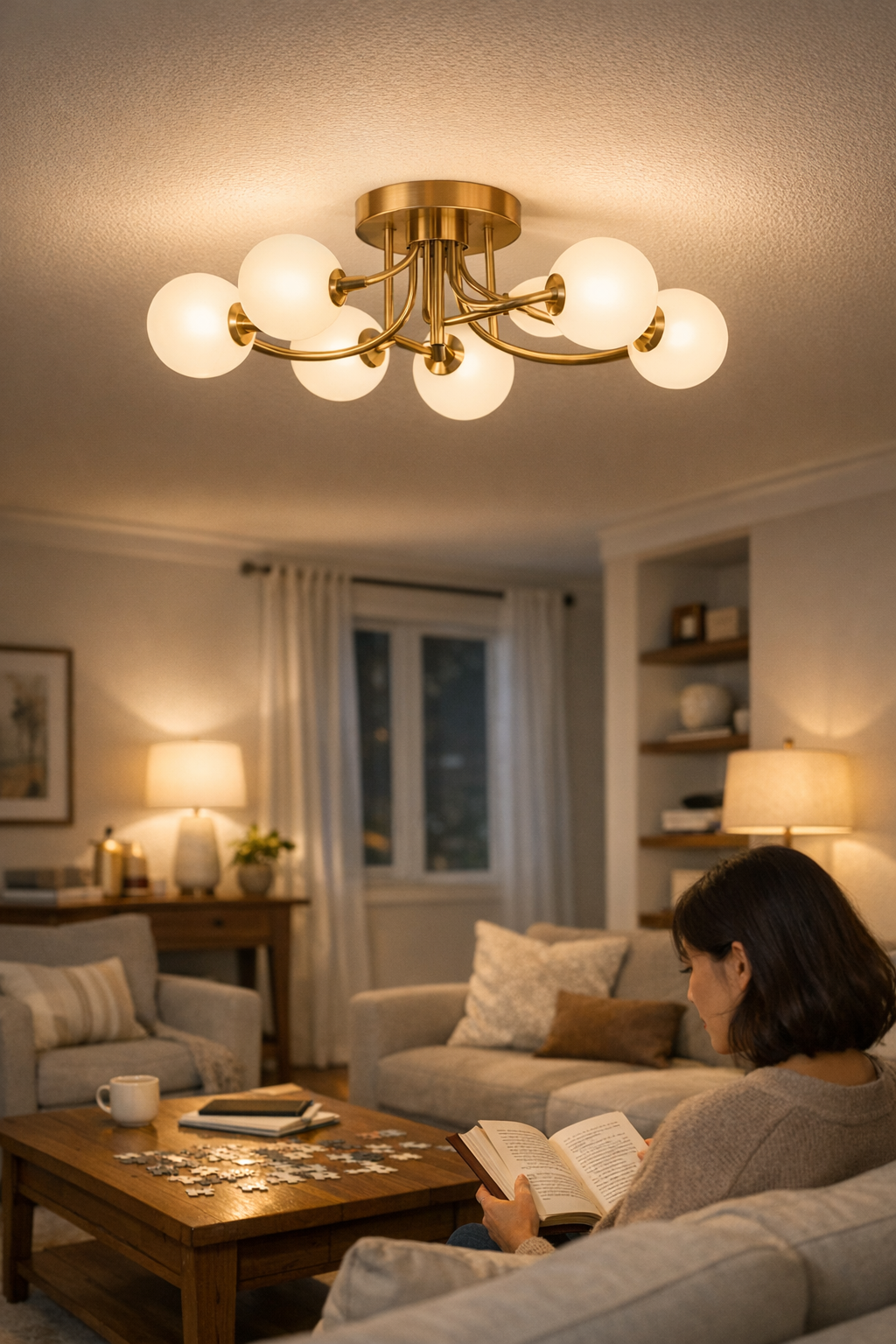
Overlapping ceiling panel and linear lights almost always look controlled in a design plan—but in daily use, they create snap decisions, uneven brightness, and cable routes you start to notice before the room itself. The paperwork promises clean lines and balanced brightness. The photos look settled. But with actual routines—family evenings scattered across sofas, game boards stretched over the coffee table, or friends shifting between chairs—the neat, shadow-free promise collapses. Instead, you get glare spots, underlit edges, and the slow creep of exposed cords along accident-prone paths. The gap between an Instagram shot and a real living room widens, mostly when you’re just trying to settle down and use the space without dodging awkward light—or tripping over last week’s attempted fix.
Where Overlapping Ceiling Lights Start to Unravel
It seems smart to combine a wide ceiling panel for general glow with sharp, targeted linear strips for key corners or accent zones. In reality, their beams rarely cooperate in a busy living room. Problems show up when—
- Glare bounces off a table surface straight into your eye during board games
- The “center” is flooded, but actual seating sits in pooled shadow or fine stripes
- Someone squints, shifts, or abandons the armchair wedged between overlapping light cones
This isn’t abstract atmosphere. It’s the daily drag: reading feels effortful, faces look tired, and moving across the room starts to mean tracing safe footpaths around fresh islands of glare or unexpected dim zones.
Living with Lighting Friction: Recognizing the Mismatch
Minor annoyances escalate fast. One night it’s sliding a board game to dodge a bright edge; the next, a regular seat turns unusable because it gets hit from two lights at once. The instinct is to plug in yet another lamp—momentary relief, new cord out of nowhere, another thing to step around. The supposed fix becomes an extra problem: cable lines stretch into the open, corners feel even more improvised, and the original fixtures still fail to make any one area simply comfortable.
The split-room effect sticks out in use, not in pictures. The living room splits into fractured “too-bright,” “not-quite-enough,” and “wobbly-shadow” sections. Try moving a drink, picking up a book, or walking the dog inside after dark—you’ll step over visible cables or lose the edge of the rug in a sudden dip of light. What looked tamed now attracts attention every time you move, adjust, or try to settle in.
Why Panels and Linear Lights Clash in the Same Space
Panel and linear ceiling lights don’t talk to each other in a mixed-use room. Panels blanket with diffuse, wide light—sometimes falling flat at the edges, erasing contrast where you need it. Linear strips punch narrow, bright lines: effective under cabinets or along a hallway, but harsh and dominating when pointed at a coffee table or angled wrong across a sofa. Their overlap never quite settles. New hassle points include—
- Chair arms and desk corners catching harsh, directed glare
- Rug and seating edges vanishing into awkward shadow gradients
- Children’s play zones or laptops melting under hot spots, while walkways fade into afterthought dimness
Even if every fixture is technically “covered,” you end up chasing comfort—shifting a lamp, moving a chair, or adjusting a bracket—just to get light where it’s needed next.
Routine Discomfort: When Everyday Use Exposes the Problem
The friction amplifies in the smallest routines. Kids stretch on the floor—half of them reading in a dim patch, the rest fending off glare from a misplaced linear. Someone tries to knit but pools of shadow crowd the sofa edge. A guest plugs in a portable lamp for their laptop, cable trailing into the only open path. Flick on the panel for a family puzzle night and discover half the table is comfortable, the rest half-invisible. The ceiling setup—“finished” on install day—now drives repeated improvising. Every week, cables retreat and reappear, lamp placements wander, and you keep correcting the aftereffects of supposedly “resolved” lighting.
Tidy looks slip as new support pieces layer over the old plan, exposing both cords and the pattern: each temporary fix signals a bigger underlying miss in spatial logic and daily use coverage.
What Actually Improved the Space: Small, Real Changes
The actual fix wasn’t more power or more fixtures—it was removing competition. Simplify. Let one ceiling light (usually a balanced panel) do the main job. Assign specific task areas to an adjustable floor or desk lamp—deliberately routed, not just dropped wherever a cord reaches. Removing the linear from general seating and placing it only where needed—like a work corner or shelf—halts the problem of harsh crossing beams. The room may look less “designed” on paper, but use finally wins: seats regain steady light, eyes stop working overtime, and family routines work from the same setup night after night.
Cable issues calm down fast when you accept some visibility and put management before outright hiding: a bracket that locks a cord into a safe route, runs designed to skip active walkways, and outlets chosen for stability instead of minimal appearance. Now, footpaths clear up, and lighting becomes a solved part of the room’s logic—not a daily adjustment.
Practical Tips for Avoiding Patchwork Lighting
- Commit to one ceiling light for all-purpose use. Let other lights fill actual task gaps by zone, not by competing on the ceiling.
- Use movable, grounded lamps for areas that change. These can handle new routines without forcing the whole setup to shift.
- Don’t hide cords at all costs—manage them where you live. Safe, visible routing plus one good support point beats endless frustration with cables crowding edges or walkways.
- Test at night, not just during the day. The flaws in overlapping plans reveal themselves once routines kick in after dark.
The goal isn’t showroom perfection—it’s a room that holds up without fine-tuning or sidestepping the lighting every evening.
Product-focused support for lighting that fits actual routines—including all lighting, mounting, cord management, and adaptive add-ons—can be found at LightSupport.