Blog

  • Why Drawer Design Shapes Your Daily Storage Efficiency and Routine

    Drawers or open shelves: both look tidy at first glance, but the real test comes at 7:23 on a rushed Thursday morning. That’s when you’re elbow-deep in a drawer, searching for the socks you know you put there, and you realize—your storage solution isn’t actually helping you. It just looked good for a day or two. The difference between a closet that photographs well and one that keeps up with real, everyday routines comes down to less visible details: friction, category drift, and how smoothly you can reset at the end of a busy week.

    Drawers: Neat on the Surface, Chaos Beneath

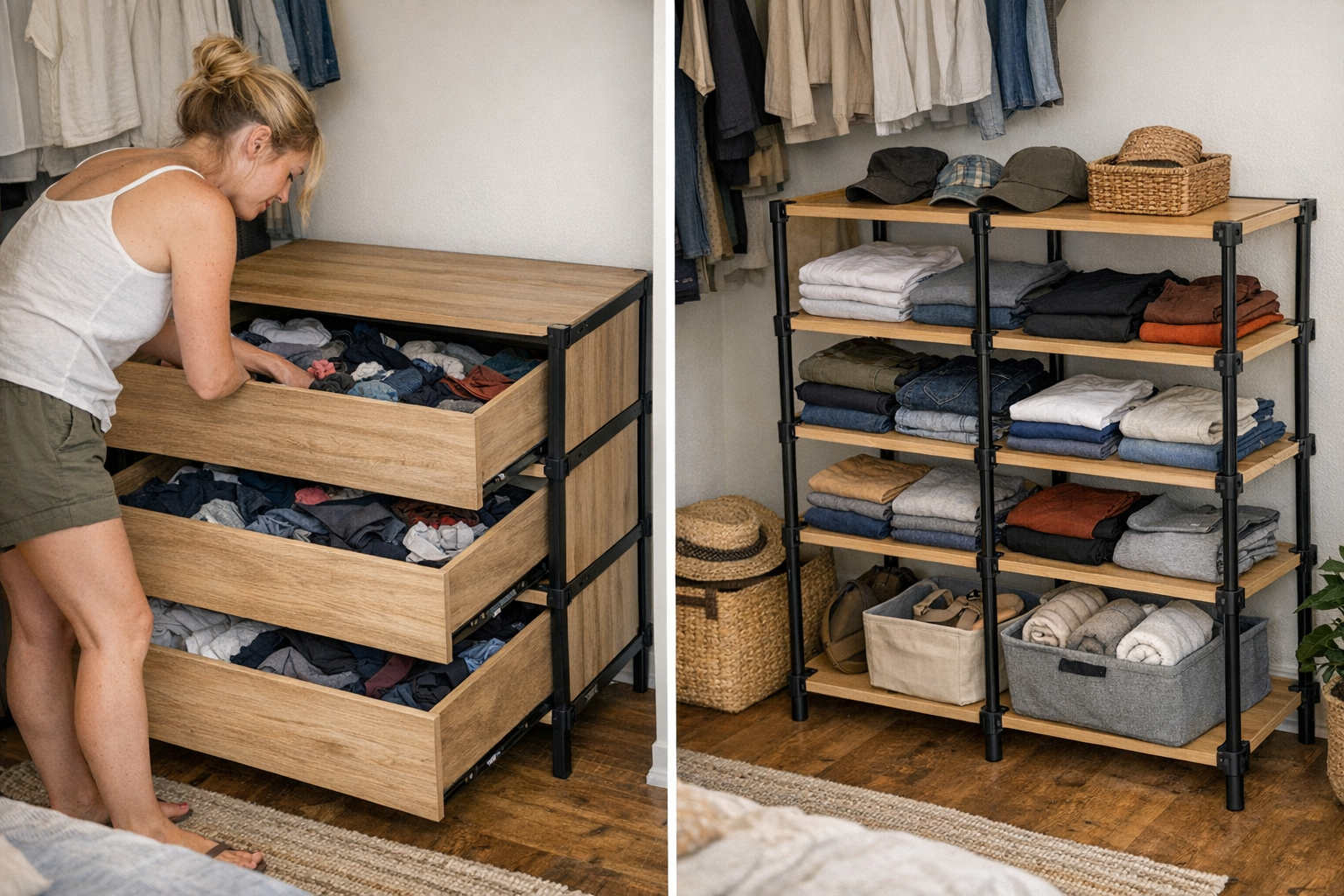
    Imagine the lower half of your closet lined with deep drawers—everything sorted, folded, hidden from view after a weekend reset. By midweek, though, that illusion starts to slip. You can’t put your hands on what you need without disrupting layers: socks disappear under t-shirts, sports bras slide to the back, athletic tops get lost. The sense of order you worked for quietly comes undone, one hurried grab at a time.

    Deep drawers make it far too easy for categories to blur with each rush. They swallow poorly folded stacks, and items shift and topple before you notice. What starts as minimalist calm turns into a churned-up mix just below the surface.

    The Drag of Reaching, Shuffling, and Searching

    This friction adds up in the routine details. Every morning, reaching for one specific shirt means touching—if not actively moving—three others. Socks stuck at the bottom force a half-unfold of everything on top. Untangling a pile to find a single missing gym short slows you down and leaves folded stacks looking punched-in. Drawer resets take longer each time, and what once felt efficient slips into maintenance mode—constant process, barely keeping pace.

    The trouble is mostly hidden. Drawers fool you with surface order, but every repeated reach disturbs the balance. Eventually, it’s easier to stop resetting entirely and just live with low-level chaos.

    Shelves: Full Visibility, Fast Access, Real Limits

    Shelves, by contrast, refuse to let items hide. Every piece—pants, towels, folded knits—competes for visible space. With no deep layers, you pull what you need without dislodging the rest. Each category is exposed, so mixing is obvious and retrieving is quick. You lose less time to searching or reshuffling. Shelves tell on you: overstuff them or neglect a row, and chaos is instantly on display.

    But shelves can crowd up fast. Too many stacks become hard to control, and soft items spill into each other nearly overnight. One oversized sweater can push an entire row toward collapse. The neat line up front quietly grows into a jumble when no one’s looking. Still, you always know where things are—and if you use bins or baskets, they force you to define what goes where, at least until overflow starts again.

    Scene: Mudroom Entryway Shelves in Practice

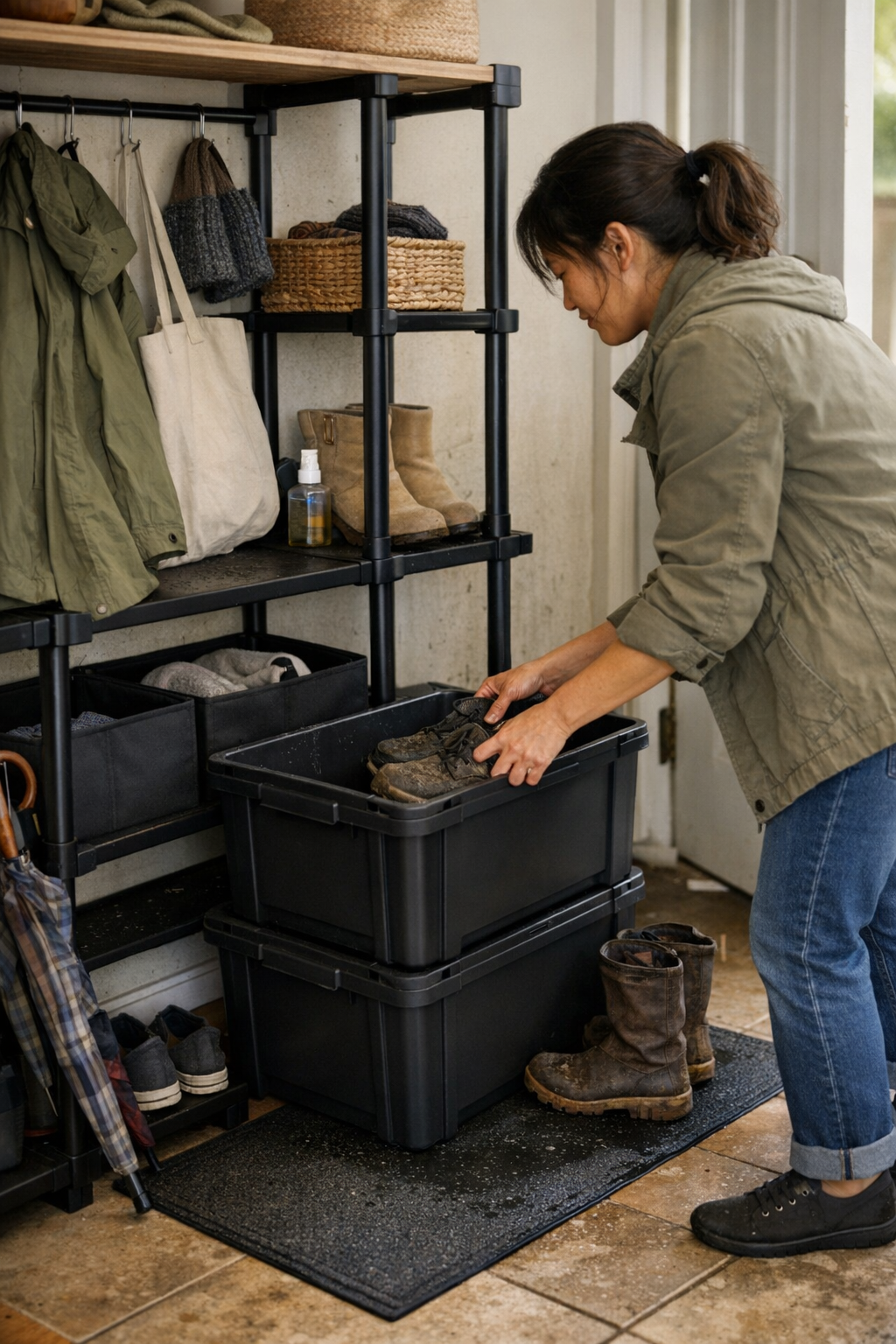
    Picture the honesty of a mudroom shelf lined with baskets. There’s a tray for keys, a bin for hats, boots set out in their spot. Categories stay clear because each is visible and easy to access. But if shoes start landing outside their bin, or baskets overflow, clutter spreads instantly from shelf surface to floor. Even then, finding the right scarf or gloves is a glance and grab—fast, but risking visual clutter and the need for constant pulse-checks.

    Dividers: Small Fix, Big Relief

    Back to the bedroom closet: add removable dividers and watch the tone shift. Each divider becomes a miniature boundary—shirts here, leggings there, socks corralled to one side. Suddenly, the drawer you’d grown to dread opens to clear, persistent zones. The scramble for a specific item is gone; instead, you can nab what you want with a single reach. Stacks hold shape. Crumpling slows down. The difference isn’t always dramatic, but it’s real—you’ll feel it when resets become near automatic instead of a weekend project.

    Dividers quietly prevent category sprawl and reduce the subtle mess that builds from little misplacements. Implementation is simple, but the payoff comes in every rushed morning and low-stress reset.

    Quick Check: How Deep Is Too Deep?

    If grabbing your favorite workout tee means moving two or more layers, your drawer is working against you. Too much vertical space invites chaos. Shallow drawers or strategic dividers force a single layer—everything visible, nothing buried, so mornings flow and clean-up is fast.

    Reset Anxiety: Signs Your Storage Isn’t Working

    When storage works, even hectic routines don’t unravel it. If you’re hesitating to reset a space because it seems overwhelming, your system needs tweaking—not just more discipline. Drawers devolve without boundaries. Shelves overflow without limits. True storage success shows not just in how easily you can tidy up, but in how little there is to fix each evening or weekend.

    The best setups don’t rely on constant vigilance—they quietly keep things organized day after day. Whether that means confining socks to a single slot or making towels easy to grab off a shelf, the difference is functional, not just visual.

    Beyond the Closet: Where Storage Friction Sneaks In

    This tension shows up in every high-use zone:

    • Kitchen drawers without flatware dividers devolve into utensil grab-bags.
    • Bathroom cabinets with deep baskets let bottles vanish at the back and half-used products multiply.
    • Garage workbenches lose all order when one tool gets wedged behind another inside a deep drawer.

    The cycle is the same: each time you have to move the wrong thing to find the right one, friction accumulates. Each small fix—dividers, bins, clear visibility—reduces the reset grind and keeps daily routines smoother.

    What Works: Everyday Storage Tactics

    If you find yourself wasting time searching or resetting, try this:

    • Root out hidden layers—deep drawers and bins love to hide clutter. Add dividers or split a single deep drawer into two shallow ones if possible.
    • Track how often you have to move one thing to get what you really want. If it’s frequent, reorganize for single-layer or single-category access.
    • For shelves or busy drawers, reduce categories: one type of thing per shelf (or per bin) lets you see when clutter is creeping in.
    • Move your most-used items to open storage or top-access spots—control friction, then customize boundaries where chaos appears most often.

    The lowest-friction storage setups are the ones you barely have to think about. Small changes like a simple divider or a swap to open shelving can transform how a space functions in real, messy, repeatable life. If your system feels like it’s always on the edge of chaos, it isn’t you—it’s the setup. Good storage adapts to your rhythm and helps declutter as you live, not just after a big reset.

    Discover practical options and smarter routines at ClosetWorks.

  • How Anchoring Pet-Care Essentials Simplifies Your Daily Routine

    Pet care routines break down fast in daily use—even when they start out looking organized. You line up food and water bowls, set a grooming brush within reach, stash quick-clean wipes close by, and convince yourself the routine is handled. But by day three, a towel is missing from its hook, the water bowl is low again, or you’re shuffling supplies buried behind shopping bags. Each tiny delay—waiting, reaching, re-stacking—interrupts a simple reset, turning a ten-minute job into twenty. The problem isn’t a messy pet area; it’s a setup that can’t defend itself against real-life friction. CalmPetSupply products live in this gap: they’re not just for “looking ready,” but for cutting out the repeat work and surprise setbacks that creep in after the first round of use.

    The Illusion of Readiness: Why Pet Areas Don’t Stay Functional

    A prepared pet-care space looks finished—full dishes, mats in place, supplies within easy reach. But real routines stress-test setups faster than most owners anticipate. Pets nudge bowls out of alignment. Toys drift under furniture. The brush you ‘always’ keep next to the feeder finds its way into the laundry basket or behind a storage bin after just a few days. At night, you run inventory: water gone dry, stray kibble trapped under the console table, cleaning spray nowhere within arm’s reach. The weak link isn’t visual mess, but repeated small failures that become friction points with every pass through the routine.

    How Small Disruptions Build Into Major Friction

    Say it’s after work and you want the evening pet care cycle to flow. But now the cleaning towel is still in the laundry, so you improvise with paper towels—hunting for the roll, bending under the sink. You fetch the refill bottle, only to find the brush obscured by shopping bags from yesterday. At each stop, the system lags. It’s not about lost items, but about what’s blocked, misplaced, or too far out of reach when speed actually matters.

    Over a week, these disruptions snowball. Quick resets demand extra moves: bending to grab wipes from a low drawer, clearing toys before water can be refilled, shifting bowls that keep migrating into walkways. Even a tidy setup by Sunday starts leaking into living spaces, with bowls edging into traffic paths and mats curling under passing feet. Every night ends up with more “quick” fixes—each one avoidable, but real.

    The Problem with Quick Fixes and Visual Tidy-Ups

    Setting up looks simple: bowls straight, supplies clustered, mats uncurled. But most quick fixes trade daily speed for temporary order. Cleaning sprays relegated under the sink slow down spill response. Grooming tools land neatly back in storage—until one busy morning pulls them into another room, where they sit out of sight for days. The routine works until a missing item or an awkward reach turns a five-minute maintenance into a full round of searching, shifting, and sometimes just leaving the cleanup for tomorrow.

    The moment a pet knocks over water or tracks fur behind the bowls, you realize whether your “system” is built for actual use—or just for clean lines. Tasks stretch out, not because you’re unprepared, but because supplies ended up one room away, or tucked behind closed cabinets. Most missed steps aren’t laziness, but from systems that fail routine stress.

    Daily Chore Chains: When One Weak Link Slows Everything Down

    Real-world breakdowns usually hide in lag—not disaster. Towels drift from hooks to laundry for two days, letting pet hair pile up and making every future wipe take longer. The water bottle isn’t at hand, so refills get skipped or rushed. After-walk care pauses because the towel is wet or stored in the wrong bathroom. You might labor to keep other parts neat, but the weak spot reappears: supplies out of reach at the exact moment you want a seamless reset. No matter how tidy the space looks at breakfast, mis-anchored essentials guarantee drag by night.

    Functional Over Decorative: What Actually Keeps Pet Care Flowing

    Reliable routines depend on essentials that don’t drift. A silicone mat with a wide edge anchors bowls and traps spills—no more gradual bowl migration. Hanging a towel hook directly above the pet zone means a missing towel is obvious right away, not discovered after the fact. Shallow, open trays for brushes or sprays put the basics within eyeshot and arms-reach, which matters under actual time pressure. The right products don’t multiply clutter; they stop a dozen minor shuffles and repeated “make do” substitutions.

    The point isn’t to add more gear or to make a pet area photogenic. It’s to cut out the repeat friction—less bending, less hunting, fewer steps back and forth—so feeding, cleaning, and grooming actually link together. Every reset becomes smoother because fewer things migrate and basic supplies stay anchored and visible at the pinch points of your daily flow.

    Real-World Results: Why Anchored Supplies Change the Routine

    With supplies anchored—towels right where spills happen, water bottles always under the bowl shelf, grooming brushes returning to their tray—each daily care block shrinks. Cleanups happen at the right moment, not an hour later. Refills stop being last-minute chores. Pet hair and stray kibble don’t accumulate in dead zones. Most crucially, less time is wasted on repeat searching and recovery. Care doesn’t just look easier: it is.

    In practice, this means fewer half-done resets, less spillover clutter, and much less “mental drag” after the day is already long. The clutter reduction is visible, but what matters is the relief from invisible interruptions: fewer stops, fewer lost minutes, and a routine you don’t have to force yourself through. Organization stops being cosmetic and starts showing up where it actually matters—at the hand grab, at the cleanup moment, during the refill routine, and throughout every daily handoff between you and your pet.

    CalmPetSupply isn’t about decoration—it’s for setups designed to hold up against daily stress, so the right item never drifts out of daily reach.

    See the CalmPetSupply difference here.

  • How a Simple Morning Ritual Eases Tension Between You and Your Dog

    You’ve just finished feeding your dog. Bowls are rinsed, surfaces wiped. But as you try to get your own morning started, your dog plants himself near the door—half-expecting, half-waiting, blocking the hall as you grab your shoes. It’s a predictable friction point: routine says breakfast is over, yet your dog hasn’t fully “switched off.” Instead, he silently interrupts the next steps, shadowing your movements, sneaking back for crumbs, or staring at door handles waiting for a cue. Whatever setup you use—a tidy feeding station, baskets for toys, bed in the sun—the trouble keeps coming back: the space might look organized, but it doesn’t run smooth.

    That Post-Breakfast Door Hover: More Than a Quirk

    We tend to dismiss after-breakfast pacing, door-hovering, or kitchen patrols as random dog behaviors. But these are signals—signposts that your morning routine still has an unfinished seam. As you move on to your own tasks (coffee, emails, getting dressed), your dog lingers directly in your path, drawn by the absence of real closure. Ignore it, and the cost is easy to spot: a paw on your calf while tying shoes, bursts of interest at the smallest sound, water bowl visits with no thirst—each a micro-interruption that drags out the “settling down” window. These aren’t isolated quirks. They stack up and reset your morning around the dog’s limbo.

    Identifying the Routine Weak Point

    This isn’t about burning off extra energy. It’s a logistical miss: when the morning routine lacks a visible seal, neither dog nor owner can settle. Look for these daily clues:

    • Your dog does hallway loops or shadows you from room to room after breakfast
    • Detours back to the bed or feeding spot before finally giving up and lying down
    • The softest household noises snap your dog’s attention right back to you, as if he’s waiting for the “real” next step

    Even if the rest area is plush and bowls are lined up, a missing signal means the underlying cycle repeats. You get the illusion of order, but the hidden work never ends: restlessness, unnecessary retracing, and constant resetting for both sides.

    The Small Frictions Add Up

    The real pain isn’t dramatic—it’s the quiet grind of daily inconvenience. Shoelaces blocked by a hovering dog. Leash hooks perfectly placed—but you’re fumbling keys and gear because you never actually grab them in flow. Cleanup wipes live one room away, always a few steps late for muddy paws. A tidy feeding corner might be visually calm but is stranded far from the quickest exit, forcing awkward double-backs. Rest corners look luxurious, but their position means the dog pops up mid-transition, never getting into deep rest before the next interruption.

    Looking tidy isn’t the same as living easy. Visual “order” can even mask bottlenecks: items are technically put away, yet leak right back into main walkways, or require detouring back for something forgotten. The result? More shuffling, more mess, more tension—just out of the spotlight.

    Signs the Routine Isn’t Really Over

    So what do incomplete routines look like in real life? Not chaos—just constant, low-grade friction:

    • Bowls need a “surprise” second rinse when the dog circles back after you thought feeding was finished
    • Water splashes, kibbles, or tracked crumbs turn up repeatedly as the dog patrols the bowl area
    • Paws make it deeper into the living room before you remember the towel is still out of reach
    • The leash sits untouched, even as your dog hangs by the door, unsure whether to ask for a walk or return to bed

    Put together, these moments puncture any chance for either of you to fully shift gears. The morning that “should” bring calm instead scatters into small resets and fetches. Both you and your dog end up more alert than at ease—routine becomes disruption, not anchor.

    Creating a Reliable Closing Step

    You don’t need a flashy solution. The fix is a practical, physical marker that tells both you and your dog: “routine closed.” This could mean:

    • A short pause at the door every time after breakfast (even if you’re not heading out)
    • A deliberate “all done” sound or gesture at the water bowl as you put things away
    • Delivering a chew or comfort toy straight to the dog’s regular resting spot—so he knows that’s the next move, not more patrol
    • A repeated, predictable phrase every time you finish the feeding routine

    It’s not novelty—it’s consistency that works. When that ending step stays the same day after day, your dog learns what signals the shift from “morning action” to “rest mode.” The more clearly you mark the transition, the less strain on both sides.

    Real-Life Example: The Leash Pause Trick

    Here’s how a tiny adjustment resets real friction: after weeks where the dog circled back to the bowl and hounded the hallway, one owner tried a post-breakfast “leash pause” at the door—not for a walk, just as ritual. Clip leash on, dog stands by, leash off, and both pause together for a beat. The result? No nagging need to patrol the kitchen, no ramped-up waiting energy. The dog began heading for his rest spot right after, and the owner could finish her own prep without side-stepping or backtracking. Seven days in, the “background” problem simply stopped repeating. Both sides landed their mornings faster and more cleanly.

    Why These Endings Work—Even When the Routine Looks “Good Enough”

    Organization alone misses something crucial: actual, daily closure that holds up under repeated use. Your setup can look staged for Instagram—bowl, leash, basket, pads (even labeled), nothing left out—yet if you skip a defining “end,” unwanted resets creep back in. Visual neatness does not mean flow. In fact, over-tweaking for aesthetics alone can make sequences longer or more awkward if the routine isn’t backed by a strong signal that says, “We’re done.” The gap hides until a spill, a missed wipe, or another morning spent tracing your dog’s path instead of your own.

    It’s a pattern most owners recognize: you move the supplies for cleanliness or reach, only to realize you’re still retracing your steps two weeks later—friction survived the shuffle.

    Tweaking Your Setup: Spot the Single Weak Point

    Dog routines rarely need a “makeover.” One stubborn kink—one bowl that’s always one step too far, or a towel you never remember to move before the exit—can drive most of the visible trouble. To break the cycle, look for where routine stalls:

    • Does your dog hover where he can’t see you prepping, because the rest spot is out of sight?
    • Do your feeding and door zones force back-and-forths, so cues blur together and neither task really finishes?
    • Is cleanup gear actually reachable in the moment or just “stored” conveniently out of play?

    Pick one tweak—move the bowl, shift the bed, keep the wipes within reach, or add a pause at the door—and measure if the after-breakfast shadowing drops by the third or fourth morning. Most setups need only this: a micro-adjustment to break the loop of constant resets.

    The Difference a Consistent Finish Makes

    When you land the routine with a concrete closing act, the payoff is immediate: your dog gives up anxious following, you stop losing minutes to looping tasks, and the post-breakfast window finally supports the rest of the day. It’s not about perfection—it’s about a repeatable step that holds up in practice, even when mornings run late or your hands are full. That’s when the hidden friction evaporates, and “settle” becomes something both sides actually feel.

    What If Restlessness Persists?

    Persistent door-hovering or trailing can mean one last kink is hiding in your sequence. Try reviewing the full flow for a few days: Does the water bowl stay accessible? Have you accidentally skipped a needed outdoor trip? Are you jumping from food to silence too abruptly? Extra pacing, tracking, or new messes usually flag a missed transition, not a misbehaving pet. Small, structure-based changes—not big lifestyle overhauls—almost always resolve it within a week.

    Morning Calm Isn’t an Accident—It’s Built In

    Dog-life friction doesn’t have to be tolerated: it’s a symptom of a setup that doesn’t support repeated use in real time. The difference between “looks good” and “works under pressure” is where small daily adjustments matter most. Catch the hidden weak point, tweak the closure, and the result isn’t just a better organized space—it’s smoother, more trustworthy mornings built from the ground up.

  • Optimizing Carry-On Bags for Faster Movement After Landing

    The real test of your carry-on setup isn’t at home—it’s the first time you hit an airport checkpoint and realize your essentials aren’t where you need them. The comfort of a perfectly packed, color-coded bag collapses the moment you’re edging down the jet bridge, one hand holding your suitcase, the other fumbling for a passport now buried under layers. A bag that looks “organized” in your hotel room can suddenly create delays, blocked access, or awkward repacking in line, especially during repeated quick-reach moments across immigration, security, and shuttle transfers. What felt like neatness on your bedroom floor quickly reveals itself as friction when every second counts, and your charger, wallet, or ID is one zipper path too deep at the wrong time. This is where the real difference appears: the divide between tidy arrangement and ready access, the difference CarryOnSupply travelers notice on every leg of a real trip.

    Why Packed Neatness Can Turn Into In-Transit Hassle

    Airports reward quick retrieval, not tidy rows. When the flow shifts from packing pride to moving with a crowd, you aren’t admiring a system—you’re hunting for a transit card or phone cable blocked by organizers that were supposed to help. Each extra pouch, divider, or deep compartment turns into a snag point during security checks or boarding queues. Consider standing in an immigration line, one arm around your bag, feeling the frustration rise as a boarding pass hides under your toiletry kit, or realizing during a bag scan that your ID is sandwiched between “less important” items at the bottom of a pocket. The illusion of order dissolves every time you have to kneel at the curb or re-stack pouches at the tray table. Inconvenience isn’t a rare glitch—it’s a loop that repeats with every airport transition, multiplying the strain and slowing movement just when you need to keep pace.

    The Over-Organized Trap: Tidy at First, Slow on Repeat

    It’s easy to fall for setups that promise visual control: lay-flat organizers, triple-zipped pouches, separate slots for every cable or battery. They look sharp when you zip your bag before departure. But in transit, where device chargers, passports, and headphones move in and out of reach, friction multiplies. Travel exposes this mismatch—bags arranged for visual order quickly become slow to use in kinetic environments. The same multi-pocket logic that prevents “mess” creates extra motions under pressure: a passport behind two unrelated organizers, or a quick pen search that triggers another round of pouch stacking. Every pause to dig or shuffle, standing elbows-out in a moving queue, turns organization into an obstacle. The more layers between you and what you need, the more visible—sometimes embarrassingly so—the gap between order and actual flow.

    Where the Repetition Really Wears You Down

    The damage isn’t just inconvenience; it’s cumulative. Each repeated hunt for a transit card, every time you return a charger only to retrieve it again an hour later, adds both mental drag and small lost fragments of time. Multiplied across a trip—between gates, lounges, hotel lobbies—the same structured setup starts amplifying stress. The energy lost isn’t from one big mistake, but from realizing that your own system is tripping you up five, ten, twenty times before you make it past arrivals.

    What Actually Helps: Re-Thinking Access Moments

    Practical control means knowing, before you land, which items you’ll need instantly and which can stay packed away. The difference between “packed well” and “moves well” is rooted in whether you can grab your essentials without pause, every time. Routine travel movement—stepping off the plane, passing through security, catching a train—punishes buried items. A setup that makes you stop, unzip, and reshuffle during pressure moments is built to fail in real conditions. Before descent, shift must-haves—passport, wallet, earbuds, transit pass—into a single, shallow pocket or front section, even if it means sacrificing neat interior stacks. This small adjustment can sidestep half a dozen friction points that would otherwise ruin your flow through customs, boarding, or shuttle entry.

    Real-World Adjustments That Make a Difference

    You’ve just landed. Jet bridge is full, crowd is moving, someone’s elbow nudges your bag. The ultimate question: Can you get your documents or device out with one hand, first try, without sitting your carry-on flat or unzipping inner compartments under pressure? If not, your “organizer” may be sabotaging every urgent moment. Rearranging for arrival isn’t “ruining” organization—it’s reframing it for actual movement. Pull those repeated-use items out from layered pouches, into outer or easily accessible slots before you hit the ground. That way, you handle the airport on your terms: quick flick, smooth grab, no need to stall the flow or draw stares as you kneel by your open bag at the exit. What looks messier by a few inches makes all the difference when you’re shouldering your bag through a crowded hallway or rushing to find a boarding pass in a queue.

    Small Frictions, Big Gains

    “Perfect” packing hides dozens of minor slowdowns: pens deep in tech pouches, flight tickets mashed with receipts, chargers locking out your ID. Every tiny access problem chips away at your ability to move cleanly. If a setup only reduces visual mess, but forces you to slow down at each checkpoint, the frustration stacks up quickly. Rapid, repeatable retrieval—at gates, in line, stepping into a taxi—is what actually transforms travel strain into manageable movement.

    Balance Structure With Real Access

    There’s a distinct edge to a bag that keeps order without interrupting your routine. A clearly defined, shallow “high-access” pocket pays off far more than buried neatness. This isn’t just a theoretical win: real tests happen with each scan, gate transfer, seat re-entry, and hotel check-in. As your trip wears on, systems built only for packing quickly show their limits; systems built for motion reward you every time the routine repeats. The line between helpful structure and counterproductive order becomes obvious after enough transitions. A carry-on that lets you avoid the dreaded “pouch shuffle” keeps you in the slipstream, not stalled in the aisle.

    Keeping It Simple, Not Just Tidy

    The real prize in modern travel isn’t a show-off bag setup—it’s frictionless motion. A carry-on that is slightly less photogenic but dramatically more accessible will outperform a divided, pouch-heavy bag every time your day demands repeated reach and fast repacks. Airport reality exposes over-organized systems within minutes, not hours. Every awkward tray transfer, blocked boarding pass, or delayed gate reach demonstrates whether your bag was engineered for visual calm—or for practical speed. When you keep essentials at the top, visible and touch-ready, you’re not just more organized; you’re built for real travel momentum.

    Explore practical gear for repeated movement and real access at CarryOnSupply.

  • How Thoughtful Lighting Placement Eliminates Shadows in Workspaces

    The real trouble with work area lighting doesn’t show up during installation—it shows up on the second, third, and tenth time you use the space. That new LED bar or low-profile desk lamp might look clean and organized out of the box, but the first full work session exposes what photos can’t: a dim strip right where your wrist rests, a perfect bracket that blocks your favorite pen, or a cable setup that snags as soon as you move your charger. You find yourself shifting, squinting, or nudging things back to “usable”—again and again. The spot that seemed fixed in place keeps losing focus as shadows and glare drift across your work. A setup that looks streamlined on install day can still create headache points that slow you down every day after.

    Why Brightness Isn’t the Whole Story

    Many lighting setups fail not for lack of light, but for the way that light lands—or doesn’t—on what you actually do. The room feels bright at first because the LED panel or task lamp floods surfaces with white, but real friction starts: glare on a glossy notebook, the far edge sliding into murk, cables crossing spots your arms or keyboard move through. Even a “minimal” cable run can sabotage you if it means unplugging something just to roll your chair or spread out a binder.

    Lighting that looks smooth on day one reveals its cracks with use. Paper piles stack up in the only shadow left. You slide out a laptop and a bracket blocks where you want to rest your wrist. A small detail—a misaligned bar, an exposed wire—becomes a repeated disruption, no matter how finished the setup looked to start.

    Small Setup Decisions, Big Day-to-Day Impact

    It’s the subtle friction that eventually dictates what gets used and what silently exhausts you. A cable dragging two inches too far into your work zone might seem minor until it brushes your hand thirty times a day. A lamp base claiming one corner at install time soon claims your patience, as its bulk or reach pushes your papers—and your focus—aside. These aren’t just passing annoyances. Shifting things back, looking for clean light, or hoping the charger stays put—each invisible delay adds up, draining your momentum.

    Over days and weeks, these “minor” mismatches outlast whatever visual order the room had at the start. Fatigue sets in, not from the tasks themselves but from nudging the gear, battling unpredictable dim bands, or never quite having a desk edge you can settle into without adjustment.

    Desk Edge Woes: When Clean Looks Don’t Equal Comfort

    A typical open desk or shared table often hides its weak points until the routine sets in. Overhead light seems strong enough—until you pull a chair to the end seat and discover half the work surface is in shadow, or the laptop catches a sharp glare. Passing notes means chasing the last patch of light, or rotating items just to read your own handwriting. The tidiest surface, with cables zipped and fixtures flush, ends up forcing you to work around dead zones and hot spots instead of through the actual work.

    This is where setup logic matters more than surface appearance. You notice the “finished” look doesn’t hold up when the cable bracket creates a ridge under your palm or the light that once looked perfect now throws shadow on every shared seat. Comfort drifts as soon as you start using the space for real tasks—showing just how quickly a visually resolved setup can fall short of lasting usability.

    The Real Difference: Task Lights and Placement That Hold Up

    The setups that stay comfortable through a week—or a month—are built on thoughtful task lighting and support placement, not just strong bulbs or cosmetic order. You recognize them because:

    • Light lands exactly where hands meet work and screens—not just creating a general zone but eliminating the shadows and glare at the business end of every motion.
    • Edge-mounted LED bars, low-profile under-shelf strips, or side-track lights keep illumination consistent even when you spread out materials or shift your seat, keeping the actual working edge clear—not just the center “design” area.
    • Cables don’t just disappear visually—they’re routed out of traffic zones, tucked along unused ledges or behind shelf faces, so they don’t reappear every time you plug something in or drag a pad across the desk.

    What breaks through is the lack of little repairs. After the first few uses, you realize you’re not compensating for the setup—no empty spot at the desk edge, no recurring tangle, no lighting zone that needs re-aiming when your work routine shifts.

    When Task Areas Shift, Lighting Should Adapt

    Few work surfaces stay static. Some days the main work zone moves to the edge, or you share the space for a project. Adjustable arms, sliding bars, and pivoting task lamps make a practical difference by letting lighting coverage follow your routine—not force your routine to fit the lighting. The same “fixed” overhead light or desk lamp you trusted at install can leave you squinting at the margins just because you sat two feet farther out.

    Lighting that fits your real movement changes everything: A wall-mounted strip, adjustable bracket, or under-shelf panel, when installed for the way you actually use the area—not just its layout—gets rid of dim patches and surprise glare. Cables that move with gear, not against it, mean you’re not one device swap away from a disruption. The goal is less fixing, more working, even when the task or layout changes midweek.

    Everyday Visibility: Clarity Where You Actually Work

    The most dependable sign of a right-fit lighting setup? You stop noticing it—because you’re never pausing to fix shadows, move cords, or dodge glare. Clarity follows your hand from the middle to the edge; brackets and cables vanish from mind because they stay clear of your movements. When a setup blends into your routine, you know you’ve solved not just appearance but function.

    Spaces wired for “maximum brightness” or cable visual order may look right until repeated use exposes creeping glares, shifting shadows, and tangled support. Prioritizing true edge visibility, movement paths, and cable logic yields a work zone that holds up beyond first impressions—a place where you can just work, not manage the setup every time you sit down.

    Real-World Tips for Day-to-Day Lighting Comfort

    • Mount LED bars or slim task lights just forward of the desk or shelf edge to erase the “blind spot” where hands, tools, and notes collide with awkward shadows.
    • Route cables behind mounting hardware or under shelf lips so movement stays clean—no more split-second hand snags or visible tangle creeping back into view.
    • Check and re-adjust light positions when changing hardware or routines—don’t let one-time setup decisions set traps for your daily workflow.

    The real test: After a week, is your setup reducing distraction—or quietly creating more? Choose lighting and support logic that disappears into your routine, and you’ll replace constant correction with real focus.

    Visit LightSupport for practical lighting and support setups fit for real repeated use.

  • Why Cardboard Boxes Fail in Humid Entryways and What Works Instead

    Cardboard entryway bins look tidy on day one—but by the end of a wet week, their limits are impossible to miss. What seems like a quick, low-cost solution for shoes, jackets, and bags quickly breaks down once daily weather hits your threshold. Boxes soak up moisture, sag under the weight of real routines, and turn from “neat storage” to a slow-moving obstacle that makes coming and going harder. If your hallway starts each week looking decent but midweek finds you stepping around shoes and shoving a crumpled bin back into place, you’re seeing the true friction of a setup that looks organized but doesn’t survive repeat entry and exit.

    Why Cardboard Fails Where Weather Meets Routine

    Cardboard’s surface neatness hides its weakness in real use. Every time rain or snow soaks gear, that humidity seeps in—you won’t spot damage after the first day, but the breakdown adds up. By midweek, box sides are softening, corners curl, and the layout you reset on Sunday gets blurred as shoes start drifting outward, jackets bow the sides, and bag drops split the seams. Instead of holding the zone, the bin starts losing its shape, bleeding mess into the path. What begins as containment becomes a daily negotiation: dodge the shoes sliding out, rescue the bags slumped across the edge, and re-align jackets that no longer stand up. The cost isn’t just appearance—each shift steals time and adds hassle to every entry and exit.

    Reset Friction: The Slow Creep of Disorder

    No matter how you line things up after a weekend reset, a cardboard box can’t withstand the pace of real re-entry. One shaky landing—an armful of groceries dropped fast, a backpack slung on top—and the sides buckle again. Shoes you arranged in a tidy row spill wide as the box can’t hold a straight edge. Push a bag in too quickly, the bottom sags, and you’re forced to waste seconds every morning shuffling everything back, instead of just passing through. In busy homes—shared entryways, kids hustling to catch the bus, a pet weaving around legs—every uncontrolled drift adds up. The promise of a quick reset turns into a cycle of micro-repairs, as “just tidy up a bit” becomes the baseline, not the exception.

    Every arrival means shoving a box back from the walking lane, scooping up shoes that have spread out, or wrestling a jacket back from drooping sideways. Those seconds become expected. Instead of storage easing the route, it continually blocks and slows it—even small resets mean every crossing of the threshold feels heavier than it should.

    Thresholds Are Unforgiving: When Space Fights Back

    Entryways rarely give you room to relax—especially in narrow halls or household drop zones. When space tightens, even a modest cardboard bin that was “out of the way” turns into a hazard. Shoes that once fit inside spill toward the main path. Open the door with hands full and the softened box jams the swing, or you kick a boot into the next room. Overflow isn’t an aesthetic problem—it’s real lost time: pausing with a door propped open in the rain just to shovel stray gear back into the bin, or bumping a bent box every time you grab a coat. Instead of a clear return flow, you get trip hazards, slowdowns, and frustration at the moment you’re supposed to be moving forward.

    Picture it: three days of wet weather and evening routines run late. The storage that started the week as an island of order becomes a cluster of half-dropped gear straddling the bench and walkway. Cardboard is no match—once slumped, it never regains structure. Damp edges go soft, corners fray, and the “quick fix” becomes a reset you resent repeating. No matter how many times you sweep things back, the weak container keeps multiplying mess at the most-used threshold in your home.

    Real-World Improvement: How Durable Bins Change the Pattern

    Swap in a weather-resistant bin and the daily flow changes immediately. Instead of patching up the same softening box, you get a structure that stands up—literally. Drop muddy shoes, hang up a wet jacket, toss in a heavy bag; the container holds its form. The lid shuts with one motion, gear stays where you left it, and the path behind you clears. One hand is enough to move the bin, even after a busy day—no awkward reshuffling, no checking for leaks, no scanning for stray edges or puddles. The difference isn’t cosmetic: durable bins absorb the shock, block moisture from creeping into the rest of your storage, and never fold under the pressure of fast-moving routines.

    When a wet week ends, the only evidence is a quick wipe-down. Mud collects at the bottom, but never seeps through. Edges keep their right angle—no soft collapse, no trail of sloughed-off cardboard. The job of resetting shrinks to what it should be: one clear step, not a multi-part rescue mission. The transition zone holds, instead of demanding your attention at every crossing. Over time, you notice what no cardboard ever achieved—reset is a fast afterthought, not an ongoing obligation every evening.

    Visual Appeal Isn’t Enough: Why Cardboard Is Best Left “Upstairs”

    There’s a place for cardboard bins—out-of-season storage, top-shelf closets, or shallow stash zones where humidity never lingers and access is occasional, not constant. Use them to stack rarely worn hats or categorize light gear in dry bedrooms. At the door, though, cardboard fails the main test: resilience. It looks orderly at first, but can’t stop daily migration, can’t support the heavier stuff, and won’t keep overflow in check when routines speed up or weather turns. For transition spaces, surface neatness collapses under the stress of real movement and moisture—even the tidiest box at the season’s start will become unpredictable, shapeless, and in the way.

    Seeing the Early Warnings: Signals Your Setup Is Breaking Down

    Look for:

    • Box sides bowing out after the first rainstorm, exaggerating the shoe row spill
    • Sneakers tipping or sliding into the path, tightening walk space
    • Base of the box collapsing, making vertical organization impossible
    • Cardboard fibers breaking loose, leaving trails near the drop zone
    • Increasing reset time—more minutes lost each night to restoring minimal order

    Each sign is a flag that your setup is working against you—not with you. These aren’t minor annoyances; they add moments of forced attention at the very point in your day when you need movement, not management.

    The Real Difference: Function That Survives Repetition

    Moving from cardboard to a real weather-ready bin isn’t an upgrade for style—it’s a way to restore routine momentum. The difference is predictable, not just visible: resets become a single, sure movement; the threshold keeps its shape; overflow is contained rather than spread; the floor avoids puddles and trip points. Where you once tiptoed around semi-contained mess, now you move cleanly through the doorway, bags go down without risk, and gear lines up without escaping into the main living area. After weeks of uncooperative weather, the difference compounds: you stop expecting minor repairs every evening, and gain a front zone ready for whatever comes next.

    If you’re stuck in a routine of shuffling bins, squeezing past the drift, or patching up a system that just can’t keep up, you’re not being too picky. You’re noticing signals your entry zone isn’t built to survive actual use.

    See more transition-space storage solutions at Betweenry.

  • Why Cable Management Fails When Your Desk Finally Moves

    Your desk looks organized—until you actually start working. That tidy surface hides its limits the moment you reach for a notebook, slide open an under-desk drawer, or nudge your monitor for a call. One tug, and a power cord locks up your chair, a hidden cable slips from its channel, or a charger yanks loose just as you’re mid-task. The difference between a desk that photographs well and one that works well shows up fast: what seems orderly at first glance often unravels the minute you move, shift, or reset across your workstation.

    Workstations that Look Tidy but Don’t Feel Smooth

    Minimal doesn’t always mean usable. In compact desk setups—especially with multiple monitors, laptops, and storage units—the surface can look disciplined while still fighting you at every turn. Grab for a notepad beside your keyboard and find your hand blocked by a rogue charger. Swivel your chair only to feel resistance as a power cord drags behind a leg. The friction isn’t abstract:

    • You push back but a taut cable stops your chair halfway.
    • You reach under the desk for storage, but an extension cord jams the drawer before it opens.
    • Shift the monitor for a closer look and suddenly the tidy bundle of cables uncoils—mouse, keyboard, adapters all shifting loose onto a crowded desktop edge.

    These aren’t rare hassles—they’re the micro-stalls that break flow: a typing rhythm interrupted, an extra move every time you need to grab a pen or plug in headphones, a reset forced on you because cables designed only for looks can’t handle constant shifts. Underneath that calm visual order, desk function uncovers its true weight.

    Hidden Cable Paths: Why Out of Sight Doesn’t Mean Out of Mind

    Most cable “solutions” hide problems until you need to work. Cords routed flat behind the monitor or zipped up in sleeves look sharp for a week—then routine use exposes weak design. Swap devices or unhook a charger, and a hidden cable snaps tight, yanking something off the edge. That cable sleeve tucked under the lip? Now it blocks a drawer from opening all the way. Cable boxes stacked with adapter bricks quickly become puzzle boxes, forcing you to pull half the cords just to get one device connected.

    • Invisible cable runs twitch loose every time you unplug, making it harder to trace what belongs to what.
    • Sloppy cable trays or overstuffed boxes rattle and spill the moment you swap for a new device.
    • Anchors set for aesthetics restrict real movement—requiring a full rewire just to add a monitor arm, USB hub, or task lamp.

    The real test isn’t hiding cables—it’s surviving repeated motion. If your desk resets, device swaps, or even lunch breaks regularly trigger cable snags, the system isn’t built for living use. Showroom neatness rarely survives daily readjustments or new adapters landing mid-cycle. Every fixed path risks becoming a friction point when real workflow changes directions.

    Where Cable Setups Start to Fail: Real Routine Friction

    It rarely fails at the start. Trouble usually surfaces hours into the workday: after a few cycles of notebook checks, device swaps, and positioning tweaks:

    • The mouse cord snags against the edge of a notebook—suddenly your pointer jumps.
    • Monitor cables stretched “tidy” flicker or cut out when you angle the screen mid-meeting.
    • Phone chargers drawn across the desktop form speed bumps for your elbow or block a clean notebook push.

    These interruptions don’t stop work, but they build fatigue—a slow leak of attention every time you pause to untangle cords or sidestep a blocked drawer. Sometimes, that new under-desk drawer does less to clear clutter and more to trap a cable snake just out of comfortable reach.

    Mini Case: The Drawer’s Revenge

    Example: Mount a slim under-desk drawer to contain pens and sticky notes, only to discover your external drive’s cable now hangs squarely in its path. Slide the drawer open and—snap—the drive disconnects. Every attempted fix (reroute, tuck, tape) repeats the friction. Why? That cable path never accounted for the daily motion of storage access. Across thousands of desks, this is the hidden cost of “clean” setups that ignore real movement.

    What Actually Changed My Desk’s Repeat Performance

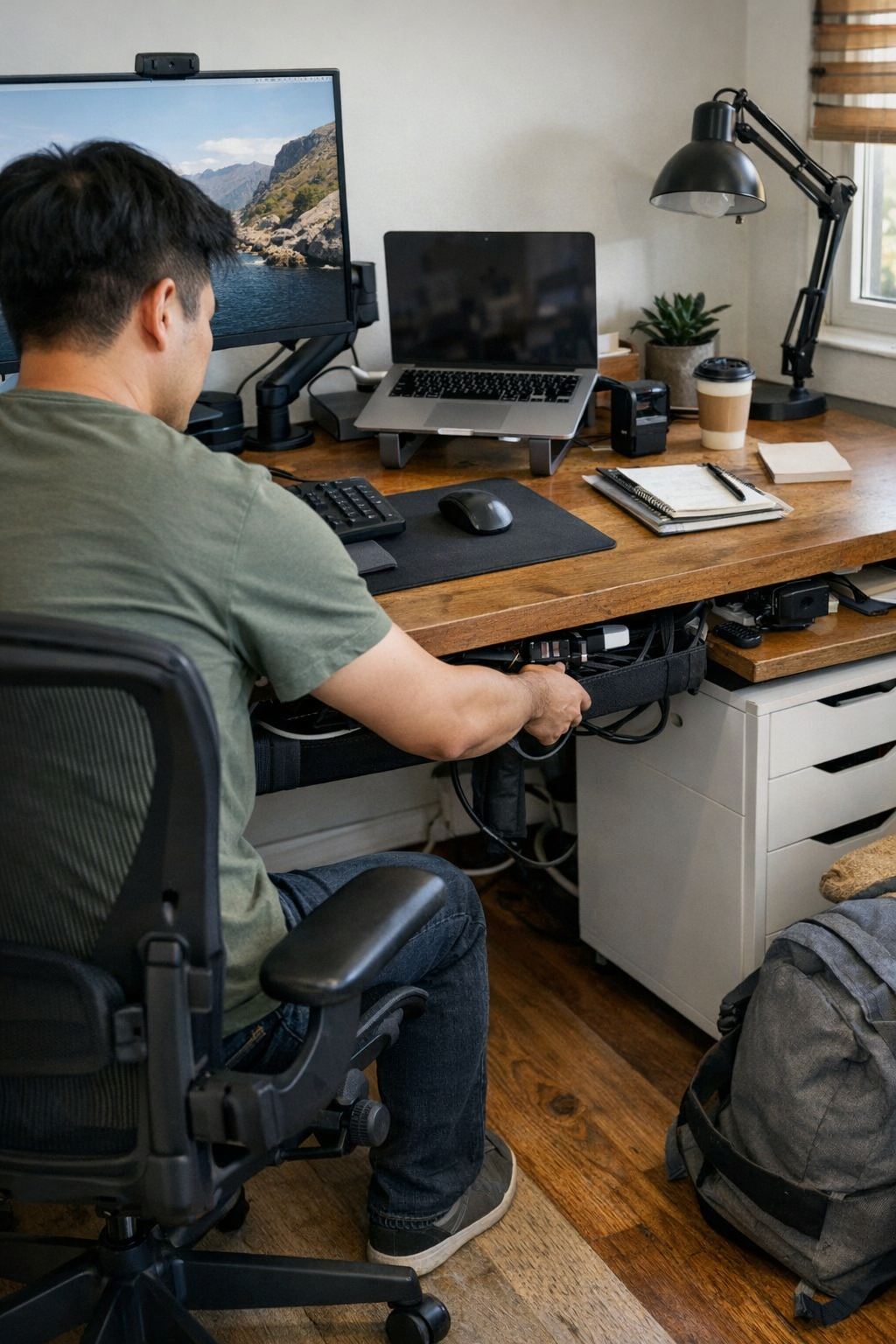
    What made the friction break wasn’t obsessively tying every cord. It was adding a single under-desk tray—as an anchor, not a hiding place. Power and USB lines ran through it along the desk’s back edge, but near my everyday reach points (right-hand keyboard corner, storage drawer edge), I left slack. Devices I plugged or unplugged daily got room to move. Cables only got anchored where they never needed to flex.

    The difference showed up after a week:

    • No more losing charging cables behind the desk edge—swaps stayed within instant reach.
    • The mouse pad and keyboard area stayed clear, no matter how often I reset or rearranged nearby gear.
    • Coming back to the desk, I never had to fish a cord from behind a chair leg or knock loose a lamp base again.

    The main gain wasn’t cosmetic—it was the erasure of micro-stalls at every movement. The desk adapted to recurring workflows, not just the first-day setup. Over time, I needed fewer resets, had faster transitions, and the desk kept supporting work instead of working against it.

    FAQs: Diagnosing and Fixing Real Cable Friction

    How do I know if cable structure is slowing down my desk?

    If every monitor shift, chair move, or drawer pull triggers a snag or an unplug, your cable setup is the problem—not your habits. A tidy look means little if the smallest adjustment reveals built-in resistance.

    Why does cable mess come back so quickly, even after I fix it?

    Hiding cables isn’t the same as supporting access. Cable runs that ignore actual hand, device, and drawer moves will always migrate back into view, or block the next adjustment. If you reset more than once a week, something about the path doesn’t match the workflow.

    Should I anchor cables everywhere or leave more slack?

    Anchor only along stable stretches—back edges, fixed monitor arms. Anywhere you interact, swap, or plug/unplug regularly (front corners, drawer zones, charger ports) needs managed slack. Too much anchoring blocks real-world movement and guarantees headaches later.

    Beyond Tidy: Setting Up for Real Movement

    If your desk only works in a photo, it doesn’t work. The mark of a strong setup isn’t “hiding” everything on day one—it’s seeing your desk handle resets, device switches, or long-session shifts without snags rising back. The most reliable cable management adapts to the flows you repeat, not just the ones you plan. Every time you return to the desk, you should find what you need where you expect—without negotiating with cord drag or drawer blockages.

    In the end, you know a better setup not by what you see, but by how rarely cables interrupt your day. The winner isn’t clean—it’s the workstation that quietly keeps up, week after week. When structure mirrors real workflow, the desk becomes not just organized, but finally functional.

    Explore the full WorkBasic collection

  • How Entryway Storage Can Transform Daily Routines and Reduce Clutter

    Entryway storage always flatters to deceive—until real life sets in. On day one, everything feels under control: hooks in neat formation, cubbies perfectly squared, shelves lining up like architectural plans. You stand there, picturing every shoe, bag, and coat in its place, convinced you’ve finally closed the gap between chaos and calm. Then routines hit. The careful symmetry crumbles—shoes block the walkway, jackets pile three to a hook, and baskets overflow with whatever didn’t fit elsewhere. Within a week, the entry looks less like a system and more like a lived-in scramble, proving yet again that first impressions fade fast once actual habits collide with even the best-laid setups.

    When Setup Meets the Pace of Real Life

    This is where most storage systems reveal their true colors: not on setup day, but during back-to-back mornings and unpredictable evenings. The difference between a space that quietly resets itself and one that slips into disarray comes down to what happens as people move through it—bags grabbed in a rush, muddy boots dumped in the nearest gap, groceries suspended on whatever surface is open for half a second.

    Photo-ready order holds together for about three days—until you’re wrestling a backpack from under two coats or twisting sideways just to wedge boots onto a shelf that looked spacious enough only in the catalog. When bins are awkward, hooks too high, or shelves crammed too tight to reach, the cleanup routine becomes a workout. If your storage doesn’t fit the reality of your movements, you fall into workarounds: shuffling bins to clear a path, negotiating space with someone else, or simply stacking one thing awkwardly atop another and telling yourself you’ll fix it on Saturday. Most setups don’t fail all at once. They fail in all the little ways that force you to constantly make up for what the layout won’t let you do naturally.

    Tracing the Slow Breakdown

    What does it really look like when a setup stops working? Shoes start clustering in the wrong places—with piles creeping closer to doorways and traffic lanes. Hooks disappear under three jackets, so anything new gets draped over a bench, or lands on the nearest basket. Items without obvious homes—hats, sports gear, pet leashes—migrate to what should be clear corners, slowly becoming obstacles for anyone stepping inside. Every pass through the area is an improvisation: nudge the rolling cart again, sidestep the chest that never fits quite right, or reroute entirely because one cabinet blocks half the flow.

    You know the system’s failing not by the volume of stuff, but by how often you find yourself moving things just to move yourself. Categories blend out of frustration, not necessity—a shelf meant for shoes now shares duty with mail and the odd umbrella, simply out of reach-based convenience. Instead of helping you get in and out, the setup becomes another source of negotiation—and the difference is measurable in every sigh, slowdown, and missed morning exit.

    Everyday Friction Points You Can’t Ignore

    Picture getting home at 6 PM with two grocery bags and soggy boots. The hook closest to the door? Already smothered by winter coats, demanding an awkward stretch if you want yours to fit. You try the cubby, but the angle’s too tight—why twist awkwardly when it takes half the time to just leave shoes by the wall? Within days, that shortcut becomes routine, and soon everyone’s stepping over a sprawl of shoes. That’s where gridlock starts: one small inconvenience creates a chain reaction of clutter.

    For smaller entries, those problems only grow. A cabinet door that blocks passage every time it swings open, a corner that’s never quite empty but always full of “for now” gear—these little design misfires draw a direct line between storage on paper and the real-life shuffle and sidestep. Storage isn’t just a numbers game; the shape, reach, and footprint of every piece determines whether movement flows or constantly faces micro-obstacles. It doesn’t matter how many bins you squeeze in if you’re reshuffling contents or paths every single day.

    Reshuffling: The Invisible Time Drain

    You rarely notice just how much time and energy you waste until the entry forces your hand. That rolling cart isn’t just in the way once—it has to be shifted two, maybe three times, just so you can sit on the bench. The wall lined with identical hooks never adapts—so when Saturday soccer starts, there’s nowhere to put the extra bag except by wedging it onto the nearest available spot. Overflow becomes a way of life, not an exception. What started as “enough storage” pivots into a daily chore that chips away at the utility the setup should have provided.

    Small Fixes with Outsize Impact

    Tiny layout changes often pay off the most. Swap one long row of hooks for staggered pegs at two different heights and suddenly the congestion vanishes—no more wrestling a jacket off the lower hook just to reach a kid’s backpack. It’s a five-minute adjustment that buys back time, space, and convenience.

    Move a shoe shelf six inches clear of the main path—now there’s no need to squeeze sideways or leave shoes heaped by the door. The open pathway signals where things should land, making clutter instantly visible and easier to resolve. These aren’t splashy remodels, just subtle realignments that quietly eliminate friction. Return flow—actually putting things back—feels natural, so the area resets without even having to think about it. Weekends stop being reserved for an entryway comeback.

    Setup Tactics That Withstand the Mess

    The best setups aren’t the ones that look the sharpest on delivery day—they’re the ones that can absorb mess and routine pressure, then still snap back. Day-to-day usability matters more than total storage capacity, with setups either smoothing your routines or making you fight for access every time.

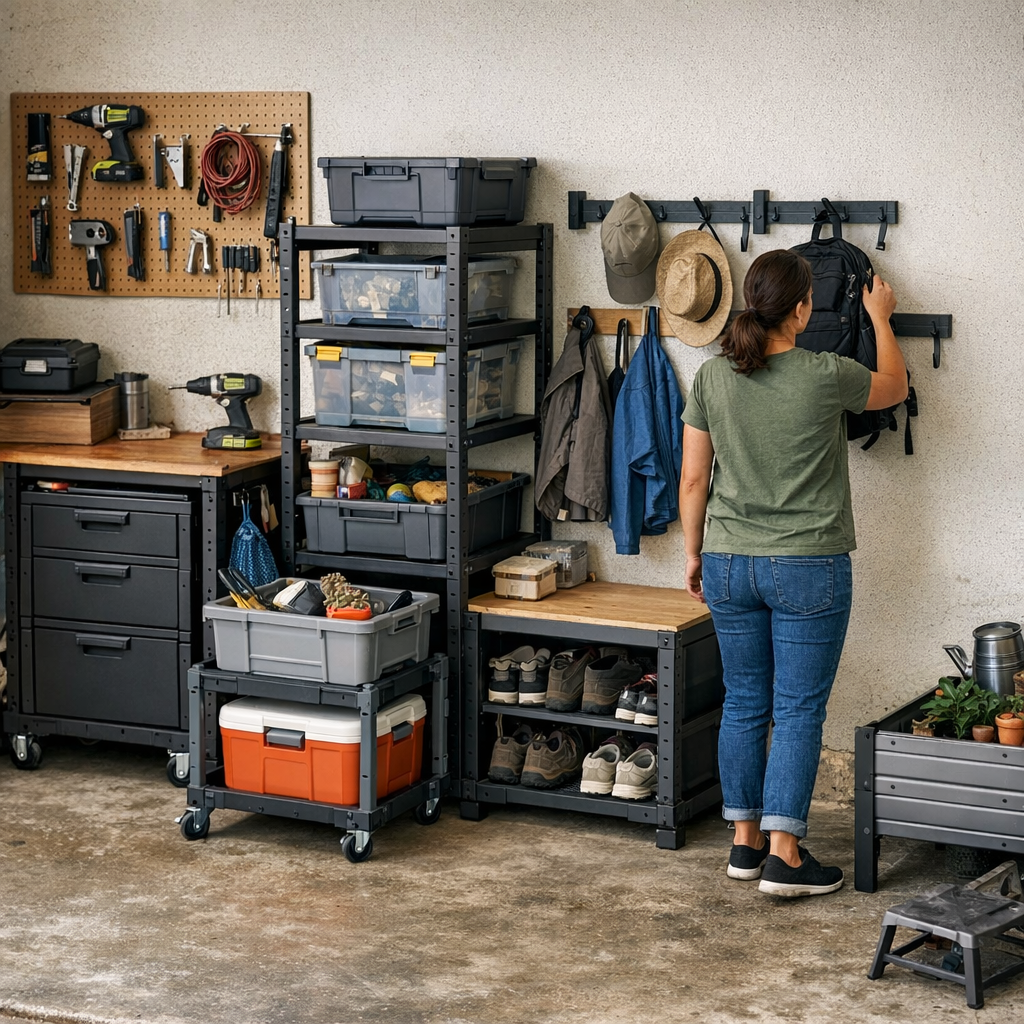
    • Break the straight line. Don’t force every hook and shelf into a tidy row—stagger heights and mix wall with floor-level storage. A bench below hooks, or bins overlapping hook zones, lets you organize vertically without creating bottlenecks.
    • Keep wall and floor systems distinct but complementary. Separate jobs mean less pile-up—so carts and cabinets don’t choke the same corner, and mobile units aren’t nailed down at the expense of flow. Rolling storage should move out of the way (not just look like it can), and modular bins should let you reclaim or repurpose dead space as your needs shift.
    • Treat repeat overflow as a flashing light. If one corner keeps capturing stray gear, solve for easier access there—or redefine what belongs to that spot. Don’t just add another layer; rethink the zone.
    • Use awkward wall spans and corners as adaptable zones, not abandoned ones. Modular systems can slide, expand, or contract. Done right, they make even the least convenient nooks carry their weight—so no spot’s a permanent backlog.

    Audit Your Reset Routine

    Once a week, pause. Watch how things circle back to their “spots,” if they circle back at all. If a bin or hook is always skipped, or if you ever catch yourself cutting corners because a shelf is awkward to reach, it’s a cue: something about the layout isn’t matching your flow. Real organization isn’t about visual order; it’s about a system that quietly resets itself during real movement—not as a chore to be done after the fact.

    Why Looks Aren’t Enough: Lasting Setup vs. Surface Order

    An entryway only earns its keep if it stands up to repeated, daily use. It’s not enough for storage to be present; it needs to keep clear movement routes, distinct categories, and a naturally resetting flow. If every pass means sidestepping, double-stacking, or improvising with overflow piles, the setup just adds to your work. The win is a space that does its job while your routine stays uninterrupted—not picture-perfect, but always ready for the next round.

    Discover modular storage systems built for real, repeated use at StackNest.

  • How Thoughtful Car Organization Transforms Daily Driving Convenience

    A car can seem organized after a deep clean, but by your third or fourth real trip the micro-frustrations return: a loose charger cord tangles at your feet, a bottle disappears under the passenger seat, a cleaning wipe slides out of reach just when you need it. Even in an interior that photographs as “ready,” those small, stubborn friction points start stacking up—so driving off usually means another round of lunging, fishing, and shifting things out of your way. The ordinary clutter that creeps back isn’t just visual—it’s the repeated hassle that undermines the sense of readiness your setup is supposed to deliver. The right structure for your driving routine isn’t about hiding mess, but about reducing these corrections every single trip. This is the difference between a car that just looks settled and one that reliably supports real use, DriveWellSupply style.

    The Invisible Weight of Repeated Friction

    What slows you down isn’t a dramatic mess. It’s every small, repeat correction: the charger cable that won’t stay put, the wipes wedged by the seat belt, the pen or mask that somehow always finds the same gap. Each grab, reach, and minor search eats up seconds—and adds a mental drag that’s hard to ignore if you’re running errands or swapping drivers. After a handful of re-entries, that easy “ready” feeling breaks down into a string of familiar irritations. The cost is invisible but real: the drag of dropped items, tangled cords, shifting organizers, and the subtle, repeated delays they cause.

    When Orderly Looks Don’t Match Natural Flow

    Appearances fool as often as they help. That streamlined, cable-free look can backfire fast: need a quick charge at a red light, or to grab wipes on the go? Good luck digging them out of deep storage—or through an overloaded single-slot organizer where what you need slips to the bottom. A neat setup can end up more like a puzzle box: to get one thing, you have to move three others. Every extra micro-move erodes the function that neatness was supposed to guarantee, especially on fast-turn trips.

    Real-World Scenes: Persistent Micro-Interruptions

    These frictions rarely arrive as a single dramatic mess—they accumulate through routine car habits:

    • After grocery runs: Produce bags claim the passenger footwell again; clearing the space before anyone sits becomes a ritual.
    • Rainy commute: The floor mat slips under your shoes, bunching and forcing a reset before you step on the gas.
    • Errand sprints: That bottle of sanitizer always hangs up beside the seat belt latch; every re-entry, it’s a shuffle to retrieve it.

    The sum of these moments is slow, steady erosion—not a messy disaster, just more tasks between you and a smooth drive. If your structure can’t keep items in place and within reach through normal use, friction returns no matter how much you “tidy up.”

    The Critical Difference: “Tidy” vs. “Usable and Ready”

    The gap between “photo neat” and truly usable reveals itself fast—and not in emergencies, but in those normal, repeated demands: reaching for a charger without detangling a cord, or grabbing wipes that haven’t slipped out of position. Hiding everything is not the victory; eliminating the need to hunt, dig, or fish every trip is. A strong layout means wipes don’t skate away, chargers don’t swing free, and each key item has a predictable landing spot. If you’ve stopped asking “where did that go again?” your setup is finally working for you instead of against you.

    What Happens When the Structure Matches Real Use?

    When the interior shifts in sync with your actual driving patterns, the payoff isn’t visual—it’s felt every return:

    • Charger always where you reach: No more searching between seats or untangling from other cords.
    • Protective mats and covers stay fixed: Wet shoes and jostled bags don’t undo your structure or make you bend down for quick fixes.
    • Daily items stop migrating: There’s no pileup or vanishing act under the seat or at the edges—each tool, wipe, or accessory lands right where you want it, each time.

    This isn’t a showcase, but a structure that actually survives quick park-reload cycles, swap-ins with family, or whatever your week throws at it. If re-entry, access, and cleanup stop feeling like new jobs, your setup is finally holding up.

    Signs It’s Time for a Setup Update

    Is your car’s structure sabotaging daily flow? Watch for these realities:

    • Same item, same spot: still fishing for it after each trip
    • Charger or phone line tangles, piles, or has to be moved again mid-ride
    • Organizers or mats shift, letting clutter slide right back in
    • Grabbing a single item means shifting others every time

    More than one of these? Structure isn’t matching your real routine. Organization is about reliably smoothing your path, not just concealing signs of use.

    Common Setup Missteps That Creep Back

    The top pitfall: Sacrificing access for looks. Tucking every stray cord or bottle away makes for a cleaner photo, but when each grab means fishing under or behind something else, it quickly gets old. The setup puts up resistance at the very moments it should make things easier.

    Cargo that looks compartmentalized can still slow down loading and unloading—especially when groceries shift in transit or you’re working with limited trunk space. Dog travel setups promise order, but if seat covers block buckles or bins eat up foot space, the convenience fades fast. Good structure doesn’t trade one repeated annoyance for another.

    Practical Fixes: Structure That Stays Steady Under Pressure

    What does it look like when your setup really fits repeated use?

    • Cable management that works: Phone lines clip or route through pass-throughs, ending charger-fishing and mid-trip tangles.
    • Seat-edge and door-pocket return spots: Pens, wipes, and sanitizer don’t slide away, and you aren’t repeating the same reach or grab at every stop.
    • Protectors and organizers that don’t shift: Interior gear withstands the normal drag of boots, bags, or quick re-entries—so less time resetting, more time moving on.

    These setups aren’t about a “finished” look; they’re about reducing the cycle of fixing, searching, and resetting—especially during busy, real-world routines.

    Summary: Sustaining “Ready” Through Real Use

    Real readiness happens when each re-entry, search, and charging action flows as expected—without micro-fixes or guesswork. When organizers, cables, and covers stand up to daily drive cycles, your car keeps pace with your life, instead of trapping you in minor resets. The most usable setups aren’t invisible; they’re the ones you forget about because they actually work, day after day.

    See practical car-use solutions built for real routines at DriveWellSupply.

  • Why Geometric Centering Fails in Everyday Indoor Lighting Placement

    “Centered” lighting fails fast—just not where you notice it first. On day one, everything can look right: a flush-mount ceiling light square in the hallway’s middle, a sconce precisely above the bathroom mirror, a bright pool in the living room’s core. But week after week, friction piles up. The hallway that looked “done” now asks you to reach blindly for that lost shoe in the closet’s gray corner. The bathroom’s centered fixture leaves your face half-lit, half-vanished every morning. Even the living room’s glow can form islands of glare and dead space—the chair you actually sit in somehow always on the edge of the brightness, never at its heart. Lighting that fits the room’s geometry rarely fits the way you move, work, or see.

    Why the Geometric Center Rarely Matches Real Life

    The measured, centered fixture feels logical—flush mount or sconce, right in the blueprint’s crosshairs. In the real world, symmetry promises evenness but delivers a brand of inconvenience you only discover after repeated use. Rooms ignore the neat math: Sinks sit off-center, closets eat space at one end, and your daily routines—shaving, grabbing towels, taking the last stair—cut right across the “plan’s” blind spots.

    Take a narrow hallway—drop a ceiling light in the geometric middle, and the closet at one end stays in shadow every time you need it. Each night, it’s the same: you cross into darkness, floor vanishing, searching by feel. In the bathroom, a wall light centered to the vanity—not your reflection—means mornings spent squinting at the bright half, guessing at the shaded half. The flaw isn’t in wattage or style. The flaw is lighting to a diagram, not to the way people actually use and cross each space.

    When Blueprint Lighting Creates Everyday Friction

    The trouble with “design-perfect” lighting shows up in small, accumulating failures:

    • Stair turns: The landing is in shadow, even though the fixture is centered on the plan—making each descent or climb hesitate at the same dim patch.
    • At the mirror: As you lean closer, the light splits your face: one side is all glare, the other side fades out—never balanced, always annoying.
    • Night hallway walks: The path glows in the middle but drops off on one side, or by the closet, or at the far door. You adjust your route or slow down every time.
    • Kitchen counters: Under-cabinet lighting leaves your usual work edge in stubborn shadow—the place you chop, pour, or sort is always just out of reach of clean light.

    These aren’t mere annoyances. They break the rhythm of a room. Every time you shift, stoop, or squint for better clarity, it’s not the bulb failing you—it’s the entire approach. Rooms aren’t meant to be posed; they’re meant to be used, and lighting fixed to abstract centers keeps interfering with routine comfort.

    Small Shifts, Big Difference: Adapting Fixtures to Real Use

    You don’t always need new fixtures or complex rewiring to escape central-lighting traps. Much of the time, comfort returns with a simple adjustment: moving a fixture a few inches, splitting up the coverage, or realigning toward actual activity zones.

    Bathroom Mirror: Sync the Light, Not the Plan

    If your main sink and mirror are offset on a long counter, a perfectly centered ceiling fixture lights the room but leaves your reflection lopsided. Nudging that flush mount even two inches closer to where you stand at the mirror balances the field—no side lost in shadow, every shave or face wash clear-eyed. The entire experience sharpens without a single extra lumen, just a smarter placement.

    Hallway and Closet: Cover the Movement, Not Just the Geometry

    In a narrow corridor, a lone mid-point light leaves each end washed in gloom. Adding a second flush mount near the closet or nudging the original toward the storage zone can finally erase those persistent pockets of dimness. Suddenly, grabbing laundry at night, the darkness isn’t a second obstacle. The room shifts from “lit everywhere but where you need it” to “always clear where you move most.”

    What Signals a Poor Lighting Center?

    Lighting can meet all the drawing rules and still betray you daily. Common signs:

    • Glare in the mirror above an offset sink, blinding one side and shadowing the other—never a full, clear view
    • Consistently dark ends by closets, cabinets, or doors, no matter how many times you swap the bulb
    • Always needing to tilt, lean, or step off-mark for clear sight—folding, brushing, sorting, or cleaning
    • Light lines directly in your eyes when passing through a hallway or alongside a cabinet run, not above or behind where it helps most

    If you’re always compensating—bending, squinting, pausing—the “right” center on paper is wrong in the real room. That’s not a quirk; it’s correctable misalignment.

    Realignment: How (and Where) to Shift Lighting for Better Comfort

    Room comfort starts with matching light to movement, not floorplan geometry. Here’s where small changes make outsized differences:

    • Stair landings and corridors: Shift a flush mount toward foot traffic or install a second fixture at the landing; focused clarity matters more than general glow.
    • Mirrors and vanities: Adjust wall sconces or over-mirror lighting to match your stance, not the counter’s full width—a single inch’s move can banish repeated shadow.
    • Task counters and under-cabinet areas: Align fixtures or strips where you prep or read most, not just in the center; mark activity, not symmetry.
    • Hallway ends and storage nooks: Illuminate where you actually pause or put things away; these dead zones are where abstract “centering” gives itself away every time you use the space at night.

    Lighting for Life: Turning Measurement into Usability

    Reliable comfort in any room isn’t about mathematical perfection. It’s about whether every step, turn, and task happens in steady, clear, shadow-free light—not just under a broad haze in the middle. If your lighting never makes you squint, hesitate, or guess, the setup is tuned to your real routine, not just the architect’s plan. Sometimes that means nudging a flush mount, adding a semi-flush near the stair, or giving the laundry corner a dedicated light—small structural decisions that eliminate recurring inconvenience.

    When the lighting in your home finally follows you—rather than forcing you to track the blueprint’s center—you’ll notice. Not in the way a guest notices, but in the absence of hesitation and in the ease of daily repetition. Centered lighting looks organized; well-placed lighting feels right, every time you cross the space.

    http://www.lighthelper.myshopify.com