Blog

  • How Consistent Signals Transform Your Dog’s Daily Routine Experience

    Some dog routines look perfect—everything arranged and seemingly out of the way—yet daily use keeps exposing the same weak spots. The leash is easy to find until you need it fast and find a bag in the way. The bowl sits in its tidy corner, but your dog stalls, caught between a misplaced mat and a slightly blocked path. What sounded like ‘good setup’ in theory starts to drag: small delays, awkward pauses, one more fumble right when you need a smooth step. In dog life, a routine that only looks right but doesn’t move right keeps slowing you down—and your dog rarely waits quietly for you to catch up. This is the real gap DogPile exists to close: setups that actually match what happens when routines repeat—not just how things look after you tidy.

    When the Routine Looks Right But Feels Wrong

    You set up a neat feeding zone, map out a rest spot, and hang the leash by the door. Yet, every feed, walk, and rest keeps exposing micro-delays: the dog paces the bowl but doesn’t start eating, hesitates at the entrance while your arm snakes past dropped mail, or refuses to settle in a spot where a stray laundry pile keeps intruding. Quickly, the pattern shows—meals stretch longer, walks start slower, and rest becomes another round of nudging and shifting. It’s a routine designed on paper that starts grinding once it hits the real pace of daily life.

    Most of the drag comes not from chaos but from mismatched timing and awkward reach. Move the food bowl slightly to mop up after breakfast and don’t return it exactly; watch eagerness drop in small ways. Hang the leash in a convenient spot, but then one busy morning a bag spreads over the hook, and you’re untangling handles while your dog’s excitement curdles into restless waiting. Each glitch isn’t a crisis, but the sum of these friction points pulls the whole routine out of alignment, making everything feel just a little bit more work than it should be.

    The Compounding Cost of Missed Signals

    Dogs don’t need perfection, but they do build habits from cues you give—timing, placement, repeatability. When signals go ignored or setups change slightly, pace shifts: the dog circles before eating, pauses at the door, or tries to rest only to find comfort blocked by toys or random piles. Often, owners don’t see the human-side friction piling up—unexpectedly late walks, calling the dog back to a bowl moved just an inch off the usual spot, or re-inviting the dog to settle after resetting the rest spot three times in 20 minutes.

    These interruptions rarely announce themselves loudly, but their effect is concrete. The wipes meant for post-walk cleanup? Present, but stacked behind shoes—so you chase a muddy dog across clean tile. The bed positioned perfectly at noon? By bedtime, it’s boxed in by two extra baskets and last night’s sneakers. Every “almost ready” routine means another subtle, steady drain—the setup appears organized but keeps making room for new tiny obstacles.

    Everyday Scenes That Reveal Weak Points

    • Feeding stalls: Bowl is down, but your dog hesitates—waiting for your signal or a clear space that never quite feels ready.
    • Doorway block: The leash is visible but tangled beneath a jacket or caught behind a grocery bag, slowing both you and your dog’s exit.
    • Rest interrupted: Nighttime rest turns into circling and pausing, dodging a toy basket or moving a laundry pile before finally settling.
    • Muddy entrance: Fresh from a walk, you reach for wipes only to realize they’re across the room, so wet paws plant prints on the clean floor you thought was already handled.

    It’s not about missing big steps; it’s about how much constant “just fixing” sneaks in when the setup needs invisible corrections every time. That quiet, repeated drag is the hidden enemy of smooth routines.

    Consistent Structure: Quiet Fixes with Big Effects

    You don’t have to accept routines that constantly ask for another adjustment. The real fix isn’t fancier gear or stricter timing—it’s a structure that anticipates repeated use. Line up cues, keep items reliably accessible, and pay attention to which behaviors your dog repeats just before something goes wrong. When the bowl returns to the same spot every meal, and supplies stay truly within reach, the dog’s approach shifts: steadier walks to the bowl, less stalling, and a clear transition when you pause and actually notice your dog’s readiness before acting.

    The difference isn’t in how neat the setup looks at 11 a.m., but in how little rearranging you need to do after every routine runs its course. When comfort isn’t blocked by clutter, and cleaning gear lives at the entry instead of somewhere “tidy,” your routine finally starts to flow on its own momentum.

    Walk and Doorway Flow: Fewer Blocks, Quicker Moves

    The leash scenario says it all. An obvious hook or bowl works until your next rushed morning or hurried return. The moment gloves or bags fill the entry zone, leash retrieval slows to a shuffle—your dog stuck between anticipation and confusion. It takes one unblocked, visible leash to remove the stall and get straight from cue to action. Add wipes or a towel in the same easy-snag spot, and you’re no longer choosing between muddy floors and ten extra steps while your dog bounces or stalls waiting.

    Rest Spots and Self-Resetting Corners

    Dogs will find the same rest area if it’s open—but “open” shrinks fast under normal home drift. A resting place that requires clearing out toys, lifting boxes, or moving shoes each time isn’t a rest area; it’s an obstacle course. The setups that last are built to reset automatically: nothing to shove aside, nothing to move back, nothing that creeps into the dog’s landing space. If you find yourself silently reshuffling the spot more than once, the fix isn’t another round of tidying, but a layout that stays clear by design.

    How Small Mismatches Create Big Interruptions

    It’s not the huge mistakes—it’s the ongoing, small mismatches between the expected setup and the lived routine. That slightly shifted bowl means the dog waits, then hesitates, then finally starts eating with less enthusiasm. A tangled leash means three steps of fumbling instead of one clean click and go. A bed pinched by laundry means more circling, less rest, and a routine that keeps asking for do-overs. When this happens every meal, every walk, and every bedtime, the cumulative interruption becomes the new routine—one that always feels just out of sync.

    Often, owners misread these moments as random or assume, “He’ll just settle when he’s really tired.” But dogs repeating the same standing point, circling gesture, or pacing behavior are making a clear ask: notice me here, now, with this setup. Structures that match those cues make routines easier for both sides; setups that miss those signals require more fixing and more patience, every time.

    Building Better Routines: Observable Shifts That Really Stick

    Practical changes come from watching where your routine stalls, then making that fix stick:

    • Set one dependable bowl spot. Feed at the same place, every meal. Your dog’s approach firms up, hesitation drops, and meals start and end on time.
    • Time your response to behavior, not the clock. See your dog waiting by the crate, food, or door—pause for their signal, then act. This syncs the routine and uncovers points where you’ve been rushing (or lagging) without realizing it.
    • Keep transition gear within arm’s reach. Wipes, leash, towels—tucked in the entry, not the hall or the closet. Each item you can grab without shifting other things helps avoid the repeated reset loop that creeps into every “neat” setup.

    The biggest upgrades aren’t visible in a photo. They’re found in how much less you scramble and how few times you correct the same spot in a single day. DogPile’s focus is the small, lived breakpoints—turning “just fixed” areas into friction-proof ones that actually feel easier with every repeat.

    Recognizing Your Dog’s Real Signals: Pattern, Not Guesswork

    Dogs repeat their moves for a reason—pacing, hovering, or camping out just before walks or meals is a kind of request, not just passing time. The more consistently you notice these patterns, the easier it is to diagnose misfires. If you see your dog always doing a last-minute lap or waiting at a certain point, something about the setup isn’t quite matching their expected flow. Each time you dismiss these small signals, the pace of your whole day slows—and you end up working around from behind instead of letting the pattern run forward on its own.

    From Tidy Looks to Smooth Routines: How to Tell When Structure Works

    A truly functional setup stops making you fix the same spot again and again. The layout that seemed “good enough” at first—bowl near the rug, leash hung on a shared hook
  • Balancing Dust Protection and Moisture Control in Entryway Storage Solutions

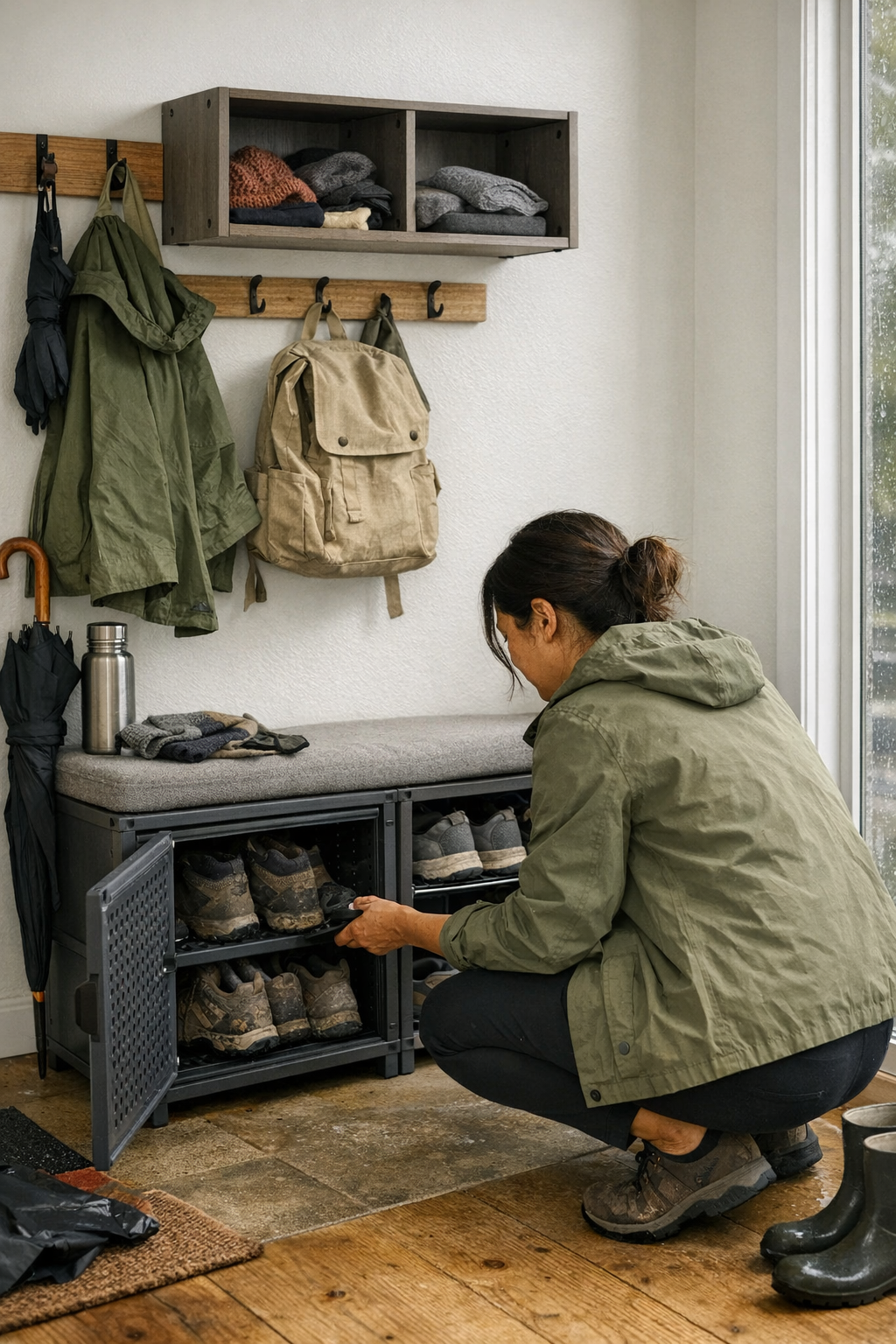
    Every entryway makes a promise the first week—shoes tucked away, bags out of sight, a floor that runs clean from door to kitchen. But the real test starts with the first wet return: shoes rimmed in grit, a rain-soaked jacket, or a muddy backpack dropped after soccer. In that moment, your storage choice—gasket-sealed versus ventilated—immediately shapes what happens next: will order hold, or does your threshold quietly shift from reset to rework every day?

    Looking Ordered Versus Living Ordered

    A sealed cabinet can give an entryway the look of control: flush doors, surfaces wiped down, nothing spilling out in the open. For a dry stretch, it delivers, hiding the shoe row and bench scatter. But introduce a drenched umbrella or a backpack with hidden puddles, and the system starts resisting your routine. You stash things out of sight, only to find them stuck in their own weather: boots that feel spongy, gloves mislaid and now half-damp, a musty air when you open up midweek. Resetting turns into an extra step—a pause to air out, a hunt for dry gear instead of just grabbing and passing through.

    This is the hinge point for transition storage: what contains disorder visually can create silent messes behind closed doors. The split isn’t a theory—it’s the trade between spotless lines and gear that stays ready, between cabinets that shield from dust and setups that prevent your whole flow getting jammed with every wet sweep through the doorway.

    Dust Tight: Where Gasketed Cabinets Shine (and Stall)

    Gasketed, sealed storage works smoothest when life at the threshold is mostly dry—city dust, pollen, and pet hair threaten most, and your entry links to the outside but doesn’t double as a mudroom. Here, tightly sealed cabinets act like a shield: guests kick off clean shoes, you sweep less, and gear slides in and out with hardly a thought. Temporary drop-offs rarely matter because everything inside is already dry and the friction stays low.

    Trouble builds as soon as water is in the mix. After rain or snow, sliding even a nearly-dry pair of boots or a tote with a damp base into a sealed compartment traps just enough moisture to grow lingering humidity inside. The next return amplifies it: more damp gear layered in, never quite drying between uses. What was once order becomes a cycle—resets slow down, a sour smell grows, and you find yourself holding doors open with a foot just to let things air out for five minutes, then forgetting anyway as you head to the kitchen.

    When the Hidden Mess Appears

    These aren’t big, single failures—the cost is in slow buildup. Shoes start sticking instead of sliding out. Gloves swapped for dry ones, only to realize the backup pair is now not-quite-dry. Each reset nudges you off pace, adding small delays or extra reshuffling. The illusion of tidiness masks a drift towards clutter and extra laundry in disguise.

    Ventilated Racks: Give Up a Little Order, Gain Back Time

    Ventilated racks and open shelving change the deal. Everything’s visible—the “picture perfect” calm of a sealed cabinet is replaced by active gear in motion. Shoes dry out; bags lose condensation instead of collecting it. The sweep of the week is messier to the eye, but the movement’s quicker: hats left on a wall hook are actually aired out, boots dry where they sit instead of festering and transferring moisture from one item to the next.

    The main tradeoff? The clutter spreads unless you reset daily. Floor gets sandy after a windy day, sock pairs go missing in open view, and you’re more likely to see the ongoing chaos of a shared threshold. Still, resets are lighter: you’re reaching for a dry item instead of rescuing what’s been stewing in its own dampness. The cycle favors flow—less hidden buildup, fewer delayed departures, and fewer “wait, these are still wet?” moments as you rush out the door.

    The Real Routine: Where Friction Builds

    • You drop a gym bag on the bench, intending to sort it later, only to realize the sealed cubby below is still holding yesterday’s damp shoes—now both areas are blocked, and the pathway closes in.
    • After soccer, sneakers get stuffed into a closed compartment “for now”—next outing, they’re greeted by a sour, stale odor carried over from the last missed venting.
    • Wall-mounted racks eat up hats and scarves efficiently, but when the overflow doesn’t get cleared, items start slipping off onto the floor, turning the entry channel into a slalom again.
    • If you forget just once to wedge open a sealed cabinet after dumping wet gear, one tight seal sets the stage: re-entry means a wall of humidity the next day, not the clear passage you hoped for.

    Small Adjustments with Outsized Results

    Either setup can fail or flex, usually on the margin of a small habit. Leaving a gasketed cabinet cracked for thirty minutes after wet returns—a thumb’s width, no wider—lets trapped damp escape before it breeds problems. In reality, it’s easy to skip, especially on rushed mornings. The penalty: clammy soles, lingering chill in gloves, reset cycles that eat time you thought you’d saved. Stick to a partial-vent routine and the difference is immediate: floors stay clean, bags are ready the next day, and the threshold feels less like a slow obstacle course.

    Matching Storage to Your Threshold Reality

    If your threshold only sees dry gear and sweeping dust, sealed storage runs nearly frictionless. But in busy homes with wet cycles and unpredictable comings and goings, open racks or intentionally vented cabinets are non-negotiable for keeping flow ahead of frustration. The right fit is found not in a static snapshot of order, but in resets that match the turbulence of repeated use.

    Key signs you need to rethink your storage:

    • A closed cabinet develops musty air, even after a single rainy afternoon.
    • Gear comes out feeling cold, sticky, or not fully dry—your “grab and go” becomes “grab and second guess.”
    • More time shuffling items or making space than actually passing through the entryway, especially with back-to-back arrivals.

    Most real setups land somewhere mixed: sealed units during pollen-heavy, dry spells; open racks for winter, monsoon, or back-to-back activity days; and a built-in habit of venting when moisture rides in. The system works if it shifts with you, not just in a photo but after a week of lived-through resets.

    Tip: Create a “Vent Routine”

    Whenever wet gear comes home, pause and leave cabinets cracked—set a timer if you need to. Even short vents in a well-designed entry zone can stop moisture from taking over, cutting down on hidden mess and regaining lost minutes in your return flow.

    What Matters Most: Performance After the First Week

    The real difference between sealed and vented storage is never visible on organizing day—it shows after a spill, a muddy bag, and a cluster of rainy entrances. Pick what stands up not just to the idea of order but to the stretch where paths get crowded, gear returns wet, and every shortcut matters. Efficient threshold storage isn’t about hiding the most, but about matching real rhythms: keeping shoes genuinely ready, spots clear, and resets light—even when arrivals pile up or routines go sideways.

    The best systems flex, recover, and quietly handle the churn of daily use without letting friction pile up. See how adaptable entry storage options can reset your threshold routine at Betweenry.

  • Why Testing Car Organizers with Tape Reveals Hidden Daily Frustrations

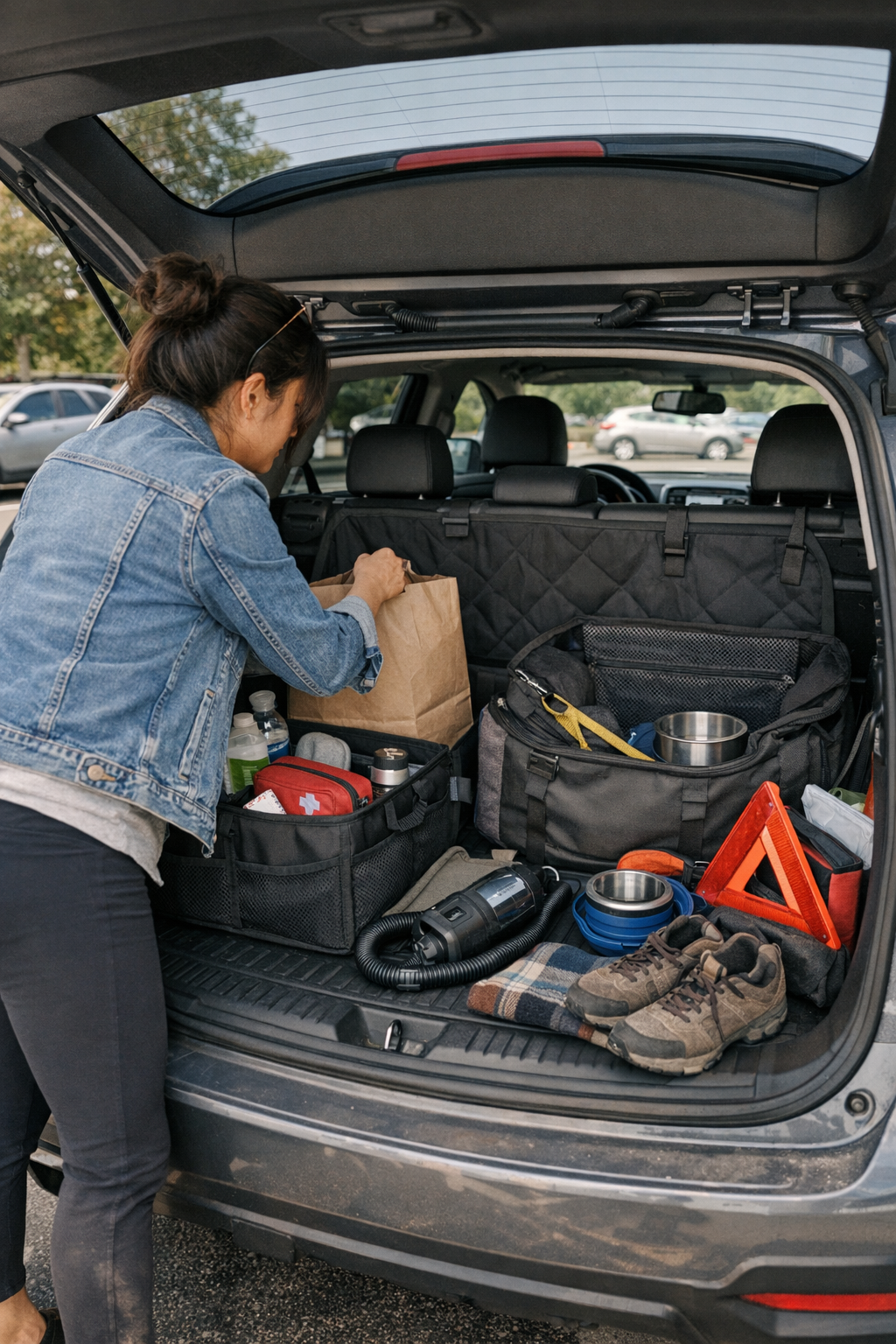
    A car can look organized yet still trip you up at every turn. Slide behind the wheel after a weekend cleanup—fresh bins, crisp trays, perfect order—and things seem under control. But by your third coffee run or midday errand dash, it’s clear: the cable you tucked fights your hand, the “mail spot” leaks letters across the footwell, and every drive means sliding an organizer aside to grab what you need. These aren’t just minor hiccups—they’re proof that car organization fails when it only looks tidy instead of actually working in motion. What separates a staged interior from a functional one is how it feels on a busy Tuesday, not how it photographs on Sunday morning.

    Why Car Organization Breaks Down in Real Use

    Any setup can look impressively neat when the car is parked, doors open, nothing moving. The real test? Regular use: seat swaps, reach for your mounted phone, toss in charging cables, grab a mask, and go. Too many organizers, even smart ones, become sources of friction as soon as you’re back in motion. The difference shows in use, not in stillness—that’s when the flaws flare up:

    • Charging ports blocked off by a storage pocket that never felt “in the way” until you needed a fast plug-in;
    • Phone cradles so perfectly aligned on paper that you have to twist awkwardly to reach from the seat in real traffic;
    • Mail and receipts that shift at every brake, ending up underfoot or wedged into corners despite their “zone”;
    • Charging cables that snake tighter across the center area each time you re-enter, creating their own daily knots;
    • Trunk spaces chopped up by bins that make unloading groceries or boxes a frustrating Tetris game.

    Organizing by sight alone hides friction until routines grind—every awkward grab and cable snare is a micro-failure that stacks up fast.

    A Simple Method to Expose Real Friction: The Tape Test

    Buying a set of organizers and slotting them where you see “extra” space feels logical—until they’re installed and the actual routine begins. Before committing, run a live simulation: use masking or painter’s tape to map out your planned zones for a few days.

    Tape off a phone tray spot, a document pocket next to the passenger seat, a trunk section for groceries. Do nothing else—just drive as you always do, three to five days. Watch what breaks down:

    • A mail zone taped in place quickly fails as letters slump past the boundary during a sharp brake—free to drift into foot space;
    • A taped charging “corner” pulls your cable taut, creating an awkward angle you notice before noon on day one;
    • Trunk lines make sense until your bag shifts, and the new “order” means heavy lifting or spills getting routine items out.

    This isn’t about how the setup looks, but whether it survives repeated cycles. What holds up in theory often falls apart when you hit the road and reach, grab, and load at full speed.

    Real-World Scenes: Where Organization Fails—And Succeeds

    Reaching for the Phone, Again

    Your phone mount sits next to the gear shift, exactly where instructions suggested. Yet on every drive, your elbow bumps a cable or you twist your wrist just to grab your device. Multiply it by ten trips, and the “smart” location turns into a source of daily irritation—proof that perfect placements on paper often block real-world movement.

    Sliding Mail and Unstable Bins

    A designated “mail zone” seems to promise clutter control. But in practice, envelopes pile up until corner turns send them sliding, or sudden braking launches them toward the floor. No tray or taped boundary holds if it doesn’t actually lock movement—leading to quick relapse into chaos as the routine repeats.

    Trunk Spaces That Don’t Fit Your Routine

    Tape off a trunk zone and it’s organized, until two errands in a row demand both groceries and sports gear. Rigid bin dividers mean you’re now hauling bags sideways just to get anything out—and on busy days, the neat setup you trusted grinds daily function to a crawl.

    The Hidden Cost of Looks-First Organization

    If you organize to keep surfaces pretty, you pay in slow motion everywhere else. Every tangled cord, rescued receipt, or bin you move to get beneath—these are costs that repeat across dozens of drives. The real debt is measured in seconds, small frustrations, and the creeping sense that you work for the car instead of the other way around. Re-entering the vehicle after each stop shouldn’t feel like retracing steps from your last fix; if it does, looks-first order is quietly draining your energy, not giving time back.

    How Small Adjustments Make a Big Difference

    The advantage of the tape test is quick feedback: after two days, you’ll know if a divider needs shifting, a cable needs slack, or a bin needs to move out entirely. A ten-centimeter adjustment away from the console is often all it takes to turn phone grabs from awkward to automatic, make cables finally rest flat, or let the mail spot actually hold mail. Many real improvements are small, visible mainly in how much smoother the car feels—one-handed grabs work, untangled cords stay put, and cleanup becomes routine instead of recovery.

    What to Watch For During Your Testing

    • Repeated slowdowns: If you’re picking up the same item slower each time—phone, cable, mask, mail—it’s a sign you have an access flaw, not just clutter.
    • Sliding or buildup: Anything that slides out of its “zone” or piles up somewhere new reveals where current boundaries don’t match actual driving forces or habits.
    • Accessibility vs. order: An organizer that keeps things tidy but slows down essentials—especially on re-entry—means you’re sacrificing use for looks, and the cost builds every week.
    • Compromising other spaces: If a caddy blocks knee room or an under-seat bin shifts into the way during boarding, you’ve traded today’s problem for tomorrow’s inconvenience.

    Finding the Setup That Lasts Beyond Day One

    The best setup is usually the one that survives your actual routine, not the one that fills the most space or impresses on a quiet day. It’s about finding the lineup that supports your movements—phone, wallet, cords, dog leash, mail—without slowing any of them down over three or four days of return-to-car tests.

    • Use patterns make clear which organizers actually serve you and which create new friction;
    • Repeated loading and re-entry exposes subtle delays you never spot in a freshly staged car;
    • Often, removing one unnecessary bin or shifting a boundary is more valuable than adding another clever product.

    What you gain isn’t a perfect look, but the relief of a smoother loop—less friction, fewer resets, and a sense that your car’s setup adapts to you instead of requiring workarounds.

    Turning a Tidy Car Into One That Works

    Real car organization isn’t a static achievement—it’s a moving target judged by what survives the commute, the pickup run, and the daily return. When you let real flow shape your choices—testing with tape, spotting friction, and changing what doesn’t fit—your car finally starts working with you. Less workaround, less forced tidiness, and more time spent moving cleanly through every routine.

    Find the organizers and driving essentials that work with your habits—not against them—at DriveWellSupply.

  • How a Rotating Monitor Arm Transforms Collaborative Workflows Effortlessly

    If your job means fielding questions or sharing your screen several times a day, it doesn’t take long to spot the desk setup flaws that eat away at your rhythm. The typical “clean” monitor stand looks organized—until real work begins. You need to show a colleague something and end up trying to nudge the entire base, shift your chair sideways, and dodge the spill zone around that carefully placed pen cup. Suddenly, order turns into repeated micro-collisions: where to rest your arm, how to keep a loose notebook from sliding, why the mouse cable just snagged under the monitor. That’s when a tidy surface exposes its first real weakness in daily workflow.

    The Subtle Sabotage of a Fixed Monitor Stand

    Fixed monitor stands deliver the illusion of control: everything lines up, cables duck through a desk grommet, the surface looks clear—so long as you’re working alone. As soon as you bring in a collaborator, the friction starts. You grab for the corner of the monitor, careful not to drag your notebook off the edge, fumble past a tripped USB cable, and maneuver a rigid base to an angle that’s still a compromise. The guest leans in awkwardly; you both stare slightly sideways at the display, neither at ease.

    • Your hand stretches across the keyboard, trying not to scatter sticky notes as you pull the monitor.
    • Cables resist, tugging the mouse or pulling the charger taut—sometimes yanking a plug just enough to lose connection.
    • The monitor angle never feels right for both; you alternate between craning and slouching as the session rolls on.

    None of these interruptions ruin a meeting outright, but over a week, the fatigue stacks up. The desk presents itself as efficient, yet every team session triggers a choreography of clearing space, rotating, and awkward reshuffling—underlining how quickly “organize” turns to “obstacle” in active use.

    How a Rotating Monitor Arm Changes Daily Flow

    Installing a rotating monitor arm seems like a minor tweak—but the relief it brings, especially for shared workspaces, registers immediately. Stop moving your chair, stop clearing items: now you use one hand to pivot the screen, leaving everything else—your mug, your notes, your keyboard—undisturbed. Cables no longer pull you into a tug-of-war. There’s no accidental pen spill, no bumping into the edge of a drawer unit that used to block your path. Instead, the monitor floats into place, faces your guest, and returns in seconds. The improvement is doubly apparent in cramped setups, where shuffling the whole workstation isn’t even an option. A few extra inches of screen swing can separate smooth workflow from yet another desk reset or spilled water glass.

    Real Work Scenes Where Rotation Solves Routine Interruptions

    • You field three back-to-back questions during a team review and simply rotate the screen to show your Gantt chart—no pile shuffling needed.
    • Someone brings a printout; you swing the display to compare changes, both of you keeping natural posture and catching details in one glance.
    • You bounce between note-taking and checking reference material, quickly pivoting for angle or glare without breaking your own work stance.

    The flow difference is more than just saving a few seconds—your setup now adapts in real time, turning interruptions into quick pivots, not mini-resets. The rest of the desk stays busy; your routine keeps moving.

    Where Setup Details Make or Break the Improvement

    But not every upgrade delivers equally. Repeated-use friction often shifts rather than disappears if you skip the fine points:

    • Cable slack: Cables cut to length for a fixed stand become your enemy on an arm—snagging, tugging, quietly resisting every pivot. Installing just 6–8 inches of controlled slack in a cable clip or tray turns rigid resistance into smooth travel instead of jerks and accidental unplugging.
    • Desk depth: On shallow desks, the wall—or a stacked drawer unit—can block full arm travel. Measure the pivot path before you install; double-check that you have elbow room behind instead of discovering a hard stop mid-pivot.
    • Obstacles and reach zone: It’s easy to forget how gear piles up: another display, a fan, a random charging dock. If anything encroaches on the monitor’s swing path, your upgrade devolves into a workaround again. Best is to keep the rotation path above the desk’s day-to-day clutter line—static below, moving only where the screen lives.

    Miss one of these, and you trade one flavor of inconvenience for another. Overly neat cable routing looks good but locks the monitor in place. Too little swing space, and you bump into walls, drawers, or other gear—new versions of the old reach struggle. Desk organization isn’t just about hiding clutter; it’s about removing what interrupts the work pattern.

    The Smallest Habit That Made the Biggest Difference

    The unexpected game-changer isn’t the arm—it’s cable management. After a few days of fighting HDMI tugs and charger snap-backs, rerouting each cable in a loose arc and anchoring them near the mount eliminated most interruptions. The difference: no more cable recoil, no half-detached plugs, and no fearing a sudden disconnect as you rotate the monitor mid-discussion. For this setup, adding intentional slack turned the arm from “looks better” to “actually works better.”

    FAQ: Rotating Monitor Arms in Real Use

    Does a monitor arm free up space on a compact desk?

    In almost all cases, yes. Raising the screen lifts it clear of the desk, opening up room for organizers or even just arm movement. The key caveat is space behind the desk: full rotation needs clearance beyond just the clamp or mount—don’t ignore how wall distance or deep drawer units block that swing.

    Will thick or inflexible cables limit the benefits?

    Absolutely. Heavy HDMI cables, oversized power bricks, or rigid sleeves slow the pivot and eat up any ergonomic gain. Swapping inflexible cables for thinner, more flexible versions—or routing all wires through internal arm guides—restores full range and freedom.

    How stable is a rotational arm with frequent use?

    With a proper clamp or grommet mount, a single arm remains solid after hundreds of pivots. Unlike pushing a big, fixed stand, you avoid jarring everything else on the desk. But the real-world stability depends on desk surface quality and lateral force—tricky desks and lightweight tables may transmit more play over time.

    When Setup Looks Tidy but Still Slows You Down

    Plenty of workstations look clean but stall the second you start real tasks. Cable trays hide the mess, but cords still yank when you move a screen. Centered monitors look perfect from the hallway, yet force you into odd posture whenever it’s time to share. A drawer unit swallows clutter but juts into the only usable leg space. These choices create the image of control—but when you cycle through multiple shares, edits, or meetings, you feel the clutter push back in new forms. The “finished” look might even slow down your most basic routine.

    Rotating monitor arms don’t just tidy up the view—they rewrite the ways you hand off, review, or talk through work. Their impact is obvious once your desk becomes a checkpoint for active collaboration. The right setup makes movement easy, reduces reach stretch, and means one less reason to interrupt your focus or reset your space after every project handoff. Order matters, but usable order wins every time you put your routine to the test.

    Swapping out a fixed base for a rotation arm won’t revolutionize your workflow overnight, but it will quietly remove the headaches you keep bumping into each day—reach awkwardness, reset slowdowns, cable drag, and repeated interruptions that never show up in the “after” photos. That difference becomes the reason the desk works for you, not against you.

    Explore the full WorkBasic collection

  • Why Precise Battery Voltage Monitoring Improves Air Cleaner Performance

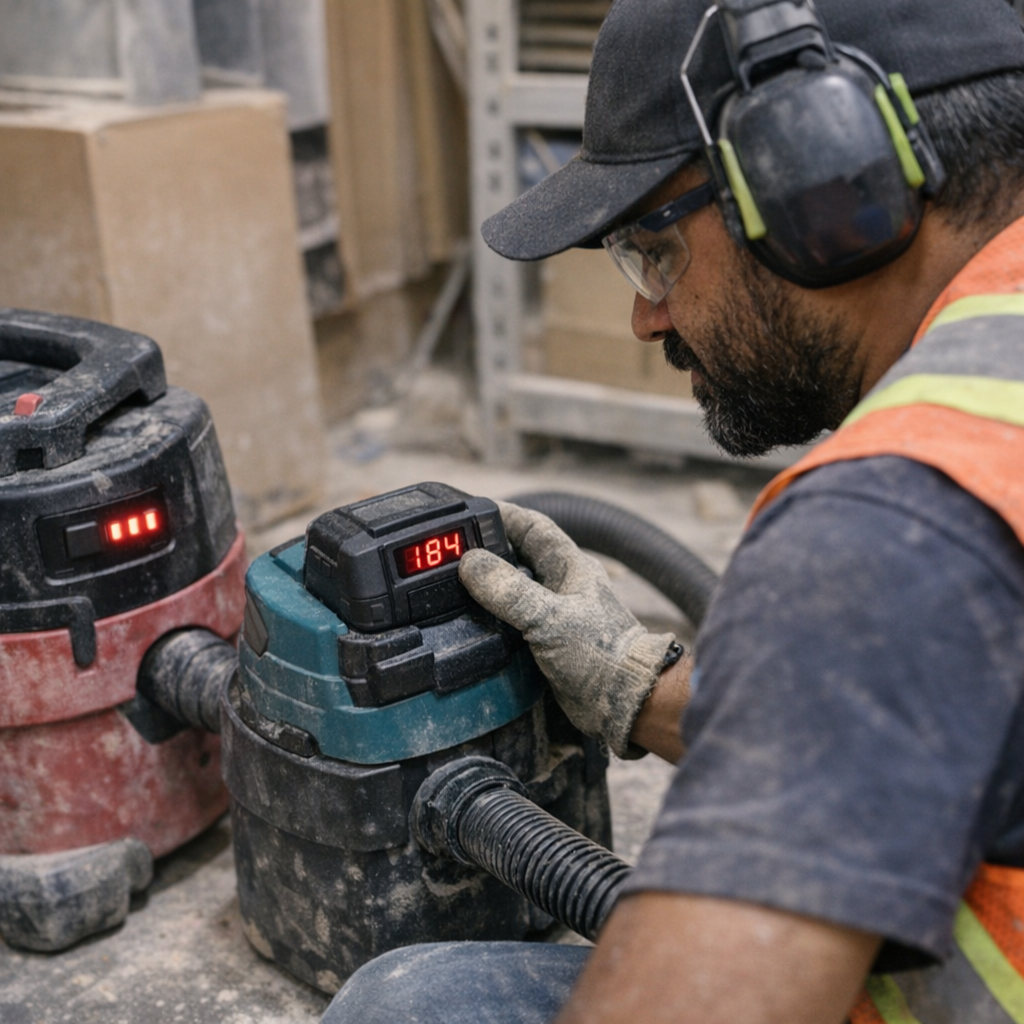
    The drop in battery voltage hits before you notice it—but everything after gets harder. The vacuum lags on a long sanding run; dust suddenly hangs around the jobsite. Tools don’t care if it’s just an hour left in the day or there’s a deadline—performance is performance. And if you rely on an air-cleaning power cleaner to keep pace during rough cutting, concrete drilling, or non-stop sanding, you’ve learned fast: what really matters isn’t just the tool’s muscle or badge. It’s how you track—down to the moment—your battery voltage, while the job’s unfolding for real.

    Voltage on the Floor: Why Numbers Turn Into Mess

    Start the air cleaner and expect strong suction, only to find dust escaping anyway—or the clean hiss replaced by a dull, uneven whine halfway through. Ignore the voltage too long, and what should be a routine sweep turns into a patchy, repeated fight with fine debris. A flashing LED or a vague feeling won’t help you in a corner after cabinet sanding, or after filling a hallway with tile dust. Here, those “good enough” shortcuts mean mess, slowdowns, and more filter swaps when you’re already spent—and the job’s not done.

    Let voltage drop just a little too far and you pay with weak airflow, gummed-up filters, and an ugly restart when you should have finished. The worst part? You rarely catch it until it’s too late. Only when daylight angles in or the site light comes up do you spot the real cost: lines of leftover dust in baseboard cracks, or a powder settling across new paint just as you’re packing gear.

    The Unseen Slide: What a Voltage Drop Looks Like Mid-Job

    Two identical cleaners, two people wrapping up a nasty round of sanding and drilling. Both start out strong. But watch as the hours build: one runs until its “low battery” glows red; the other uses a digital meter showing numbers creeping steadily down. With the LED, you might sense the weak pull just as the tool gives in. With the voltage readout, you spot the drift—airflow fading, motor tone softening—before it gets in your way. The slip is subtle, easy to miss until a haze hangs in the air or cleaning passes start taking longer, each sweep leaving behind a growing trail to re-do later.

    Repeat Jobs: Where Stray Dust Stings the Most

    If you’ve worked cleanup in a crowded storeroom or after hours at an assembly bench, you know: missed dust doesn’t just vanish, it migrates—on shoes, carts, even settling on finished surfaces you’ll have to touch again. Often, what seems like a clogged filter is really just the tool starved for voltage. Wait too long to check, and yesterday’s work visits you twice—scrambled up with a fresh batch of static-clinging, fine debris.

    Late in the Day: The Reality of Chasing Dust with Tired Batteries

    The end of a shift, you’re hauling the cleaner back and forth through doorways, under pipe clusters, behind new cabinetry. By the fourth cycle, the vacuum’s tone starts warbling, airflow drops, and you find yourself working harder for less result, feeling suction lifeless against your hand. You keep going, thinking there’s still charge left—until you spot faint, ugly dust trails looping around wire bundles or slipping under shoe molding. Sometimes you only see these after packing up, forced to drag hoses and tools back out for another round.

    Out in the open, you might shrug off a little dust—but on finished trim or floors, every missed spot is a time penalty. The built-in gauge? Usually just a lagging signal that you’re already behind.

    Precision Upgrade: The Small Change That Fixes the Rhythm

    The fix isn’t complicated—a digital voltage meter that reads to the decimal. My own rig shows changes of 0.1V on a 21.6V pack. The practical effect: the instant voltage slides to 18.4V, the swap happens—before the airflow fades, not after. There’s no last-minute stutter, no silent drop in suction that ruins the finish or doubles your dusting. Just a clear cutoff to keep everything consistent and under control.

    Over time, this means less stalling out. No guessing if it’s filter or battery. No chasing ghostly dust lines with a broom after hours. It’s less break in your rhythm, less wasted effort, and a cleaner exit with fewer double-backs at the closeout.

    Work Smarter: Building Voltage Checks Into Your Workflow

    Check voltage every half hour of real run time, or sooner if suction pulls weak or the pitch softens in your ear. Don’t write off a slow pass or new resistance as just a filthy filter. Glance at the digital display and you’ll know: if voltage is low, swap in a fresh pack—simple. Factory LEDs? Rarely bright enough, often unreliable under shoptop glare or with dust slicks covering the lights.

    Beyond Suction: The Real Cost of Running Low

    Letting voltage dip isn’t just about a little less suction. Motors strain, dragging heat and wear up with every underpowered pass. Filters gum up, dust sneaks past, and maintenance stacks up. Ignore it for weeks and you’ll feel it—in extra tool wear, frequent swapping, and eventually a higher bill for parts and repairs. Small shortcuts ripple out: more wasted motion, more fatigue from going over the same square foot twice, and less time cutting or fastening where you wanted to.

    Make It Routine: Voltage as a Hands-On Habit

    However you monitor juice—onboard indicator, ear for the tone, or a digital meter clamped to the case—the discipline shapes your day. For sanding runs, concrete work, or any job where airborne dust can sabotage a result, those hard numbers beat hope every time. Pick a conservative swap threshold (18.4V works well for 21.6V batteries), and run with it—you’ll get steadier workflow, fewer filter swaps, and, most of all, less wasted time.

    See tools and power equipment tuned for real work at Gumboll.

  • How Organized Travel Bags Ease Stress for You and Your Pet on the Go

    Every pet traveler knows the gap between looking ready and actually managing clean, smooth stops. Your bag appears organized at home—each pocket zipped, essentials carefully placed. But one real outing, and the friction starts: the leash slips under towels, wipes bury themselves, and by the second curbside pause you’re kneeling by an open bag, one hand steadying your dog while the other sorts a growing mess of spilled comfort toys and crumpled cleanup packs. “Prepared” fades fast; actual usability is tested stop by stop.

    When Ready Isn’t Enough: The Gap Between “Prepared” and “Usable”

    A bag that looks perfect on your kitchen counter rarely keeps its shape after a real trip. The very first rush—an impatient dog tugging, a sudden need for treats, or a cleanup emergency—immediately exposes any hidden flaw. That tangle of towels you packed “just in case”? They’re now wrapped around the wipes you need. The water bowl, safe and upright at home, slides beneath the leash, trapping it just as you reach. Repeated friction isn’t about the total storage, but about whether you can actually get what you need, the moment you need it—without everything else tumbling out or getting in the way.

    Every small delay stacks up: each fumbled zipper, each double-check for treats, each second spent searching instead of moving. The feeling isn’t just inconvenience. It’s a shift in how you interact—your pet senses the tension, the travel flow breaks, and even the best-packed carrier can become a silent pressure point as the trip goes on.

    The Stop-and-Go Test: Where Ordinary Setups Break Down

    Friction multiplies at every real-world stop. Picture this: twenty minutes into your trip, your dog’s pacing sets the clock running. The car door cracks open, you grab the leash with one hand, reach for cleanup wipes with the other—and now you’re digging through a pile where bowls, plastic bags, and snacks have all tumbled together. What started out crisp and sorted now forces you to work against your own setup.

    This repeated scramble isn’t rare, it’s predictable. Most bags with a single central compartment collapse into a catch-all pit within two quick transitions. Treats slide out of sight, wipes wedge under beds or toys, and the more you move, the more your “organization” unravels into overlap. Your own urgency echoes down the leash: a rushed search means sharper motions, less patience—and your dog reacts to every shift.

    The Feedback Loop: When Your Rush Becomes Your Pet’s Stress

    Small holdups spiral into big stress signals. You reach faster, your voice shortens. Zippers snap, items clatter, your dog’s attention narrows on each sudden move. The moment slows down—your signals speed up. Each clumsy reach feeds your pet’s restlessness, building a cycle where every stop becomes more tangled than the last. The neat routine dissolves; distraction and pressure edge in for both of you.

    Item Overlap: The Invisible Drag in Every Trip

    Try listing what you actually need, mid-trip, by memory: can you name which pocket has wipes, which side holds treats? Most can’t after three or four stops. Single-compartment bags invite spillover—leashes snagged on bowls, comfort items sinking below cleanup bags, your most-used gear hiding two layers deep. Instead of single-move access, you face an awkward shuffle: to grab wipes, you eject snacks; to reach treats, you toss aside towels. Each attempt makes the next one slower, and you lose track of essentials right when quick access matters most.

    Short Trips, Repeated Friction: The Same Weak Point Returns

    The pain point isn’t obvious at first. It appears in the repeat cycle: the second gas station pause, the third dog park detour, the fifth time you need to change pace under a time pinch. No matter how fresh your setup looked at home, one unreliable access point—be it wipes stuck at the bottom, a toy blocking the treats—keeps coming back to break your flow. The result is slow movement, missed cues, and a rising tally of small, frustrating corrections as the trip adds up.

    Reshuffling on Repeat: When Small Delays Stack Up

    Every reset is a hidden drain. The more you pause to untangle, rearrange, or “fix” your setup, the more energy leaks out of the trip. You pause, your pet waits—impatience rises on both sides. Five seconds here, ten seconds there—all those mini-complications convert to repeated stress signals and lost focus. By the third stop, you’re on edge; your pet feels it. Instead of a flowing routine, you’re caught in a loop of minor emergencies and constant reshuffling created by weak structure, not by chance.

    These aren’t dramatic disasters—they’re the slow, repeated interruptions that turn a simple trip into a string of fixes and re-dos. Every return to the car is a small reminder: the way your bag is built matters far more than how full it is.

    The Shift: Practical Seat-Side Pockets vs. Catch-All Compartments

    The biggest real-world upgrade isn’t adding more stuff, it’s changing where the essentials actually live. Travel setups with true exterior, seat-facing pockets alter the entire flow: wipes in a side pouch you can reach while holding a leash, treats in a slot your hand finds without looking, a spare leash clipped—visible, not buried. Suddenly, the response time compresses. There’s no more fishing in the “main well”; you grab, use, and return in two direct moves, and each access gets easier, not harder, as the day goes on.

    This altered structure isn’t just convenience—it shapes your movement. Your attention returns to the pet, not the bag. Your routine holds up through restarts. Speed and clarity return because the bag’s layout is built for immediate, repeated access, not for photo-perfect packing or once-a-day use.

    A Setup That Moves With You—Not Against You

    By the end of the trip, a well-designed travel kit might look less “neat,” but it hasn’t turned against you. You aren’t wrestling zippers, or making your dog wait while you fix another spillover. The setup supports the routine—every swipe of a wipe, every reach for a treat happens where your hand expects it, not where the bag designer thought it should go. With correct sectioning and predictable access, you keep nerves calm, your pet steadier, and transitions less jarring. The payoff isn’t just fewer delays—it’s genuinely less agitation collected along the way.

    Real Observations: Little Fixes, Big Difference

    One seat-side change can cut more stress than an overpacked kit. Place waste bags and wipes in the side pouch your hand finds first at every stop. Keep treats by the entry point you naturally reach. Clip a spare leash on the outside. Don’t coil it up again. You’ll notice: fewer last-second digs, fewer accidental signals of urgency, fewer distractions streaming down to your pet. Stress doesn’t build quietly in the background—it’s stopped at source by removing tiny access delays.

    The best tweaks rarely require buying more. They’re about changing movement: less bending, less searching, less confusion at the door or curb. A practical arrangement does overtime work, quietly evaporating tension and making every transition less costly for your focus—and your pet’s patience.

    Matching Setup to the Realities of Movement

    A good pet-travel structure passes the repeat-use test, not just the one-time pack. The goal is fewer interruptions, not just tidier gear. A setup that keeps wipes, treats, and leashes in distinct, reliable zones—especially ones you don’t have to look for—teaches your muscle memory, not just your eyes. You spend less time managing your stuff, more time moving and reassuring your pet. Every cut in overlap or misplaced gear cuts anxiety and keeps both traveler and pet more present through the day. When your setup doesn’t slow you down, the whole trip stays workable the third, fourth, and fifth time—long after “looking prepared” has faded.

    PawGoTravel Store

  • Streamline Your Automated Pet Feeding with Smart Setup Adjustments

    Why Daily Pet Care Gets Harder When Details Are Missed

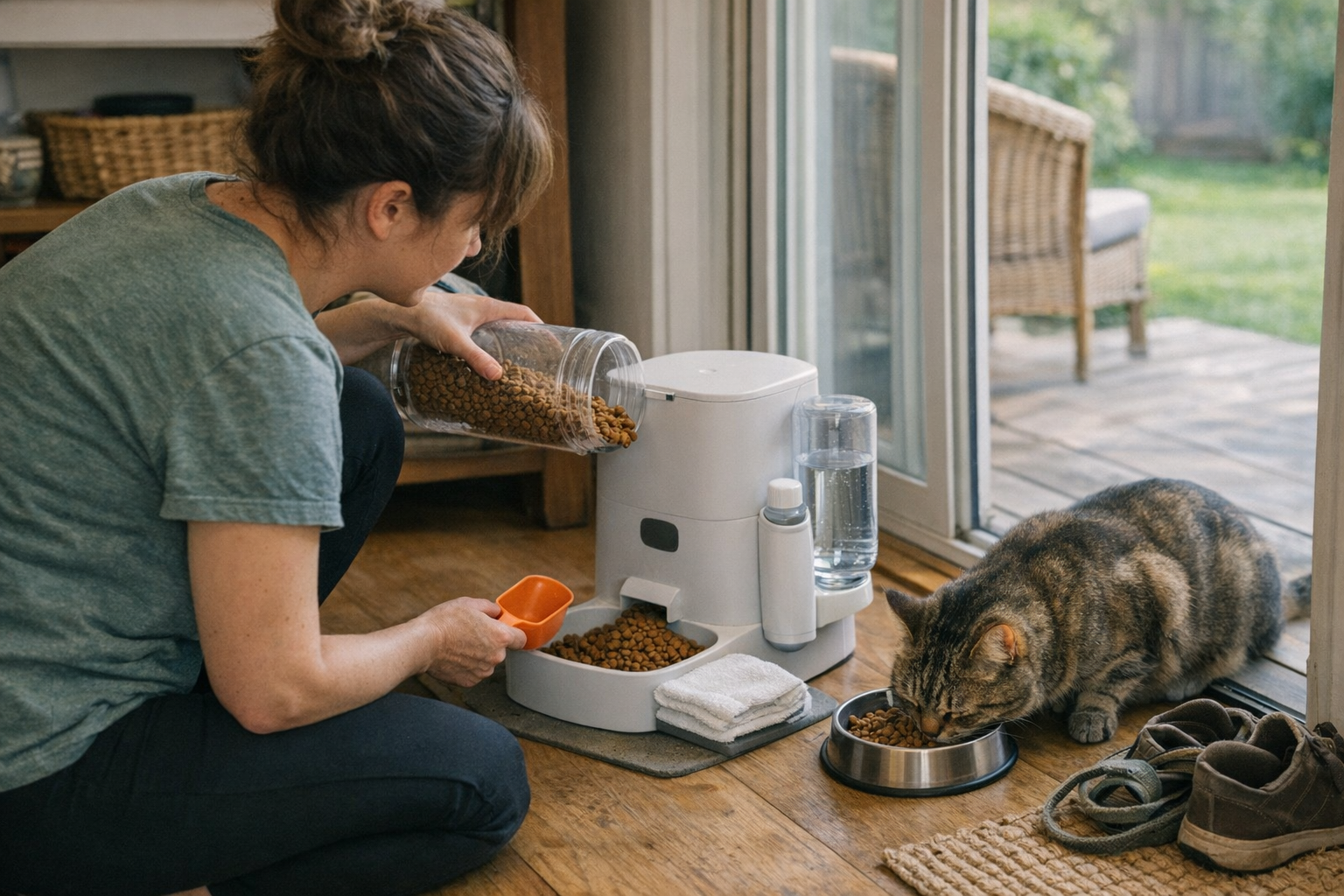
    Daily pet setups can look organized for a day or two, but real problems creep in when essentials aren’t always right where you need them. An automatic feeder clicks on—releasing food like clockwork—but the scoop’s vanished under yesterday’s mail, the refill bottle’s across the kitchen, and a sticky film lingers in the bowl because the wipes aren’t nearby. Instead of a routine on autopilot, you’re thrown into a scramble: one more search, one more trip, one more cleanup left for later. A setup that feels simple turns demanding when a single supply goes missing or ends up just out of reach. This is where the CalmPetSupply world comes in: setups built for real daily use, not just for show.

    The Hidden Friction: When “Effortless” Routines Slip

    Out of the box, it all works: feeder in place, scoop and bottle arranged, surface wiped—ready to go. But real-life routines don’t stay clean on their own. Small gaps appear, piling up fast:

    • The scoop drifts under paperwork or ends up in another room entirely.
    • The refill bottle circles the kitchen, never at the feeder when you need a quick top-up.
    • Misdirected wipes disappear, and crumbs, smudges, and old kibble build up, just beneath notice until it matters.

    Suddenly feeding means crossing rooms, moving piles, or improvising. A feeder that should save time turns into a chore hub. Skip a wipe-down and the next feeding sticks; hunt for a bottle, and you lose flow just because one step got out of sync. The illusion of “automatic” cracks the first time a missing item turns a quick task into a sideline that lingers past breakfast.

    Repeated Interruptions: Real-Life Use Scenes

    Most mornings become a series of detours: refilling the bowl means shifting a grocery sack aside, crawling behind the feeder to find a hidden scoop, or realizing your cleaning wipe is missing—again. The water top-up, supposedly a five-second job, requires backtracking to another counter or even another room. The feeding corner that looked manageable now slows down your whole hallway every time you pass through.

    Evening resets tell the same story—ready to prep for tomorrow, but you hit a snag right away: a wipe nowhere in sight, the refill bottle dry, hands overloaded with other items. Each micro-delay chips away at whatever calm you hoped your setup would save. Even the basics leak back into shared family spaces, tripping up the day’s flow with one more fragment of stray pet gear or spill.

    These aren’t one-time slip-ups. One misplaced refill or missing scoop can keep draining minutes and attention, stretching what should be a pause for your pet into just another household pressure point. Even when the area stays visually tidy, you find yourself pausing to reshuffle, stepping away from kitchen tasks, or mapping a route around half-blocked access. A routine that once looked under control starts consuming space, time, and headspace—especially if you share it with others.

    The Difference Between Tidy and Truly Functional

    A neat appearance always seems like enough at first: supplies lined up, no loose kibble, everything out of sight. But function trumps form when routines repeat. A feeding corner can seem picture-perfect, but if your essential tools aren’t exactly where your hand needs them, every step is an interruption waiting to happen.

    For example, spotless floors don’t save you a step if the refill bottle lives somewhere else. A well-wiped bowl still means an extra walk if your scoop wanders away or gets piled under unrelated clutter. What looks reset and organized often conceals the next snag—and you only notice when you’re stopped in the middle of some other job.

    Practical Shifts Make Care Friction-Proof

    The game-changer is always simple, concrete placement: the refill bottle actually mounted beside the feeder, a scoop and wipe caddy anchored at arm’s reach, not drifting off elsewhere. No extra storage; no wait-until-later reshuffling. Putting each supply back during the actual routine—not just at the end—means every part of the care loop stays in sync, even when time is tight or you’re juggling five things at once.

    Try tucking a refill bottle holder at feeder level and dropping the scoop into a visible tray beneath—not off to the side. Suddenly, feeding resets flow in seconds, wipes aren’t an afterthought, and you don’t break stride walking away. What used to be a hidden job now fits right into your everyday schedule, saving invisible cleanup later.

    Daily Details That Make Care Consistently Calm

    Keep every supply—food, scoop, refill bottle, wipes—anchored at the actual point of use. Replace and return items in real time instead of falling back on a weekend clean. A quick swipe after food drops means later bowls don’t stick or clog; water bottles left on-site mean top-ups aren’t a scramble. Routines hold steady not through complicated systems but by letting the right tool meet your hand exactly when you reach for it, every day.

    Real-World Proof: Convenience Isn’t Automatic

    “Set-and-forget” only lasts as long as your arrangement genuinely serves repeat use. One missing or badly placed supply can slow you down every single time—whether that means backtracking, improvising, or letting clutter drift, the cost builds with every repetition. The routine that seems solved after one good reset slips fast when core details don’t stay put.

    There’s real difference between a visible reset and an actually friction-free routine. The CalmPetSupply approach is about anchoring the basics where they’re needed—so no hunting, no sidesteps, no extra resets. The payoff is immediate and visible every time you refill, feed, or tidy up. The right setup does more than look tidy: it frees up real space and calm at home, with less repeat-work in your day.

    Find setups for feeding, water, cleanup, and daily calm—purpose-made for real routines—at CalmPetSupply.

  • Why Small Yards Benefit More from Systems Than Extra Storage Products

    It’s not just a lack of square footage that makes small yard storage so exhausting—it’s the way perfectly good setups quietly trip you up. The side-yard cabinet, the bins lined along the fence, the deck box that promised an empty patio: they fill up, overflow, and then start to get in your way. Shoes line up along the back step where the shelf is always one move too far. A spade perches on the gate post, waiting for its “real” home. That storage bin meant to rescue your flow? It sits half-a-foot forward, quietly squeezing the walkway every time you pass. None of this looks like chaos, but it chips away at the space’s usefulness, day after day.

    When Clever Storage Stops Feeling Clever

    Every outdoor setup hits that turning point where a good idea turns into a small headache. The new storage chest arrives and, at first, everything tucks in. But patio chairs block the lid halfway. You need to move two things to return one. Bins that started out organized turn shapeless with the mix—seed packets, stray dog toys, one muddy glove, the random bit of wire. Floor space becomes an obstacle course. What looked tidy one weekend slips gradually: a toolbox balanced on the bin lid, the grill brush wedged behind the folded chairs, the path to the side gate now a sideways shuffle. Organization becomes friction—each “reset” feeling heavier than the mess it’s meant to prevent.

    Why Traditional Storage Keeps Losing to Real Routines

    The breakdown isn’t dramatic—it’s cumulative. The more you rely on big bins and closed cabinets, the more you end up digging, doubling back, or skipping the reset altogether. A bin swallows rope, then hides that trowel you reach for midweek. Overflow collects in predictable blind spots: gardening pots stack up behind the shed, balls roll under the table, watering cans cluster by the fence. Those “dead corners” soak up the overflow. So every few days, you reshuffle, reclaim an awkward patch of floor, and know it’ll fill back up before next week.

    Wall Storage: The Illusion of Freeing Space

    Mounting hooks and racks is supposed to clear the floor, but unless they’re placed where your routine naturally passes, they’re decoration more than solution. Gloves land on the hooks on day one, but on day three, they end up on the nearest bench. A rack above the spigot stays empty because it’s that one step too far when your hands are muddy. Wall panels fill quickly, but the path between gate and fence keeps getting tighter. Wall storage that only looks right is quickly outpaced by how you actually move.

    The Daily Reset Struggle, Scene by Scene

    Picture the cramped side yard after a week. Morning watering means dirt-caked boots pile outside the door—close, but never quite inside. Gloves disappear beneath last season’s planters, forcing a midweek hunt. Deep bins become black holes: last Sunday’s pruning shears lost to a tangle of forgotten gear. By Thursday, you’re sidestepping piles instead of working. That precious five minutes for a quick project is eaten up by dealing with minor blockages—paths constricted, corners filling with overflow, access narrowing room by room. The system isn’t broken, but it isn’t working for the way things actually get used.

    The friction is all around you—tight walkways, mounting overflow, and a reset routine that gets heavier with every return trip. Storage setups that ignore the way you move just hide the mess until it spills back across your path.

    When Setup Follows Real Flow

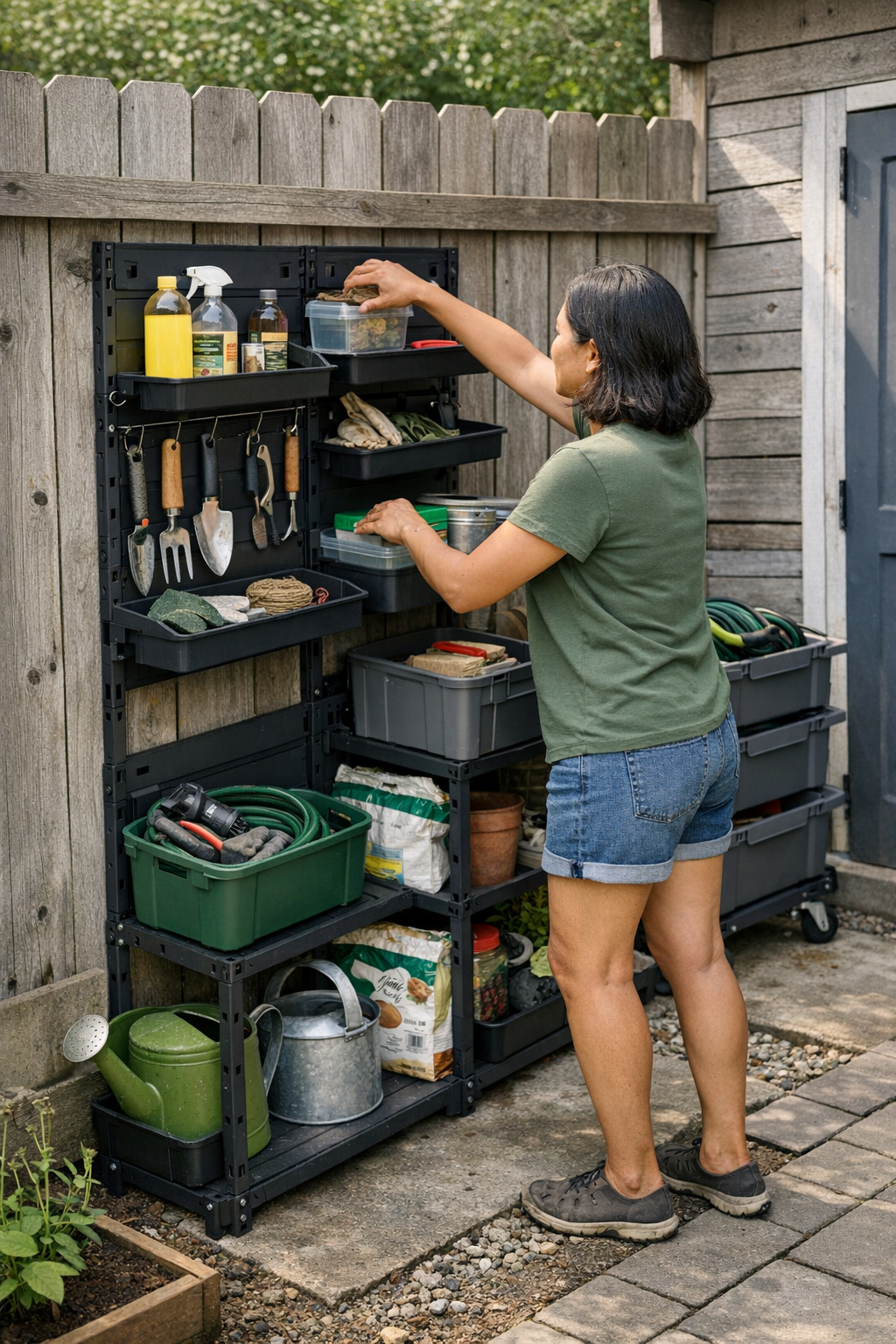
    No storage system handles the work for you, but you feel the shift when organization starts matching your outdoor habits. Take the difference between a deep bin at the patio edge—where pruners and trowels get buried—and a few hooks and trays right on the fence by the planting zone. Suddenly, the reset is built into the motion: finish watering, hang the hose; drop gloves in a tray just outside the door. Stray items stand out instead of hiding in a pile. It’s not perfect—some dirt collects, and sometimes an item is still misplaced—but the clutter you have to handle stays visible, and the tidy-up shrinks from a major chore to a passing gesture. Over the months, those micro-adjustments reclaim time and space that would otherwise be lost to constant reshuffling.

    The Power of Tiny Tweaks

    Small physical changes transform how you use your space. It might be a hook near the back gate so the sprinkler gets returned after use, or mounting a narrow shelf right where muddy boots actually land. Replacing one dead corner with a vertical module forces overflow upright—overflow you see and deal with, not trip over. Suddenly, resets happen mid-routine: gloves hung one motion earlier, tools dropped where you actually finish working, not where the system says they ought to go.

    Questions That Actually Unclog Outdoor Organization

    Why not just add more bins?

    Because another bin becomes a new hiding spot, not a fix. It turns daily-use items into missing tools, especially if there’s no assigned zone or route. More storage without smarter setup only stretches out the same frustration—longer hunts, more blocked paths, another heavy reset ahead.

    How do you keep the small stuff from vanishing?

    Visibility beats containment. Shallow trays and hooks, placed directly along the routes you already use (not just on available wall space), keep essentials from getting swallowed up. The next time overflow threatens, you’ll spot it and adjust before it takes over. Deep bins only hide what you’ll end up searching for anyway.

    Tidy versus usable: can you actually have both?

    Only when you split the setup. Keep open, visible storage for everyday tools where you already walk, and stash seasonal or rarely-used items further out of sight. This cuts down reset time and keeps core pathways uncluttered. No more scavenger hunts—just a straight return.

    Turning Setup Friction Into Real Flow

    Outdoors, there’s no “forever tidy.” The goal isn’t pristine surfaces, it’s a system that bounces back with minimal fuss. If you’re dragging bins aside to reach the hose, or wading through corner clutter to find a tool, your storage is asking to be realigned. Usually, it’s as simple as moving a unit, planting a hook by the exit, or swapping a buried bin for a visible tray. The biggest gains come from tweaking the trouble spots: the fence bend where stuff piles up, that garage threshold that always bottlenecks, the shadowy patio edge that fills with overflow. Once your setup works in step with your routine, resets happen as a side effect of use—no big cleanup block required.

    In the end, the real difference isn’t how much storage you have outside—it’s whether the setup makes your space easier to move through every day. The best outdoor organization isn’t invisible; it earns its keep each time a task resets itself before the clutter gets a chance to build again.

    http://tidyyard.myshopify.com

  • How Function-Based Packing Transforms Carry-On Travel Efficiency

    The illusion of a well-packed carry-on usually shatters the third time you’re cut off by a document check or the second time your charger goes missing in a crowded airport. A bag that looks “organized” on your bedroom floor often falls apart during real travel—when friction hits, cosmetic neatness turns useless. The real test is not how your bag looks at home, but how quickly it gives up a passport at a tense security line, or whether a quick tech grab turns into a scramble with organizers and cubes under pressure.

    When “Organized” Packing Slows You Down

    An “Instagram-ready” carry-on—cubes aligned, pouches color-coded—can fool you into believing you’re ready for anything. Then you hit the first security tray, and the cracks start showing. Suddenly:

    • your passport is lodged under two packing cubes and a tangled band of charger cords,
    • getting to your headphones requires unzipping the entire main compartment (and restacking half the bag after),
    • a charger, visible when you packed, is now wedged under snacks and a toiletry kit, forcing a partial unpack just to keep your phone alive.

    With each repetition—security line, boarding call, seat adjustment—these delays pile up. What started as a small annoyance grows into a measured drawback: every round drains a little more momentum, until your “organized” layout feels like a liability you have to manage every step of the trip.

    The Cost of Repeated Access in Real Travel

    Real travel isn’t an unbroken flow—it’s a repeating pattern of line-jumping, document handovers, squeezing down narrow aisles, reaching for tickets or wipes with one hand while dragging luggage with the other. Every stop-and-grab reveals whether your packing system works under real tension, not just at rest.

    If you’re reaching for high-frequency items and your hand keeps heading to the main compartment, you’re setting up a slow-motion mess. Every repeated dig means another round of repacking, misaligned organizers, and items sliding into new corners. At security, visible hesitation draws attention and stress; at the gate, one awkward reach disrupts your pace and everyone else’s. The cost isn’t just in time—it’s visible in the way your setup starts fraying around the edges before you even board.

    Why Visual Order Isn’t Enough

    Neat columns of pouches or perfectly layered cubes don’t survive flight connections or rapid-fire checks. The real flaw shows up the moment you’re forced to open your bag in motion: if essential items still require shuffling—the “quick grab” becomes a partial repack, every single time. Visual order fools you into thinking you’re set, right up until a checkpoint exposes how buried your essentials are. A functionally packed carry-on exposes its advantage only when your hand finds what you need, first time, with zero reshuffling—or doesn’t.

    Function-Based Packing: Setting Up for Movement

    Instead of thinking by category—chargers here, toiletries there—structure your carry-on around how, when, and how often you’ll need each thing. Ask which items you’ll need while standing, walking, or answering a document check. Function-based packing means:

    • placing passports, boarding passes, tickets, and small tech in dedicated, instantly reachable outer pockets,
    • building in single, predictable access points for true quick-grab essentials,
    • deliberately separating must-reach gear from everything else that can stay stowed long-term.

    No setup is frictionless. Giving outer pockets more responsibility may add visual bulk or cause your perfectly symmetrical layout to sag. But the first time you clear security or respond to a spontaneous gate change without digging… that “imperfection” pays off. Items that matter most stay accessible, while the main compartment is reserved for cargo you won’t need to touch mid-transit.

    What This Looks Like in Repeated Use

    Put to the test on a two-airport route with an international connection, a function-first setup exposed the difference within minutes. Passport, earbuds, charger, and wallet—all moved to a single unzip-and-reach pocket. Each checkpoint became a one-move task: zip open, hand over, zip closed—no shifting, no accidental dump of cubes, no run-on repacking. The main compartment only opened once, at the hotel hours later. The trade-off—a slightly chunkier outside pocket—became invisible compared to the compounding time and stress saved by the second round of security.

    Packing Pitfalls: Where Function-Based Setup Makes a Difference

    Packing for visual order falls apart at exactly the worst moments—

    • The aisle pause. You halt traffic, balancing your bag, scrambling for a ticket that sits two zippers deep—just as someone needs to squeeze by.
    • The tray shuffle. Pulling a charger out from the main compartment triggers a cascade: pouches slide, cubes splay out across a communal security tray, your focus shreds as the line pressures you to hurry.
    • Return friction. Once you grab something, it never lands in the exact spot you started with. Two retrievals later, your tightly organized system is a loose stack—and that charger or passport is now buried again, setting you up for the cycle to repeat.

    Function-based setups aren’t magic, but they cut the drag immediately. Each “interruption” becomes smaller and less costly. You stop rebuilding your setup on the fly, and minor slowdowns stop turning into major pileups as the trip rolls on.

    Is It Worth Re-Structuring Your Carry-On?

    If your carry-on feels like a puzzle where every use scrambles the solution, the answer is yes. It’s not about chasing maximum neatness or color-matched bliss. It’s about whether reaching for your passport—on the third, fourth, or fifth try—requires another repack, or just one clean motion. Grouping by type has its visual charm, but the moment you really need speed—a gate change, tight seat row, impatient line—one well-placed outer pocket can save you from dumping your “organized” contents across the aisle.

    Every Travel Routine Exposes Your Setup—For Better or Worse

    The longer your journey, the more brutally honest your bag becomes. What survived a home test collapses in the noise of airports and real movement. Security delays, lost tickets, endless shuffling after each “just one thing” grab—these recurring frictions invite a tougher question: Does your carry-on work when you need it over and over, not just once?

    No packing method is flawless, and no carry-on can escape all repacking. But a function-first setup—designed for repeated, real access in transit—reduces drag, saves time, and lowers in-motion stress across any travel sequence. That, not visual order alone, is what holds up when travel gets real.

    See what a function-based carry-on setup feels like at CarryOnSupply.

  • How Low-Glare Lighting Transforms Everyday Utility Spaces for Comfort

    Most homes look bright enough—until you actually use the space. By the third week of laundry, you’re still squinting at care labels under the flush-mount ceiling light. In the bathroom, your reflection turns patchy, forcing you to squint, lean sideways, or angle your chin. Working at the kitchen counter? You have to chase circles of shadow, blocking glare with your forearm just to find the cutting board’s edge. The ceiling may look fully lit, but daily routines reveal the same flaw: output poured everywhere, with visibility and comfort left behind.

    When “Brighter” Doesn’t Mean “Better”: Subtle Frustrations Add Up

    It’s easy to believe a single overhead can handle the whole room—flush mounts, modern panels, a dramatic fixture in the hallway. But every routine exposes what that ceiling light misses. Machine controls in the laundry room glare unreadably, especially on cool metal tops. Kitchen counters go from gleaming to divided: one half is over-bright, the other shaded. After another squeeze on the stair landing, you blink reflexively, mapping out your next step by feel, not sight.

    Discomfort isn’t dramatic. It creeps in: you rub your eyes, nudge paperwork under the brightest patch, turn your head to dodge a flash in the mirror. Corners in the utility room stay unrested. Glare bounces mercilessly off tile on damp mornings. Instead of fixing the imbalance, you compensate—avoiding certain spots, adjusting your path, or simply living with routine annoyance that stacks up over time and slows even simple tasks.

    How Overhead Fixtures Create Invisible Obstacles

    Overhead lights claim to “fill the room,” but their weaknesses show when you have to move, read, or look closely. Everyday use puts the failures in sharp relief:

    • Stairway handrails glare back at you on the landing, right where certainty should be highest—forcing caution where movement should be fluid.
    • Bathroom mirrors offer a clear face—until you step in close, when a bolt of direct glare makes you look away, blurring detail when you need it most.
    • Kitchen and laundry counters end up split in two: one side in shadow, the other reflecting overhead light straight into your eyes, pushing you to awkward angles and disrupting the routine.
    • Hallways look fine up high, but the path ahead blurs, with one flank darkening and the other glaring, making every walk feel off-balance.

    If you find yourself shifting, squinting, or hesitating in a “well-lit” area, the lighting isn’t just an aesthetic failure—it’s a daily obstacle, leading to missed steps, misread labels, or constant micro-adjustments that sap time and comfort.

    The Limitation of Single Fixtures: Shadows and Glare No Matter the Wattage

    Turning up the brightness or installing a more powerful panel rarely solves the problem. Instead, it trades one kind of discomfort for another: new shadows on the wall, cutting glare across surfaces, or leaving corners as dim as before. Every exaggerated hot spot is a reminder that spread matters more than raw output. The result: ordinary tasks feel disrupted, not just underwhelming.

    Adding more light without direction just pushes the friction around the room. Streaks of light dance across folded laundry or slice the bathroom mirror, and “improvements” in one task zone create shadows or reflection zones somewhere else. It builds into a loop—each new bulb or brighter fixture leaves a new blind spot, especially noticeable during repetitive tasks: hunting for that product label, carrying groceries, leaning in for a closer look, or walking the same darkened path night after night.

    Real-World Scenes: Where Lighting Frictions Repeat

    Stairways and Landings: Navigating Shadows, Not Just Brightness

    Picture a steep stairwell, lit only by an overhead bulb. You take the turn, hand on the rail, and harsh light leaps off the surface, making the next step fuzzier, not clearer. On a damp morning, reflections build, requiring you to step with extra care. Over time, you shift your weight defensively and look away from the “lit” step—subconsciously confirming that the space may look bright, but doesn’t actually guide safe movement.

    Mirror Zones and Bathroom Sinks: Uneven Lighting Where Clarity Matters

    Main ceiling lights face the mirror directly, but their glare splits your reflection down the middle. Attempting to shave or apply makeup, you find each side of your face unevenly lit, one flashed to white, the other falling away. Frustration follows as you sidestep, lean, or even cup your hand to block the strongest beam, proving that more overhead light doesn’t equal clarity or comfort for daily routines.

    Work Surfaces and Counters: The Shadow Keeps Coming Back

    Overhead lighting sets up counter work for failure. You reach for detergent or chop vegetables and end up chasing “good” lighting across a glossy surface. A single flush mount leaves an unmistakable stripe down the middle—a distracting stripe of glare edged with shadow. Tasks slow down as you shift everything (and yourself) to avoid the least usable spots. “Full brightness” at the ceiling, but the real work surface is still unpredictable.

    Practical Fixes: It’s About Direction and Diffusion, Not Just Output

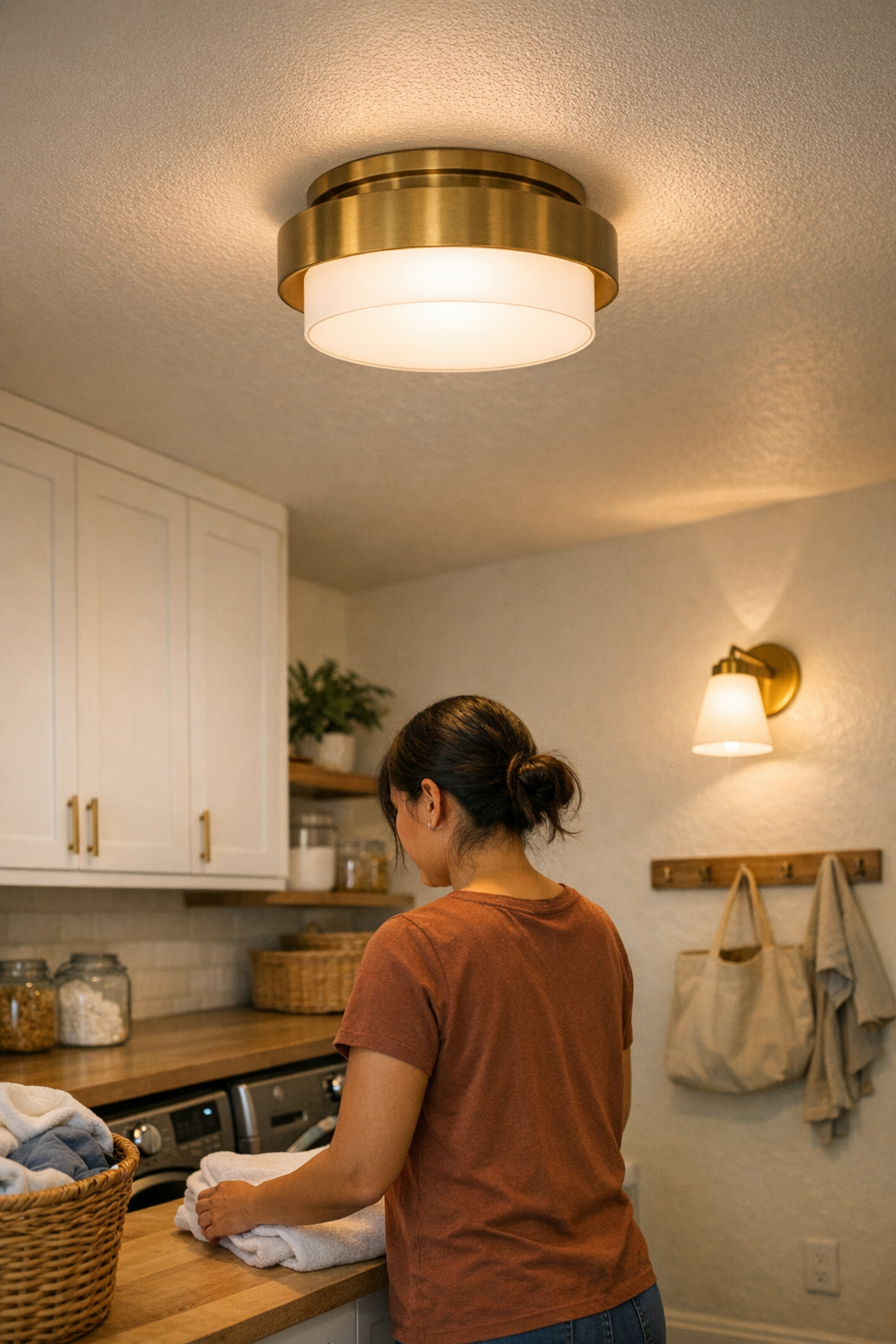
    Routine discomfort doesn’t fade with a brighter bulb. The breakthrough is using fixtures that shape and direct the light, not just flood the space. A frosted panel in the stairwell quiets the reflections and weakens shadow bands. Add a low-glare wall sconce at the stair turn: suddenly, every step is outlined, the handrail is visible rather than blinding, and you move naturally without hesitation. These aren’t visual upgrades—they’re functional corrections.

    Wall sconces, hardwired task lighting, and well-placed under-cabinet strips don’t layer on luxury; they clear repetitive obstacles. The right light at the mirror, the landing, or above the laundry counter means you stop working around the fixture and start working in the space. Shadow edges smooth out, reflections stay muted, and glare no longer dictates your route or pace.

    Layering, Not Multiplying: A Smarter Approach to Everyday Lighting

    “Just add more lights” is a trap. Layered lighting—soft overhead for the whole room, wall-mounted or under-cabinet for surfaces and faces—actually reduces hotspots and makes every area more predictable to use. Doubling up on overheads multiplies glare. The real solutions use lower-output fixtures, aimed to break up shadow and deliver visibility right where your eyes need it. Work counters, walking paths, and mirrors all stay equally accessible—without trading one problem for another.

    Use this quick test: If you routinely squint, reposition, or adapt your whole task around a stripe of shadow or a reflected flash, your setup isn’t serving you. Real upgrades mean matching fixture type and placement to repeated trouble spots, not ceiling voids. Frosted panels for damp rooms, directional sconces for stair turns, and diffused under-cabinet strips for counters tame the friction fast—without overloading the space.

    The Difference You Feel After Changing the Lighting

    Shifting from glare-heavy overheads to layered, diffused fixtures changes how you use every room—quietly but repeatedly. You move through stairways and halls without pausing or glancing away. Faces in mirrors appear evenly and naturally, making routines faster and less strained. Counters are simply usable, not battlegrounds for shadow versus glare. The most visible difference? Fewer stalls, squints, or detours in the middle of habits that ought to be simple. Good lighting leaves a space feeling clear, routine-friendly—and no longer something you have to work around.

    Track your lighting setbacks: wherever you change your behavior or hesitate in a supposedly “bright” space, that’s where a smarter fixture or better position will actually make a difference—every single day.

    Find practical indoor lighting that makes daily use more comfortable and reliable at LightHelper.