
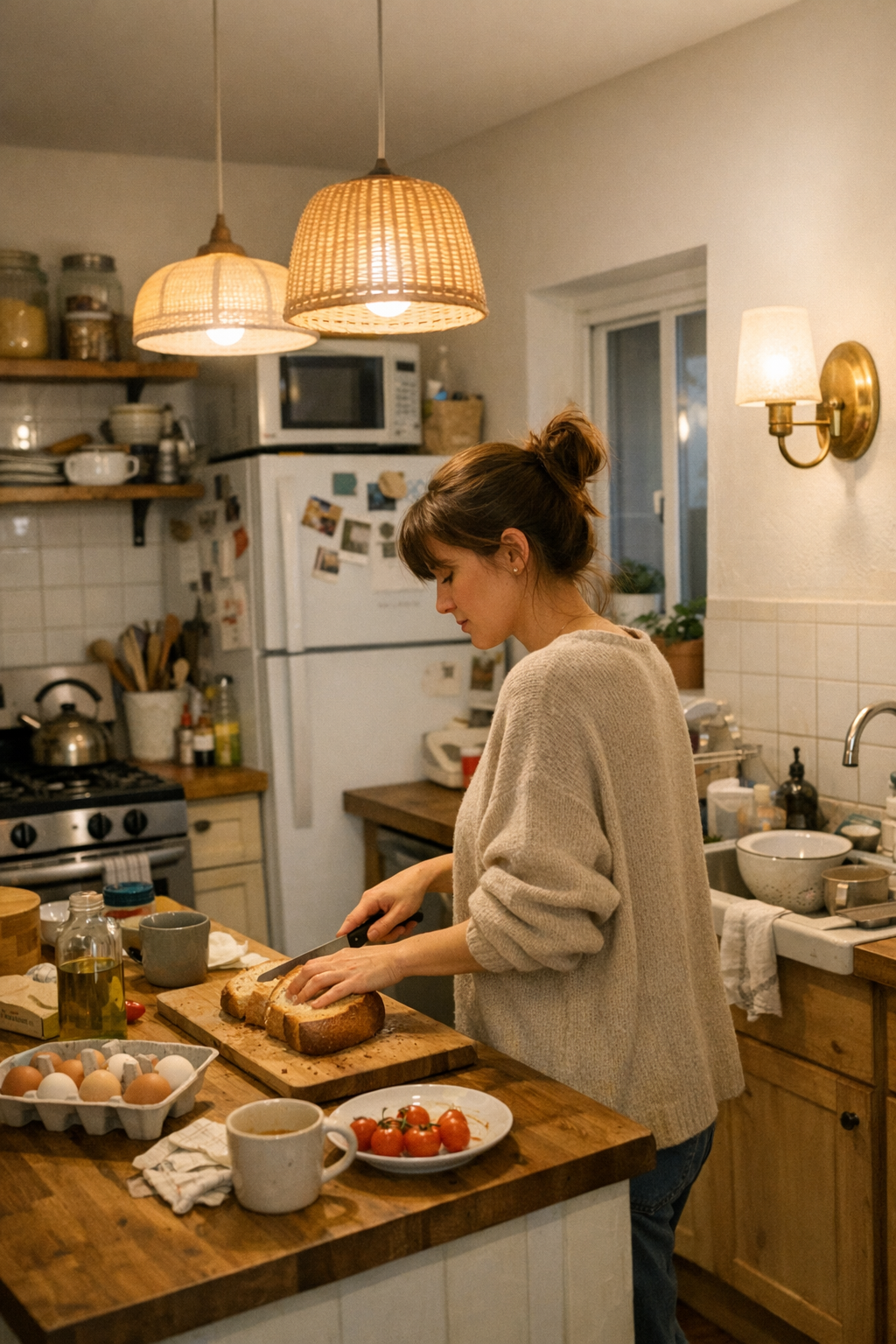
There’s a unique kind of calm that settles over a kitchen in those early hours, before anyone’s said a word. It’s the quiet moment when the dog’s tail brushes lightly against the hallway runner, the kitchen slowly inhales its morning, and a faint glow along the ceiling casts a soft, almost hesitant light. Bare feet shuffle across cold tile, a hand trails along the counter’s edge, finding the kettle tucked neatly into its corner before flipping a switch. The panel lights activate gently—not harsh or overwhelming but enough to lower the ambient hush, coaxing everything into soft focus.
As the first cup of coffee warms a pair of hands, the day begins its slow stretch. A dog nudges a rubber ball across the tile, and the refrigerator door swings open and closed with a muted thud. There are hints everywhere of life lived simply—a few stray breadcrumbs near the breadbox, a slightly damp towel hanging unevenly from the oven handle. The light overhead doesn’t glare; it hovers, steady and impartial. Shadows retreat quietly, and the kitchen feels inviting rather than sterile, even embracing the imperfection of fingerprints on cabinet doors or a cereal box left open mid-pour. In this light, everything is easy to find, visible without demanding attention or forcing you to chase illumination across the counter.
The Practical Benefits of Thoughtful Lighting in Daily Kitchen Life
Lighting in the kitchen isn’t just about visibility; it sets the tone for everything that happens within the space. Thoughtful, even lighting can make mornings smoother and afternoons more manageable. Instead of battling glare or harsh shadows, your eyes find comfort. You don’t have to squint or second-guess what’s on a label or silently adjust your body to navigate a dark corner. It makes cooking, cleaning, and even casual moments around the kitchen table more pleasant.
When the day gathers momentum, so too does the energy in the kitchen. The phone buzzes from across the room, keys clatter against the counter, and a pan handle sticks out at an odd angle. Someone slides in on socks, juggling a lunchbox and a pencil tucked behind the ear. Steam curls softly from the kettle, the glass microwave door reflects the scene, and you catch your own reflection blinking in wakefulness under a soft, even glow. This kind of lighting takes the edge off kitchen chaos; it doesn’t spotlight every misstep but cushions the mess like a familiar rhythm.
Why Consistent Lighting Matters
In bustling kitchens, consistent, well-diffused light reduces mistakes and accidents. Sharp shadows can hide spills or create visual confusion, increasing the chance of slips or burns. Even illumination also helps maintain an ambient comfort level, reducing eye strain and mental fatigue that come with trying to operate under uneven lighting. It’s this steady presence that turns potential kitchen frustration into manageable, even enjoyable moments.
Midday Kitchen Moments: Balancing Light and Activity
Midday often brings the most active kitchen scene: lunch preparations, homework negotiations, quick cleanup missions. The interplay of tasks and light affects how well these moments unfold. A rolling pin wedged under a stool, a near miss with a glass of juice, and the careful dance around scattered papers and cooking ingredients make the kitchen both a hub of creativity and a test of coordination.
Here, the quality of lighting can be transformative. Steady lighting keeps the kitchen grounded, allowing the clutter and accident-prone moves to simply be part of the ordinary without stressing the eyes or mind. Instead of feeling overwhelmed, you have a kind of quiet permission to let the space be lived in and loved, imperfections and all.
Refresh Tip: Reassess Your Lighting Zones
If you find parts of your kitchen are too shadowy or starkly lit, try breaking the room into lighting zones. Layer overhead panel lights with softer task lighting over prep areas or counters. Consider dimmers for adjusting brightness throughout the day. This subtle shift lets your kitchen evolve with your rhythm—from focused prep in the morning to relaxed winding down at night—and can renew your energy and engagement with the space.
Evening and Night: The Kitchen’s Gentle Wind-Down
As the sun slips lower, the kitchen softens further. Blinds close halfway, casting gentle gradients across walls and countertops. The clatter quiets. Shoes shuffle beneath counters, cabinet doors close with muted taps, and the household begins the practiced ritual of returning items to their places. No grand reset happens here—just the steady, calming motions that signal the close of day.
Lighting dims in tandem, moving toward a gentle glow that feels more mood than necessity. Silverware is bundled, lunchboxes lined, the trash can lid seals with barely a sound. Towels hang loosely over chairs, evidence of use but also care. The fridge hums quietly in the background, the kettle’s metal settling after the last use of the day. At this point, the kitchen isn’t a workspace but a sanctuary in soft focus—a place where eyes rest and hands relax.
The Subtle Power of Ambient Lighting
Ambient lighting plays a crucial role in how we wind down. It influences mood, signaling to our bodies that the active part of the day is over and that it’s time to transition to rest. By carefully modulating light levels, you can create a kitchen environment that supports not just daily function, but also contributes to overall wellbeing.
Embracing Routine: The Quiet Victory of a Well-Lit Kitchen
Despite the cycles of busy and quiet, the kitchen’s lighting remains a steady presence, guiding your eyes and movements without shouting for attention. Over time, this constancy can transform how the space feels. You may not notice it day to day, but one morning you’ll realize the absence of struggle in finding a jar or reading a recipe. The once fraught searchlight of blinding bulbs is replaced with a calm clarity that simply supports your needs.
It’s not a bold, headline-grabbing change but a quiet victory: a kitchen that simply works better because the light finally works with you. And that makes every step, stretch, and stanza of the day easier to navigate.
Tomorrow will bring the same dance—bare feet to tile, forgotten coffee grounds, a kitchen starting uncertain and ending in familiar hush. But the lighting will continue to hold steady, offering an unspoken promise that nothing needs fixing right now. Just the simple rhythm of daily life, supported and illuminated.