
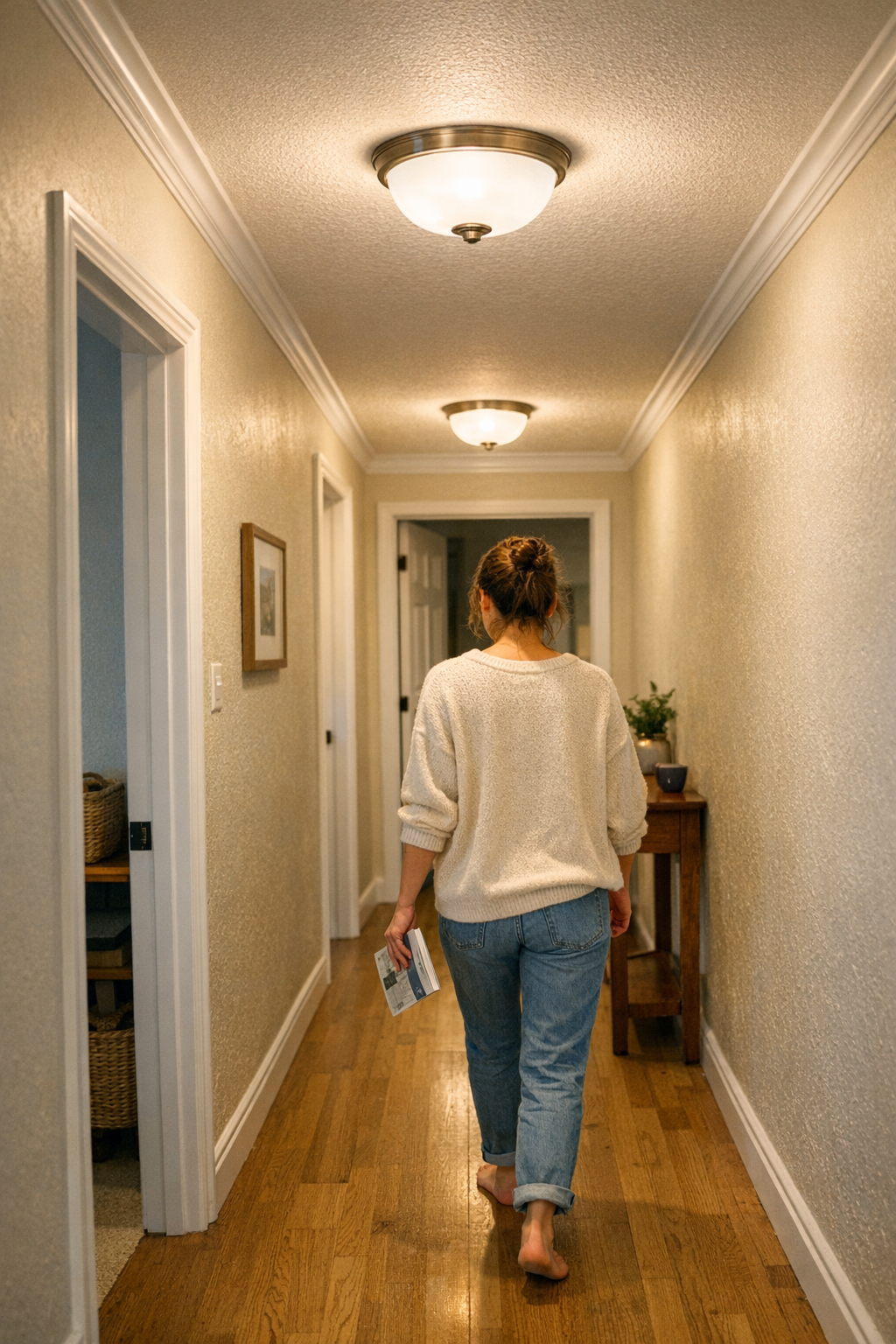
The most neglected space in the house is the one you cross a dozen times a day. You probably don’t remember the last time you chose your hallway light—it’s just there, bland and serviceable, illuminating a space that never gets to be its own room. Most hallways are treated more like a bus stop than a destination: shoes scattered in a flanking pile, keys dropped on the nearest hook, mail threatening to slip onto the tile. And yet, every week brings another small negotiation—balancing laundry and groceries through the squeeze, dodging shadows, squinting against glare, hoping your footing lands on clear carpet. For all the time we spend transiting these corridors, the lighting hangs on, year after year, stubbornly imperfect: too stark at noon, too murky at night, always a compromise.
The Real Annoyances of Standard Hallway Lighting
You notice bad hallway lighting most when your routine stumbles. That cheap ceiling dome wasn’t chosen for comfort or clarity. Most likely it was the “standard” because it was available before you moved in—or the one a landlord picked in bulk. In my place, the original hallway fixture sent a hard cone of light right down the middle, leaving the edges in perpetual twilight. The floor would shine with just enough glare to make you blink, while shoes and bags lingered in awkward shadow—perfect conditions for stubbed toes, missed step edges, lost mail, or a basket toppling as you try to exit with arms full. By mid-morning, kitchen sunlight would cut in at an angle, competing instead of blending, only making the lopsided brightness more obvious.
“Good enough for now” lighting always comes with small penalties. The little moments of inefficiency add up—slower walks as you squint at what’s underfoot, a quick foot check for kid toys under the bench, a sigh when you hit the light and still feel like you’re walking through static. Familiar, but never quite easy. The hassle never gets big enough to demand a replacement, so you live with it—fixed in irritation, not quite visible in the daily shuffle.
Semi-Flush Mount Fixtures: Small Change, Big Improvement
A better hallway light doesn’t have to shout. When I finally swapped my old dome for a semi-flush fixture, it wasn’t about decoration—I simply craved a light that wouldn’t force me to stare or slow down. The morning after the new fixture went in, the contrast was instant: even, quiet light that crept reliably into corners, landing softly on baseboards so clutter no longer hid in shadow. Suddenly, I could cross from one end to the other without detouring around uneven spots or steeling myself for a glare off polished tile. The air above my head felt less cramped, the ceiling visually lifted. “Subtle” isn’t usually the word for a home upgrade, but that was the shift—light that receded, letting the hallway become all function and no spectacle.
Day after day, it turned out the most noticeable detail was the lack of drama: I didn’t have to think about what I was stepping over, or if I’d missed a delivery box. The hallway simply worked—clear, predictable, balanced. It’s the kind of improvement you feel first, then forget (in the best way).
Three Ways Better Hallway Lighting Instantly Pays Off
If you swap your old fixture for a semi-flush mount, expect these daily upgrades:
- Glare, gone: Even coverage means the floor doesn’t turn into a disco ball at midday or blind you when you step in from outside.
- No more shadow traps: Corners and cubbies are gently illuminated—no hidden shoes, no lurking backpacks to trip over. You see everything the first time.
- The ceiling feels higher, not heavier: There’s no bulky lamp sitting just above your eye line, making a narrow hallway feel even tighter. Air and light move freely.
Lighting That Adapts—Not Dominates—Through the Day
Early Hours—No More Squinting, No More Surprises
Mornings start on your terms. With the semi-flush light, stepping into the hallway doesn’t jolt you into wakefulness with sudden contrast. Even before daylight filters in, you can actually see the floor, spot baskets, navigate shoes—no more stubbing your toe or bumping a laundry bin before coffee. The path is quietly readable, and the urgency fades from your first steps.
Noon—Clarity That Matches (and Softens) the Sun
By midday, natural light picks out every smudge and dusty patch. The new fixture isn’t there to compete; it gently balances out what the sun misses. The result? You notice what needs wiping or sorting, but you aren’t working in a glare. Midday chores move faster because visibility is comfortable, not clinical—enough to spot a scuff, never enough to make things feel sterile or overlit. The light adapts, instead of arguing with the room.
Evening—Retreat With Just Enough Guidance
Relaxing shouldn’t feel like stepping into an interrogation spotlight. A simple dimmer makes the late-day transition seamless. As dusk settles in, lowering the fixture keeps the hall navigable without flooding the space. Family members drifting in after dark—or tiptoeing out for snacks—find gentle clarity, not retina-burn white. The hallway gets gentle, not gloomy: you can see, but you aren’t “awake.”
Late Night—A Route That’s Safe Without Waking the House
After 10pm, set the dimmer low and the hallway becomes a nightlight for grownups: enough to steer clear of obstacles, but too soft to spill into bedrooms or shake anyone from sleep. Gone are the aggressive reflections on tile and the daunting shadows clinging to the baseboard. The walk to the kitchen or bathroom is calm and undramatic—safe, subtle, and tailored. Pro tip: program your own “nightlight” level. Just five seconds of adjustment, and you’ll wonder why you didn’t do it sooner—especially during that inevitable 2am water run.
When a Hallway Light Does Its Job, Nobody Notices
Flawless hallway lighting is almost invisible by design. Visitors probably won’t compliment your fixture. What they will notice: they walk straight through without slowing down, veering off, or flinching at glare. Even when shoes, coats, packages, and life pile up, the hallway itself feels clearer—nothing interrupts your field of view or the axis between kitchen and bedroom. The praise is silent, but unmistakable: the hallway simply operates, free from fuss or fanfare.
It doesn’t need to be bold or decorative. It needs to be clear and helpful, the quiet upgrade that lets every day run smoother. No massive overhaul, no mess—just smarter lighting that finally makes this everyday stretch of floor work like it should.
See how a simple change in ceiling light can reframe the most ordinary part of your home at lighthelper.