
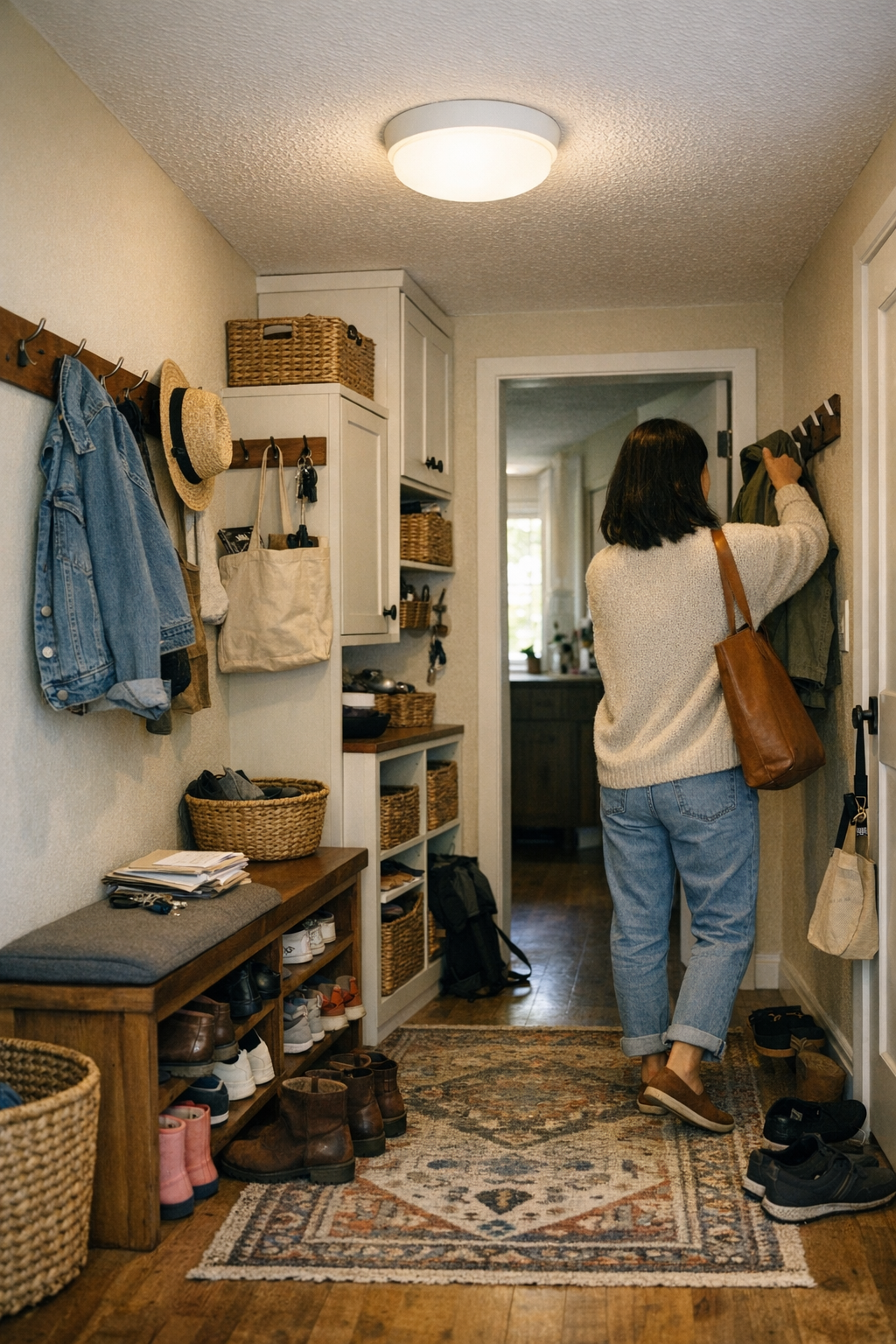
The Quiet Role of the Entryway in Daily Life
Mondays have a way of feeling heavier, especially when the entryway—the narrow threshold we cross dozens of times a day—already feels tight. The early morning light spills thinly through the sidelight next to the door, casting familiar shadows and highlighting a row of wet boots waiting patiently by the mat. With a simple click, a flush mount ceiling light bursts into life, its steady, understated glow making the low ceiling feel just a little higher. It is a subtle but essential detail: no hanging fixtures to catch your head or very bright spots to glare sharply. Just calm, even illumination that gently brightens the small but busy space.
Living in a Functional, Lived-In Space
The first steps through the door each morning bring a collection of small clutter—the mail spilling out across the key tray, an umbrella drooping over its drip collection tray, jackets draped loosely and bags sliding off the side of the bench. The faint scent of damp rubber lingers, a reminder of yesterday’s adventures seeping from the grooves of well-traveled shoes. The space feels a bit unpolished, far from perfect, but far easier to live with than a sterile, display-only foyer. It breathes with the rhythm of everyday life rather than posing as an empty set.
At the heart of the entryway is the bench, a quiet anchor amid the movement. Scuffed legs and a worn surface tell stories of countless comings and goings. One end often collects a pair of mismatched gloves, abandoned and forgotten amid the morning rush. Above it, a humble wall hook holds keys, scarves, or leashes, ready to catch whatever needs a landing spot—always accessible but never cluttered. The mail settles into the key tray, and small routines unfold: a quick brush of dust as I pick up the day’s letters, the familiar relief of order that doesn’t demand perfection.
Daily Rhythms and the Flow of an Entryway
By midday, the hallway reflects the dynamism of the household. A package thuds against the utility cabinet, loose papers flutter across the bench, and the key tray jingles with coins, receipts, and small trinkets like a plastic wristband from a recent event. Sunlight catches puddles under umbrellas, making them gleam faintly—a silent reminder of moisture still waiting to evaporate. Ambient sounds fill the space: the low hum of the refrigerator nearby, the kettle clicking shut, the soft scrape of shoes shifting on the trays. It is a place alive with quiet motion.
The Importance of Efficient Lighting in Transitional Spaces
As the day progresses toward lunch, that ceiling seems to drop just a bit, weighed down perhaps by the to-do list or just the increasing number of shoes lining the floor. This is when the flush mount lighting becomes indispensable. It eliminates shadows, brightly but gently illuminating the cabinet drawers and benches without creating glare, making everyday tasks like finding gloves or sorting parcels smooth and frustration-free. A good lighting setup in an entryway isn’t just about aesthetics—it’s essential for seamless function.
Storage That Adapts to Life’s Little Chaos
In the everyday flurry, storage solutions often see the brunt of occasional disarray. Today’s groceries ended up balanced on top of the wall rack in a hurried moment, a hands-full choice that later justified a quick household scavenger hunt when the bread seemed to have vanished. The rolling cart quietly waits nearby, ready to bear parcels and bags for the next stage of their indoor journey. Though the scene might seem chaotic, it is an unspoken choreography—backpacks settled in the morning are whisked away later; mail piles build and then shrink; a rolling cart queues like a patient commuter.
Tip: Embrace Intentional Flexibility in Your Storage
Recognizing that a bit of unpredictability is part of daily life allows storage to function rather than frustrate. Instead of striving for rigid perfection, opt for flexible storage zones that shift as your day demands. Dedicated spots for everyday clutter—like a bench for backpacks, a wall hook for keys and leashes, and trays for shoes and umbrellas—create a form of gentle order that can bend without breaking.
The Dance of Entropy and Order
There’s a quiet humor in the push and pull of order versus disorder here: a soccer cleat makes an unlikely companion of an umbrella, keys migrate from hook to bench and back again, testing patience. But it’s this ebb and flow that marks the space as truly lived-in and functional. Late afternoon slows down the hurry: boots pulled off near the bench with soft thuds, umbrellas tucked away—still damp but less so. The mail narrows down to a few flyers and a single bill. The faint click of a cabinet door signals a small victory, and the space exhales.
Evening Calm and Preparing for Tomorrow
As evening folds over the house, the flush mount light softens to a gentle glow. The wiping down of a coffee ring or the gentle nudge that straightens the rolling cart are small acts that clear the way for the night. It is not a perfect scene, but a lived-in harmony that settles naturally. The open floor near the door offers a welcomed path, the sound of a mug set upside down on the bench signals preparedness—waiting for the next person. The overhead light smooths away the day’s sharp edges quietly, a loyal sentinel in the everyday routine.
Refresh Tip: Assess Your Entryway Lighting Seasonally
Changing seasons bring different qualities of natural light and often shift our patterns of homecomings and departures. Taking time twice a year to assess your entryway lighting can dramatically affect comfort and function. In winter months, a warmer bulb or an added softer lamp can enhance mood and visibility, while summer might need reduced glare or shaded options. Your lighting should support your lifestyle fluidly, not compete with it.
Balancing Function and Comfort in the Entryway
The small details matter—the familiarity of a paint chip on the wall, the scuffed bench leg, the dependable glow of the flush mount light—because together they make the space work for real life. Rather than striving for sterile perfection, the goal is a system that breathes easily and grows with the household’s needs. This balance helps create an entryway that not only holds the bits and pieces of daily life but also supports the quiet rhythms and subtle transitions from one part of the day to the next.
Ultimately, the entryway is less a showcase and more a trusted partner in daily living—welcoming you home, catching the day’s detritus, and smoothing the path forward without fanfare. Its genius lies in its silent reliability, making it easier to move through each day with a little more ease and a little less hassle.