
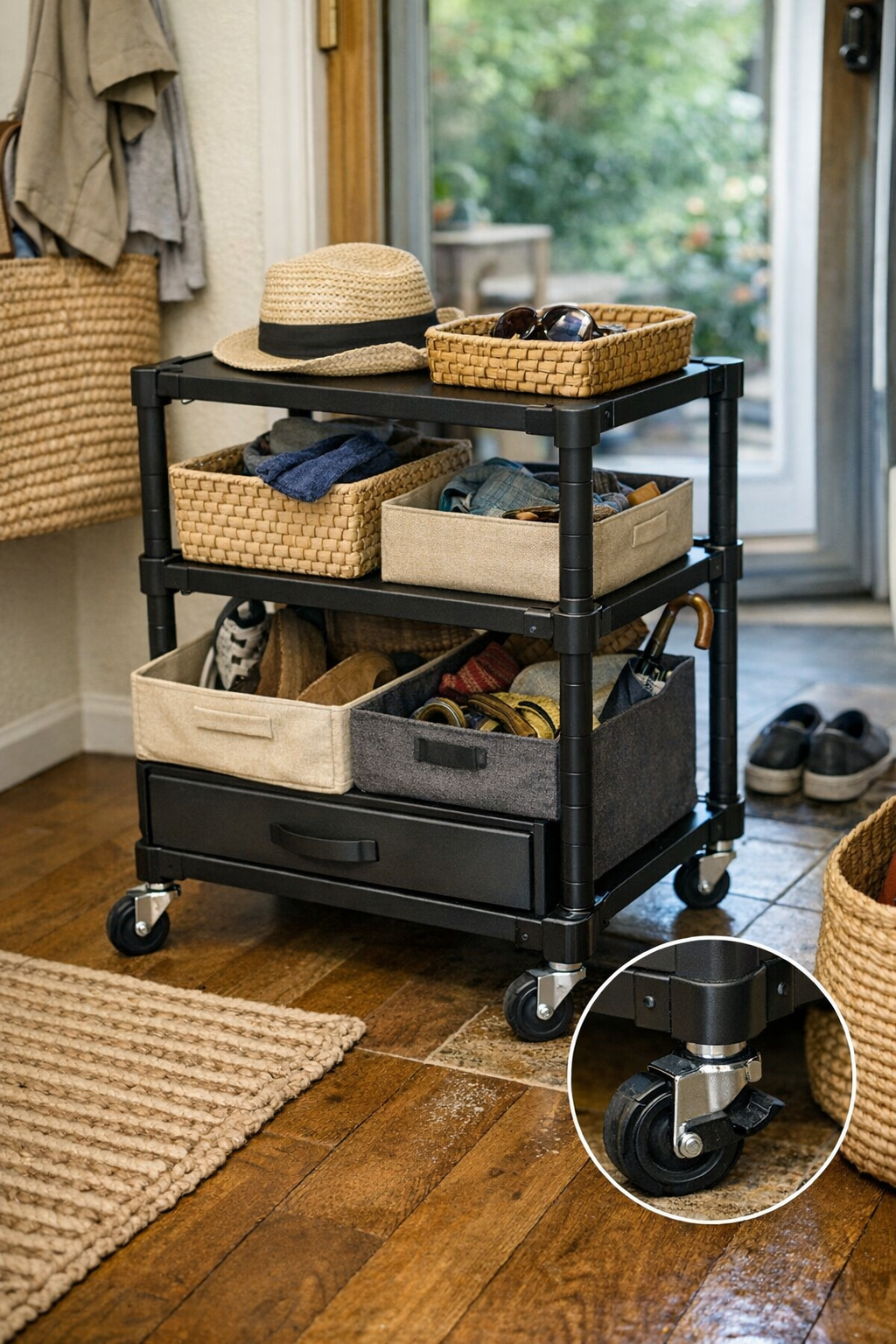
Entryways are the gateways to our homes—a transition zone where the outside world meets our personal spaces. They’re often small, busy, and highly trafficked, making efficient storage and thoughtful arrangement essential. However, entryway storage isn’t just about squeezing in more shelves or hooks; it’s about managing movement and maintaining clear passage through a space that’s constantly in flux.
The Real Challenge of Entryway Storage: Movement, Not Just Clutter
It’s easy to think of entryway frustration as mere clutter: shoes scattered around, bags tossed carelessly, raincoats crumpled on benches. But more often, the real problem is the unintended movement of storage pieces themselves. Rolling carts, benches, and racks that are designed to be flexible can turn into obstacles if they drift away from their intended place.
Imagine a rolling shoe cart that’s supposed to sit flush against the wall. Over time and daily use, it can creep forward into the path. A lightweight bench might slide little by little toward the door, blocking space needed to comfortably remove shoes or hang jackets. Vertical racks holding keys and hats can shift just enough to catch elbows or disrupt the flow of people entering and exiting.
This kind of “drift” is subtle but accumulates quickly. It reduces the effective width of your entryway, creates toe-catching hazards, and fragments the smooth transitions that bring ease to daily routines. These objects aren’t clutter in the traditional sense; they’re mobile pieces resisting—or succumbing to—movement in inconvenient ways.
A Personal Wake-Up Call: When Entryway Movement Becomes a Safety Concern
One rainy day was a turning point. Carrying an umbrella, groceries, and an overstuffed jacket, I stepped inside to find the rolling shoe cart had shifted underfoot. My boot landed where the cart had just been, causing me to stumble and bump the doorframe. It was a fleeting moment but profoundly disruptive. That brief misstep transformed the usual warmth of “coming home” into a frustrating and clumsy dance.
Such moments aren’t rare. On busy or slick-floor days, modal shifts in entryway arrangement can cause a cascade of inconvenience. The cart rolls just enough to block the door swing; the bench encroaches on removal space; the hats and bags sag and lean. What should be a seamless transition becomes a minefield.
Strategies for Stabilizing Mobile Entryway Storage
The key intervention? Adding control to the movement rather than eliminating it. A locking caster is a simple, practical solution: one click on a rear wheel of a rolling cart keeps it stable overnight, ensuring it stays aligned to the wall.
With this small fix, the morning routine smooths out. The cart no longer drifts several inches or creates突发 toe-catches; instead, it becomes a predictable part of the space. This kind of stability reduces the micro-frustrations and safety hazards that creep into daily entry flow.
The same approach applies to other movable pieces, like slim utility benches. By outfitting them with lockable casters, you get the best of both worlds. The bench can be easily repositioned for special needs—a cleaning session, extra seating for guests—but otherwise stays firmly in place, preserving clear pathways and usable space.
Practicing Habit Formation: The Importance of Locking and Unlocking
The success of this approach depends on forming consistent habits. Lock the wheels each night, unlock when movement is needed. While some family members may forget or the lock may occasionally slip, these small repeated actions gradually stabilize the entry environment.
Beyond Hardware: Embracing a Mindful Entryway Routine
Hardware fixes like locking casters offer tangible improvements, but shifting your perspective about entryway maintenance provides lasting benefits. Consider entryway order an ongoing dance, not a fixed state. Expect daily arrivals and departures to unsettle things, but view your storage zones as adaptable rather than static.
By consciously resetting the flow—stepping back before leaving, a habitual glance to ensure paths remain clear—you foster an environment that respects movement without letting it devolve into chaos. This mindset reframes small frustrations as invitations to adjust and improve rather than obstacles to endure.
A Refresh Tip: Weekly Entryway Clear-Outs for Renewed Order
Once a week, take 10–15 minutes to survey your entryway with fresh eyes. Remove outgrown shoes, donate bags no longer in use, and reorganize hats and keys. This ritual not only declutters but resets spatial relationships, making it easier to maintain the flow of movement through the week.
Use these moments to reset locking casters, reposition benches, and realign racks. Such intentional attention keeps the entryway less of a chore zone and more a welcoming passage.
Practical Action Points for Managing Your Entryway Better
- Install locking casters on rolling storage pieces. This simple hardware addition anchors your storage without sacrificing mobility when needed.
- Encourage household members to develop the habit of locking/unlocking wheels. Consistency keeps things aligned and reduces unexpected shifts.
- Designate entryway zones clearly. Define where shoes go, where bags hang, and where benches should sit to prevent gradual overflow and drift.
- Regularly assess and declutter. Weekly refreshes clear out items that accumulate unintentionally, restoring space and reducing stress.
Understanding Entryway Dynamics: Why Partial Stability Matters
Entryways are dynamic zones of perpetual change. Yet some degree of stability is key to making these shifts manageable. Mobile storage adds flexibility—moving for cleaning, accommodating guests, seasonal changes—but untreated movement invites chaos.
Between adaptability and restraint lies the sweet spot: storage that moves on purpose, not by accident. Locking casters and intentional habits provide this balance, allowing your entryway to flex while protecting safe, clear passages.
This balance makes everyday flows smoother—not perfectly tidy all the time, but steady and predictable enough to reduce frustration.
Concluding Thoughts: Designing Your Comfortable Threshold
The entryway may never be perfectly still or perpetually pristine. Shoes will arrive in pairs and singles, bags will accumulate, and furniture will shift. Yet by recognizing that movement itself often causes problems—and by strategically applying small stabilizing interventions—you can reimagine your entry as a space that supports and welcomes.
Through locking a single caster or anchoring a bench with subtle restraint, the difference between stumbling through a bottleneck and walking easily in is striking. These thoughtful tweaks allow the entryway to fulfill its true purpose as a threshold: a smooth transition from world to sanctuary.