
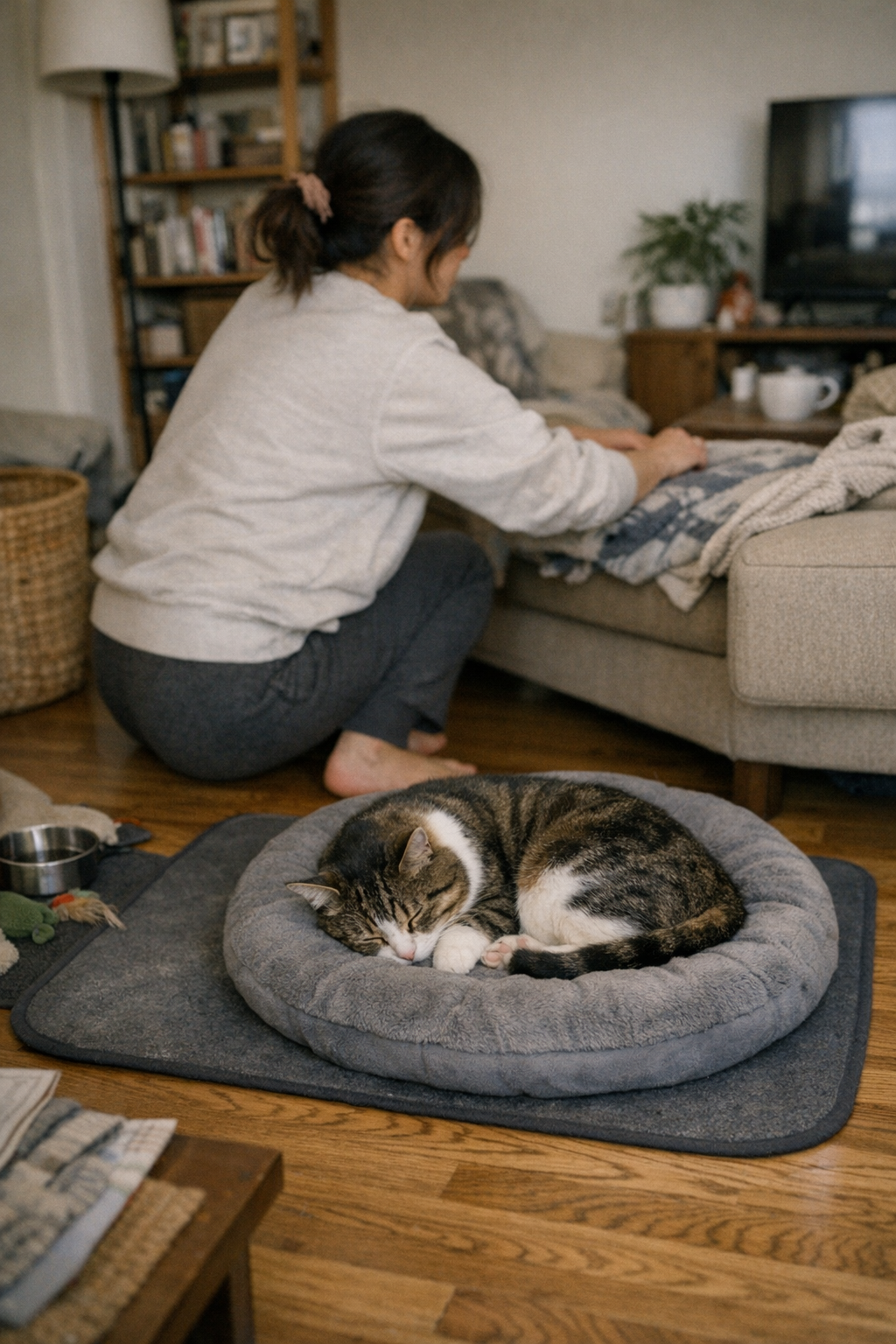
The spot where your cat sleeps is the first place where a “solved” setup quietly falls apart after a few days of real life. What starts as a tidy sleep corner—bed neatly placed, nothing in the way—gets tested fast: blankets drift into walkways, fur clings to places you never expected, and the mat meant to keep things orderly is already half-curled by midweek. Each time you reach to refill a water bowl or pick up a dropped toy, you find the bed has shifted, or the “contained” setup now means awkward reach and a double chore. In a typical indoor-cat routine, every rest spot becomes part of the real maintenance loop—sometimes making your daily flow smoother, sometimes just slowing you down.
The Open Cat Bed: Looks Calm, Proves Messy
An open sleep zone—up against a living room wall or catching morning sun—feels efficient at first. You can glance over and spot fur, see if bedding is out of place, or know right away if cleanup is needed. For about a day, this works. But it only takes a few naps before the pattern sets in: your cat kneads, stretches, and pushes the blanket into the center of your walkway. You step around loose bedding on the way to the kitchen, wondering if it’s worth resetting now or letting it slide until after dinner. Kibble crumbs stray into the main path, while fur slips beyond the mat’s edge, mixing with whatever you’re already tracking from feeding or play.
Open Means Repeated Catch-Up
Every time you think you’re ahead on cleaning, new out-of-place bits show up—water bowl splash marks, toys you’re now collecting from behind the TV, and bedding that never sits straight for more than a few hours. The open look may promise a quick scan, but in reality, every visible mess becomes your distraction. You keep cleaning up the same three things, sometimes twice a day.
Shared Room, Shared Mess
When your cat’s spot is out in the open, you end up dealing with their quirks directly in your path. If your cat loves to spin or dig before settling, their routine repeats into your routine—mat out of line, blanket halfway to the sofa, treat stuck just out of reach. Even when the cleaning cloth is within arm’s reach, you pause more than you planned, thrown off by yet another tiny surprise. That “organized” sleep area exposes every little drift, making daily upkeep a string of unplanned resets.
Tucked Corners: Sheltered at a Cost
A bed pushed into a corner or hidden behind furniture looks calm, tucks toys out of main view, and seems low-maintenance. But by midweek, the reality is less forgiving. Crumbs and treats hide out of sight, fur compacts under bedding—difficult to notice until you finally go in for a full reset. You crouch down, move two other things just to reach, and end up pulling out debris that’s been wedged in for days.
Containment That Backs Up Over Time
What seemed organized at first ends up trapping work in harder-to-reach pockets. When it’s finally time for a deep clean, mat edges are heavy with fur, toys have slipped and jammed between furniture legs, and the “tidy” bed feels dense with last week’s buildup. Unlike open setups, you don’t see the dirt every day—you just feel it all at once when you have to upend the corner for maintenance.
Blurring Boundaries, Increasing Chore Pile
Setups tucked beside a water bowl or near a feeding zone tend to blend jobs together. Run your hand near the corner for a refill and you’ll find stray crumbs, toy debris, or cat hair merged with the next task. Cleaning up becomes slower, with smaller problems hidden under mats or behind chairs. The promise of order is replaced by a slower reset rhythm and extra steps just to reclaim basic access.
Repeated Friction: Where Each Setup Demands Payment
No matter the layout, your cat’s sleep area starts trading visible clutter for new invisible chores. Open beds scatter work in pieces—resetting bedding, wiping up fur, tracking crumbs. Tucked corners promise less mess spreading but load all the hassle into single, heavier cleaning jobs. Either way, routines break down midweek: a blanket that keeps blocking your path, or a mat that turns cleanup into a mini-move-out every Thursday.
Each option exposes a weak point—one is constant interruption, the other, buildup that drags your routine further behind.
Layering for Control: Mats, Borders, and Reset Signals
The difference comes from structure, not just comfort. A mat just a bit larger than the bedding—giving an extra couple of inches—catches fur and traffic before messes drift. Firm borders give you a visible line: you know it’s time for a shake when fur reaches the edge, before it ends up on every surface. Unlike bedding alone, this setup holds its ground longer in both open and semi-open areas, buying you crucial time between resets.
Semi-Open, Less Exposed: Controlled Access
The real-world fix is often a semi-open sleep zone: not tucked out of reach, not right in the main path, but set along a lightly used wall with a no-slip, oversized mat anchoring everything. When bedding starts to drift, you see it before it’s a full chore. After a heavy nap zone traffic or a burst of indoor sprinting, you lift the mat, shake out the fur, and slot it back—no need to reroute the whole room. Twice-a-week resets feel sustainable, because the mess stays contained and the effort stays low.
Visible Edges, Timely Intervention
A clearly defined mat line is more than tidy—it signals before mess turns into a chore. Regular spots for fur, debris, or toys give you a shot at a fast reset. Wipe or shake when you see buildup, instead of waiting for the problem to push you into a full sweep. That means you rescue your own routine, instead of constantly chasing after it.
It’s not about creating a showroom look—it’s about reducing rescue time so chores stop stacking up. Easy-to-handle mats and loose, washable blankets mean you don’t stall out, even if your cat’s routine keeps shifting. When setups come back under control with quick resets, it’s easier to keep every room usable—whether you have guests coming or just need a clean spot for yourself.
Shifting as the Routine Changes
Cats change up sleep spots with no warning: chasing a sunbeam, dodging noise, or turning a new box into their main lair. The setup that worked last week starts to push its flaws forward the moment your daily flow gets interrupted:
- The blanket bunched into the high-traffic area—do you step over it, or drop what you’re holding to fix it?
- Vacuuming picks up dust, but fur piles where you can’t reach until it’s already on your clothes.
- Return a toy or food bowl, and find the rest spot merging into the feeding zone, blocking access when you’re rushing out the door.
Each bit of micro-friction adds up, especially in shared rooms or tight apartments. Patterns show up fast: if you keep hesitating before resetting the corner, or ending up late because you had to clear a path, the current layout is costing you in lost time and repeated aggravation.
Keeping It Settled: Flexible, Contained, Ready for Reset
A space that looks settled isn’t always easier to keep in check. When bedding sits on a slightly oversized, soft-border mat, kept where you can reach without shuffling furniture, maintenance stops feeling like an extra job. Fur and stray pieces are caught before they drift or compound. Cat comfort gets preserved, but so does your ability to recover the area with two quick moves instead of a drawn-out chore.
The difference isn’t how organized a spot looks after cleaning—it’s how little you dread the next reset. Comfort, containment, and regular reach matter more than first impressions. A truly workable setup for your cat is one that lets you stay ahead of the routine, not get buried under it. See what fits your space, and what actually moves with your day’s real patterns.
Explore practical sleep-zone setups for real-life cleanup and reset at StillWhisker.