
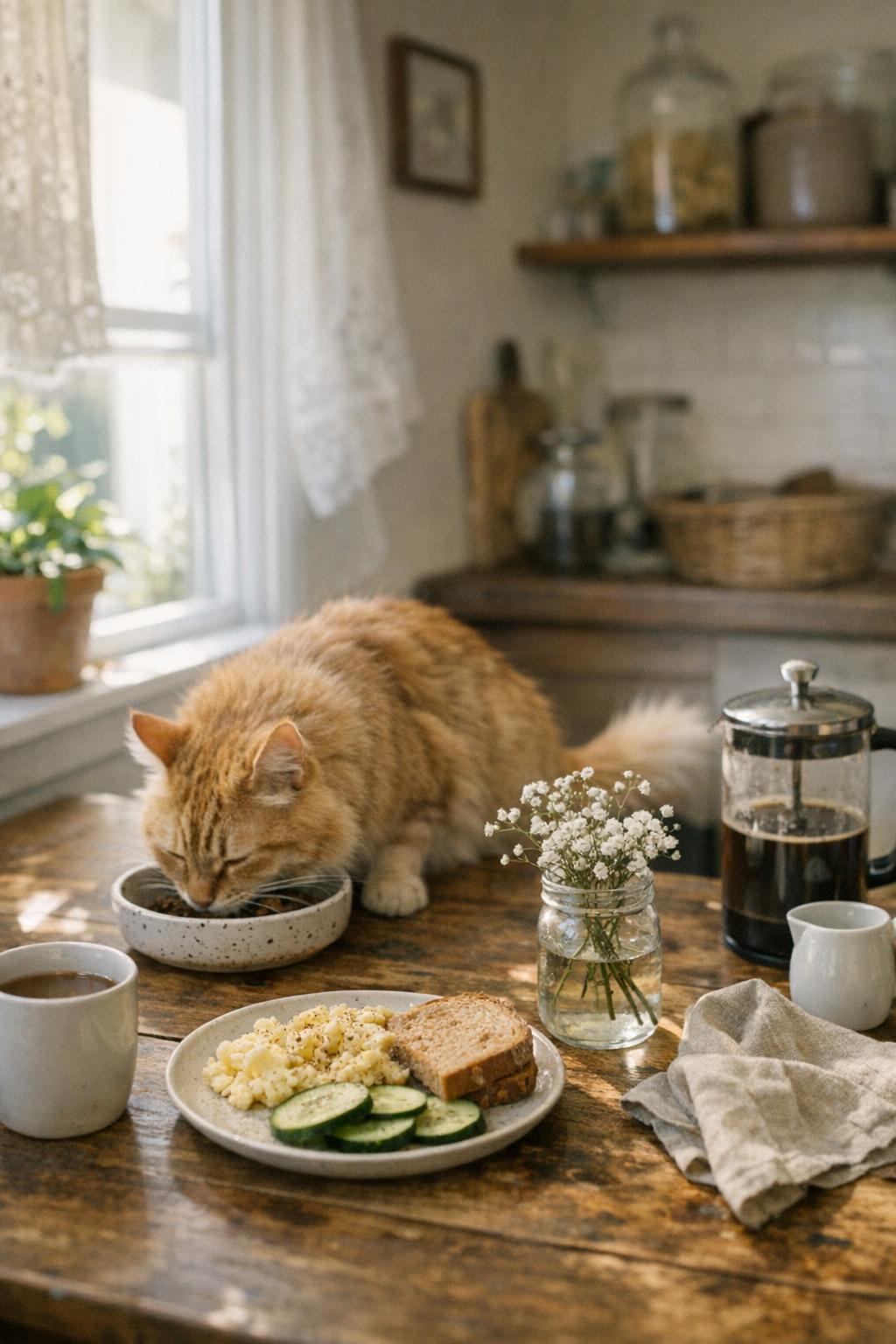
On mornings when the city outside still lies quiet against the window glass, I feel a familiar presence before I even open my eyes—a soft brush of fur against my ankles, just below the edge of the comforter. Basil, my cat, appears with the same calm patience every day. His tail curls quietly as he watches me fumble for the bedside lamp, waiting silently to mark the start of our day together.
I often pause to take in the subtle background hum of the apartment—the faint fridge buzz, the distant sound of traffic yet to fully waken. This small moment feels deliberate, as if Basil composes himself for a daily ritual: a steady procession from bed to kitchen, where routine reigns, and the morning meal signals a new beginning.
The Morning Ritual: Creating Calm Through Routine
Each morning’s steps unfold like a ceremony: my slippers sliding softly on hardwood floors, the cool metal surface of the feeder’s handle beneath my fingertips, and the reassuring click of the lid opening. Through fogged blinds, a filtered light spills onto Basil’s food bowl, awaiting him patiently.
Throughout, Basil follows quietly—his paws making barely a sound, ears flicking as he anticipates but never demands. He looks back once or twice, checking in with me, then directs his gaze toward the soft sound of food landing in the bowl.
However, not every morning unfolds perfectly. Sometimes my attention is pulled away—an alert on my phone, a clumsy drop of the litter scoop. On those occasions, the rhythm wobbles. Meals begin late, interrupted, or stretched thin by the household’s mundane noises. During these times, Basil’s demeanor shifts subtly; he approaches his meal with a trace of hesitation, occasionally leaving food behind, circling the bowl as though unsure.
I once thought these quirks were just part of a cat’s private world. But one rainy morning changed my perspective completely. Seated with my coffee, undistracted, I watched Basil eat. Outside, rain smeared the windows, turning sunlight into a soft, gray wash. For a full ten minutes—the time it took me to drink my coffee—Basil ate calmly. No interruptions, no pacing, no anxiety. He finished, tail lowered, ears relaxed, then looked up as if to say, “Thank you for this moment.”
How a Simple Pause Transformed Our Connection
This calm, deliberate pause has since become the heart of our mornings. It’s a quiet ten-minute ritual that gently resets both of us. Over time, I’ve noticed changes: Basil no longer paces restlessly before his meal, nor does he respond with skittishness to every creak. After breakfast, he settles into sunlit spots, tail flicking only at harmless dust motes, embodying a tranquility I’ve come to cherish deeply.
Afternoon Patterns: Building Predictability and Trust
As the day unfolds, the apartment light softens into warm golden hues. Basil finds a favorite spot in the living room—a patch of sunlight near the old carrier he once loved to chew. He curls up for a mid-day nap, his whiskers twitching with dreams.
As lunchtime approaches, I sense his quiet anticipation. Unlike morning, Basil is relaxed but attentive, neither demanding attention nor anxious. When I prepare his meal, he sits calmly nearby, eyes half-closed but watchful. Maintaining our ten-minute shared pause at mealtime continues to nurture this peace, encouraging slow and mindful eating that benefits both body and mind.
On days when external noises disrupt the routine—a neighbor’s thump, an unexpected knock, or a sudden oven alarm—I see that tension return: stiffened shoulders, a questioning tilt of his head. If the meal is delayed or interrupted, he circles the bowl uneasily before settling in. It’s similar to how I feel when forced to eat hurriedly or distracted. These moments highlight the importance of preserving calm mealtime routines to support both animal and human wellbeing.
Evening Closure: Ending the Day with Respect and Comfort
Evenings settle around us with a slow, tender light. I start by brushing Basil’s fur, feeling his body relax against soft throws and cushions. His purring rumbles content beneath my hands. Setting a small bowl of food near his bed remains part of our ritual, though often he’s content to simply rest.
The sounds of the house become hushed; only the soft swish of his tail and the gentle crunch of kibble fill the room. That shared quiet speaks volumes — a mutual acknowledgement of the day closed with care and consistency.
At night, Basil curls up on his favorite blanket—one dashed with sun from a summer’s drying breeze. He kneads once or twice before settling beside me, legs entwined. His eyes trace me as I finish my own evening routines, moving slowly through the darkened hallways, carrying the peace cultivated in these small, unhurried moments.
A Practical Tip: The Power of the Ten-Minute Pause
If you want to build calm and mindfulness into your daily routine with your pet, consider adopting this simple but profound practice: set aside a fixed ten-minute window when offering food. During this time, eliminate distractions—turn off devices, quiet household noises if possible, and focus fully on the act of feeding and being present with your animal.
This dedicated pause helps reduce anxiety, encourages mindful eating, and deepens the connection you share. Over time, it creates a sanctuary in the otherwise hectic rhythm of everyday life.
Refreshing Your Space for Ease and Comfort
Sometimes, a small shift in environment can renew your sense of calm and order. One idea is to assess your pet’s feeding area and surroundings. Consider adding a nonskid mat beneath bowls to prevent sliding, choosing heavy ceramic dishes that stay put under eager paws, and ensuring proper lighting and sound acoustics to reduce hustle and bustle interference.
Another subtle refresh is to introduce small, natural textures—like a soft blanket or rug—that invite your pet to lounge comfortably nearby, making mealtimes a full sensory experience that invites rest before and after feeding.
These adjustments not only improve your pet’s comfort but also help anchor you both in a peaceful shared routine.
Ultimately, it’s in these simple, intentional rituals—mealtimes held within a quiet ten-minute frame, a soft brush across fur in the evening, a familiar blanket warmed by sunlight—that both human and animal find a gentle rhythm. It’s a reminder that sometimes, the greatest gift we can give each other is the grace of presence and the calm of well-worn routines.