
Every morning, as I settled into my workspace, my eyes would instantly catch the cluttered power strip tangled beneath my desk. Before even glancing at my monitor, I found myself mentally navigating through a maze of cables and plugs, wary that a stray foot or a quick move might disrupt my setup. This daily distraction pulled my focus moments after sitting down and lingered as a subtle annoyance throughout the workday.
The routine was almost ritualistic: dropping my bag beside my chair, bending down to untangle wires or shuffle charging cables into a manageable order, and carefully positioning my feet to avoid accidental unplugging. The power strip itself wasn’t the problem—it was the invisible rules it imposed on my movement and space. My feet stayed cautiously tucked in; stretching or shifting meant risking an accidental disconnect.
The Hidden Cost of Cable Clutter
Repeated over days and weeks, these small frictions accumulated into a persistent source of irritation. Even when I attempted quick fixes—like stuffing the cables behind a tote bag or carefully tucking cords away—the mess seemed to resurface, stubborn as ever. Once, in the middle of an important video call, my foot snagged a cable, and half my chargers cut out instantly. The abrupt interruption was a stark reminder that the issue wasn’t just aesthetic; it actively disrupted productivity and focus.
How Cable Clutter Limits Movement and Workflow
Beyond the occasional unplugging incident, the cable chaos restricted my natural movements. Rolling my chair back required caution, standing up had to be slow and deliberate, and shifting posture came with the constant worry of what might be caught or pulled loose. Essentially, my workspace became governed by the hidden, restrictive presence of the power strip and its tangled cords.
Transforming the Workspace with a Cable Box
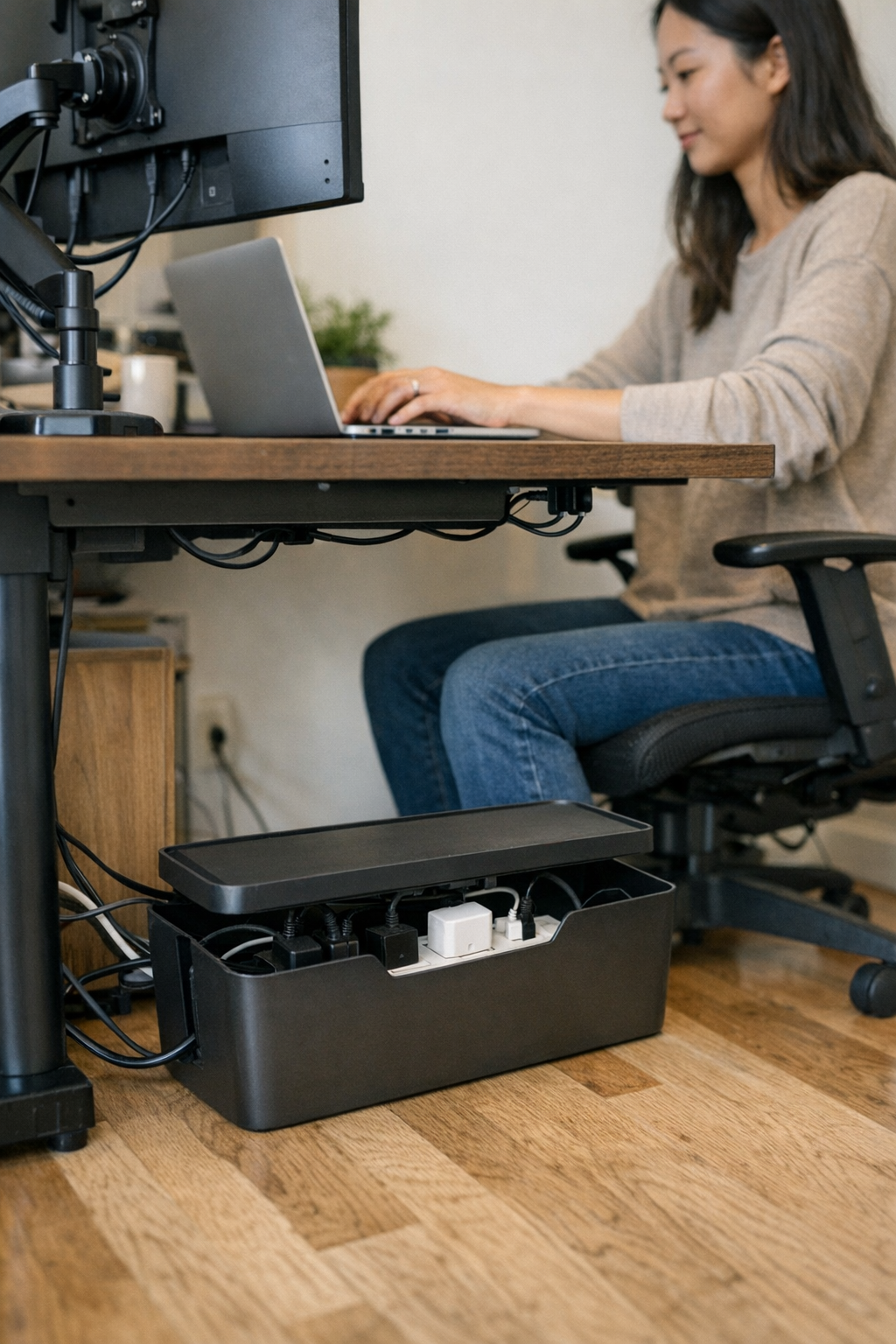
The turning point came when I introduced a cable box to contain the power strip and the cables. This simple addition transformed my workspace. Instead of wires sprawling on the floor or draping awkwardly from the desk, everything was collected within one neat container. The cables and plugs receded from view and, more importantly, from my feet.
With the cables contained, the area under my desk opened up. The risk of accidental unplugging diminished to nearly zero. The infamous tangle was gone, replaced with order and simplicity that subtly reshaped how I interacted with my desk space.
Benefits Beyond Cleanliness
By midday, I noticed a remarkable difference. I could stretch my legs casually, roll my chair back freely, and move without checking my under-desk space for hazards. The chargers ran quietly in the background, powering my devices with no fuss or interference. This freedom made my workday smoother and less mentally cluttered—the cables were no longer a constant, low-level distraction.
My lunch break underscored this improvement. Sliding my chair back to stand was effortless, without the usual snag or jolt. The peacefulness was subtle but profound. It was as if a weight had lifted, allowing my workspace to feel more dynamic and less confined. I realized that this simple change supported a more natural and relaxed way of working.
Refreshing Your Workspace Perspective
This experience highlights an important shift that many overlooked workspaces can benefit from—rethinking how the invisible elements of our desks affect us physically and mentally. The cable mess was more than just an eyesore; it was a silent barrier dictating how I moved and worked.
A fresh tip for maintaining this kind of clarity is to periodically reassess the “hidden” parts of your workspace—the areas under the desk, behind screens, and any spaces where cables or accessories reside. By routinely organizing or containing these elements, you allow your work environment to support natural movement and focus, rather than hinder it.
Visual and Practical Impact
Visually, the absence of scattered cables immediately lends a tidier and more intentional look to the desk. It sends a message that this space is dedicated to work, not just a catchall for electronics and charging devices. This not only affects how others perceive your workspace but also influences your psychological readiness to work efficiently.
Practically, the cable box restored valuable under-desk space that was previously unusable or risky for leg movement. No longer having to make mental calculations about how to sit or move reduced fatigue and improved comfort throughout the day.
Ending the Day with Ease
When the workday drew to a close, packing up my workstation became quicker and less of a chore. Unlike before, I didn’t need to double-check every cord, disentangle wires before leaving, or awkwardly rearrange cables to make room for my chair. The workspace looked calm and ordered, setting a peaceful tone as the room transitioned from work mode to downtime.
At night, this contained setup facilitated a seamless transition. I could prepare for the next day without the subconscious dread of dealing with cable chaos. The desk was ready to support—not disrupt—my workflow the following morning.
Practical Tips for Cable Management Success
- Invest in a good cable management box: Choose one that fits your power strip and has adequate ventilation for safety.
- Label your cables: Use simple tags or color codes for easier identification when unplugging or troubleshooting.
- Routine checks: Make a habit of tidying and adjusting cables once a week to prevent knots and maintain order.
- Keep excess cable length manageable: Wind extra cable length neatly with cable ties or wraps to prevent tangling.
Shifting Mindsets Toward Workspace Wellness
Ultimately, organizing cables isn’t just about aesthetics; it’s about creating a physical environment that enhances productivity and wellbeing. Our workspaces should support movement and focus without constant interruptions from the little things. By paying attention to these underlying factors, like cable clutter, you set the stage for better workdays and healthier habits.