
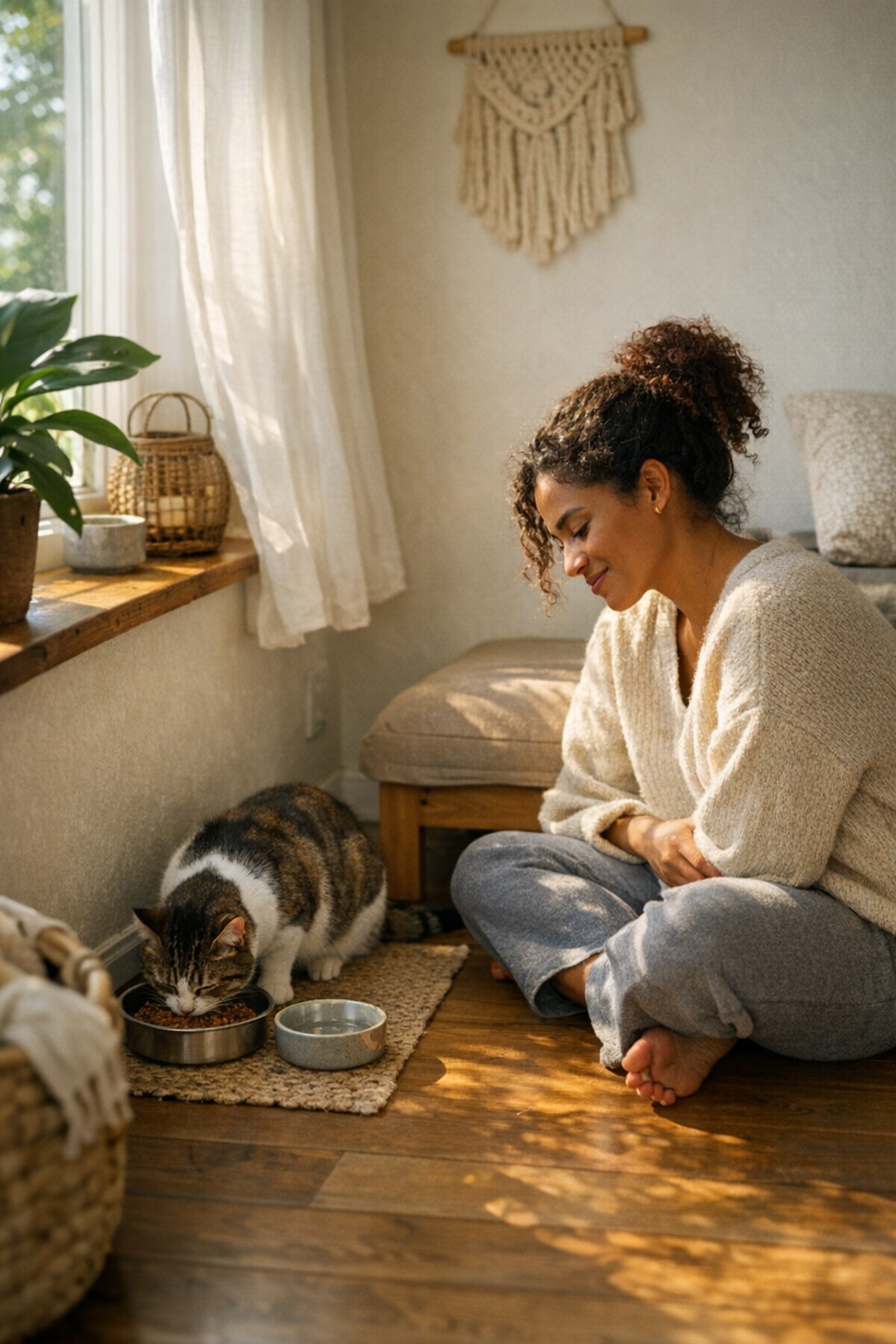
Mornings in my apartment begin quietly, with the soft half-light filtering in long before the city truly wakes. In this calm, my cat Pudding usually stirs first. She’s perched quietly on her favorite fleece blanket, attentive to the subtle sounds around us—the gentle pop of a heating pipe, a neighbor’s footsteps, the rustling of a newspaper. Though her eyes are wide open, she moves minimally, gathering energy for the day. Without excessive fuss, she walks patiently to her food bowl and signals with a soft, gentle chirp that breakfast time has arrived.
Creating a Calm Feeding Space
In Pudding’s earlier years, her food bowl was near the hallway—a probably convenient spot but one that exposed her to a lot of movement and noise. Shoes scuffing, doors opening and closing, distant voices all made her nervous. She’d start eating, then pause frequently to check her surroundings, tail flicking uncertainly as she scanned for any threat.
One weekend, I decided to quietly move her food bowl to a more secluded corner near the plant stand—a small nook that basks in soft sunlight throughout the day. This little change had a remarkable effect. Pudding approached her food with a renewed calm, eating steadily without the usual nervous pauses. Her tail relaxed, and she no longer felt the need to be on high alert while eating.
Why a Safe Space Matters for Indoor Cats
Indoor cats, despite the safety of their homes, have retained instincts that make them sensitive to their environment. A spot that is open, near traffic, or exposed to sudden noises can cause stress, which impacts their eating habits and overall well-being.
Providing a quiet, consistent feeding area supports a cat’s need for security. It allows them to engage in natural behaviors like eating and grooming without distraction or anxiety. This small adjustment can improve not only feeding routines but also confidence and comfort.
Building a Routine That Respects Your Cat’s Needs
Feeding time is now a key part of our morning rhythm. I fill Pudding’s bowl in the quiet corner, refresh her water, and keep the area clean and inviting. Washing her feeding mat regularly and sweeping crumbs away are small but important acts that maintain this sanctuary. Pudding eats undisturbed, seemingly comforted by the quiet and familiarity.
My mornings unfold alongside hers—from brewing coffee to setting up my work area—with small sensorial details: the clink of a spoon, soft footsteps, and the hum of everyday home sounds. All of these seem to coexist peacefully with Pudding’s calm dining spot.
Actionable Tip: Create a Cat-Friendly Feeding Corner
- Choose a low-traffic area away from loud appliances and busy doorways.
- Use a washable mat and keep the feeding area clean to discourage pests and odors.
- Keep food and water bowls slightly separated so your cat can easily access both without crowding.
- Observe your cat’s behavior and adjust placement if signs of distress appear (e.g., hesitation, tail flicking, frequent pauses).
Daily Rhythm and Shared Spaces
Throughout the day, Pudding alternates between naps in sunny spots and checking in on her feeding corner. Even when she doesn’t eat, stopping by her bowl area seems to be a form of ritual—an anchor in her day. Watching her stroll calmly to and from this spot reminds me of the importance of safe, personal spaces for cats within a home.
Refreshing the Space and Routine
After a few weeks of settling into this routine, I took a moment to refresh the feeding nook with a small rearrangement—rotating the plant stand slightly to allow more sunlight in, adding a cozy textured blanket nearby, and moving a small cat-safe toy into the area. These subtle changes helped maintain Pudding’s interest and comfort, breaking any monotony without disrupting the calm atmosphere.
Try occasionally changing elements in your cat’s space to keep it engaging. This can be as simple as shifting plants, adding new textures, or introducing gentle scents (like catnip-infused toys). It reaffirms that the space belongs to your cat and encourages active, positive interactions.
Evening and Nighttime Comfort
Evenings bring a different kind of peacefulness. After dinner preparations and household tidying, Pudding resumes her quiet routine. She returns to her feeding corner with attentive, deliberate movements, sometimes licking her bowl contentedly after finishing her meal. Later, she curls up for a long wash, her eyes slowly blinking as the day winds down.
When the city outside dims and quietens, I often catch Pudding on her last rounds—checking her food spot and moving to her favorite blankets. She kneads gently, then settles, tail curling in contented comfort. These moments highlight the trust and ease we’ve built in this shared sanctuary.
Practical Tip: Establish Evening Rituals
- Keep feeding times consistent to help your cat feel secure.
- Create quiet, cozy zones for your cat to unwind—this could include soft blankets, warm bedding, or a spot near a gently flickering lamp.
- Spend a few minutes sitting together to reinforce your bond and share calm energy.
The Power of Small Changes in Cat Care
It’s remarkable how little things—moving a bowl, washing a mat, adding a blanket—can ripple through your cat’s behavior and your shared dynamics. These small steps foster a sense of security and comfort that benefits the whole household.
Our experience with Pudding demonstrates that mindful attention to environment and routine can promote calm, reduce stress, and enrich the daily life of indoor cats. Identifying and respecting your cat’s preferences is a fundamental part of responsible pet ownership.
For anyone interested in deepening understanding of indoor cat needs and creating harmonious living spaces, exploring resources on creating a calm environment for cats can offer valuable insights into environmental enrichment and behavior management.