
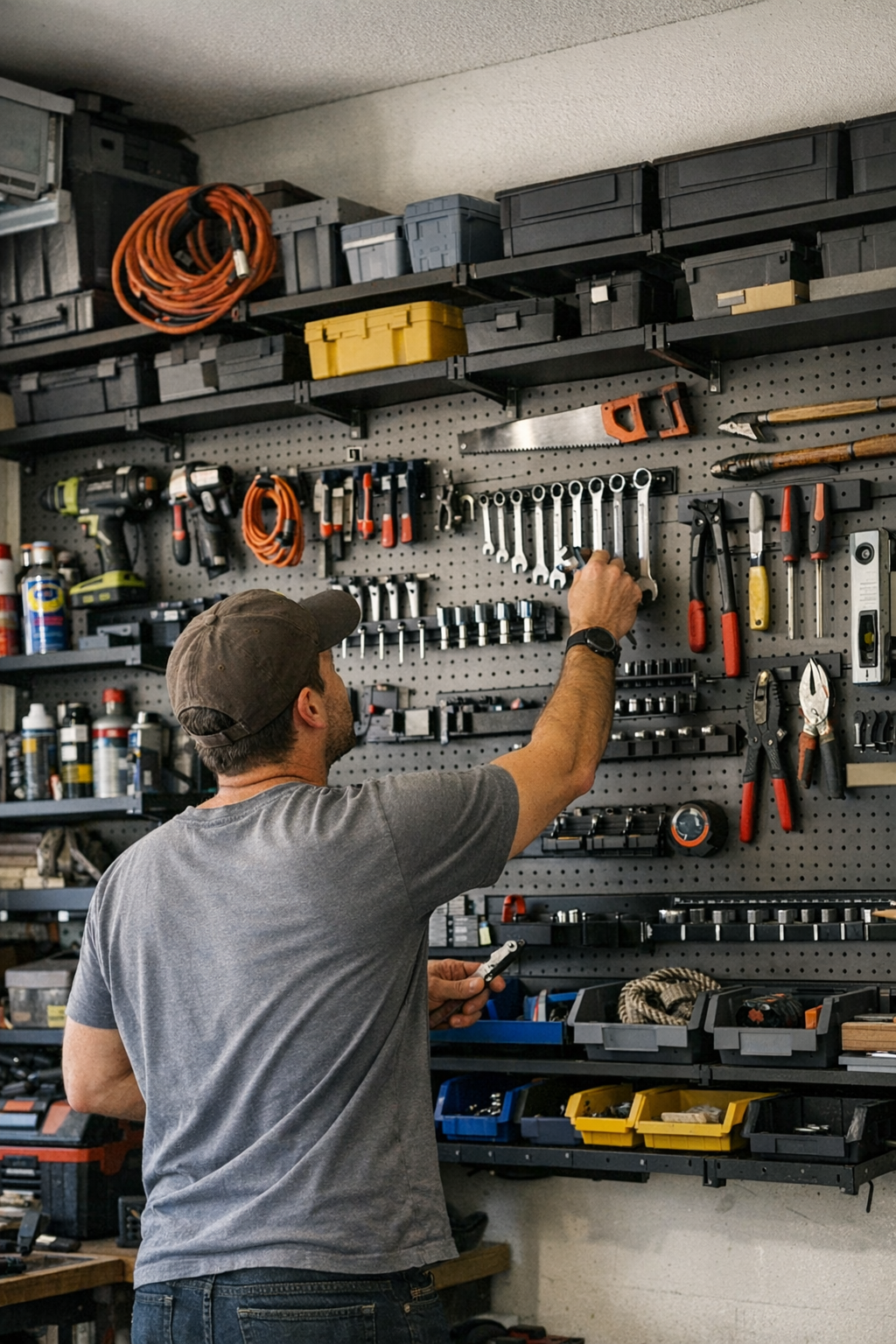
The familiar creak of the garage door opening is always met with a brief pause—will my heel catch on stray debris again, or is the floor finally clear? Stepping in barefoot, I feel the cold concrete through my socks and hesitate before moving further inside. But after setting up a modular pegboard wall, even the slow shuffle of clutter began to transform into something more manageable.
The Power of Modular Pegboard Walls for Garage Organization
Modular pegboard walls have revolutionized the way many of us manage garage storage. These interlocking panels, equipped with hooks, clamps, and customizable sockets, offer a practical way to free the floor of tools and gear that often spiral into disarray. When each peg reliably holds its designated item, the space stays orderly. But organization isn’t just about having hooks—it’s about crafting a system that responds to your workflow and tools.
Why Modularity Matters
Unlike fixed shelving or individual hooks, the modular nature of these pegboard systems means you can adjust their layout as your needs evolve. Whether you’re swapping out tools for a new project or tweaking the setup after a season of gardening, the ability to move panels and re-slot pegs provides flexibility. However, adopting this system comes with its own set of nuances.
Common Challenges and How to Overcome Them
When I first installed a modular pegboard wall, I learned that the devil was in the details. Bare drywall behind the panels often revealed old screw holes and imperfections. Aligning each panel requires patience; even a single bent anchor or uneven screw can tilt an entire section, compromising the uniformity and usability of the wall.
One small mishap with a heavy rubber-handled trowel taught me how fragile these alignments can be. After snapping the tool onto a peg, I noticed the next day that it had slipped, causing the hooks underneath to catch incorrectly. The entire rail sagged, and every hook wobbled when touched. The fix wasn’t complicated but required temporarily loosening the panels, nudging them into place, and re-slotting the pegs until a satisfying click confirmed stability.
Spacing and Tool Fit: The Key to Stability
I quickly realized that each tool deserved its own breathing room on the pegboard. If a peg’s slot was even slightly cramped, the tool would lean or slide, usually ending up on the workbench or floor. Proper spacing ensures each item fits snug but doesn’t trap or tilt. Overcrowding doesn’t just look messy; it leads to frustration as tools migrate back to the floor.
Maintaining Order: Routine and Resetting
One rewarding aspect of this modular system is the ease of resetting it. Whenever tools are out of place or a section feels cluttered, a quick adjustment of panels and pegs can restore calm. For example, after several work sessions, I often find the broom or a pair of gloves missing from their slot. A few tweaks and re-slots later, everything clicks back in place.
This rhythm of minor daily resets keeps the garage floor clear and the environment pleasant. The silence that follows a proper reset is noticeable—no more scratching gravel sounds or dropped tools echoing off walls. The open floor space feels wider and lighter, making every visit more enjoyable.
Practical Tips for Optimizing Your Modular Pegboard Wall
- Measure Twice, Install Once: Before mounting panels, inspect your wall for screws, holes, and imperfections. Use a stud finder to place anchors properly and avoid uneven sections.
- Designate Zones: Group your tools by function—gardening gear in one spot, automotive tools in another—to streamline your workflow.
- Leave Slight Clearance: Ensure each peg slot leaves enough space for the tool to settle fully, reducing drift and accidental displacement.
- Incorporate Clear Labels: Adding labels or outlines for each tool spot helps family members or guests return items to the proper place.
- Routine Reset: Spend a few minutes weekly to check for shifting pegs, loose panels, or overcrowding to maintain stability.
A Refresh Tip: Change the Viewing Angle
If your pegboard wall ever starts to feel stale or overwhelming, try changing your perspective. Stand back and view the entire wall from different angles and distances—sometimes, a small change in layout or relocating a single panel can open up new possibilities for space utilization. Even swapping high-use tools to lower, more accessible areas can improve daily workflow and refresh your enthusiasm for the space.
Beyond Storage: The Psychological Impact
More than just reclaiming square footage, a well-organized garage reduces mental clutter. When every item has a dedicated place, the space no longer feels chaotic or overwhelming. Tools no longer hide in piles, and finding what you need becomes a quick, even enjoyable task. Modularity doesn’t freeze your workspace into an inflexible state; it invites continuous improvement and adjustment, which ultimately makes the garage a more welcoming environment.
As boots slide smoothly onto empty lower pegs and workbench surfaces clear, the garage transforms from a storage room into an efficient workshop and retreat. The quiet order that settles isn’t just about neatness—it’s a small but meaningful upgrade to how you experience your daily projects.