Category: Uncategorized

  • Why Your Laser Level Drifts Subtly on Uneven Floors and How to Stop It

    The concrete looks fine—until your laser level proves otherwise. In the haze of jobsite LEDs, the slab tells a simple lie: “I’m flat enough.” Then comes the reality check. As soon as that crisp laser line cuts across the workspace, it wavers, jittering with every subtle imperfection beneath your boots. Anyone who’s tried to mark, drill, or hang long runs on questionable floors knows the feeling—the slow, creeping drift that turns a straight line into a source of second-guessing and wasted time.

    The Real Fight: Floor Drift Versus Laser Truth

    On paper, setting a laser is quick: tripod up, flip the switch, get to work. In real-world interiors, nothing cooperates that easily. Beneath fresh overlays and patched composite lurk dips, spongy rot, and echoes of old repairs. It doesn’t take much—just a shallow hump, a thin seam, or another trade hammering in the distance—to trip up even the best self-leveling system. The laser isn’t blind; it responds to everything the floor throws its way, magnifying small errors over every extra foot you try to cover.

    Tripods: Friends Until They Fail You

    Try this: set your laser where you always do. Everything looks solid, until a few steps or one stray hammer strike sends the line sliding. The problem isn’t always dramatic. Sometimes it’s nothing more than a tripod leg sunk into a hidden pocket, or a setup parked too close to an expansion seam. But those tiny missteps have outsized consequences—a wall track slightly skewed, a drill line that slowly inches off spec, an afternoon of corrections for what should have been a one-and-done.

    I’ve watched a laser track perfectly for layout drills—then lose integrity the second the HVAC crew thundered past, leaving my anchors chasing an imaginary straight. Finished measurements on paper always promise accuracy ±1/8 inch, but that spec shreds fast if your base flexes or talks back. Even a half-soft subfloor forces you to redraw, re-measure, and remake your cuts, grinding your schedule and your patience at the same time.

    Two Floors, Opposite Outcomes

    It’s never just the surface look. One week, two jobs: both slabs claimed to be flawless. On Project One, the laser line was sharp and faithful sunup to sundown—straight drill runs, bracket installs, and no surprise adjustments. On Project Two, under nearly identical light and tools, the line snaked away from initial marks just minutes after setup. The culprit? Buried rises that carried every small vibration straight into the laser’s core, making precision a moving target every time a dolly rolled past or someone dropped tools behind me.

    Invisible Flaws, Visible Cost

    At distance, both floors seemed trustworthy. Only when the first cut went wrong or drill bit started biting a shade off mark did the underlying reality show itself. A hidden pocket of fill, an old leveling patch—these details don’t advertise themselves, but their effects echo across every measurement. That gap between “looks fine” and “is actually fine” expands quickly, especially for jobs where dozens of fastenings and lines have to dovetail over long spans.

    The Chaos of Renovation: Floors That Won’t Behave

    Mid-strip retail jobs are a masterclass in instability. There’s never just one surface—a roll of tile glue, exposed trowel marks, stubborn mastic—all layered atop each other. Getting lines for gridwork or bulkhead channels across 40 feet seems straightforward until the foot traffic ramps up or bins slide out of the way. The laser’s line starts drifting after lunch, not because the tool gave up, but because the world underneath is always in motion. Ignore it, and next thing you’re ripping anchors and patching mistakes instead of wrapping up the day.

    Adapting: From Blind Faith to Hands-On Checks

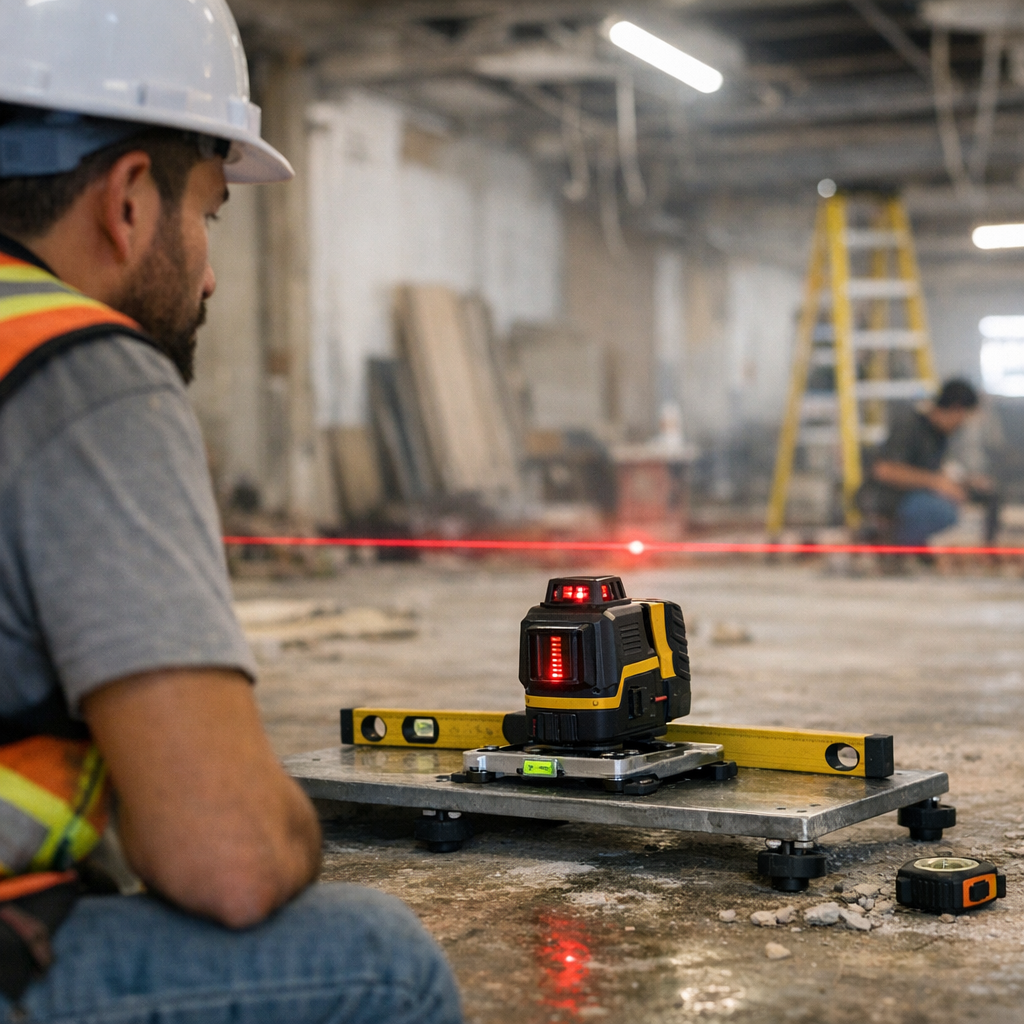
    There’s a point where you stop blaming the tool and adjust your approach. I started leaving the stock tripod in the van, swapping in plywood scraps for a broad, low-touch surface right on the most solid section of concrete I could find. Tripod legs spread as far out as possible, not perched in some tight cluster. Before so much as firing up the laser, I took a trusted four-foot level and mapped for dips and rises by hand. The right platform killed half the ghost-drift instantly. Floor too soft? Skip it—move to another spot, or layer plywood until you’ve got some consistency. After that, the lines stayed tight, making it through breaks and fit-ups without needing another full do-over.

    Your best tool is still limited by the ground you trust it to. Losing five minutes to verify and re-level is better than sacrificing half your anchors to bad marks. On longer runs, I now re-check both ends every hour or so, not out of paranoia, but because I’ve learned that floors make their own rules the moment your back is turned.

    Small Tweaks: Where Precision Becomes Habit

    Practical reality: even the most rugged laser is only as precise as its perch. A stray sander on the next room, low battery roulette mid-cut, or the flex of an aging subfloor—all can tip what’s “level” into a guessing game. This applies across the board: mounting tool racks, setting shelf levels, even punch-list fixes when you’re already exhausted from layout corrections. Shaky support multiplies fatigue and forces you to work slower, sometimes with a hand always on the tool, never fully trusting it will hold its mark when you step away.

    Tip: Spread Out and Stay Low

    If the laser betrays you once, don’t just readjust—rethink your stance. Flatten your base. Go wide. The broader the tripod or board, the less wobble and the fewer aftershocks. Bring everything as close to the slab as possible. Before you lock in, sweep the chosen zone with a box or digital level—five minutes spent there pays you back through faster progress and fewer costly resets. Working over suspect flooring? Layer up with plywood or find a clean patch. It might seem like overkill, but it means you’re not correcting for mystery shifts you can’t see coming. The goal is predictable performance, not gambling on “good enough.”

    On Alert: Catch Surface Drift Before It Costs You

    The worst kind of trouble hides in subtlety—a gradual drift you fail to spot until patching is unavoidable. If your lines aren’t matching up at distant marks, or if the laser visibly wobbles after someone walks past, take the hint. Pause, re-examine, and—if needed—pick up the rig and start again one bay over. Floors aren’t evil, just indifferent. They don’t care how careful your measurements are if your support slips each time the room vibrates.

    Most mistakes aren’t dramatic—they’re slow creeps you can head off if you’re watching for them. Plumb accuracy is about constant adjustment, not naive trust. Good marks and clean work only become routine when your process is grounded—literally—in surfaces you’ve tested and tamed.

    Next install, next cut, next round of bracket holes: treat the ground as an active part of your setup, not just blank scenery. Bad runs are part of the job, but finding your own fix means you’ll make fewer of them, and waste less time chasing the perfect line that never quite settles without your help.

    Visit Gumboll for practical tool solutions built for real jobsites.

  • How Adjusting Blade Speed Transforms Your Circular Saw Cuts

    The difference hits your hand before your eyes ever notice the edge. Pre-dawn at the jobsite, breath fogging and boots crunching across plywood, your first cut sets the tone for the day—a ripping whine, a blade biting in, sawdust spraying across your gloves. But as you guide the saw through a length of spruce, something feels off: a hitch, a vibration, a snag where you expect a glide. You stop, eyeing the cut. It looks fine at a glance, but as your thumb runs along the edge, you catch that telltale roughness—not quite a splinter, but enough to slow you down. You know what caused it. Too much speed, wrong blade, wrong approach—and now, another pass with sandpaper or a repair you didn’t plan for.

    More Than Looks: Why a Clean Finish Actually Matters

    Jobsite logic says fast is good and sharp is best. But real work makes different demands. Two pieces ripped seconds apart by the same saw can look almost identical from across the room. But you know the difference in seconds: a smooth, finished edge—or one that drags an old shirt, catches on a joint, or needs an awkward fix before paint or stain. Finish quality isn’t just a detail; it’s the unspoken line between a job that moves and a job that stalls. The speed isn’t right for every board, and every cut is a chance to get ahead or lose time.

    Sometimes you catch the warning signs—a little resistance, a spike in vibration, the blade whining as it bogs down—or you don’t, and end up scrubbing out chips until your shoulder aches. Even a fresh blade is only as good as the speed and material allow. You feel it most on long days, when the line between “good enough” and “needs another pass” gets a little too narrow for comfort.

    Blade Speed: Control or Chaos?

    You won’t find a perfect RPM on a sticker or in some manual. The real difference shows up in the workflow—when everything lines up and cut edges need nothing but a quick dust-off, or when you spend precious time chasing splinters and fixing burn marks.

    Softwood sheets? High speed cuts clean, minimal tear-out, all day. But push plywood too fast, or run plastic laminates at full throttle, and you’ll feel—even before you see—things start to head south. A faint scorched line here, a flake of veneer there—problems that stack up over a shift. On hardwoods, too much speed leaves a shadowed burn you can’t sand out. On melamine, that “efficiency” means a rough, jagged band that refuses to disappear no matter how much you try to blend it.

    Blade speed is a moving target—tune it wrong and the job fights back. The real clue isn’t always in the edge’s appearance. Instead, it’s the subtle change in the saw’s pitch, the way the handle buzzes, the extra muscle it takes to keep things straight.

    Switching Gears: Fixing the Problem Mid-Cut

    Imagine a tight crawlspace in January, attic insulation clinging to your hoodie, an old circular saw sending heat up your wrist. Running through OSB? Fast and steady, no problem. Then it’s time for a built-in shelf—glossy laminate on MDF. Suddenly the saw kicks, splintering the laminate and spraying chips everywhere. You pause, frustration simmering. The fix? Dial back to 2,200 RPM, swap in an 80-tooth finishing blade. The difference is instant: the next cut leaves a cool, glassy edge, not a mess of repairs. What would’ve eaten your lunch break is now just a couple quick passes of a sanding sponge—if that.

    Why “Fast” Isn’t Always Better

    Instinct says run hot, get it done. But every seasoned worker knows the creeping cost of mistakes made in the name of speed. Tough oak and fir might need the extra RPMs just to keep from splintering, but laminate and melamine punish impatience—just a hair too quick, and you’re left with chipped edges, heat-blued marks, and plastic that gums up the blade.

    All it takes is a quick check—speed, blade, material. Ignore it, and your shortcut becomes overtime. These are the fixes that cost you more than minutes; they drain your focus, push fatigue into your wrists, and turn a smooth day into a slog of touch-ups no one wants to revisit.

    The Hidden Price of a Bad Edge

    Most tradespeople can remember the job where “just one more cut” at full speed went sideways. Ripping white melamine at max RPM leaves a brown scar down the edge—too late to angle it away. You sand and fill, but it never matches. A client checks your work, running a hand over the edge, and you read their pause. The lesson lands hard: time saved on the saw gets tripled at the workbench, and the only thing faster than a rough cut is a story that follows you to the next site.

    It’s a cycle broken only by experience—realizing where to shave time, and where to stop and get it right.

    Adapting in Real Time: Noticing the Right Signals

    Skill grows in the seconds between steps—listening, feeling, adjusting. Every trade teaches you to read the machine: a change in blade pitch, a vibration traveling up through your grip, slight resistance in the middle of a sheet. Don’t wait for the splintered proof. Before new material, stop for sixty seconds. Switch from the all-purpose 24-tooth to a finer 60- or 80-tooth blade. Drop the RPM for laminates. That moment of attention keeps the workflow tight—skips the frustration of backtracking when the cut betrays you late in the day.

    You’ll miss sometimes—everyone does. Not every shoe needs a perfect shine and not every shelf needs a mirror edge. But knowing how to tune blade and speed to the real job, not the ideal, stacks up to hours saved and repairs avoided. When your hands say the edge isn’t right, trust them over your eyes—every time.

    Quick Jobsite Habit That Saves Hours

    Switching from plywood to something delicate? Stop for a test cut on scrap, no matter how behind you feel. One wasted offcut now is worth ten times the time it’ll take fixing a bad run after break.

    The Payoff: Not Just Smoother Edges, But Smoother Days

    The more hours you log behind a saw—or a drill, or a sander—the more you recognize that small adjustments separate a steady workflow from a day plagued by stops and repairs. Prepping bit changes, setting the right speed, listening for the machine’s warning signs: none of these are about perfection, but about keeping the work moving. Muscle memory is earned, but it’s the discipline to pause and check that keeps fatigue at bay and control in your hands.

    Listen to your tools, slow down when the job calls for it, and trust what your hands are telling you—because the only thing worse than a rough edge is spending your weekend making up for it.

    http://gumboll.myshopify.com

  • How a Quiet Sleep Corner Transformed Our Cat’s Wild Nights

    This is what living with a cat really looks like: hair on the sofa before breakfast, litter underfoot before coffee, a bowl that always needs a wipe, and a hush between small, familiar interruptions. Calm is never automatic. It’s built—one half-forgotten sweep, one quiet brushing, one minor reset at a time. The friction isn’t dramatic, but it’s always there. Living with a cat in a small apartment means the little messes write themselves into the rhythm of every day. The real change shows up not in some flawless transformation, but in the small routines that nudge chaos back to manageable—the mats that keep most grains in check, the corner that becomes “her” space, the water fountain bubbling above the city noise. This is where StillWhisker’s real-world supplies matter—practical tools that don’t pretend to erase cat-life friction, but make the endless resets feel lighter, quicker, less wearing on your peace of mind.

    Morning Friction: Where the Day Unravels—And Starts Again

    Sunup means one thing: Minko stationed at my ankle, tail spelling out either command or complaint. Her first order of business is always the litter zone. By then, those pale grains have already broken containment—no mat, however wide, blocks every last speck. What’s underfoot is predictable: a crunch by the door frame, that faint, gritty feeling by the baseboard. The litter dance is muscle memory now—scoop, dump, swap in a liner, tie off, sigh, and reset. Skip a day, and the sour edge to the air won’t let you forget it.

    This is battle fought in increments: the mat keeps the worst at bay, but a stray scatter always survives, huddled against the wall. Nothing stops the escape completely—you just get faster at the sweeps and less precious about the lines between “clean” and “good enough for today.”

    Handy habit tip: Keep a discreet broom or chargeable mini-vac within arm’s reach of the litter station. Twice a day, three minutes, and you’re not arriving at lunch to fifteen crusted pawprints and a new perimeter of dust. These micro-cleanups give the illusion of control—enough to restart the day instead of surrendering to the drift.

    Cat fur is less forgiving. It collects where you sit and where you don’t: sweatpants, sofa throws, shirts you swore you hung up. My lint roller is at arm’s reach—one pass over the sleeve, one swipe on the cushion, enough to keep the evidence manageable but never gone. It’s not war; it’s background noise. You handle it or it handles you.

    The Sleep Spot Reset: How One Corner Softens Everything

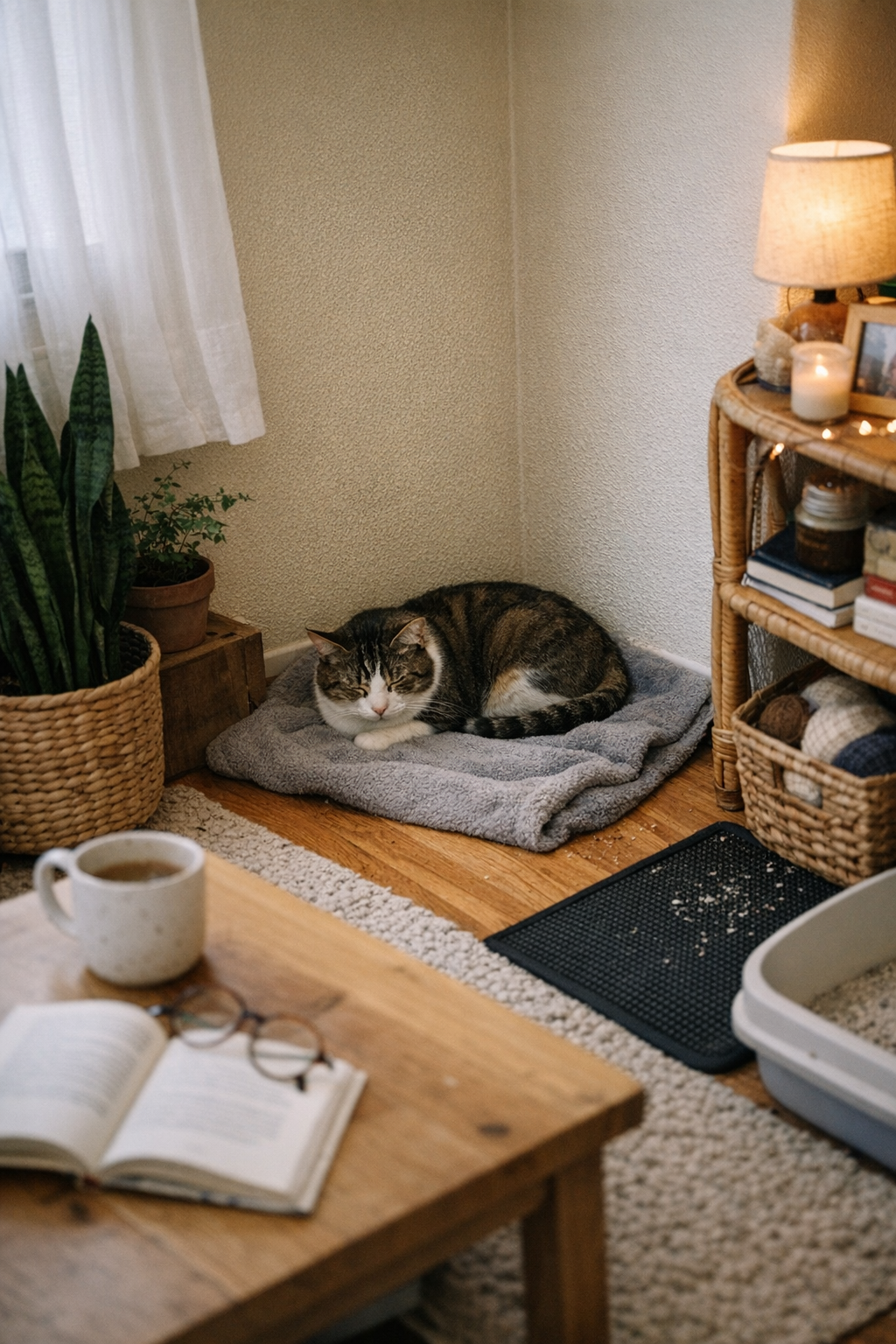
    Litter and fur are predictable. The real atmosphere shift came when I dragged a faded blanket—part sentimental, part desperation—behind the chair to create a makeshift nap zone. Minko sniffed, circled, and, with the flat determination of a cat choosing a patch of sun, claimed the spot as hers. Suddenly, she wasn’t just pacing between bowls and posts. She had a visible “her place.”

    This one, quiet tweak changed the entire feel of the room. Sunlight hits the blanket late morning, window cracked just enough for a breeze, and Minko melts into a deliberate loaf, toes flexing, eyes drifting closed. The air loosens. When she’s this settled, I use the moment—slow brushing, underfur loosened with one hand, a preemptive sweep of the roller over my lap immediately after. Most days, this is the only time I get ahead of the fur wildfires. The more I stick to it, the less fur piles up unseen in the corners—routine becomes prevention, not a reactive scramble before company.

    These routines breed calm. There’s less chase, more pause. Just quiet company, a slow brushing, the soft sound of water, and the wordless understanding that peace mostly lives in the habits you can repeat.

    Scattered Toys, Scattered Focus: The Afternoon Drift

    Even with a cozy sleep zone, the reset doesn’t last. By three o’clock, I can bet there’ll be litter by the chair leg again. Sometimes it takes a socked foot to nudge it discretely back to the mat; sometimes it demands crouching, scooping, wondering why gravity always breaks my way. Minko oversees the cleanup with studied indifference—one chirp if I miss a patch, then she resumes her endless quest for rogue dust motes.

    The toy sprawl is its own map of the day: the blue spring abandoned near the doormat, the feather stick lurking under socks, the mouse wedged beneath the table. They migrate silently. By night, if we’ve played hard enough, her favorite toys return to the nap corner—the only order that exists. The day’s minor chaos contracts toward the blanket: a stash of playthings in a fortress of soft, a cat at rest, the rest of the world tuned out.

    Managing Water, Wipe-Ups, and Wildness After Dark

    Switching from a static bowl to a quiet water fountain wasn’t revolutionary, but it changed the apartment’s mood in small but stubborn ways. The fountain’s whisper hushes outside noise, replaces the old metallic clang with something vaguely peaceful. Minko all but ignores the stationary bowl now—her interest is in the burbling, moving water, chasing stray droplets with a practiced swipe that guarantees at least a small puddle by dinnertime. The towel waits, folded nearby, always pressed into service behind the fountain’s arc.

    Night order begins before sunset. The blanket is squared off just so, toys half-assembled in their fortress, water topped up. The post-dusk wildness that used to ricochet down the hallway now burns off quicker; Minko still gets her night sprints, but they end with a soft slow-kneading on her nap corner. On windy evenings, she dips a paw in the fountain’s bubble and listens, ears twitching, as the apartment finally slows. Night doesn’t erase the messes—it just pushes them out of view until tomorrow’s first sweep.

    The Incomplete Fix: Why “Better” Beats “Perfect”

    None of this is magic. There’s always fresh scatter by morning. Hair finds new fabric to claim. Towers of toys become new tripping hazards overnight. But now the routines—blanket, mat, liner, fountain—work together against the daily grind. The friction’s still there. It’s just bearable instead of endless.

    Nothing holds forever. Even the best mat only wins small victories; a fresh liner keeps things clean until the next “surprise” detour; one good brushing staves off the worst of the tumbleweeds. The fountain, topped up every evening, is the closest thing to background peace. The point is never perfection—just making disorder brief, recovery quicker, and the small moments of calm more frequent. That’s the StillWhisker world: improvement by increments, not ideal.

    When the Space Itself Learns to Breathe

    What’s most noticeable, weeks in, isn’t a vanishing of mess or stress—but that the whole apartment seems to exhale. There’s space to sit, rest, stretch—fewer sharp reminders of chaos, more background hum of routine. Minko claims her corner, and the rest of us borrow a little of her contentment by osmosis.

    Evenings close the loop: a single cat kneading a blanket, toys ringed around her own settled calm, and the sure sense that messes will return in the morning. The weight is less, though. Each small reset, each low-friction supply, adds up. Tomorrow begins with another crunch underfoot, another sweep, another slow making of order. But, quietly, that’s enough. Quietly, that’s the difference.

    StillWhisker

  • The Quiet Rituals That Ease Travel’s First Anxious Hour

    Travel doesn’t meet you with fresh possibilities. It greets you at 5:17 a.m. with cold tile underfoot and a series of small aggravations you never wrote into your itinerary. The airport pre-dawn feels like rummaging in a junk drawer—blindly pawing for one last charger, half-worried you’ll leave a lamp burning. Shoulder the bag, fumble through pocket checks, debate whether one more zipper repack might make all the difference. The friction piles up—before you’ve even made it to the curb.

    Where It Starts to Unravel: Packing Fights Back

    Getting out the door isn’t about feeling ready—it’s about hoping your carry-on setup won’t betray you by breakfast. Every move in this early choreography—shedding the coat for security, sliding your belt into a gray tray—feels riskier, somehow, than it should. The important things are never the biggest; they’re whatever decides to hide just when the line moves.

    • Unzipping your main pocket and discovering your passport wedged under rolled jeans
    • Fishing for headphones in a black hole of tangled cords, with an impatient traveler breathing over your shoulder
    • Swearing under your breath as your clear liquids bag resurfaces, mysteriously, beneath snacks and last-minute toiletries

    The same quiet dread repeats itself at every bottleneck: will I be the one stalling the line, or wrestling zippers while my flight information updates again—this time, for boarding?

    Security Checkpoint: Where Speed is Stolen

    You shuffle forward, knuckles whitening as you mentally review the inside of your bag. Every step brings potential sabotage: a toothpaste tube in the wrong pouch, earbuds tangled around your lint brush, a boarding pass swimming loose in a side compartment. It isn’t inspection that slows you down—it’s the sudden realization that what you need isn’t where you need it.

    Everyone recognizes the traveler who glides through security: a flick opens the right pouch, a passport appears, nothing spills, nothing is misplaced. It isn’t luck; it’s that every item has its place—intentionally, not optimistically. They unpack and repack with almost absent-minded rhythm.

    Use-Case Move: “Front-Row” Packing

    Assign high-touch items—ID, charger, medication—their own reachable spot. Put them in organizers or zipped pouches that are accessible with your bag upright. You don’t need designer solutions; even a clear zip bag, carefully placed, can shift your whole tempo from frantic scramble to easy routine.

    Overhead Bin Roulette: The Packing Stress Test

    Boarding isn’t a calm handoff; it’s a mini-competition. You shoulder past other travelers, eyes scanning for an empty bin as your row creeps closer. In that moment, your bag either rewards or punishes your earlier decisions:

    • Can you grab your snack or headphones before stowing your suitcase, or are you blocking the aisle in a frantic excavation?
    • Did you lay your book and pillow atop, or are you elbow-deep in a chaos of sweaters and receipts?
    • Will you have to beg for bin space, awkwardly cradling jacket, charger, and sandwich just to stay organized?

    The overhead bin isn’t storage—it’s a sorting gauntlet. Travel isn’t just lighter with better packing. It’s sharper, smarter, defined by how fast you can get what you actually need without kneeling on the floor while the row behind you groans.

    Practical Tactic: Build a “Pre-Flight Grab Bag”

    Before you board, gather your in-flight must-haves—gum, book, sanitizer, tissues—into a pouch or insert you can pull out instantly. When you slide this out before overhead stow, you dodge the panic of rooting through your suitcase at 32,000 feet. One simple step can mean less apologizing, less aisle blockage, and less travel-day regret.

    In the Cabin: The Fight for Personal Order

    Settling into your airline seat, you enter a space engineered for minimal comfort—and maximum inconvenience. The tray table barely fits a coffee, your knees graze the seat in front, and the overhead drama lingers. Every small forgotten item now becomes a big deal.

    Still, the relief is unmistakable when it works: finding a granola bar where you expect it, flipping to the right page of your book, spritzing sanitizer without a hunt. Each win untangles the stress you brought on board. When your packing breaks down, every reach—shoulder bag, backpack, under-seat pouch—reminds you of what you’d planned to do differently next time.

    Landing: Your Packing Discipline Gets Graded

    Arrival exposes your choices. Can you pluck your bag from a wall of black luggage and keep moving? Did you stash your house keys and transit pass where your hands remember, or will you stall in the crowd, one arm inside your backpack while the line behind you sighs?

    Most often, the scramble to exit is a highlight reel of every overlooked inefficiency: too much packed, too little sorted, once-accessible items now buried. The best intentions crumble under pressure; a careless pocket choice at 5:17 a.m. now becomes a full-blown bottleneck at the taxi stand.

    The Return Trip: Refined by Repetition

    Coming home always feels less heavy—not just from the snacks you finished, but from hard-won improvements. You start to group charger, earplugs, sunglasses. Everything gets a spot, not “somewhere safe,” but where you can point to it with your eyes closed. Less second-guessing, less stress. You’re not pretending this is a flawless routine. You’re just not fighting your bag every step.

    The city comes back into focus through cab windows. You unpack tired, but something lands a little lighter: travel gear that kept up with you. Suddenly, it’s not just about what you brought. It’s about how you moved—less fighting your own setup, more gaining ground with every repack.

    One Core Shift: Pack for Movement, Not for Inventory

    A well-organized bag doesn’t erase travel’s annoyances. It’s the difference between feeling constantly interrupted and almost—almost—keeping pace with your day. Access and order aren’t luxuries; they’re how the travel hour becomes bearable, even satisfying.

    You don’t need a miracle system. You just need a bag that lets you surface what matters—charger, keys, wipes, ID—when you actually need it, not three minutes after. Not everything will go smoothly. But with each trip, the chaos shrinks, the control grows, and you spend less time apologizing to the clock—and to strangers in line.

    Find travel tools tested in real-world movement at Carry On Supply.

  • The Quiet Ritual of Travel: Finding Calm in Carry-On Chaos

    The Quiet Before You Leave: The Myth of a Perfectly-Packed Carry-On

    Every traveler knows that particular hush—the hour before departure, when your carry-on stands zipped and squared off by the door. On the kitchen counter, your coffee cools while you mentally trace every pocket and pouch, convinced you’ve predicted every need. Your charger’s packed. Your passport’s zipped into its sleeve. You stand in your own front hallway, feeling briefly in control. But that sense of readiness is a kind of illusion—one that unravels the minute you drag your bag into the friction of real transit.

    Once you hit the airport, the clean logic of your packing disappears into baggage lines, shuffling crowds, and overhead bins snapping shut. The calm, methodical confidence you had at home buckles under the pressure of movement: boarding pass in one hand, bag handle in the other, your mind keeping inventory. As you scan the crowd pressing toward security, old familiar doubts close in: Did I pack my essentials where I can grab them? Will I have to check this bag after all—risking seeing it vanishing down a conveyor, never quite the same when you get it back?

    In the Grind: Where Travel Organization Actually Cracks

    Leave your house, and suddenly the bag becomes heavier. Small annoyances multiply—from balancing your coffee on top of a rolling suitcase, to digging out your wallet at curbside while your jacket keeps slipping off your shoulder. There’s that first real-world test: standing at the taxi or shuttle, fumbling with zippers you thought were perfectly organized just minutes before. Your headphone cord tangles. The bag squeaks as you set it down. Little things that didn’t matter in your living room now demand attention at every stop.

    Inside the terminal, every step is delayed by logistics. Watch how quickly you abandon your careful system when you can’t find your ID at security or you need your charger mid-walk. A carry-on with overcrowded or mixed-up compartments is a headache accelerator: you unzip and expose a tumble of receipts from previous trips, snack wrappers, and a boarding pass that’s migrated to the wrong sleeve. You see fellow travelers pulling exactly what they need from a neatly labeled pouch and feel envy—realizing just how wide the gap is between “packed” and “prepared.”

    The Bin Battle: Losing What Felt Secure

    The final test: waiting to board, eyes tracking which group gets called next. You see it play out at every gate—the nervous scan for overhead space, people clutching their bags just a little tighter, calculating whether their carry-on will make the cut. There’s no drama like watching an airline attendant start gesturing for bags to be gate-checked. In a split second, your self-sufficiency can vanish: the bag that worked at home now gets whisked away, your plan for in-flight comfort traded for a claim ticket. The reading glasses you meant to keep handy and the medication you thought would stay close are now somewhere in the cargo hold.

    No organizer can guarantee you beat the gate-check lottery, but you see the seasoned travelers take quiet measures: pouches pulled and tucked into jacket pockets, essentials stripped out before boarding. That’s not paranoia, it’s pattern recognition—you can count how many trips it took to learn what matters most is having the right handful of items accessible when bags go out of reach.

    In the Cabin: Where Packing Choices Get Exposed

    The plane settles into its slow, pressurized hum. Now your bag sits, awkward and remote, crammed in a bin over someone else’s seat or jammed beneath your feet, occupying precious legroom. This is when every shortcut or packing mistake reveals itself—whether you can grab your headphones with one hand while still buckled, or end up digging under an avalanche of toiletries and laptop cords while jostling elbows with your seatmate. The aisle is narrow, space is personal, and the bag that promised flexibility now demands contortions and apologies.

    Look around and you’ll see the pattern repeated: parents unpacking entire pouches in search of pacifiers, business travelers rooting for a pen at customs, someone awkwardly halfway into the aisle retrieving a snack before the cart blocks them in. Here, being able to retrieve—or completely miss—just one small item can set the tone for the next few hours. When a carry-on’s compartments actually match your movement, the difference is immediate: no frantic digging, no upending contents onto your lap mid-flight.

    Quick Habits for Taming Carry-On Chaos

    If you travel enough, a few patterns stick:

    • Pack your must-haves where your hand lands first. That means a side pouch for your passport, a slim inner organizer for medication, or a zipped case for headphones—anything you could grab in the dark if you had to.
    • One-handed access, every time. If you need to hold up the boarding line while unzipping three flaps, your system is already failing you. Every truly useful travel organizer pays off the moment you’re forced to multi-task (one hand on coffee, one on bag).
    • Repack, don’t just reload. Between connections, take a minute to reset your bag. Move the things you actually used into your main compartment, banish trash, and make sure nothing has migrated to the bottom. Those sixty seconds of attention prevent the “emptying the bag in public” routine later.

    These aren’t refinements for the obsessively organized—they’re battle scars from enough missed connections and lost pens to know that what you can actually reach, you use. And what you can’t, you end up stressed about.

    The Subtle Win: Ending the Trip With Everything You Need—Still With You

    Most trips don’t feel seamless. Bags still sometimes get gate-checked, and no arrangement is immune from unexpected turbulence or wild layovers. But each improvement—each pocket you can reach in ten seconds, each essential that stays put instead of sliding beneath a pile of shirts—pulls your travel life back from the brink of disorder. It’s not about showing off a color-coded suitcase; it’s about landing with your sense of control intact, and with your basic comforts not left to chance.

    The real story of a decent carry-on isn’t in never facing friction—it’s in overcoming it a bit cleaner each time. When you finally come home, dragging your familiar bag over the threshold, every mark on the handle and scratch on the corner is a reminder: your setup worked just well enough. With a handful of habits and a smarter way to organize, you bent the usual chaos back in your favor—and got everything important home, right where it belongs.

    www.carryon-supply.myshopify.com

  • How Soft Lighting Transforms Everyday Bathroom Moments Calmly

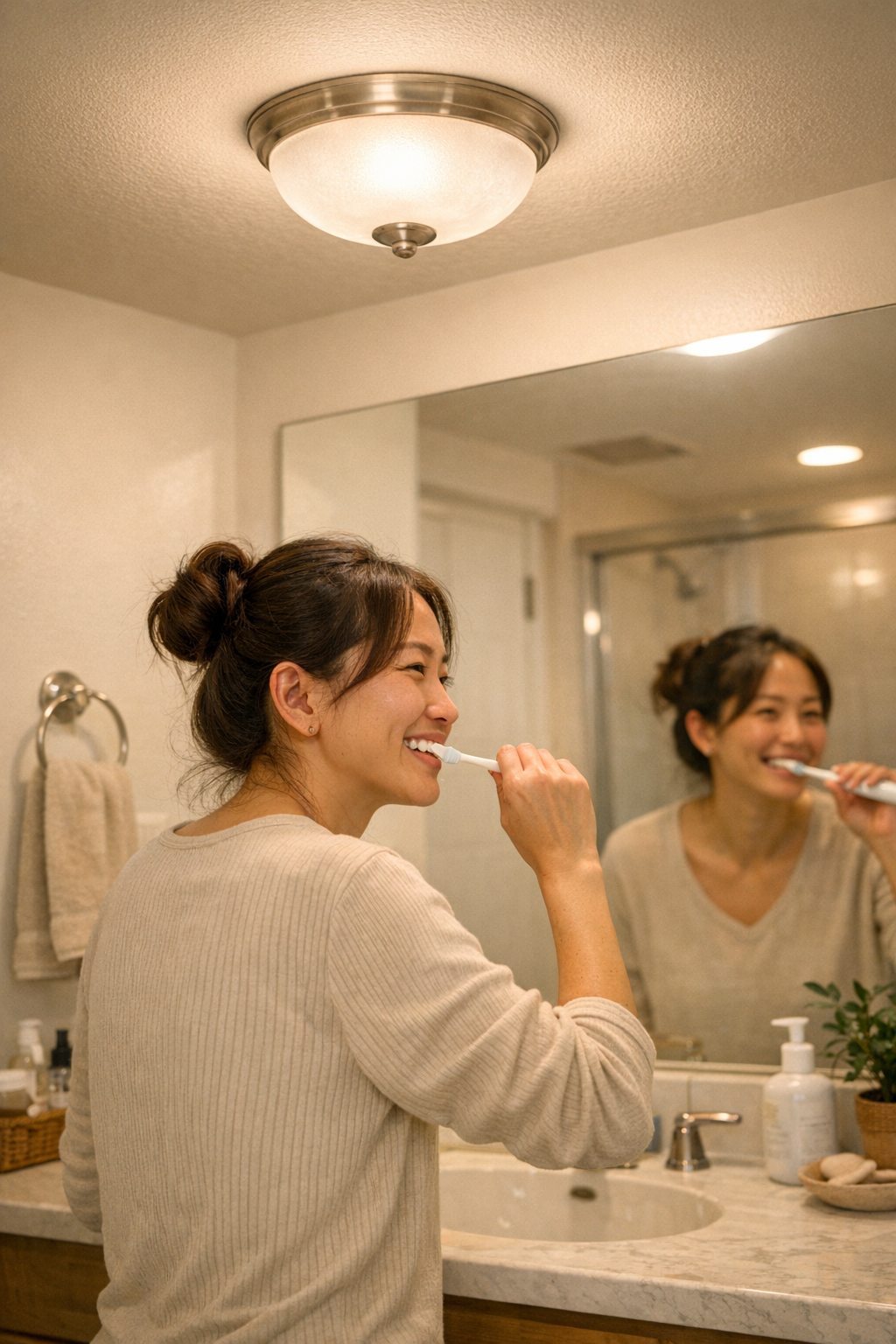
    Every morning starts with an unspoken negotiation: you, half-awake, eyes blinking, and the light you have to face. The habit is always the same. You nudge the bathroom door open, toes recoiling from cold tile while your hand skim-searches for the switch. Before you’ve even registered what day it is, you’re in a standoff with the ceiling light. If your house has low ceilings and an old-school flush-mount dome, you probably know the routine: harsh overhead glare floods the room, carves deep shadows under your eyes, aims straight for your retinas. The countertop is a patchwork of odd brightness and lurking gloom—you’re squinting, sidestepping, repositioning just to find the toothpaste or rinse your face. A basic routine, turned slightly adversarial.

    Why Regular Bathroom Lights Wear You Down—And What Actually Changes

    Bad light in a small room rarely screams for your attention. Instead, it works in quiet, cumulative nudges: a face in the mirror that never looks quite right, foggy patches of shadow where toothbrushes or hair ties disappear, shining streaks that bounce right off the faucet and into your eyes. The old “mushroom dome” is a master at turning every simple action—brushing, wiping, reaching—into an exercise in visual guesswork. It isn’t dramatic failure. It’s micro-irritation, replayed every morning and multiplied by every trip to the sink for a quick rinse or a late-night water glass.

    Semi-flush mount lighting disrupts this cycle. Instead of clinging flat against the ceiling, a semi-flush fixture drops just enough to let the light spread—a bounce, not a blast. Light isn’t driven straight down in a hostile puddle, but softens, diffuses, and finds its way into corners. Your eyes don’t flinch. The countertop reads clear all the way to the far edge. That “where did I put my glasses?” moment? Gone. The reflection in the mirror isn’t a split-screen of blinding and shade. You don’t have to consciously notice the upgrade—the absence of obstacles tells its own story.

    Routine, Rewired: Mornings Made Less Awkward

    You feel the difference in routines before you can explain it. Every reach, every lean over the sink or swipe of the towel is smoother. No more hand vanishing into a shadow-canyon while hunting for soap. Leaning in to check your teeth, you’re not shifting sideways to avoid tile-glare. The whole business of getting ready shrinks from a drawn-out series of minor navigations to something nearly frictionless—even with half your mind still waiting for coffee.

    Mid-Morning: Where All the Lost Things Went

    The pain points don’t just hide in the morning rush. Return after breakfast or midday—old lights transform daylight into something less useful. Sun streams in just enough to tangle with the artificial glare, splitting your reflection with zig-zag shadows, lighting up fingerprints and leaving the rest muddy. Set down keys, a hair clip, or the mail, and they disappear into the dim streak along the edge of the vanity or backsplash. That afterthought check for what you misplaced? Suddenly, it’s not required.

    With semi-flush lighting, glass, tile, and little corners all register in the same gentle field. No glare ricochet off a chrome tap. No “guess and grab” reaching for earrings lost in gloom. Every surface is just… visible. There’s no impressively staged brightness—only relief from the crude on-off struggles of old fixtures.

    The Day Unfolds: Why Evenness Actually Matters

    Consider the rest of the day: natural light thickens, then thins. In homes with mismatched lighting, afternoon means confusion—shafts of sunlight duel with a ceiling bulb that never seems right. You get harsh reflections off the mirror, squinting just to refill soap, shadow traps behind the trash can, and a general sense that the bathroom becomes “messier” as light fades in strange directions. The bounce and spread of a semi-flush fixture means transitions aren’t jarring anymore—no blinding hotspot, no vanishing corners. You find what you need, whenever you need it, without thinking twice.

    Late Day: Where Shadows Used to Lurk

    Fast-forward to late afternoon or early evening, hallway and bathroom corners turning reptilian and dark. Before, you shuffled through these zones, one eye on the ground for socks, the other on baskets and piles. It’s so routine, you barely notice: bracing yourself, slowing down, angling for the best light just to keep the pace. With the right fixture, light floats evenly—shoes are easy to find, the edge of the hamper is obvious, nothing sneaks by your tired eyes. It’s rarely brighter overall, just steady and honest.

    Evenings: From Stark Utility to Gentle Retreat

    By dinner, basic utility matters most. You want enough light to clean up, check the mirror, herd kids through teeth-brushing. But the old harshness is unwelcome—especially at night. With a semi-flush mount, you can dial things down: brightness fades into a soft glow, corners stay visible but never overlit, and the mirror image calms. Wiping counters or winding down, you’re not stuck grimacing under a surgical glare. It doesn’t feel fancy, just less tense. A rarity for any high-use bathroom.

    Midnight: Navigating the 2am Walk

    This is where most fixtures fail. Flip on the light in the depths of night—traditional ceiling lights spike the walls with cruel brightness, waking you up instead of guiding you safely. Semi-flush fixtures with a gentle bulb keep the essentials visible (corners, handles, floors), but spare your half-closed eyes the shock. You move safely, see just enough, and get back to bed without being blinded. The improvement is practical, subtle, and invaluable with tired eyes.

    Noticeable Gains, Human Limits

    This isn’t magic. Semi-flush mount fixtures don’t erase the steam on your mirror or find socks the laundry ate. Strange nooks and quirks persist. But the everyday antagonism—the glare, the blind spots, the dizzying brightness or sudden murk—is gone. Instead, you get a bathroom that helps with each routine: less pausing, less correcting, less fumbling. The most welcome change isn’t perfection—it’s the vanishing of old, persistent annoyances.

    One Thing to Check: Dimming Makes a Difference

    If you want real control, check that your semi-flush fixture and chosen bulbs work with a dimmer switch. A good dimmer lets you move from wake-up clarity to unwind softness in seconds. The same bathroom goes from high-function noon to gentle nightlight without swapping anything out. That’s an upgrade you’ll feel every day, from frantic mornings to sleepy midnight walks—without needing anything but a twist of the dial or tap of the switch.

    Why This Swap Packs More Value Than Expected

    You won’t remember every single improved moment. But you’ll feel the old pattern fade: no more sidestepping glare, no more peering into mirrored shadow, no more morning scavenger hunts for the things you set down seconds before. The small routines finally run as they should. It’s the kind of change that feels quiet—until you remember what it was like before, and realize you wouldn’t want to go back.

    If making your bathroom (or any hard-working, low-ceiling space) easier, clearer, and less exhausting has been on the to-do list for far too long, you can start here:

    lighthelper

  • How Semi-Flush Lights Silently Transformed My Hallway Feel

    The most neglected space in the house is the one you cross a dozen times a day. You probably don’t remember the last time you chose your hallway light—it’s just there, bland and serviceable, illuminating a space that never gets to be its own room. Most hallways are treated more like a bus stop than a destination: shoes scattered in a flanking pile, keys dropped on the nearest hook, mail threatening to slip onto the tile. And yet, every week brings another small negotiation—balancing laundry and groceries through the squeeze, dodging shadows, squinting against glare, hoping your footing lands on clear carpet. For all the time we spend transiting these corridors, the lighting hangs on, year after year, stubbornly imperfect: too stark at noon, too murky at night, always a compromise.

    The Real Annoyances of Standard Hallway Lighting

    You notice bad hallway lighting most when your routine stumbles. That cheap ceiling dome wasn’t chosen for comfort or clarity. Most likely it was the “standard” because it was available before you moved in—or the one a landlord picked in bulk. In my place, the original hallway fixture sent a hard cone of light right down the middle, leaving the edges in perpetual twilight. The floor would shine with just enough glare to make you blink, while shoes and bags lingered in awkward shadow—perfect conditions for stubbed toes, missed step edges, lost mail, or a basket toppling as you try to exit with arms full. By mid-morning, kitchen sunlight would cut in at an angle, competing instead of blending, only making the lopsided brightness more obvious.

    “Good enough for now” lighting always comes with small penalties. The little moments of inefficiency add up—slower walks as you squint at what’s underfoot, a quick foot check for kid toys under the bench, a sigh when you hit the light and still feel like you’re walking through static. Familiar, but never quite easy. The hassle never gets big enough to demand a replacement, so you live with it—fixed in irritation, not quite visible in the daily shuffle.

    Semi-Flush Mount Fixtures: Small Change, Big Improvement

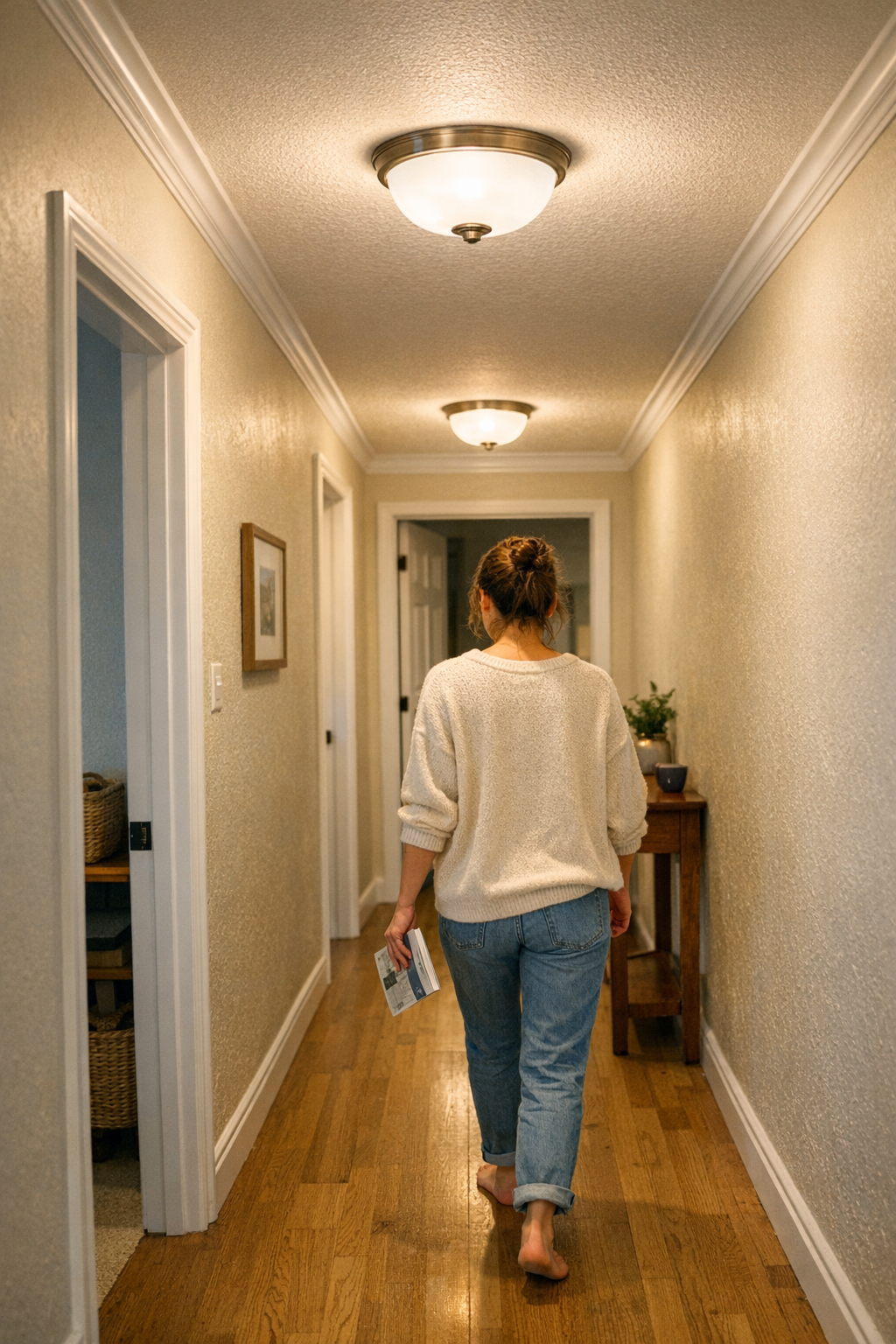
    A better hallway light doesn’t have to shout. When I finally swapped my old dome for a semi-flush fixture, it wasn’t about decoration—I simply craved a light that wouldn’t force me to stare or slow down. The morning after the new fixture went in, the contrast was instant: even, quiet light that crept reliably into corners, landing softly on baseboards so clutter no longer hid in shadow. Suddenly, I could cross from one end to the other without detouring around uneven spots or steeling myself for a glare off polished tile. The air above my head felt less cramped, the ceiling visually lifted. “Subtle” isn’t usually the word for a home upgrade, but that was the shift—light that receded, letting the hallway become all function and no spectacle.

    Day after day, it turned out the most noticeable detail was the lack of drama: I didn’t have to think about what I was stepping over, or if I’d missed a delivery box. The hallway simply worked—clear, predictable, balanced. It’s the kind of improvement you feel first, then forget (in the best way).

    Three Ways Better Hallway Lighting Instantly Pays Off

    If you swap your old fixture for a semi-flush mount, expect these daily upgrades:

    • Glare, gone: Even coverage means the floor doesn’t turn into a disco ball at midday or blind you when you step in from outside.
    • No more shadow traps: Corners and cubbies are gently illuminated—no hidden shoes, no lurking backpacks to trip over. You see everything the first time.
    • The ceiling feels higher, not heavier: There’s no bulky lamp sitting just above your eye line, making a narrow hallway feel even tighter. Air and light move freely.

    Lighting That Adapts—Not Dominates—Through the Day

    Early Hours—No More Squinting, No More Surprises

    Mornings start on your terms. With the semi-flush light, stepping into the hallway doesn’t jolt you into wakefulness with sudden contrast. Even before daylight filters in, you can actually see the floor, spot baskets, navigate shoes—no more stubbing your toe or bumping a laundry bin before coffee. The path is quietly readable, and the urgency fades from your first steps.

    Noon—Clarity That Matches (and Softens) the Sun

    By midday, natural light picks out every smudge and dusty patch. The new fixture isn’t there to compete; it gently balances out what the sun misses. The result? You notice what needs wiping or sorting, but you aren’t working in a glare. Midday chores move faster because visibility is comfortable, not clinical—enough to spot a scuff, never enough to make things feel sterile or overlit. The light adapts, instead of arguing with the room.

    Evening—Retreat With Just Enough Guidance

    Relaxing shouldn’t feel like stepping into an interrogation spotlight. A simple dimmer makes the late-day transition seamless. As dusk settles in, lowering the fixture keeps the hall navigable without flooding the space. Family members drifting in after dark—or tiptoeing out for snacks—find gentle clarity, not retina-burn white. The hallway gets gentle, not gloomy: you can see, but you aren’t “awake.”

    Late Night—A Route That’s Safe Without Waking the House

    After 10pm, set the dimmer low and the hallway becomes a nightlight for grownups: enough to steer clear of obstacles, but too soft to spill into bedrooms or shake anyone from sleep. Gone are the aggressive reflections on tile and the daunting shadows clinging to the baseboard. The walk to the kitchen or bathroom is calm and undramatic—safe, subtle, and tailored. Pro tip: program your own “nightlight” level. Just five seconds of adjustment, and you’ll wonder why you didn’t do it sooner—especially during that inevitable 2am water run.

    When a Hallway Light Does Its Job, Nobody Notices

    Flawless hallway lighting is almost invisible by design. Visitors probably won’t compliment your fixture. What they will notice: they walk straight through without slowing down, veering off, or flinching at glare. Even when shoes, coats, packages, and life pile up, the hallway itself feels clearer—nothing interrupts your field of view or the axis between kitchen and bedroom. The praise is silent, but unmistakable: the hallway simply operates, free from fuss or fanfare.

    It doesn’t need to be bold or decorative. It needs to be clear and helpful, the quiet upgrade that lets every day run smoother. No massive overhaul, no mess—just smarter lighting that finally makes this everyday stretch of floor work like it should.

    See how a simple change in ceiling light can reframe the most ordinary part of your home at lighthelper.

  • How a Small Light Shift Transformed My Kitchen’s Comfort and Flow

    The kitchen’s light doesn’t just wake you up—it interrogates you. Even before your first sip of coffee, there’s the flat, unblinking glare from that hardwired ceiling fixture. The switch snaps, and instantly the room floods with a severe, even brightness. On paper, it’s practical. In practice, it’s punishing: every streak on the counter, every water spot on the faucet, every crumb suddenly put on display. Light pours straight down like a too-honest spotlight, making the simplest shuffle from fridge to sink feel like you’re onstage—every motion exposed, even when you want to stay half-invisible and half-asleep.

    When “Good Enough” Lighting Turns Against You

    For months, maybe years, you barely noticed it. The fixture is just there—centered, neutral, “efficient”—until one morning you realize it never actually helps you settle into your day. The glare is relentless where you’re meant to work most: shadows knot up behind the coffee maker, while the chopping board gets blinding reflections and the backsplash bounces light right into your eyes. Simple tasks get complicated: rinsing mugs, slicing an apple, scanning a recipe on your phone all happen under the same harsh stare. Comfort isn’t an option when the room feels like it’s turned against you.

    You adjust your route across the tile—not for convenience, but to dodge the unwelcome brightness. It becomes habit to shield your eyes or turn your back as you fetch a glass. Slowly, the kitchen’s neutrality becomes a daily nag—never quite hostile, but never easy.

    Moving the Light—How Little Changes Everything

    Then, with one minor adjustment, things shift. The solution isn’t dramatic: the ceiling fixture nudged just enough off-center, no more than a show of inches. You hardly notice the move until you turn on the newly angled glow—and the atmosphere tilts in your favor. Straight lines of glare soften, reflections retreat, and the backsplash glows instead of searing your view.

    The kitchen’s sharpness dissipates overnight. Where light once shouted, it now converses with the room. The rush of the morning routine—juggling mugs, shuffling in socks, wrestling bread out of its bag—becomes easier, somehow quieter. There’s no longer a bright rectangle boxing in your every step. Instead, illumination pools gently along the perimeter, shadows settle into corners, and surfaces are visible but not put under glass.

    Everyday Relief, Not Just a Facelift

    It’s not about impressing anyone or landing a magazine spread. What lands is a daily, practical relief: the work zone feels gentle on your eyes, not blinding or patchy. The whole room breathes. Your hands find things without chasing shadow. You’re not “on display” for yourself. The kitchen feels companionable for the first time all week.

    Mornings Finally Match Your Pace

    No more mornings that hit you like a cold interrogation room. Now, that newly positioned light fits around actual routines: quick toast, scattered lunch prep, shoes curling in the hallway, mugs waiting in a jumble by the sink. The fixture throws only enough light—not a vitamin D blast, just enough for motion and comfort. Clarity never slides into exposure. Tiles aren’t lines of glare after washing up; the room feels less like a backdrop for chores and more like somewhere to pause, think, and breathe.

    The difference is everywhere you look—but not loud. The handrail, usually lost in a wash of white, now stands out cleanly for the dash out the door. Navigation is sure, not cautious. Bags and shoes are visible, but you’re not stepping through a set lit for high drama.

    Midday: Let Sunlight and Ceiling Light Work Together

    By noon, kitchens get crowded: mail, snacks, projects, sunlight scattered across the counters. In the old setup, glaring fixtures would war against the patchy window light. Now? The shifted ceiling glow blends with what the sun gives, not fighting it. There’s no more squinting to see what’s hiding in the corner, or wondering if you missed a spill under a dim cabinet.

    Mail gets sorted without the shadow drama. Surfaces seem evenly honest, and even the flour dust near the toaster can’t hide. There are no dark pockets—or worse, eye-stinging bright pools. Everything is just visible enough to feel right, without the kitchen ever feeling over-lit.

    When a Kitchen Feels Like It Belongs

    No one walks in and announces the change. There’s no instant dazzle, no showroom-level statement. Instead, the kitchen stops contradicting itself. The whole place agrees with itself for a change, and you stop inventing workarounds till the light shifts with the sun outside. You simply move through, act, leave—and don’t think about the lighting at all, which is the whole point.

    The Afternoon Test: Nothing to Trip Over

    Laundry in the crook of your arms, bags dangling, maybe a kid trailing behind. In the past, sunlight would fade into sharp shadow lines and the odd glare would slice in from the fixture. Now, those boundaries are gone—the floor is even, the walk smooth. You don’t have to guess where the shadow ends or worry about tripping because you missed a rogue shoe in a dark patch.

    Even at a glance, details are clearer but less aggressive: tile doesn’t fire reflections at your eyeline, and you don’t wince when you pass beneath the light. The fixture fades back, letting you do what you need—move through, grab towels, change plans—without wrestling against your own house.

    Evenings That Invite You to Slow Down

    Dinner’s done, the sky darkens, and the kitchen settles. The semi-flush fixture, now on a dimmer, nudges the mood down without leaving you fumbling. Visibility lingers just enough for an evening glass of water or the last sweep for crumbs. The rest is gentle shade. You’re not bathed in artificial cheer; you’re allowed to relax as the day ends. The room signals pause, not productivity.

    A few corners vanish into softness, which, for once, feels like an invitation to breathe. There’s nothing left to glare at you for one more load of dishes, nothing shoving you back into task mode right before bed.

    The Quiet Value of a Light That Sits Right

    Come midnight, the kitchen holds its peace. That fixture—barely off-center—offers a faint guide for late-night feet, just enough to pour water without waking the whole house (or yourself). No more jarring bursts as you cut through the darkness for a midnight snack; the room knows to let you be. The day ends with a gentle retreat, allowing both you and your eyes to rest.

    One Subtle Shift, All-Day Comfort

    What’s remarkable about this change is how unremarkable it looks—a tweak you stop seeing because the friction is simply gone. The kitchen finally lines up with the way you live, not the geometry of the ceiling grid. Instead of reminding you what’s wrong, the light just helps you move, pause, work, and unwind. It’s small, steady ease, noticeable mostly when you remember how grating things were before.

    If solutions like this quietly improve your day, you’ll find more worth trying at lighthelper.

  • Choosing Between Flush and Semi-Flush Lighting for Cozy Dining Spaces

    The first real test of any room’s lighting isn’t how it photographs, but how it pulls you through your first hour of the day. In our cramped dining nook—a table pressed up against drywall on one side and a walkway on the other—light isn’t an aesthetic detail. It’s a friction point. Breakfast kicks off before the sun thinks about rising, and the overhead fixture determines whether four people cross paths easily or flinch at every shadow. If the bulb above is right, you forget about it and reach for your toast. If it’s wrong—too harsh, too focused, too dim—the routine grinds. That’s why the flush mount vs. semi-flush ceiling light debate quietly decides whether small, crowded spaces feel usable or just tolerable.

    Why Ceiling Fixtures Shape Everyday Friction

    For most of us, the ceiling stays out of mind—until it’s not. The fixture overhead is rarely on your mental checklist when it’s a race to dodge elbows, keep juice off the floor, and rescue a dropped fork. But lighting reveals its importance in those bracing, half-awake scrambles: reaching for the edge of the table only to lose your spoon in shadow, or noticing how some seats are spotlighted and others vanish into gloom. A decision as simple as “flush or semi-flush” isn’t a catalog question. It’s a matter of whether the whole family fits into the same pool of light, or spends breakfast in tiers of visibility and second-best seats.

    Flush Mount: Bright in the Middle, Fading at the Edges

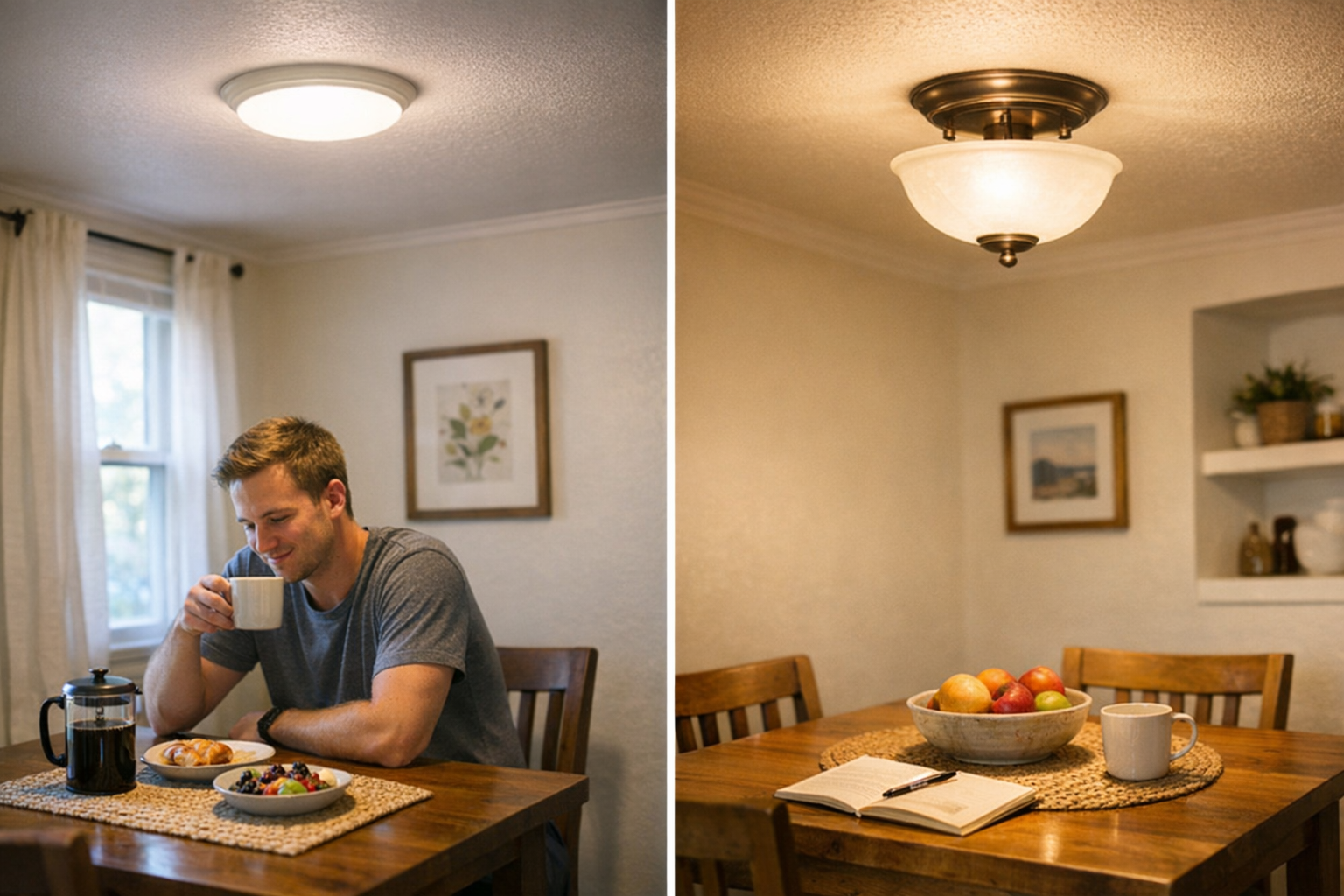
    With a flush mount fixture sealed flat to the ceiling, the room feels a smidge taller—a godsend when every inch counts and tall guests already lean involuntarily. The light is disciplined: it aims right down, forging a bright circle like a spotlight at center stage. Head clearance is preserved, and anything placed dead center pops in crisp detail. But you notice the borders: light fades quickly past placemats, leaving muffled shadows and odd lines across the table. If you’ve spooned up cereal under a too-bright bulb, squinting past a glare on the milk, you recognize the subtle unease. The flush mount is a specialist—great where it shines, indifferent to the rest.

    Semi-Flush: Light that Actually Hits the Corners

    Semi-flush fixtures hang just a touch lower—an inch or two, but it matters more than you’d expect. The effect transforms more than the silhouette. Suddenly, the light spills outward, crawling to the far edge of the table and coaxing objects in the corners out of obscurity. Ceilings drop visually, and with a table beneath, that’s a negotiation. Bang your head once and you’ll remember. But in a room packed tightly with people and things, the payoff is real: meals become collaborative, the thrown shadows blur, and every plate—edge to edge—is visible without anyone shifting for the best seat.

    Lighting and Routine: Small Details, Big Differences

    Flicking the switch in the fog of early morning is automatic. The flush mount snaps awake, delivering instant clarity—provided you’re lucky enough to sit in the middle. Move a plate to the perimeter and it disappears into off-color shadow. Glasses flash with rings of reflected brightness, leaving the outermost seats half-lit and indistinct. Over time, these awkward patterns repeat: the scramble to nudge homework into the light’s sweet spot, the inability to see toast crusts at the table’s edge, the daily migration of mugs and plates to wherever that spotlight lands.

    Midday Reality: Where Glare and Shadows Rule

    Once the sun works its way into the room, you might think the overhead fixture could rest. But natural light skips the corners; the flush mount still does the heavy lifting for the core, leaving outer spots to compete with the dull glare off windows. Across the grain of the table, light streaks and rebounds, sending phone screens into hard-to-read dazzle and kids’ pencil lines into eye strain at the far end. There’s no disaster, but anyone who uses the table for hours—meals, work, drawing—develops an almost constant urge to adjust or relocate, chasing balanced brightness that never quite arrives.

    A Neighbor’s Alternative: Semi-Flush Seen Live

    The real-world difference hit home at a neighbor’s. Roughly the same floor plan, same scrappy table, but their semi-flush fixture hovered lower, making you doubt if there’d be room to breathe. Then the light came on: no isolated glare, just an effortless glow blanketing every seat and brightening even the walls. Passing dishes didn’t mean squinting. Every plate became part of one large, gently illuminated gathering, not a series of underlit islands. Sitting there didn’t just change your view—it redrew the sense of who belonged at the table.

    How Repeated Habits Reveal Gaps

    As dinner fades to homework, laptops and toys spread out, and the first crumbs accumulate where the light starts to lose its grip. The flush mount stays stubborn, unwavering in what it lights, blind to the periphery. Stray puzzle pieces and open notebooks end up drifting along the edge, half in shadow, easy to overlook or forget. In contrast, that neighbor’s semi-flush kept everything honest—no desk toy or to-do list was left unseen, and no one’s project vanished just because it wandered to the margin.

    Layering Light to Fill in What’s Missing

    Nights demand improvisation. Even with a high-quality flush mount and a dimmer, edges often go dark, and plates pick up visual halos while perimeters shrink. The fix is rarely a total overhaul. Sometimes it’s about layering—setting a small lamp near the walls or a task light where the table runs long, diluting the harsh boundaries and inviting more of the room back into functional focus. The most realistic solutions don’t pretend overhead fixtures can do it all, especially when a single ceiling point is expected to carry a multi-use room from homework marauder to quiet dinner haven.

    No One-Size-Fits-All—Just Noticeable Tradeoffs

    When the house quiets down and you finally flick off the light, it’s easy to appreciate what the flush mount does best: clean ceilings, no ledges for dust, open air unbroken. In pure utility, it’s hard to beat. But if you’ve glimpsed what a semi-flush can do—how it includes every diner in the light, how it refocuses attention outward as well as down—the missing comfort is hard to unsee. What’s sacrificed in a little vertical clearance might be gained in daily usability, especially in rooms where the surface is always in use and the edge matters as much as the center.

    Lighting That Actually Changes How a Room Works

    It turns out there’s never a perfect answer. Flush mounts favor control and open space, but their sharp borders show up again and again in real-life clutter and shifting routines. Semi-flush options throw light farther, anchor every seat in the group, and let activities stretch without stumbling into gloom—even as they hover a little closer to your upstretched hand. In the end, the only difference that counts is made concrete over dozens of forgettable meals and moments: light that supports the table you have, in the space you actually use.

    Better Lighting, Fewer Adjustments: Takeaways from Daily Grind

    • If mealtimes are family affairs—try semi-flush fixtures to avoid the daily complaint of who lucked out with the “good” seat and who got the shadowed edge.
    • Low ceilings? Use a flush mount, but don’t try to make it do everything—bring in side lamps or wall lights to smooth harsh drop-offs after dark.
    • Add dimmers—every shared table moves between moods, and having a way to tweak the spread keeps tempers down when one person needs brightness and someone else wants calm.
    • Favor diffusers or shades—they blur harsh glares and soften edges, making any fixture less of a visual enemy during long days at the table.

    All the home stories circle back to this: light that fits your life isn’t about style points—it’s about clarity, comfort, and how many fewer times you need to squint, move the salt, or drag a chair into a “better” spot just to live the day. Nail the lighting, and the right space follows quietly behind. Miss it, and you’ll never stop noticing what’s wrong, no matter how beautiful the fixture.

    For details and ideas that actually change how rooms work, there’s always more to see at fresh lighting.

  • Why Soft Flush Mount Lighting Feels More Like Home

    The Subtle Power of Flush Mount Ceiling Lights in Small Living Spaces

    Small living rooms often reveal the shortcomings of typical overhead lighting. Imagine starting a day walking from a hallway into your living room, the sunlight gently filtering through the window. When you flip a switch for a classic ceiling fixture, the light often feels harsh and overpowering. In contrast, a flush mount ceiling light offers a softer, more inviting illumination that spreads evenly across the room, enveloping books, plants, and furniture in a warm glow without harsh glare.

    This subtle difference changes how the space feels. Instead of harshly spotlighting everyday objects or washing everything in cold, flat light, flush mount fixtures provide just enough brightness to see clearly while maintaining comfort and warmth. The ambiance created by these fixtures isn’t about brightness or intensity but about a gentle presence that makes the room feel lived-in—never sterile or overexposed.

    Why Flush Mount Fixtures Work So Well

    Flush mount lights rest close to the ceiling, pushing illumination out along the ceiling line. This design allows light to diffuse softly and reach more evenly across the room compared to recessed or pendant fixtures that create focused pools and shadows.

    Lighting expert insights often highlight this key advantage: flush mount lighting complements ambient daylight or soft background lighting, rather than competing with it. This reduces glare and harsh contrasts that make people squint, especially during morning routines or in transitional spaces like hallways and entryways.

    The result is a calming balance of light and shadow that makes everyday activities easier. Whether it’s sliding by with a coffee in hand or rolling out a yoga mat during midmorning, the lighting feels supportive yet subtle. It doesn’t dominate your attention but quietly assists in creating a welcoming environment.

    Benefits for Daily Living

    • Reduced Eye Strain: Soft, diffused light reduces glare on screens and reflective surfaces, easing the strain during extended use.
    • Lighter Shadows: Subtle shadowing helps maintain depth and texture in the room, enhancing the perception of space and comfort.
    • Even Visibility: From finding lost items to reading or sorting mail, the light provides adequate visibility without overpowering harshness.

    How Changing the Light Can Transform Your Space

    Replacing an overhead fixture designed to flood the room with intense brightness with a flush mount light can noticeably warm the atmosphere. Colors stay true, details remain clear, and the entire room feels more harmonious. For example, an afternoon spent searching for an envelope under a side table becomes easier and less frustrating when the light is soft yet sufficient, eliminating glare and washed-out colors.

    This kind of change isn’t just about aesthetics—it’s about reclaiming your space so it feels inviting instead of clinical. A flush mount fixture doesn’t box you in with flat lighting; instead, it creates a gentle wash of illumination that embraces the room’s natural character.

    Adapting Glow Through Different Times of Day

    Flush mount lighting truly shines in smaller rooms or transitional spaces where you don’t want the fixture to dominate visually. During late afternoons, when sunlight filters in at oblique angles, traditional overhead lights can flatten textures, wash out wall art, and create cold moods.

    In contrast, flush mount fixtures paired with dimmer switches support the natural rhythm of daylight. They softly reveal details like a child’s toy in the corner, keeping colors warm and the atmosphere calm. This makes the transition from day to evening feel natural—less rush, more ease.

    A Simple Refresh Tip to Shift Your Lighting Energy

    Consider integrating a dimmer switch with your flush mount fixture if you haven’t already. This small addition gives you control to match your lighting to your mood and activities. For example, you can use brighter settings for tasks like cooking or reading and lower the lights incrementally as evening approaches, creating a relaxing environment for unwinding and entertainment.

    Switching lighting gradually rather than all at once helps your eyes adjust naturally and can change your perception of the room’s size and warmth. This subtle shift supports healthier sleep patterns and adds a layer of comfort that’s often overlooked.

    Practical Considerations and Tips for Choosing Flush Mount Lighting

    When selecting a flush mount fixture, consider these practical factors:

    • Size and Scale: Choose a fixture proportional to your room’s dimensions. Small rooms benefit from fixtures that aren’t bulky to maintain a sense of space.
    • Light Temperature: Opt for LEDs or bulbs with a warm color temperature (2700K–3000K) for cozy, inviting light that flatters interior colors and skin tones.
    • Diffusion Quality: Look for fixtures with frosted glass or diffusers that minimize hotspots and distribute light evenly.
    • Energy Efficiency: Modern LED flush mounts offer long-lasting, low-energy use, making them both eco-friendly and cost-effective.

    How Flush Mount Lighting Supports Your Routine

    Flush mount ceiling lights provide quiet, effective illumination that adapts seamlessly to daily activities. They simplify transitions, such as moving from daytime busyness to relaxation in the evening, without the aggressive brightness often associated with traditional fixtures.

    Whether you’re heading to bed or getting up in the middle of the night, this kind of light offers just enough clarity to prevent accidents without disrupting sleep. It’s a low-key companion, helping you navigate your home safe and comfortably.

    Final Thoughts

    In many homes, lighting struggles are subtle but persistent—spaces that feel too harsh, shadows that create confusion, or fixtures that dominate the décor. Flush mount ceiling lights address these concerns by blending into the environment and enhancing it gently. They don’t seek attention; they share it.

    By choosing lighting that respects the flow of natural light and complements your use of space, you gain more than illumination—you gain comfort, ease, and a refuge where each moment in your home is simply more pleasant.

    For more ideas on enhancing your living space with thoughtfully installed lighting, consider exploring options that suit your lifestyle and preferences, helping you create the right ambiance for every corner of your home.