

Category: Uncategorized

  • Why Your Drill Bit Walks—and How to Fix It Easily

    Understanding Why Drill Bits Wander Off Center

    Ever had a drill bit that refuses to start where you mark it? You position the bit carefully, press the trigger, and then it suddenly slides sideways—just a few millimeters off your mark. While that might seem minor, this movement, known as “walking” or “skating,” can ruin accuracy and cause misaligned or oversized holes. It’s frustrating whether you’re a novice or a craftsman with years on the clock.

    At the root of this problem are a few common causes:

    • The drill bit’s tip glides across the surface before biting.
    • The surface is too smooth, hard, or slick for the bit to grip initially.
    • The drill isn’t perpendicular, or it starts at too high a speed.
    • The bit is dull, worn, or unsuitable for the material.

    Walking is especially common on hard woods, laminated plywood, metals, and other smooth surfaces where the bit finds no “purchase” to start drilling promptly.

    Choosing the Right Bit to Minimize Walking

    One of the best defenses against bit walking is selecting the proper drill bit tip design for your material. Not all bits should be treated equally or used interchangeably.

    Brad Point Bits are an excellent choice for woodworking projects. They have a sharp central spike that helps the bit stay centered by physically anchoring it before the cutting edges start their work. This design dramatically reduces skidding on flat wood surfaces, plywood, or laminates. For hardwoods, seek brad point bits with 8–10 teeth per inch for a clean and steady cut.

    Twist Bits are versatile and common but can be prone to wandering because of their blunt tip geometry. They’re best reserved for softer materials or when precision isn’t the ultimate priority.

    Metal Drilling Bits need to be sharper and usually come with a split-point tip angled at 135°, which helps the bit self-center when starting in steel or aluminum. Using a 118° bit on metal often leads to more walking because the tip geometry isn’t optimized for the harder surface.

    Masonry Bits feature a tungsten carbide tip designed for brick, concrete, and stone. They’re highly durable but ineffective for steel or wood, where their geometry prevents proper biting.

    A big mistake is using a “one-bit-for-all” approach. General-purpose bits often fall short on wood hardness or paint finishes and wander more easily.

    Practical Techniques to Stop a Bit From Walking

    Create a Starter Dimple

    One of the simplest and most effective ways to prevent bit walking is to create a small pilot indentation where you want the hole.

    This dimple gives the bit a physical seat to sit in before drilling starts, dramatically improving accuracy.

    How to make a starter pit:

    1. Mark your drilling spot clearly with a pencil or scribe.
    2. Use a center punch if you have one. Gently tap it with a hammer to create a shallow dimple.
    3. If you don’t have a center punch, a sturdy nail, scratch awl, or even the corner of another drill bit can work as a substitute for wood or softer metals.
    4. Begin drilling with the bit seated in this dimple—start spinning slowly and carefully.

    This simple physical guide often cuts walking down by 90% or more, especially on hard or smooth metals and wood finishes.

    Apply Masking Tape for Extra Grip

    When drilling into extremely smooth or glossy surfaces like ceramic tiles or finished plywood, applying a piece of masking tape over the drilling mark adds grip. It gives the bit a little more bite in those first rotations, preventing slippage and scratches.

    This method is popular with tile installers because the tape reduces walking and cosmetic damage.

    Start Slow and Straight

    Resist the urge to blast your drill at high RPM from the start. Instead,:

    • Keep the drill speed low when starting (around 300–500 RPM for wood, 150–250 RPM for metal).
    • Apply gentle, steady pressure to allow the bit to bite steadily without forcing it.
    • Ensure your drill is held perpendicular (90°) to the surface. Even a slight tilt of 10° can cause the bit to wander.

    Use a small carpenter’s square or visually check the angle from different points if you’re unsure.

    Maintain Sharp, Well-Matched Bits

    A dull or damaged bit tip worsens walking. Even the best tip design cannot compensate for a worn edge.

    Regularly inspect your bits and sharpen them when necessary using a bit sharpener or bench stone. The investment of a few minutes to sharpen your bits will save frustration and improve your hole accuracy dramatically.

    Remember, a well-maintained bit engages the material immediately, cuts clean holes, and holds center without wandering.

    A Refresh Tip: Slow Down and Trust the Process

    It’s tempting to rush through drilling tasks, especially when projects pile up. But trips to patch holes and re-drill waste more time and materials than a deliberate, methodical approach.

    When you slow down to take these few preparatory steps—proper bit, a starter dimple, correct drill angle, and sharp bit—you build precision into your work and avoid frustration.

    This mindset refresh helps transform your drilling from a source of headaches into a satisfying part of the craft.

    Real-World Example: Precision on the Job

    Once, while installing a French cleat wall, I found that many mounting screws had badly misaligned holes. Switching to the dimple technique—simply tapping in a small pilot mark before every hole—revolutionized my installation speed and accuracy. The crooked, frustrating starts disappeared overnight.

    My experience echoes the wisdom of seasoned metalworkers and woodworkers who know that a controlled start is half the job.

    Summary: Stop Bit Walking with Simple Actions

    • Use the right bit style and tip for your material—brad point bits for wood, split point bits for metal.
    • Create a starter dimple with a center punch or improvised tool.
    • Apply masking tape over smooth surfaces to add grip.
    • Start drilling slowly and hold the drill perfectly perpendicular.
    • Keep bits sharp and well-maintained.
    • Adopt a patient, methodical approach to drilling to save time long-term.

    Following these practices will improve your hole accuracy every time and transform drilling from a frustrating chore into a precise craft.

  • “Master Pre-Flight Jitters: Travel Light with Your Trusted Carry-On”

    The cycle repeats every time, right before heading to the airport. I wander through the apartment, checking the stove again, unplugging a lamp I probably didn’t need to, and glancing at my carry-on, already packed and waiting. I used to think this pre-departure anxiety meant something was wrong with me—something that would disappear after enough trips. But it hasn’t. That little jolt of nerves settles in quietly, especially during check-in, even with all the anticipation that comes with travel.


    The airport ride rolls by in its usual mix of excitement and unease. Traffic lurches, a podcast plays, but I’m only half there—wondering if my bag is too heavy or if my passport made it from the coffee table to my backpack. I check the charger again, just in case. My carry-on sits in the passenger seat, a low-stress companion whose handles feel familiar. Packing it last night was actually relaxing—folding shirts, tucking in a few books, finding comfort in small routines before jumping into the busy unknown. For anyone still looking for something sturdy to bring along, I found my go-to here: carrysupply.myshopify.com.

    Check-in always has a strange, stage-like feel. The line crawls forward, everyone a little distracted, quietly worrying about their own stuff. You can spot the moment when people tense up—a boarding pass scan, a bag questioned for being too big. My turn comes. I hand over my passport, stand a little straighter than normal, try not to over-explain. The agent barely glances at my scuffed carry-on, the one that’s made it through trip after trip. I think about how much I’ve squeezed into overhead compartments lately, how I’ve learned to pack lighter but still can’t shake the nerves underneath it all.

    Once check-in is done, I get a short wave of relief, but security brings its own set of tiny steps. Shoes off, pockets emptied, laptop out—somehow I’m sure I’ve forgotten something. The routine never feels totally normal. Stress hangs on until I’m through, bag rolling behind me. At that point, everything shrinks down: the hum of wheels, bits of airport conversation, a little less tension. Having something familiar to hold onto, like a steady bag, makes things easier.

    Boarding feels quieter and more relaxed. I find my window seat, slide my bag overhead, and watch as people come down the aisle, each scanning tickets and searching for space. The engines start up, and for a second, I realize I always hold my breath then. The plane climbs, the city drops away, and those jitters that stuck around all morning finally start to fade.

    There’s a pause mid-flight. I glance at my carry-on, tucked away, and think about the small things it’s carried: spare socks, notebooks, random souvenirs. There’s something reassuring in knowing your essentials are all right there, as long as they fit in something you trust. When the seatbelt light goes off, the tension drops. It’s just the sky outside and the thought that somehow, destinations just keep showing up.

    Arrival comes with its own blend of nerves and novelty. Airports each have their own smell, customs lines their own rhythm. But my bag’s humming wheels give a sense of home, no matter the country. I step into the arrivals hall, blinking at whatever new light or weather, and manage to feel a bit braver with every trip. Maybe you never get rid of the anxious part entirely—you just let it ride alongside a quiet hope for what’s next.

    The anxiety doesn’t vanish, but it shifts. Walking through a busy city with my bag at my side, I notice how everyone’s moving at their own pace, carrying thoughts I’ll never know. Late at night, unpacking, I remember that what feels urgent rarely is. Most worries fade once life picks up again. I keep the small routines: folding shirts, zipping up pockets, taking it as enough.

    Sitting in a local café, I send a quick message home, suitcase by my feet—a small reminder of all the miles together. There’s no single fix for the nerves at check-in, but having a reliable bag, one that sticks with you, helps ease things along.

    Coming home is always a bit quieter. I wait at familiar arrival gates, bag in hand, and think about all the places it’s tagged along. It’s funny how easy some comforts are: the sound of a zipper or the grip of a handle, knowing you’re never really lost, just moving forward, slightly uncertain and a little more capable each time.

    The anxiety never fully disappears—and maybe that just means I still care about what’s ahead. I acknowledge it, keep moving, and look for small ways to steady myself between places. My carry-on rolls alongside me out of the terminal, as steady as always. If you’re searching for something similarly reliable, it’s worth starting here: carrysupply.myshopify.com. And who knows—maybe next time, check-in won’t feel quite so tense.

  • Why Permanent Anti-Fog Coatings Are Worth Your Attention

    Why Foggy Safety Glasses Are More Than Just an Annoyance

    Anyone who has worn safety glasses knows the frustration—one moment your vision is clear and sharp, and the next, a foggy haze blurs everything in front of you. Whether you’re working outdoors on a chilly day, moving between a cold zone and a heated workshop, or simply wearing a mask that directs your breath upward, fogging is a persistent and hazardous disruption.

    Safety glasses are meant to protect your eyes and help you maintain focus. But when your lenses fog up constantly, they become a safety risk themselves. You might stop working every few minutes to wipe them, or worse yet, continue squinting and guessing your surroundings, increasing the chance of accidents.

    Understanding Why Safety Glasses Fog Up

    Fog forms when warm, moist air meets a cold surface and condenses into tiny water droplets. On safety glasses, this happens when:

    • You walk inside after being outdoors in the cold.
    • Your breath, especially if you’re breathing heavily, creates moisture behind the lenses.
    • You’re wearing a mask or respirator that channels warm breath upward.
    • You work in humid or sweaty conditions.

    The basic physics behind fogging means you can’t always control the environment or how your body behaves. But you can seek gear that minimizes the problem so you don’t have to stop constantly.

    Permanent vs. Temporary Anti-Fog Solutions: What Really Works

    Many safety glasses are marketed as “anti-fog” or “fog-resistant,” but the devil is in the details. Most temporary solutions involve coatings or sprays that require frequent reapplication and quickly wear off during a workday. These include water-activated coatings or sprays that promise fog-free vision for minutes to an hour.

    On the other hand, permanent baked-in anti-fog coatings bond directly to the lens surface during manufacturing. These coatings are much more durable:

    • They don’t wash away when the glasses get wet or dirty.
    • They last for weeks or months in real, rugged work conditions.
    • They reduce the need for constant cleaning or reapplication.

    The difference is significant. If you find yourself relying on spray bottles multiple times per day, it’s not the gear—it’s the coating.

    Real-World Experience: Why Durable Coatings Make a Difference

    Consider a day working in a hot attic retrofit. The air is moist and your mask directs your breath under your safety glasses every time you breathe deeply. With temporary anti-fog glasses, you might reach for a spray or cloth 10+ times in a few hours—losing focus and momentum each time.

    Permanent anti-fog coatings don’t just delay fogging—they often prevent it entirely under typical conditions. This means:

    • You spend more time focused on your work.
    • You maintain safer awareness of your surroundings.
    • You reduce frustration from constant pauses and lens cleanings.

    Practical Tip: How to Reduce Fogging By Adjusting Your Mask Fit

    Even the best coatings can struggle if warm breath is funneled directly upward. If you wear a mask or respirator, try putting your safety glasses on after fitting your mask firmly over your nose. A tight seal reduces the amount of moist air hitting the lenses.

    Quick adjustments such as:

    • Using masks with a nose wire and molding it to your face.
    • Placing a strip of medical or sports tape across the top inside edge of the mask to seal gaps.
    • Ensuring your glasses fit tightly but comfortably over your mask edges.

    These small changes often provide noticeable improvements without any new gear purchases.

    Refreshing Your Perspective: Beyond the Lens Treatment

    It’s easy to focus solely on the glasses themselves, but sometimes managing fog requires a small shift in how you approach the entire system of protection. Consider the following:

    • Layer your safety gear thoughtfully: Position masks, respirators, and glasses strategically so breath is directed away from lenses.
    • Pay attention to ventilation: When possible, working near a fan or air circulation can disperse moist air.
    • Regularly clean your lenses: Dirt and oils reduce coating effectiveness; gentle cleaning with manufacturer-recommended solutions keeps coatings performing well.

    This holistic view reduces fogging problems even further and helps your gear last longer.

    What to Watch For When Choosing Anti-Fog Safety Glasses

    When shopping or evaluating your current safety glasses, look out for these key details:

    • Permanent or baked-in anti-fog treatments: Phrases like “permanent coating” or “baked-on” suggest durability.
    • Avoid water-activated or replenishable coatings: These often need frequent reapplication.
    • Be skeptical of vague terms: Words like “fog-resistant” or “anti-mist” without specifics may mean minimal protection.
    • Consider lens material and design: Some polycarbonate lenses have better inherent anti-fog capabilities.

    Final Thoughts

    Fogged safety glasses are more than an inconvenience—they compromise your safety and productivity. The most effective solution lies in choosing lenses with truly permanent anti-fog coatings combined with mindful mask fitting and lens care.

    Making these choices allows your safety glasses to fade into the background—letting you focus on the job at hand instead of the constant battle against fog. Try implementing these strategies in your work routine and see how much smoother your day can go.

  • “Discover Airport Magic: Stories of Journeys and Timeless Travel Companions”

    Every time I walk into an airport before a flight, there’s this familiar hum in the background—a mix of nerves and a bit of excitement. Maybe it’s the odd light slanting through the windows or the voices blending together, but the place always feels a little different right before it’s time to board.


    I sometimes think airports just highlight whatever you’re already feeling. I usually arrive early, still a bit groggy from too little sleep and that low-key rush about going somewhere new. My carry-on rolls along beside me, patched and well-traveled, stocked with the things I like to have nearby in the air—a book, headphones, travel journal, and a coffee token from a past trip. I’m always browsing for new gear, too; if you’re the same, there’s Carrysupply, with bags you start to imagine collecting their own history.

    There’s something kind of personal about the security line. Everyone’s going through the same steps: shoes off, laptops out, belts undone. Even if you’re used to it, it makes you feel a little more exposed, and you can almost sense the day shifting. Sometimes I look at the people around me and can’t help but wonder where they’re headed and what they’ve packed inside those bags.

    Once I’m through to the terminal, things feel sharper. The smell of pastries at a bakery stand, the echo of an announcement overhead, the flickering flights board stacked with unfamiliar destinations—all the details stand out. A lot of times I’ll grab a spot in a quiet corner, feet propped up on my carry-on, letting the wait settle in.

    The area by the departure gates always turns into a temporary community of strangers all sharing the same moment. There are people talking with family on the phone, flipping through passports, or catching up on something on their screens. Some just watch planes outside, or listen to the chatter from a group in matching sweatshirts, or notice a kid looking up in awe at the engines. There’s a rhythm to it—little clicks, hushed laughs, the sounds of people about to head off.

    When boarding is called, I grab my bag and get in line, running through the usual checks without really thinking. There’s always that feeling as I join the queue: leaving something behind but already focused on what’s next. I keep an ear out for my row, making sure the zipper on my carry-on is shut.

    On the plane, it quiets down. I stash my carry-on under the seat, glance around, and notice how everyone’s faces shift as they settle in. Hoodies, business jackets—it all blends together. There’s this sense of being between places, somewhere just out of reach of where you’ve been and where you’re going. I catch myself holding onto my backpack strap, feeling that little push as the plane starts to move.

    Once we’re cruising above the clouds, the world below fades out, and time feels softer than it did back at the gate. Up here, everything slows down. I might pull out my book for a while, or just drift off thinking about the place I’m about to land. New streets, different languages, and a different kind of sunlight waiting on the other side of the airport ride—it hits you every time. There’s something almost freeing about being in this in-between.

    If I’ve learned anything, it’s to pick your travel companions carefully. Sometimes it’s another person, sometimes it’s just your favorite carry-on that’s seen its share of rough luggage racks and long layovers. It’s funny how an old bag you’ve brought everywhere can become a little piece of home, wherever you find yourself in the world.

    Arrivals have their own atmosphere. When you finally walk out of the terminal, whether into sun or rain, it all feels new for a moment. My bag seems a bit more scuffed, maybe with a new sticker or two picked up along the way. That familiar weight is almost reassuring.

    Coming back through the airport heading home is always easier. The routine sets in, and everything feels more familiar. The airport coffee even tastes a little different, and the goodbyes at the gate aren’t quite as sharp. At the end, there’s always a quick look back—what changed, what stayed the same, and maybe something small you picked up to keep.

    Maybe that’s just why airports have that certain feeling before a flight—a thousand stories stacked up, everyone waiting for what comes next. Even after years of travel, I still notice it, and honestly, I hope I always do. In those in-between moments, anything feels possible.

    I’ll wrap up here, between arrivals and departures. My old carry-on is next to me, ready for wherever I’m off to. If you ever find yourself hunting for a travel companion you can count on, there’s always Carrysupply, quietly waiting in its own corner of the internet—kind of like the airport itself, full of stories yet to start.

  • Are Your Safety Glasses Quietly Sabotaging Your Precision Work?

    Understanding How Lens Quality Impacts Your Precision Work

    Have you ever struggled to mark a precise line or thread a tiny screw, only to find your vision blurred or distorted despite wearing safety glasses? Many assume that wearing any safety glasses is enough to protect their eyes and maintain accuracy. However, when you rely on inexpensive safety lenses, you might unintentionally introduce subtle distortions that cost you precision and increase fatigue during detailed tasks.

    In this article, we’ll explore why cheap safety glasses can compromise your accuracy and offer practical insights on choosing the right eyewear to ensure clarity and comfort throughout your workday.

    The Hidden Cost of Low-Quality Safety Lenses

    At first glance, safety glasses appear simple and uniform: clear plastic shields with arms to secure them in place. The real differences lie beneath the surface, especially in the lens material and manufacturing precision. Lower-cost safety glasses typically use polycarbonate lenses that may have inconsistent optical clarity due to lower standards in grinding, curvature, and coating application.

    For example, the thickness of lenses in cheap glasses can be as thin as 1.4mm, whereas more reliable, jobsite-grade eyewear usually features lenses closer to 2mm or thicker. Even slight deviations—such as a half-degree error in lens curvature—can cause light to bend unevenly, leading to distortions that are critical during fine work.

    Types of Distortion Caused by Inferior Lenses

    • Edge distortions: Subtle warping at the periphery of the lens creates pincushion or barrel distortions, where straight lines appear curved.
    • Magnification shifts: Slight variations in magnification near the lens edges can mislead your perception of measurement and alignment.
    • Ghost imaging: Faint double images or reflections can cause confusion during close-up tasks requiring focus.

    These effects aren’t always obvious at first, but they force your eyes to constantly refocus and strain, subtly undermining your accuracy and causing fatigue.

    A Real-World Example: When Safety Glasses Betray Your Markings

    A few years back, I spent an afternoon installing cabinet handles for a friend. Initially, I wore a cheap pair of safety glasses, confident they would protect my eyes without issue. After making a few holes, I noticed the spacing felt off—marks that should have been perfectly straight seemed slightly curved. I shifted my angle repeatedly, wondering if my technique was the problem.

    When I finally removed my glasses and inspected the marked points, the lines were noticeably warped. Not my hands—the lenses were distorting my vision, shifting my perception enough to cause misalignment. This experience drove home how optical imperfections in eyewear can directly impact the quality of your work.

    Why Consistent Vision Matters in Precision Tasks

    Whether you’re a carpenter, electrician, automotive technician, or hobbyist, precision is often non-negotiable. The smallest misjudgments in alignment, measurement, or cutting can lead to a domino effect of errors:

    • Refocusing fatigue: Inconsistent light refraction forces your eyes to constantly adjust, leading to tiredness and decreased accuracy over several hours.
    • Misaligned marks: Even a 0.5 to 1.0mm deviation on a 300mm gauge can cause gaps in joints or ill-fitting trim.
    • Tool misalignment: Eye strain can cause you to set saw blades, chisels, or punches off-center, compromising the finish.

    These small errors compound, resulting in wasted effort, additional rework, or lower-quality outcomes.

    How to Test Your Safety Glasses for Distortion

    Before committing to a pair of safety glasses, it’s worth performing a simple at-home test:

    1. Hold your safety glasses at arm’s length.
    2. Look through them at a fine, straight line—such as the edge of a steel ruler or a tile edge.
    3. Slowly move and tilt the glasses in various directions.
    4. Observe whether the line stays perfectly straight or twists, waves, or shifts as the image moves across the lens.

    If you notice more than 0.5mm of distortion at arm’s length, those lenses might introduce enough error to affect your precise work.

    Performing this quick check before starting a detailed task can save time and frustration later. If your lenses fail this test, reserve those glasses for rough or demolition work.

    Choosing the Right Safety Glasses for Accurate Work

    Investing in higher-quality safety glasses means selecting lenses designed with strict optical standards and durability in mind. Here are features to look for:

    • Standards compliance: Look for EN 166 F or ANSI Z87.1+ certifications, which require minimal refractive distortion—typically less than 0.06 diopters.
    • Optical quality lenses: Plano (non-prescription), distortion-free lenses with consistent thickness, usually 2mm or greater.
    • Coatings: Anti-fog and scratch-resistant layers help maintain clarity throughout a long workday.

    These choices ensure your vision remains clear, minimizing refocus and eye strain, so your hands and tools can perform at their best.

    Refresh Tip: Swap Glasses Mindfully During Your Workday

    A simple strategy to maintain comfort and precision is to keep two pairs of safety glasses on hand: one budget-friendly set for rough, messy, or demolition tasks, and a higher-end optically clear pair reserved for measuring, marking, and detailed assembly.

    This small habit keeps you visually sharp when you need it most—without sacrificing eye safety during less critical phases. Switching glasses might take a few seconds but yields a substantial boost in accuracy and reduces unnecessary eye strain.

    Integrating Accurate Eyewear into Your Workflow

    Before starting your next project that involves tight measurements or finishes:

    • Evaluate your current safety glasses using the distortion test above.
    • Consider upgrading to certified, optically precise lenses if you frequently work on intricate tasks.
    • Use your robust glasses consistently for layout, marking, and fine adjustments.
    • Keep a secondary pair for demolition, rough cutting, or painting.

    Maintaining clear vision safeguards not just your eyes but the integrity of your work results.

    Conclusion

    Cheap safety glasses still protect your eyes from physical hazards but often introduce optical distortions that can subtly sabotage your precision work. Lens-induced image warping and magnification shifts cause eye strain, misaligned marks, and errors in tool setup—problems that worsen over prolonged use.

    Taking time to test your eyewear, investing in certified distortion-free lenses, and adopting smart habits—like swapping glasses based on the task—can significantly improve your finishing accuracy and reduce fatigue. Remember, the foundation of precise craftsmanship begins with clear, undistorted vision.

  • Travel Light, Stress Less: Master Packing with Carry Supply Tips

    It’s always a bit odd, that quiet buzz the night before a flight. I find myself pacing around my room, shoes out in a tidy row, suitcase on the bed with clothes scattered nearby. Packing doesn’t feel like a chore these days—not since I got used to bringing just what’s necessary. There’s something satisfying about folding shirts and holding that extra sweater for a second, deciding if I really need it.

    My carry-on is always the same one, a kind of trusty sidekick at this point. The zipper slides open, and I remember the last time I overpacked: lugging a heavy bag up the escalator at JFK, trying not to drop socks at security. Now I take it easy, and it makes a difference. I like knowing exactly what’s in my bag before I head out.

    Early morning comes, and I’m in a cab, window cracked for the cool air, city just waking up. At the airport, I watch travelers weave between each other—some overloaded, others gliding along with just a small bag. I’m not the lightest packer, but I’m definitely closer than I used to be. My carry-on rolls behind me without effort, and I feel ready for whatever comes up.

    Security is always its own little circus. I spot a guy wrestling chargers and gadgets from an overstuffed backpack, stuff tumbling into the tray. My own setup is simple: laptop, book, pouch of chargers. Years ago, a friend said, “Traveling light is the only way to stop losing things.” I didn’t really get it until I started packing this way. Also, these little routines got easier once I started picking up good gear—simple, well-made stuff, like the kind you find at Carry Supply.

    After security and the usual belt-shuffling, I settle at the gate. There’s a nice lull—people hanging around, waiting for boarding. My bag slides under the seat, and it’s easy to reach everything I want. I pull out a scarf and a notebook, happy that nothing’s lost in some deep pocket. I jot down a line or two, notice the morning sunlight moving across the terminal, watch how people handle waiting.

    It’s the small packing habits that help. A pouch just for headphones means no tangled mess. Socks always in the same outer pocket. A paperback book that doubles as a cookie tray. None of it feels like work anymore—just a routine after enough trips and mistakes. I actually like airport downtime now; there’s a comfort in having what I need in reach.

    The flight is calm, which I always appreciate. I stash my bag without trouble—no struggle, no sideways glances from the crew. Water bottle, pen, gum—they all have a spot. Once I’m settled, it’s easy to relax, with nothing to chase or search for above the clouds.

    On arrival, I move through the airport in a bit of a daze, glad my bag isn’t weighing me down. No need to wait at baggage claim—just out into a new place, ready to go. I notice how these habits—packing a certain way, using the same bag—make things a little smoother, take the edge off travel.

    Sometimes I think of the first time I found a site that seemed made for people who like things calm and simple. Picking gear that works and lasts just means less to worry about, and I can usually find what I need at places like Carry Supply.

    Later, in another lounge, I rest my hand on the old carry-on again and think about all the places it’s been. There’s always a little nerves before the return flight—crowded gates, late announcements, the slow taxi to the runway. But once it’s time to repack, putting souvenirs and memories into the bag, I feel settled in the routine. Even if things aren’t perfectly organized on the way home, that’s just part of it.

    At the gate, boarding pass in hand, I look around at other travelers—some with just a backpack, some loaded with tags from everywhere. Everyone has their own rhythm. Having a well-packed bag doesn’t solve everything, but it definitely makes the ride more comfortable.

    So when it’s time to roll the suitcase down another jet bridge, I just remind myself—lighter is easier. And if I need to switch something up next time, or just want to see what’s new, there’s always Carry Supply for a quiet browse. In the end, less stuff means more peace, and what matters most is already with me.

  • Why Your Morning Setup Could Be Your Biggest Safety Risk

    There’s a familiar silence in the workshop just before the day’s first cut or carve. The tools lie still, the benches are uncluttered, and for a fleeting moment, the urge to dive straight in feels irresistible. Whether it’s the pressure of a looming deadline or the repetitive nature of the task, the temptation to bypass the initial steps never fades. Yet, experience shows us that the most costly mistakes—and injuries—rarely happen mid-project. They happen right at the start, during those hurried setups we often skip.

    Why the Beginning Matters Most

    Statistics and injury reports from workshops nationwide tell a consistent story: severe accidents are rarely caused by sudden tool failures or freak accidents. Instead, most incidents trace back to simple oversights and hurried habits. Missing safety glasses, forgotten dust masks, or turning on a saw before securing the material properly—these are common, preventable scenarios.

    The problem often begins with a mental shift. When we’re running late or stressed, our mind races ahead, eager to complete the task. This impatience is more than just a feeling—it affects our body’s posture, decision-making, and attention to detail. Gloves don’t make it onto hands, hearing protection stays tucked away, and critical safety checks become an afterthought. The result? A small misstep with potentially serious consequences.

    Real-World Consequences of Skipping Setup

    Imagine a carpenter rushing to catch up after being delayed. He powers up a router before fastening the wood securely. The piece kicks back unexpectedly; a slip occurs, turning a small mishap into a medical emergency. Hours are lost, pain is endured, and the setback is much larger than the initial delay ever was. This scenario plays out far too often, underscoring a simple truth: No haste is worth compromising safety.

    It’s also worth noting that “setup” isn’t just mechanical. It’s equally psychological—how you prepare, position yourself, and ready your mindset before the first cut. When you take time to move slowly and mindfully through this phase, you avoid rushing and the errors it invites.

    Turning Safety Into Habit Through Ritual

    Safety equipment like glasses, gloves, and respirators are only effective when used consistently. The key isn’t owning great gear—it’s embedding their use into your routine until it becomes instinct rather than choice. The master craftspeople I’ve observed approach setup almost like a ritual. They check their protective shields, adjust their gloves, and ensure guards are in place long before a tool powers on.

    One tactical approach that’s proven its worth is creating a visible, step-by-step setup checklist. Posting it on your workbench or near the machine keeps essential safety actions tangible—not just mental notes that get lost when nerves hit. Steps like verifying hearing protection, confirming goggles’ fit, checking respirator cartridges, and testing safety guards transform safety into a repeatable process.

    A Practical Tip: Stage Your Gear Everywhere It Matters

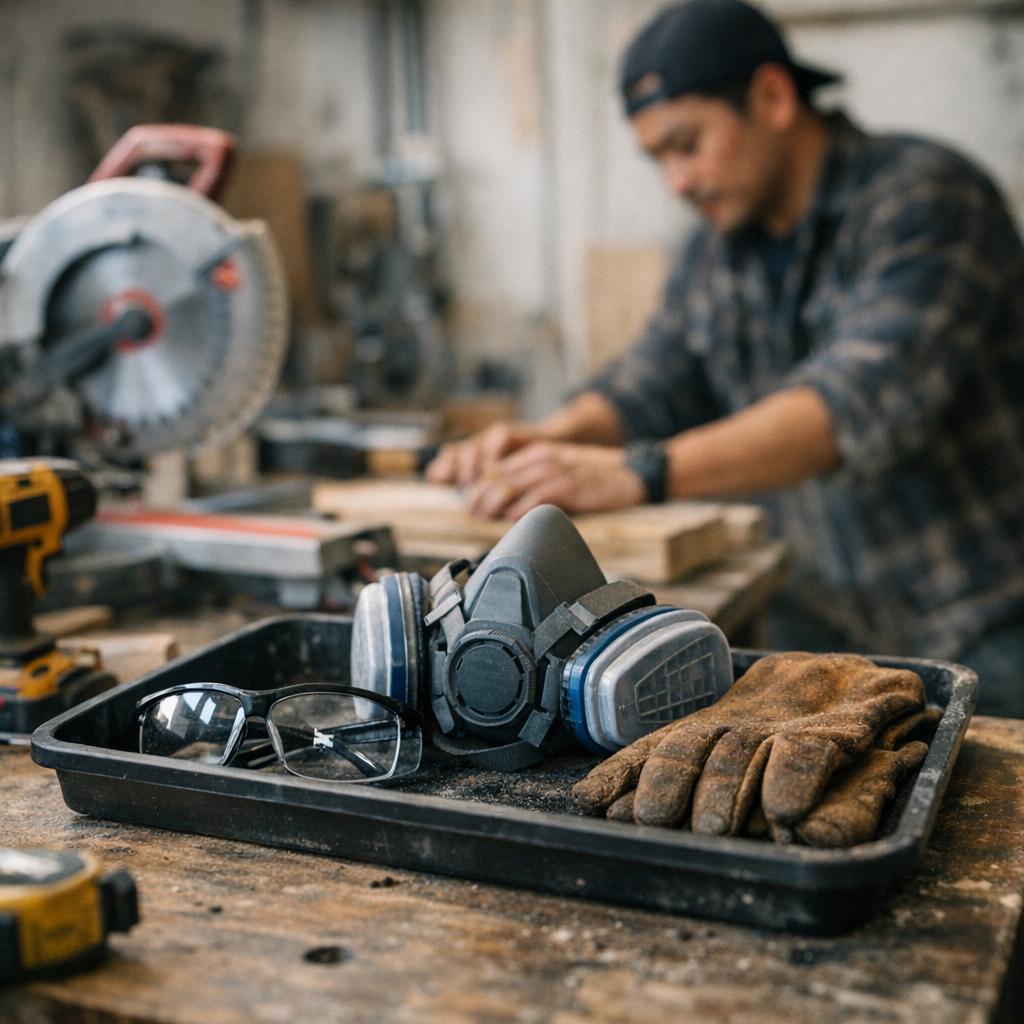
    Try this simple yet powerful adjustment: keep your core safety gear right where you use it. Stashing gloves, glasses, and masks on a shelf across the room practically invites you to skip grabbing them. Instead, place a dedicated tray or basket on each workstation, so safety equipment becomes as accessible as your tools. The ease of reaching for gear removes friction and helps turn “putting safety on” into a natural step.

    Refresh Your Approach When You Feel the Rush

    When you notice impatience creeping in, pause and take a moment to recalibrate. A quick breathing exercise or a brief mental checklist can help—you’re reminding your brain and body to slow down. Restoring this calm helps you slip back into the mindset that makes conscientious setups second nature, not a chore.

    This small mental refresh can dramatically reduce those skipped steps. Over time, it becomes a powerful internal cue that balances productivity with safety. The goal is rhythm—a repeating pattern that aligns your physical actions, mindset, and environment.

    Real Results From a Small Change

    One winter morning, overwhelmed by a packed schedule, I almost started sanding without my respirator. It was stored on a distant shelf, just far enough that rushing pushed me to forgo it. That day I moved the respirator to the workbench itself. Almost immediately, not only did I wear it every time, but my apprentices began following suit—no reminders needed.

    Within a week, a friend who heard about this simple shift copied the idea. The reduction in “almost forgot” moments was striking. This anecdote highlights how minor environmental tweaks can translate into meaningful safety improvements.

    Final Thoughts: The Lasting Value of Taking Your Time

    The majority of shop injuries don’t stem from ignorance. Experienced woodworkers know the dangers—they just sometimes let impatience carry the day. Your best defense is respecting the setup process as the critical foundation for every project.

    Before your next task, take a deep breath and survey your bench. Is your safety gear staged and ready? Have you mentally prepared? Those few extra moments spent on setup are priceless compared to the time and pain lost to injuries. Remember: the safest shop is the one where preparation is never rushed.

  • Pack Smart, Travel Light: Your Perfect Carry-On Essentials Guide

    The days before a trip always feel a bit in-between, like I’m already halfway out the door. I find myself moving around the apartment, folding shirts, rolling socks—the packing routine has its own quiet rhythm. These days, I keep it simple: a small carry-on open by the window, sunlight stretching over its neat compartments. I’ve let go of cramming too much into a checked bag. Now I just choose a few basics, fit them into the carry-on, and leave the rest behind. It feels like a small way to sidestep old travel chaos.


    This approach got its start a while back, when I stumbled across Carrysupply while getting ready for a trip. Their bags have that same pared-back, just-enough vibe—solid and straightforward.

    On travel day, the cab shows up before sunrise. I like the early quiet. The streets are empty, and the city lights fade as the sky lightens. At the airport, everyone’s in a hurry, dragging big bags, scanning the signs, hunched and tense. I remember that old nagging worry—did I forget something, will the zipper make it one more time? But with just my small bag, it’s easier to go with the flow.

    Security still drags on. There’s always a line. I watch a mom untangle headphones for her kid, a teenager balancing coffee on top of a suitcase. When it’s my turn, I slip my shoes off and send my carry-on through—nothing stuffed in weird pockets, just what I need. It’s nice not to be juggling a bunch of bags or digging for a boarding pass under things I didn’t need to bring. My bag is easy to manage and keeps up, no fuss.

    There’s something about having your essentials sorted, nothing extra weighing you down. Snack, book, scarf that doubles as a blanket—they all fit, and that’s enough. Heading to the gate, I finally notice the little things: people napping, the smell of coffee, the low hum of conversations and anticipation.

    Boarding used to feel like a scramble. People wrestling their suitcases into overhead bins, squeezing past each other with too many apologies. Now, I slide into my seat, tuck my carry-on under the seat, and have everything within reach. There’s no worry about lost luggage or waiting forever at the carousel. Keeping it simple makes the whole thing easier.

    Up in the air, the clouds start to break apart outside the window. I open my bag and pull out a notebook. Everything up here is quieter, the buzz of the cabin, the distant sound of coffee being poured. I write a few notes, stretch out, and realize I haven’t lost or forgotten anything. That order from packing carries through, and it makes the trip feel lighter.

    After landing, I walk straight off the plane—no waiting by the carousel, no hunting for my bag in a sea of lookalikes. I just head out, the little bag on my shoulder reminding me I have what I need. On the metro into the city, I catch my reflection: I look less stressed, maybe even a bit more hopeful. Next trip, I’ll stick to the same plan—pack what matters, travel light, and keep airport stress at bay. In those small choices, the trip always feels a little better.

    Even after getting home, that easy feeling sticks around. There’s a sense of traveling lighter, both in stuff and in spirit, and it’s hard to ignore. I keep coming back to the same routines that make heading out and coming home a little easier. For anyone feeling the same pre-trip tension, a bit of thoughtful packing really does help. And if you need a place to start, Carrysupply is worth a look.

  • Why Pros Never Skip This Simple Safety Gear Habit

    Why Every Seasoned Professional Double-Checks Their Safety Gear

    Walk onto any construction site or into a busy workshop, and you’ll quickly notice the difference between the seasoned professionals and those less experienced. The pros maintain a calm confidence that comes not just from skill but from cultivating the right mindset around safety—especially the habit of diligently checking their safety gear before every task.

    At first glance, wearing safety gear might seem straightforward: put on your glasses, gloves, harness, or mask, and get to work. But safety professionals know the difference lies not just in wearing the gear but in taking the few extra moments to ensure it’s fitted correctly, intact, and ready to perform exactly as designed.

    The Cost of Complacency on Job Sites

    It’s easy to slip into a false sense of security after years on the job, especially when performing familiar tasks. However, many accidents happen during those brief moments when safety checks are skipped, often because the task feels “quick” or “routine.” These small lapses can have big consequences.

    Safety equipment isn’t just a legal formality—it’s a vital line of defense against unpredictable risks. Without thorough checks, gear that appears functional may fail when you need it most.

    The Mindset That Sets Pros Apart

    What truly distinguishes experienced workers is their mindset towards safety. They acknowledge that protective equipment can degrade over time or be misapplied. Straps may loosen, lenses can crack, and seals on respiratory masks might fail. Early disregard for these details invites serious injuries.

    Understanding the Technical Standards and What They Mean for You

    Professional safety equipment complies with rigorous standards, such as ANSI Z87.1 for safety glasses and EN 361 for full-body harnesses. For example, ANSI Z87.1 glasses must withstand the impact of a 6.35mm steel ball dropped from 1.27 meters—think of a heavy metal chip ricocheting unexpectedly.

    However, a certification only ensures protection if the equipment is in good condition and worn properly. A tiny crack in a lens or a loose buckle on a harness can completely negate certified protection, turning standard gear into a liability.

    Practical Gear-Checking Tips Every Worker Should Know

    Harnesses: Fit Is Everything

    A properly adjusted harness distributes the forces during a fall primarily through the thigh and sub-pelvic straps, reducing strain on shoulders. If it’s slack, these straps can shift dangerously, causing serious injury. A simple test is to check whether you can fit a flat hand between the strap and your leg—if you can, it’s probably too loose. Tighten until snug but comfortable.

    Gloves: Check for Tears and Wear

    Regularly examine your gloves for small tears, thinning material, or worn seams. Any compromise can allow splinters, shards, or hot materials to penetrate, putting your hands at risk.

    Safety Glasses: Look and Feel

    Run your finger along the edges of your glasses to detect cracks or chips. Even tiny imperfections can fail under impact, allowing debris to reach your eyes.

    Hearing Protection: Effective Seals Matter

    Ensure earplugs or earmuffs seal properly. An incomplete seal dramatically reduces noise reduction, leaving your hearing exposed to harmful levels during long shifts.

    Respiratory Masks: The Proper Fit Test

    A simple fit test involves covering the mask with your hands and exhaling. No air should leak out around the edges. Only then can a mask filter at the specified levels, such as N95’s 95% particle filtration efficiency.

    A Real-Life Lesson: Why Rushing Safety Checks Can Cost You

    Consider the story of a welder with over 20 years of incident-free experience who once skipped a goggle inspection during a quick repair. He missed a hairline crack in the lens, which shattered when a hot spark impacted it, causing a minor burn beside his eye. The incident was a stark reminder: every rush, every skipped check, invites risk.

    An Actionable Habit: The Top-to-Toes Physical Check

    Before picking up any tool, establish a routine to physically engage with each piece of your protective gear. Don’t just glance at your safety glasses—slide your finger over them. Don’t just look at your gloves—give them a tug. Snap your harness buckles firmly into place. Fit your mask and confirm its seal. This tactile check only takes seconds but reinforces safety as a physical habit rather than a mental afterthought.

    Refresh Tip: Reboot Your Routine with a Safety Buddy System

    Sometimes, routines become automatic to the point of mindlessness. To keep your safety checks sharp and avoid complacency, team up with a coworker for cross-inspections. Having someone else confirm your gear’s condition reinvigorates the process and helps catch oversights you might miss. This small adjustment boosts accountability and keeps safety front and center.

    The Consequences of Improper Gear Use: A Roofing Crew Story

    In one roofing scenario, a worker hurriedly secured his harness too loosely before climbing. When he slipped and fell, the loose harness caused dangerous pressure to concentrate on his thighs and lower abdomen. He was suspended for several minutes, suffering numbness that required medical attention and kept him off work for days. The incident transformed what could have been a minor accident into a serious injury—all because of improper fit.

    Discipline—Not Luck—Keeps You Safe

    Ultimately, the difference between a learner and a master is discipline. Double-checking your safety gear may seem basic, but it’s the solid foundation upon which advanced skills and site safety rest. Developing it into a non-negotiable habit reduces the chance of preventable accidents.

    Adopt a mindset where your gear gets as much respect as your tools and craft. The minute you start rushing or skipping checks is the moment danger creeps in. Staying consistent ensures you’ll almost never have regrets about overlooked protection.

  • Why Ignoring Moisture in Tanks Risks Long-Term Damage

    Understanding Why Moisture Builds Up Inside Air Compressor Tanks

    In every garage or workshop, certain noises become routine: the hiss of draining compressed air, the hum of the air compressor, and the clatter of tools. While some sounds fade into the background, the hiss that comes when you drain your air compressor at the end of the day deserves your full attention. Moisture buildup inside your compressor tank might seem harmless if overlooked, but over time it invites corrosion, weakens your equipment, and can jeopardize the quality of your work.

    Air compressors are hardworking machines that constantly draw ambient air from their surroundings. Along with that air comes humidity — invisible water vapor suspended in the atmosphere. When the compressor pressurizes this air, that vapor condenses and collects as liquid water inside the tank. Think of the condensation on a cold glass of soda on a hot day; your compressor tank experiences a similar buildup from the inside.

    In climate conditions with moderate to high humidity or significant temperature fluctuations, water accumulation inside the tank happens quickly. Even a small home compressor can collect a half-cup or more of water within one week of regular use. In my own experience working with compressors in environments where the relative humidity exceeds 50%, I’ve collected up to 200ml of water after a few days of intermittent use.

    The Consequences of Letting Water Stay Inside the Tank

    At first glance, water pooling inside a compressor’s steel tank may seem inconsequential. These tanks are built thick and tough to withstand high pressures—often rated around 150 PSI (10 bar) for residential models. However, the relentless presence of water sets the stage for a slow but steady degradation process.

    • Corrosion and Rust Formation: Moisture is the primary cause of rust inside steel tanks. Once water is trapped inside, oxygen and moisture create the perfect conditions for corrosion to develop, causing pitting and flaking over time.
    • Structural Weakening: Rust tends to form at the bottom where water settles. This hidden corrosion gradually eats away at the steel, compromising tank strength and safety—a danger that often goes unnoticed until significant damage occurs.
    • Contaminated Compressed Air: Rusty water and debris can enter the compressed air stream, fouling tools and finished products. I’ve personally witnessed how rusty water expelled from a compromised tank can ruin paint finishes and delicate coatings in spray applications.
    • Increased Wear on Tools: Moisture-laden air accelerates wear on air tool components such as gaskets, seals, and moving parts. Lubricants degrade faster, leading to costly tool failures and downtime.

    Real-World Experience: How Regular Tank Draining Prolongs Life

    Over the years, I’ve seen air compressors outlast their expected lifespan when owners were diligent about draining the tank. Conversely, I’ve encountered tanks that became paper-thin, rusty hazards hidden behind a deceptively solid outer shell because their moisture was neglected.

    One of my early compressors lasted about ten years thanks to consistent draining. Usually, we drained it whenever we remembered—often enough to remove almost all the water each time. When I later bought a new unit but neglected this habit, a rusty, weakened tank formed within just two years. The base corroded, paint peeled away, and tapping the tank produced a dull knock rather than a solid ring.

    That experience taught me the critical importance of accessibility: placing the tank so the drain valve is easy to reach is the best preventive measure. In many setups, the drain is awkwardly positioned underneath or on the rear, which invites procrastination. By moving mine to a more convenient spot near where I coil my air hose, draining became a natural part of the shutdown routine.

    How to Properly Drain Your Air Compressor Tank

    Draining is a simple yet essential maintenance step. Here’s what to do:

    1. Turn off and unplug your compressor to ensure safety.
    2. Locate the drain valve at the tank’s lowest point.
    3. Open the valve slowly, allowing water and moisture to escape. If necessary, tilt or rotate the tank slightly to help discharge all trapped water.
    4. Catch the moisture in a shallow pan or container—water may be clear or brownish from rust particles.
    5. Close the valve securely once you see no water coming out.

    Emptying every drop of moisture is critical. Even small puddles left in the tank can reignite corrosion. The process typically takes less than one minute once you get into the habit.

    Pro Tip: Refresh Your Routine

    One practical habit change I recommend is placing a small reminder near your compressor’s power switch with a note like “Drain tank after use.” This nudge helps embed the task into your shutdown process, especially during busy periods when draining feels like an extra chore. Pairing this reminder with a reachable valve location makes skipping this crucial step unlikely.

    Why Frequent Draining Makes a Measurable Difference

    Regular daily draining can extend a compressor tank’s working life by 2-3 years in typical home or small business environments. Even if you use your compressor lightly or intermittently, draining weekly is beneficial. Moisture can accumulate rapidly during short bursts, especially in humid climates.

    For professionals and heavy users, investing in an automatic drain valve or an inline moisture separator can add protection. But the most effective safeguard remains a consistent manual draining habit supported by accessible hardware.

    Wrapping Up: Protect Your Compressor with Simple Maintenance

    Moisture inside your air compressor tank is an invisible threat that quietly undermines the integrity of your equipment and the quality of your work. Making draining part of your daily or weekly routine takes seconds but protects your investment for years. An easy-to-reach drain valve combined with a simple reminder turns this maintenance task into an effortless habit.

    Ultimately, the longevity and reliability of your compressor depend as much on routine care as on how it’s built. Whether you’re a casual hobbyist or a full-time professional, fostering good draining habits is what separates reliable machines from expensive surprises. As you finish your next project, ask yourself: did you drain the tank? If not, now is the perfect time to start.