Mudroom Storage Frustrations: When “Organized” Isn’t Enough
Walk through the door, arms full—your keys, the dog leash, at least one bag slipping. The mudroom bench, lined with crisp baskets, promises calm. But it’s a promise with holes. By the third day, the baskets start sticking, stray shoes wedge themselves sideways, and every “quick reset” becomes a juggling act. Each extra step—pulling out an overloaded bin, scooting boots that never quite fit back underneath, rescuing lost gloves mashed beneath a bag—chips away at your patience. Over time, the setup isn’t helping you; it’s just a new source of stress, camouflaged as “order.” The mudroom that should smooth out the chaos of family life quietly becomes another friction point—a spot where you dodge clutter instead of corralling it.
The Closed Loop Advantage: Storage That Actually Stays in Sync
A real “closed loop” storage setup doesn’t make you think. You grab what you need in a single step. You put things back just as easily, without clearing a path first. No puzzles, no wrestling baskets or shifting a mountain of winter boots to shove your work bag into place. In real life, any system that makes you rearrange, stack, or hunt simply falls apart. The mudroom can’t reset in a hurry—and the mess seeps out, spreading to hallways and kitchen counters.
Friction in Action: Where the Mudroom Slows You Down
The routine glitches are small, but relentless. Your sneakers are behind three pairs you don’t wear, so you reach, knock a stack sideways, and promise yourself to “fix it later.” Kids empty backpacks onto whatever surface is easiest, because opening (or even finding) the “right” bin takes too many steps. You spend more time moving things out of the way to get to your actual shoes than you do walking out the door. Over days, the storage looks managed—but it never actually functions the way you need.
Mudroom Benches: The Real Test of Cubbies vs. Bins
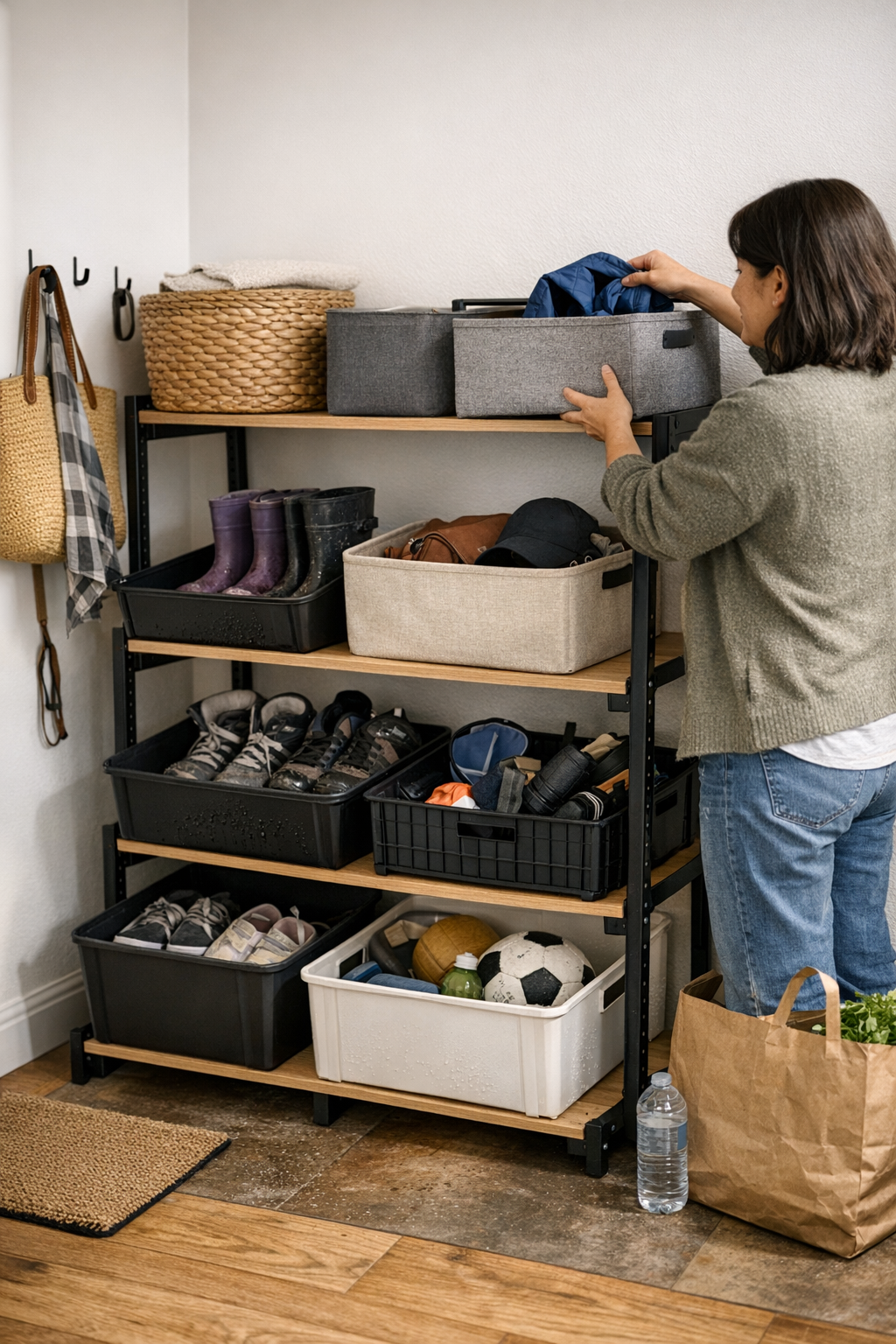
Bins seem like tidy magic—until you use them daily. Pull-out bins look organized, but with hands full or boots dripping, the extra motions are a dealbreaker. You need both hands. You have to set things down to open the bin. If there’s a traffic jam—basket blocked by a pile of shoes, or a bin too tight against another—all momentum is lost. The hidden mess gets shifted, not solved: shoes pile on benches, soggy gear gets abandoned anywhere flat, and after a week the “perfect” setup is undone by a handful of small, repeated hassles.
Open cubbies fix some of that. You can toss shoes in without breaking stride and grab them on your way out. But nothing really stays separated. Dirt is in plain view, shoe pairs go missing, and sandals migrate to the “work shoes” zone by Wednesday. In reality, both bins and cubbies unravel if the design doesn’t match your daily move-grab-return rhythm.
Scene From a Rainy Week: The Mudroom Bottleneck
Picture this: you come home soaked, balancing groceries and a laptop bag. The entry is already choked with shoes left askew, that “easy to access” bin is wedged in place, and you have no spare hand to wrestle it out, so your wet shoes end up on top of whatever’s nearest. Flip this scene for every after-school drop, every muddy soccer gear dump, every time the laundry basket detours through the mudroom. You don’t need dozens of examples. Just one routine interruption, repeated every day, is enough to turn “organized” into yet another ongoing headache.
It’s always the smallest resistance—a stuck bin, a shelf just out of reach—that kills the habit of putting things back.
Flow Over Perfection: A Storage Shift That Actually Helps
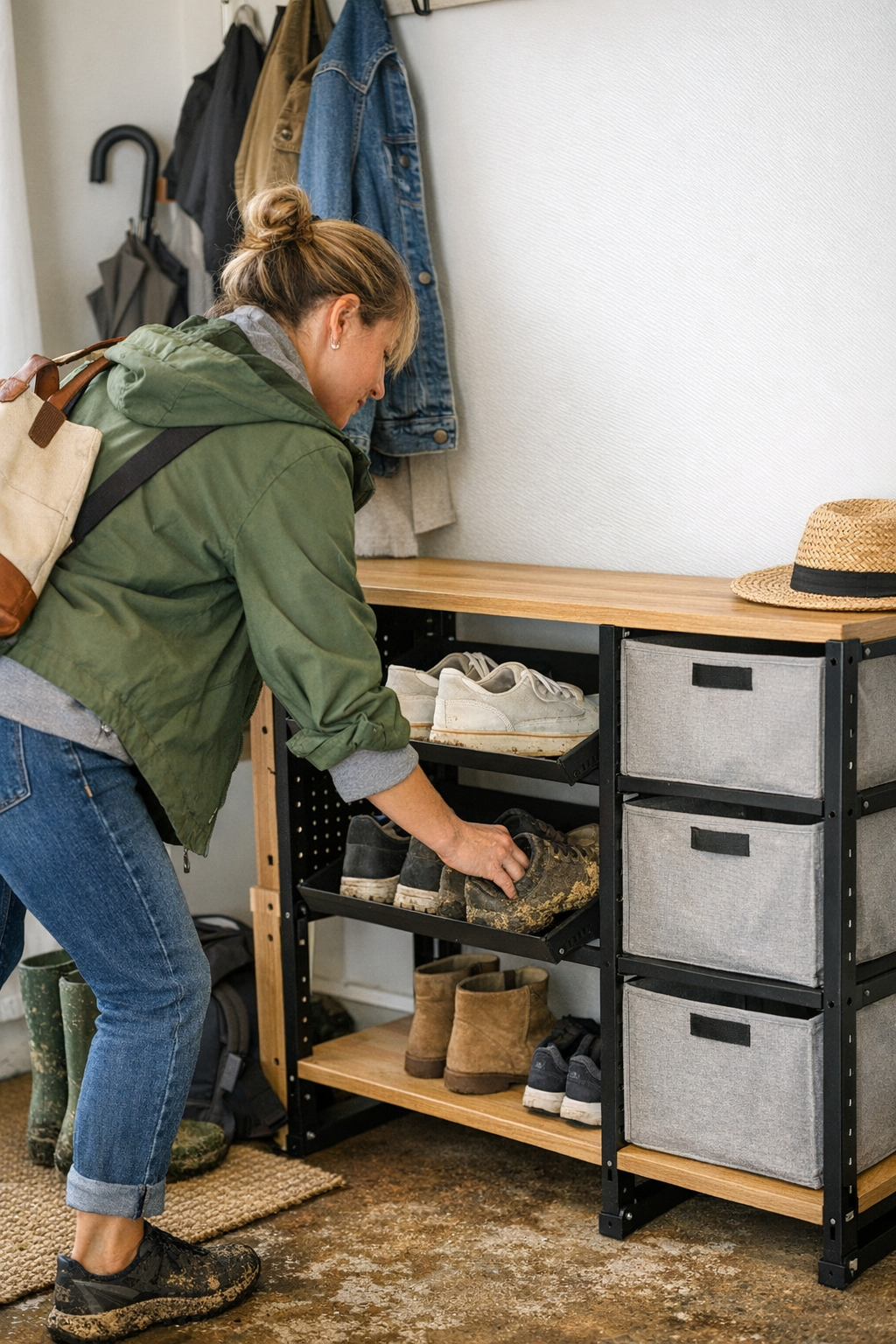
Here’s the real upgrade: swap those deep bins for angled shelves or open, shallow cubbies. Suddenly, access is direct. Shoes slide in and out—no scavenger hunt, no multiple hands, no bending or stacking. Designated spots emerge naturally; cleats and boots aren’t creeping into slipper territory. Every pair stays visible, so three-minute resets stay three minutes, not thirty. The result isn’t picture-perfect, but it is fast— and that’s what actually keeps the space under control.
Ease Drives Real Habits—Not Just Neatness
Forget aiming for the showroom look. The best system is the one that works on a Monday morning just as well as Sunday night. When putting something away is consistently easier than leaving it out, clutter fails to get traction. If it takes another step or a spare hand to reset, you’ll skip it. The real test isn’t appearance, but whether the right spot feels obvious even during the daily rush.
Is Your Storage Setup Working—or Getting in the Way?
If your mudroom feels like a battle zone, check for these friction points:
- You have to move shoes or bags just to return something to its “spot.”
- Shoes gather around bins, never quite inside them (or bins are always half-open).
- Piles reform overnight, no matter how many times you organize.
- Return paths are crowded—every surface attracts stacks instead of staying clear.
Each extra motion is a sign you’re fighting the setup—not being supported by it. Over time, any excuse to skip resetting becomes the new routine.
Cubbies or Bins: Which Survives Real-Life Use?
Bins hide mess and hold grit at bay, but only if you can reset them in seconds. If you’re frequently in a hurry, bins become one more thing to move or reposition—and lose their appeal fast. Open shelves or angled cubbies make resets nearly automatic, even if they reveal a little more daily chaos. The goal isn’t showroom order: it’s a mudroom where things return to their place between uses, instead of migrating into the rest of the house.
The Cost of Small Obstacles: How Tiny Hassles Become Big Clutter
The cracks always start small—a bin off track, a shelf that’s too deep, a pile that never fits quite right. Soon, whole zones lose definition, categories mix, and putting something back becomes a workaround. Instead of discipline, you get improvisation. Shoes go wherever, bags stack in corners, and the mudroom shifts from organized to overwhelmed, one semi-blocked return at a time.
Long-lasting organization isn’t about perfect lines—it’s about setups that survive repeated, messy, real use. If resetting isn’t easy, the system won’t last past the first week.
Noticing Trouble Before It Spreads
Overflowing bins and scattered shoes are only the final warning. The first clue is slower resets: you sigh before organizing, or leave one item undone every day. Certain surfaces become magnets for clutter—no matter your hopes. These are the signals that your storage design is getting in the way of daily life. Instead of blaming motivation, look for where things stick—literally or figuratively—and experiment with removing just one obstacle. Often, it’s that simple shift that keeps the rest of the room from caving in.
A Real-World Tweak: Keep the Put-Back Path Open
Want to fix almost any storage pain point? Focus on the return route. If there’s something to move—another bin, a fallen boot, a shelf too crowded—no one resets as they go. Make the direct path to “put it back” totally clear, even if that means rearranging shelf heights, ditching a bulky basket, or swapping in a row of hooks. When the return is always obvious and nothing’s blocking the way, the odds of staying organized skyrocket—especially when life gets busy.
Storage That Works Because You Actually Use It
No mudroom holds perfection, and no storage solution stays pristine. What matters is steady, low-friction resets: you grab, you use, you return, and the space recovers—again and again. The right setup shrinks the steps, removes hesitation, and adapts to the real chaos of daily life. That’s the only kind of “order” that lasts, even as seasons and routines change.