Author: jaesoon_admin

  • How to Create a Pet Travel Setup That Stays Organized on the Go

    The most common pet-travel mistake isn’t forgetting something—it’s trusting a setup that only looks ready while sitting still. The problem doesn’t show until you’re halfway through a day of stops, leash pulled tight, a pet circling the seat, and you reach for a wipe or bowl and grab at the wrong pocket—again. That initial “everything-in-place” feeling from home evaporates fast once you’re actually on the move. Bags that seemed organized break open at the first sign of movement: a treat pouch dumped out, wipes buried, or a water bowl shifting under blankets. Awkward reach, blocked quick access, and dog and human gear tangling together—these aren’t rare slip-ups. They’re the friction that keeps repeating trip after trip, slowing you down when you need to move most.

    When “Organized Enough” Isn’t Enough On the Road

    Most pet owners have lived the letdown: a travel bag looks dialed-in until the chaos of a normal afternoon undoes all that order. Maybe that bowl seemed secure in a side pocket, but now it’s trapped under a blanket and you’re kneeling outside the car, elbow-high, to pull it free. Or wipes set “handy” at home now require digging through a jumbled compartment with one hand, leash or door in the other, while your pet twists to escape.

    By the third stop, the routine falls apart: bags tossed aside to see into the bottom, treat pouches toppled, awkward stretches across the car just to find a single item. Each mini inconvenience stacks up, and a system that felt efficient now drains momentum on every stop.

    Real-World Friction: The Hidden Cost of Travel

    Travel stress isn’t just big messes—it’s the slow grind of repeated, fixable annoyances. A few real patterns stand out after even a brief run of stops:

    • Blocked access: The item you grab three times a trip—water bowl, wipes—ends up buried every single time, never where you need it in the moment.
    • Two-hands-needed problems: Wipes or leashes stashed so deep you can’t reach them while keeping your hold on the door, dog, or bag.
    • Comfort gear causing slowdowns: That blanket soothes your pet but consistently slips loose and blankets everything else, usually when you’re in the biggest rush.
    • Tangled overlap: Leash, keys, and phone all slide together with pet gear, forcing you to dig for each piece, doubling the interruption at every stop.
    • Perpetual reshuffling: Each movement—grab, handoff, zip, unzip—feels like a reset. By late afternoon, the routine is half handling gear, not the pet.

    It’s not chaos—just time lost and patience chipped away, every time you fight your own setup to get moving again.

    Repeating the Same Moves: Why Setup Weaknesses Multiply

    The weakness shows up not once, but in cycles: a setup that works for one stop fails when you grab, stash, and reuse gear five times in a row.

    Picture it: muddy paws after a walk, leash in hand, lifting your pet back into the car. You know wipes are somewhere close—except you’re also juggling a treat bag, a bowl, and a comfort blanket slumped over the pile. The search repeats. Each time, a quick clean turns frustrating, and the so-called “system” means pausing to dig—or give up and let paw-prints spread inside the car.

    This isn’t one tough day; it’s every errand, every weekend trip—an organized bag that grows more unworkable each time you’re forced to repeat the same slow routines.

    A Small Fix with Outsize Impact: Front-Pocket Access

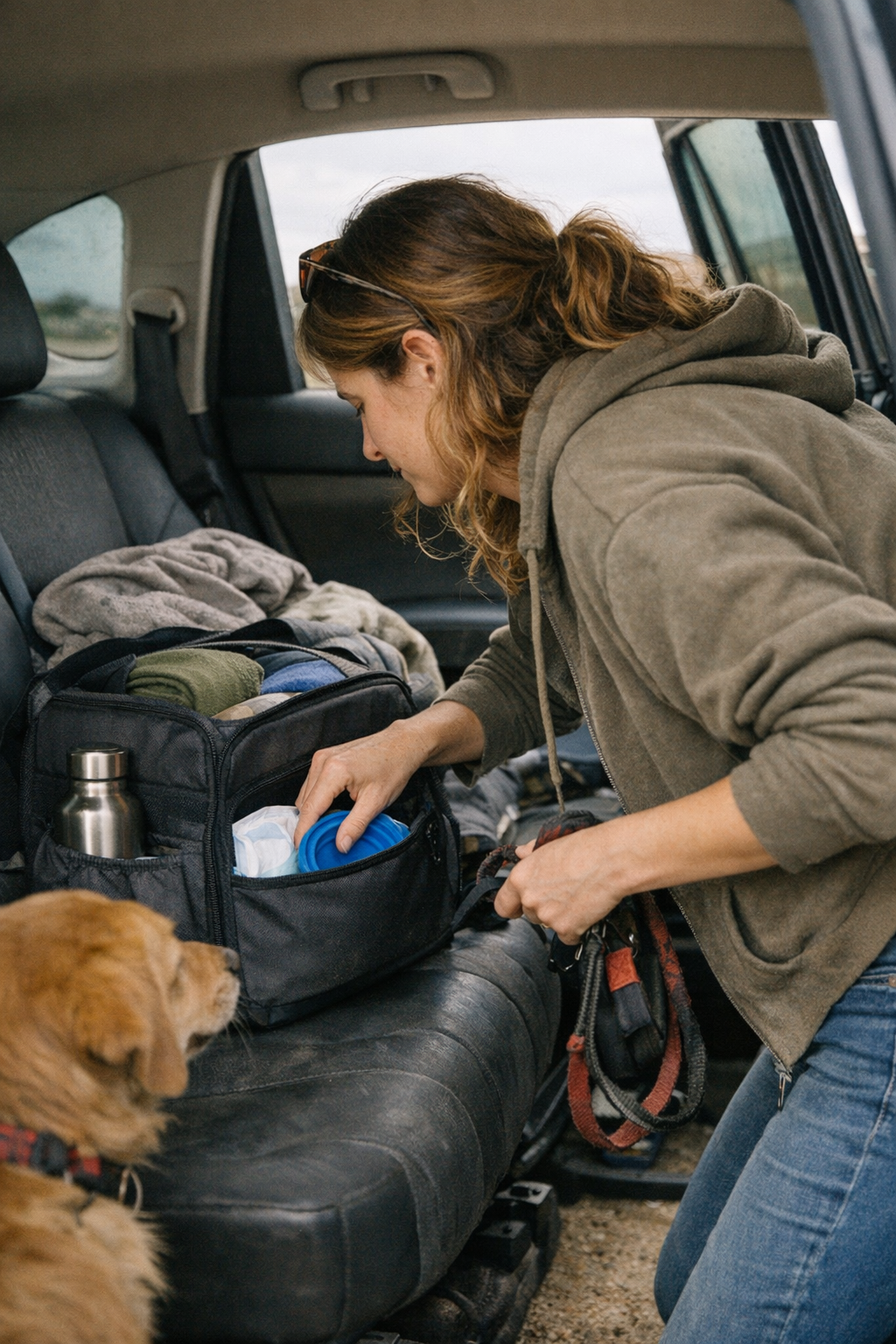
    The anchor that changes this rhythm: keep key daily-use items—wipes, water bowl, leash clip—always in an open, front pocket, shielded from clutter, reachable in one natural motion.

    After enough frustration, the benefit is obvious. Keep that outer pocket strictly dedicated—no stuffing blankets, no loose treats—just the things you reach for three or four times on any stop. The difference? You still reach that pocket easily after a day of re-packing and movement. That single split-second reach, not a full inspection, now gets you what you need—with the same reliability six trips in as on the first one. Instead of reshuffling or adjusting at every break, you simply move on.

    This adjustment sounds small, but it wipes out half the slowdown and lets you stay focused on the next step for you and your pet.

    The Mismatch Between Visual Order and Real-Life Access

    Pet-travel bags and organizers are often sold by how neat they close, packed with tidy dividers and labeled zones. But visual order means nothing if it doesn’t speed up your movement on a real, repeated trip. If you need to move something aside to get what you really use—or keep reaching into the wrong pocket—the bag’s “system” becomes its own kind of slow trap.

    The honest test: a less structured bag with nothing blocking the main access zone will outperform a clever grid of pockets if you can always grab essentials without pausing. In travel, function beats form—especially at the worst moments: rain, mud, a restless pet, or a packed car.

    Diagnosing Where Your Pet-Travel Setup Is Failing

    Red flags almost always show up in small rhythms:

    • Diving into the same compartment for wipes or a bowl at every stop, never finding them on the first try
    • Cleanup gear only surfaces after messes already reach the seat or mat
    • Bags or pockets so jammed you need to drop something else to open them one-handed
    • Pet gear and your own keys or phone mixing, slowing both of you down as you swap items mid-motion
    • The fresh-out-of-the-house “order” eroding into repeated mini-adjustments and quiet irritation

    Each hassle is minor alone, but combined they turn a routine outing into a slog. Rainy days, muddy fields, or quick errands with multiple stops multiply the pain fast.

    What Actually Makes Travel More Repeatable?

    Reliable pet travel comes from structure built for repeated, messy, distraction-heavy movement—not just tidy packing. What lasts on real trips:

    • Essentials always in the fastest, least-blocked spot—even if the rest looks less tidy
    • Compartments designed for on-the-go one-hand access, never double-handled, never under anything floppy
    • Clear, structural separation: your stuff and your pet’s don’t meet in the same grab-and-go zone
    • A rhythm that lets you reach, use, restore, and restart without thought—no unzipping a new pocket every cycle

    When you build for this kind of access and separation, you notice it fastest during back-to-back stops, in less-than-ideal conditions. The outsized result: less friction, more moving, and a routine that adapts to you and your pet—rather than the other way around. No travel setup erases every messy moment, but structure that survives movement is what changes the whole experience after the third, seventh, or tenth stop.

    Explore practical pet-travel setups that work in real life at PawGoTravel.

  • Streamline Your Daily Pet Care with an Organized Reset Routine

    Resetting your pet’s food and water setup each morning looks simple—just a quick switch, a spot wipe, and a refill for the bowls. But in real daily use, what should be a two-minute reset often turns into a stop-and-go routine: one missing scoop, a towel gone walkabout, or a refill bottle out of reach, and now you’ve started your day with a half-finished chore, a confused pet hovering, and your own coffee getting cold. The real issue isn’t big messes—it’s tiny supply gaps and small delays that pile up when the basics aren’t where you need them, right when you need them. CalmPetSupply is made for exactly this kind of repeated routine friction—the difference between a setup that’s ready for use and one that stays stuck in “almost.”

    The Slippery Slope of Small Misses

    Ever walk up confident you’re set to feed and water your pet—only to halt, mid-task, when you realize the towel’s in the laundry or the scoop has disappeared again? It doesn’t seem like much. But the second you pause to hunt down a missing item, that quick reset unravels. Multiply a few “where’s the refill bottle?” moments across a week, and now breakfast involves more steps, extra trips, and a pet idling by the bowl. Your morning momentum takes the hit.

    Picture this: feeding done, you go to refill water—except the refill bottle is behind yesterday’s mail, and the counter now has crumbs because the towel isn’t there to catch them. Every extra detour, even a short one, slowly eats away at your routine until you start rushing through steps or skipping basic wipes just to move on. These aren’t single-day headaches. The drag shows up over weeks as small inefficiencies that steal time and energy from the rest of your morning.

    When “Tidy” Doesn’t Mean “Easy”

    Setups can look neat: bowl edges aligned, towels on hooks, everything stowed out of sight. But organizing to look tidy often means you end up putting tools out of easy reach, tucked behind bins or inside pantry drawers. If you’re shifting another kitchen item every time you need to grab a towel or food scoop, that surface-level order just hides new frictions underneath. Instead of helping, appearances now create extra steps you feel every single reset.

    It’s not just feeding. Maybe your dog returns from a damp walk, paws needing a quick wipe. The towel? Out of the way, blocked by bags. With a restless pet at the door, you dig around for a cloth. That “quick” cleanup drags—adding five minutes, tracking water through the hall, interrupting your routine yet again. Your floor stays clean, but the effort behind the scenes keeps climbing.

    When One Weak Point Keeps Coming Back

    Plug one gap and another crops up. You finally keep the refill bottle by the mat—but later, it gets moved behind kitchen clutter. You hang a towel within arm’s reach, only to find it borrowed and never returned. The setup always looks fixable, yet keeps breaking at random steps. You only notice the cracks when you’re trying to finish up quickly—late at night, at lunchtime, or right before work.

    Imagine the late-evening water check: if the cleaning towel is present, it’s done in seconds; if not, you stall or consider leaving the mess for morning. Visually, the feeding station reassures, but in action, you end up searching, stepping around clutter, or skipping a needed rinse—all because the “easy” part failed on its third repeat.

    The Flow of Daily Routines

    These disruptions don’t just haunt feeding time. Grooming, litter pickup, toy cleanups, and after-walk resets—all rely on tools that rarely stay perfectly in place. One missing brush, a linen bin stuck behind storage, or a scoop left in the wrong spot triggers fresh interruptions. Suddenly, the reset isn’t so “quick.” These layered delays bleed into the rest of your day, pulling your focus and slowing even unrelated tasks.

    A bowl may look fine from the doorway, but the real indicator is a pet loitering nearby, nudging an empty dish, or sniffing around for a missing treat. Reliable routine depends on having all essentials—within reach, always returned, always visible. The moment supplies drift further from the work zone, the mental load and step count climb. Running a smooth routine means the station resets itself: one container, one towel, one scoop—all anchored at the point of use, not migrating back and forth from storage.

    What Actually Helps—Simple Tweaks

    You don’t need a full overhaul. Improving daily care often comes from nudging each tool closer to where it gets used—bottle beside the mat, towel on a side hook, scoop parked in the container (never wandering to another room). Use, reset, return—same place, every day. Slowed down by the same snag twice? Don’t tweak the whole system. Isolate the step that blocked you and move just that tool into the work zone.

    Over a few weeks, you’ll spot when your setup shifts from “looks fine” to “works every time”—the proof living in routines that stop breaking down under pressure. The difference is no guesswork, no backtracking, no searching for basics when you’re already in a rush. The feeding zone finally keeps up, not just with your standards, but with real repeated use.

    Find practical feeding setup solutions right where routine friction starts at CalmPetSupply.

  • How Partial Containment Transforms Outdoor Storage Maintenance

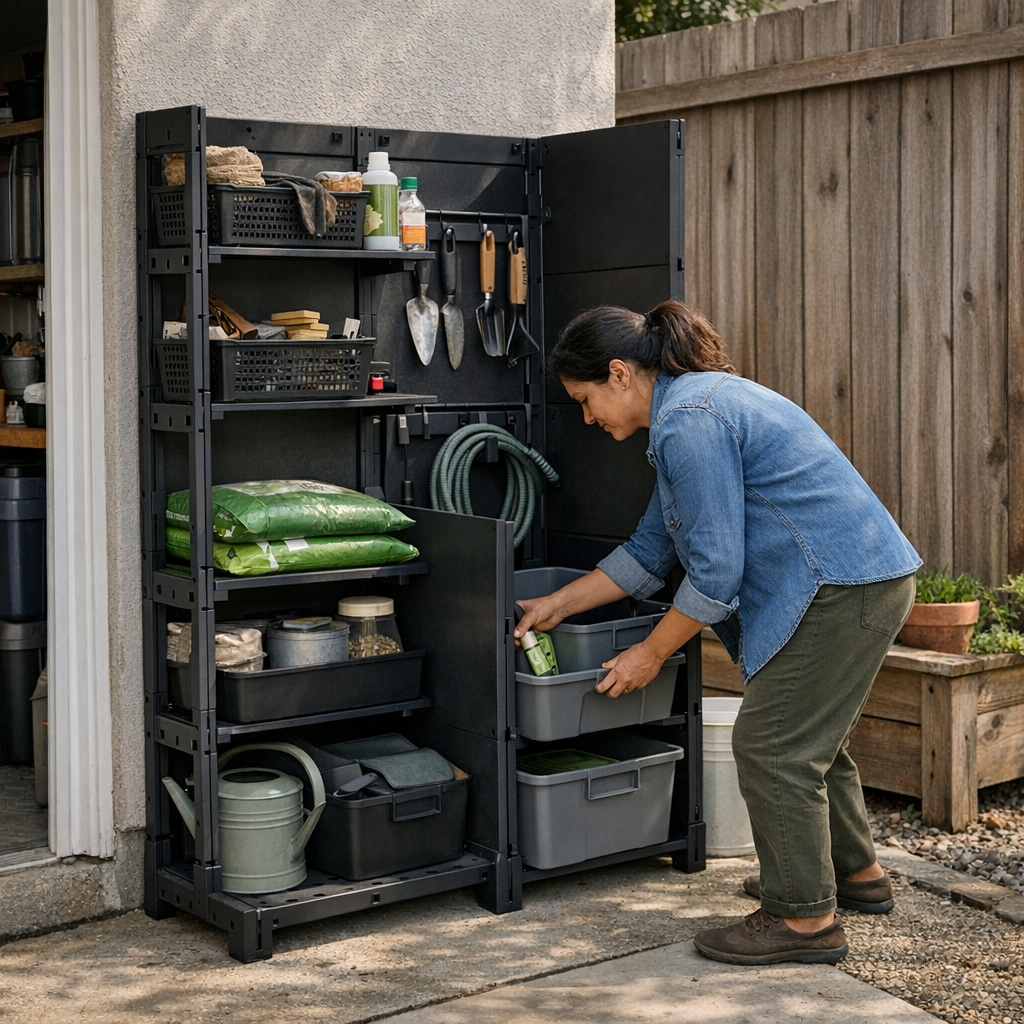
    There’s a moment every backyard or side-yard setup hits—not the obvious crisis of “I can’t fit anything else,” but the slower grind where even your best outdoor storage can’t keep little gear and tools from drifting loose. In the real world, shelves and open bins always seem like the answer. You start with trowels hooked at arm’s reach, gloves clipped in sight, seed packets lined up, every item visible and ready. It feels under control—until the second week, when order collapses with barely a sound. The trowel buries itself beneath a bag of soil. Gloves slip behind boots, then vanish for days. Resetting turns into shuffling piles just to clear a walking path. Suddenly, the zone you counted on for smooth movement and easy storage is the one spot that slows you down, blocks your step, and makes you wonder where all the “efficiency” went.

    Where Outdoor Efficiency Collapses: The Real Return Friction

    The truth is, it’s not about square footage—it’s about the return. Not “Can I fit this?” but “Can I put it back, without blocking something else or derailing my next trip in?” Wall racks and open bins might look like a system built for ease. But after a handful of uses, what’s supposed to be simple access turns into chase-and-reshuffle. You grab the rake, toss it back five minutes later, but now it’s blocking the spade. By the weekend, every reset takes longer. Storage goes from fluid to fussy, never quite matching the rush and repetition of actual backyard routines.

    This is the real test: After a week of working in the yard—watering, weeding, rearranging pots—can you return tools without shifting an entire row of supplies just to open space? If not, the system isn’t broken, but it’s quietly failing. One cluttered barrier at the edge, one pileup in a corner, turns functional setups into new snag points—forcing you to move leftovers out of the way, over and over, just to keep regular paths clear.

    Open Systems: When Visibility Turns Into Scatter

    Open racks and bins promise speed. Everything visible, nothing forgotten, every tool within reach. But spend a week with them in an actual side-yard or garage edge and the cracks show up:

    • Hand pruners get tossed on top of seed trays, forcing you to rearrange both the next time you need either one.
    • Light gloves slide behind taller shovels and don’t come out again until you empty the whole shelf.
    • A giant fertilizer bag ends up collecting three unrelated trowels and a hose—blocking access and hiding daily-use gear.

    The hardware isn’t the issue. It’s the way routines take advantage of every tiny opening. Without clear physical boundaries, “putting it back” just means dropping it anywhere there’s a gap. The more open the system, the more things start to scatter and drift—until the zone’s main job is hiding what you need, not presenting it.

    The Pileup Zone: When Good Storage Becomes a Blockade

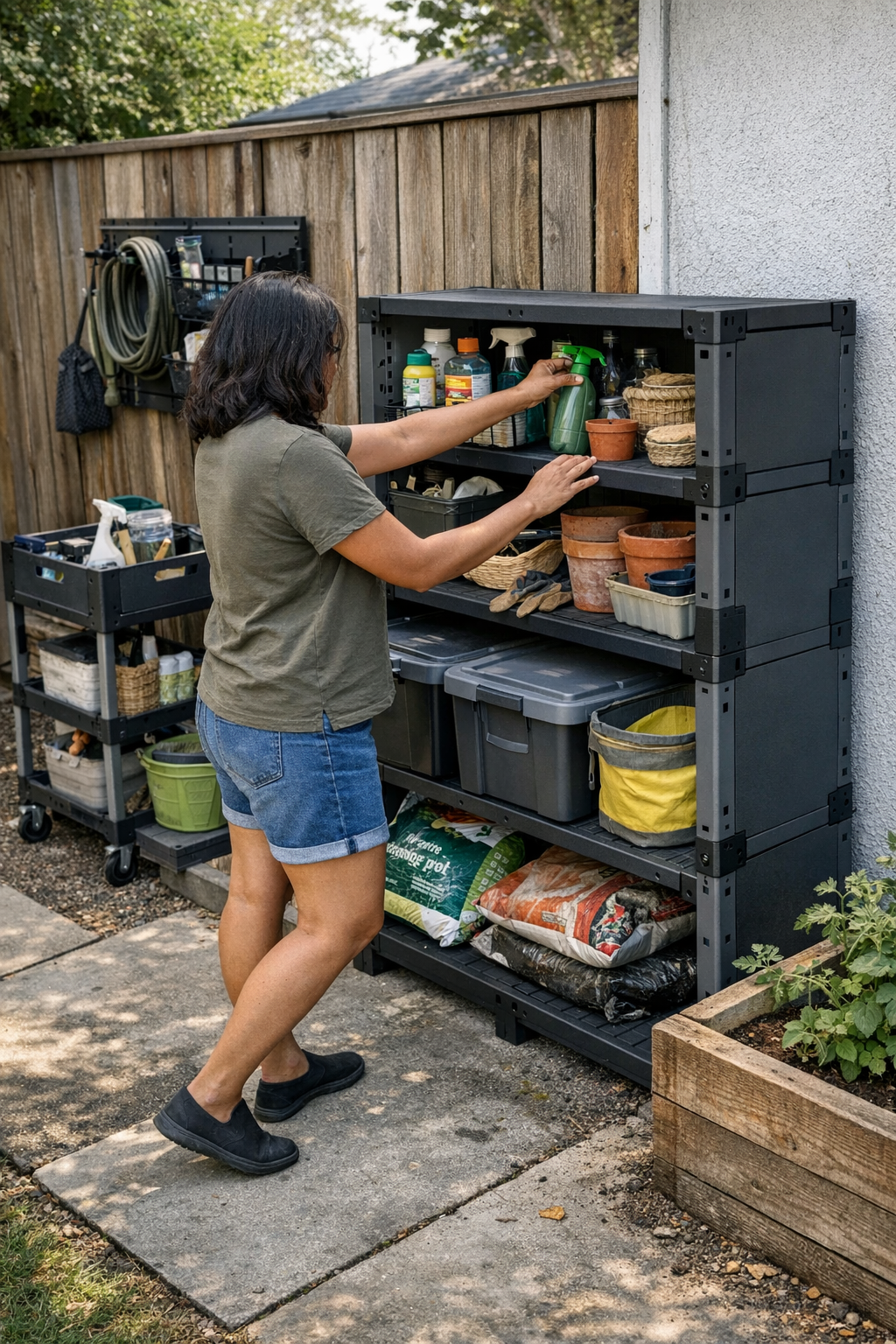
    Picture it: that garage threshold you finally organized, a fence-line stacked with modular bins, spray bottles on hooks, extra planters in neat rows. For three days, it works—everything in its zone, every tool where you want it. But fast-forward another week. You’re tiptoeing around seed packets that slipped behind planters, stepping over trowels that somehow migrated to your walking path, ducking to retrieve gloves from underneath a crate. Bins with lids, instead of containing the mess, start swallowing it. Once something drops in, it stays there until you lose patience and dump the whole box to fish it out. The cost? Every trip in or out of the zone slows down, and the setup that was meant to keep things easy is now the thing you’re working around.

    Partial Barriers: The Overlooked Fix That Holds the Line

    Most outdoor storage failures have nothing to do with layout—they blow up when the return flow falls apart. Small, odd-shaped gear drifts, fills corners, and fills the first open “edge” it can find. The eye can see everything, but the hand still has to dig or move something else just to make use of the space. The fix is usually not sealing everything away, but putting up just enough of a barrier to catch the loose ends.

    Swapping one open shelf for a partial vertical block—a simple 28-inch board along the edge—cuts down migration instantly. Small tools and slippery packets can’t wander past the soft edge. Strays land where they can be scooped up together, not hidden across scattered piles. Your most-used piece still stays grab-ready, but the daily mess clusters instead of spreads.

    You’ll notice the change immediately: less stuff creeps across the floor, drop-offs gather in one manageable place, not all over your traffic lane. Cleanup shifts from half an hour of hunting under bins to a single-pass reset. The corner that gobbled up gear now becomes the holding zone you actually use, not avoid.

    Let Routine Dictate Structure—Not the Other Way Around

    Pay close attention to exactly where things pile up after a week outside. If you’re routinely stepping over the same drop zone, install a side barrier there. If the fence-line shelf always collects loose gloves and packets, slot an open-top crate right into the drift path. Make your storage stop and hold clutter at the cutoff, not invite it to leak into dead corners. No outdoor setup needs to look perfect—it just needs to steer your mess where you can find and fix it fast.

    Closed Bins: Useful for Some Things, Frustrating for Others

    On bad days, it’s tempting to shove everything into a closed bin or cabinet and call it done. For rarely-touched gear, that works. But anything you grab or put back more than a few times a month? Closed bins only trade visible clutter for invisible, slower resets. Layers build up—one quick drop, then you forget until it’s time to dump everything out. If you keep high-traffic tools sealed away, you’re just hiding the next scavenger hunt.

    The trick is blending both approaches. Store seasonal, backup, or bulky gear tightly closed. Use partial barriers and open access for everyday hand tools, gloves, and the gear you handle most. This way, you never have to unearth last week’s mess just to hit today’s routine.

    The Difference You Notice: When Setup Starts Helping You Back

    You don’t see a storage system’s weak spots when it’s freshly cleaned. You spot them after a week of actual movement: pushing past a bucket in your path, having to free buried gloves, noticing one wall section keeps collecting more than it should. Setup isn’t about the “organized” look—it’s about function that survives repeated real-world resets. When structure gently pushes each tool and supply back toward where it belongs—and lets you clear the way in seconds, not hours—you’ve hit the sweet spot.

    Outdoor storage is alive. It gets tested the minute you start slipping back into old habits—dropping gear, skipping perfect placement, working against weather and time. The systems that last aren’t the ones with the slickest layout, but the ones that shape your routine as much as the other way around. Look for structures that block drift, keep your highest-use sections open, and make regrouping a fast, visible move. That’s the difference between storage that “fits outside” and storage that actually works outside—day after day, reset after reset.

    See outdoor storage and setup options built for real use at TidyYard.

  • Streamlining Carry-On Organization for Faster Airport Access

    The gap between an organized carry-on at home and a workable carry-on mid-trip appears fast—usually at the worst time. At home, every charger, passport, and cable sits zipped in place, ready to go. At the first security line or document check, that sense of control dissolves: reach for your boarding pass, and suddenly you’re unzipping main compartments, pushing aside headphone pouches, flipping through stacked organizers. What looked efficient on your bedroom floor turns frustrating once airport routines expose each retrieval step, each clumsy shuffle, and every buried essential.

    Why “Organized” Doesn’t Mean Easy—or Fast

    A bag that looks orderly isn’t always faster or less stressful in real travel. The friction grows the moment you need something often—ID at security, headphones before a flight, a charger when your phone dies in line. You don’t just grab and go; you pause, unzip, disturb two other things, tug out a document wallet or pouch, and then force everything back in worse than you found it. Each supposed layer of “order” is another obstacle when the pressure is on.

    Organization isn’t about first impressions. It’s about how many steps—or slowdowns—stand between you and that one thing you need again and again. Over-packed outer pockets explode with “just in case” gear, but slow you at checkpoints. A pouch system built for home visual clarity becomes a repacking job at every gate or aisle. What feels under control in quiet moments, crumbles under rushed, repeated use.

    The Real Bottlenecks: Where Order Cracks Under Pressure

    Some carry-on decisions almost guarantee trouble when actually moving through the airport:

    • Security tray scramble: The power bank you filed under three layers now requires a full dig-out. That means emptying half your bag into a plastic bin, fumbling while the line pushes forward—only to restuff it all, messier, as agents glance at your delay.
    • Gate document delay: The boarding agent calls for your pass—fast. If it’s hidden under an organizer or inside a main compartment pouch, you’re blocking the line, unzipping layers, juggling sleeves, while your system quickly gets out of sync.
    • Seat entry slowdown: Squeezed between upright bags and aisle traffic, you realize your headphones or book are packed away for “tidiness,” buried just out of reach. Now you’re stopped, digging awkwardly with people behind you, already losing order before the flight has even started.

    This is the cost of organization that ignores flow: Every retrieval adds interruption. Every repack worsens the next retrieval. Perfect order at home starts failing under churn in line, at trays, and especially at boarding when you can’t put the bag down or spread out.

    How Setups Collapse: When Visual Order Fails Real Use

    Picture a standard airport rush: Security moving fast; agent asks for ID; your phone hits red battery. The power bank and documents are neat under a layer of mesh pouches—“smart” at home, now all in the way. Each access means more unzipping, searching, restacking. Just one round—security and gate—and the bag is no longer organized. There’s no mess, just a cascade of micro-delays, and each pause compounds for the rest of the trip.

    Most systems don’t fall apart in one big failure. They unravel with every repeated scramble for the same item, as tidy home logic gets replaced by real-world urgency. The friction isn’t visual—it’s the low-level drag of slow, interruptive access at each checkpoint.

    Functional Organization: What Actually Survives Travel

    Setups that hold up in airports have one clear trait: they prioritize the items you’ll need quickly and repeatedly—passport, boarding pass, main headphones, maybe a power bank—right at the bag’s edge in one reliable, reachable pocket or section. Anything you access rarely or only after arrival can sit deeper, unbothered by transit chaos.

    This isn’t a cosmetic strategy; it’s structural. A single pocket reserved for “grab now” essentials massively cuts down lost time, mishandled gear, and post-checkpoint repacking. From curb to seat, your bag’s order survives each disruption because the stuff that needs to stay out of the way actually does.

    How it Changes the Routine

    Security lines speed up: Passport, boarding pass, and charger are literally right at hand—one motion per item, no “wait, where did I put…” You skip the multi-layer excavation, avoid the cable tangle, and don’t have to reset your setup post-checkpoint.

    Boarding and seat entry stop stalling: Your headphones, ticket, and in-flight must-haves are in one layer, not mixed with “maybe later” stuff. You grab what you need without exposing socks or scattering toiletries across the aisle. Fast access, less chaos.

    The Subtle Downsides of Over-Organizing

    Too many organizers—nested pouches, elaborate tech kits, deep document wallets—tend to hide essentials under what feels like smart structure. Each “convenient” accessory meant to sort things at home becomes a puzzle to reassemble on the move. The more organizers between you and your go-to item, the more likely you are to delay others or have to fix your packing job two, three, four times before boarding even begins.

    The takeaway: Layers of neatness become layers of resistance on travel days.

    Practical Tips for True Travel-Ready Order

    • Dedicate a single edge pocket to “next-use” essentials. Don’t let sunglasses or hand sanitizer sneak in with boarding pass, passport, and key electronics—keep that zone focused and always the same.
    • Surface only what you’ll actually need in transit. Chargers and cables can go front only if you use them before arrival; stashing every wire up top just crowds the urgent stuff out.
    • Group “once-per-trip” gear deeper. Backup cards, medication, and “if needed” extras live best where you won’t touch them during airport movement—they shouldn’t disrupt your travel flow.
    • After each trip, check your own hang-ups. If you keep fixing the same pouch or re-stuffing the same pocket after every checkpoint, simplify again. A setup that worked on your bed may not survive three airport cycles without revision.

    Measuring Real Improvement: Looking Beyond the Surface

    A carry-on isn’t successful just because it looks clean post-packing. The real test comes in the grind of lines, security trays, repacking sprints, and those tight overhead-bin moments. The systems that survive these cycles require less unzipping, reshuffling, and recovery—not just once, but through every repeated interruption. These efficiencies signal a bag that’s not just “organized,” but fit for the actual conditions of modern travel.

    If your current routine looks tidy at home and turns slow at every step—longer retrievals, awkward pocket maneuvers, messy correction mid-trip—it’s not just annoying. It’s a sign that your structure is optimized for stillness, not movement. Streamlining for quick-access and repeated use always beats adding the next clever pouch that turns routine urgency into another bottleneck.

    A resilient travel setup isn’t about perfect order or maximal sorting; it’s about a bag that can take real pressure, recover fast, and reduce disruption each time you’re forced to dig, grab, or move. When you’re ready to adapt your system for actual airports—and real travel churn—functional tools and field-tested kits from CarryOnSupply can help cut the pointless drag from your next trip.

  • Choosing Dust-Resistant Lighting Fixtures for Safer Indoor Spaces

    Most indoor lighting problems don’t show up when the fixture is new or the room is empty—they reveal themselves after months of daily use. Dust builds up where you can’t reach. Light bounces off slick surfaces, turning a bright fixture into scattered glare. One week you’re ignoring it, the next you’re on a ladder, scrubbing haze off a mirror sconce or wiping lint from a hallway ceiling light that never seems clean for long. If walking under a fixture means dodging shadows, pausing at a stair turn to check your footing, or tolerating uneven light over a bathroom sink, you’re not alone—these are common signals that the fixture’s design doesn’t stand up to real life.

    The Hidden Price of “Visually Interesting” Fixtures

    Where does lighting become a hassle most often? Bathrooms clouded by steam, hallways that always look dingy near the floor, stair landings where one step is never fully clear, or laundry corners packed with dust and lint. Decorative fixtures with exposed bulbs or deep grooves promise character but collect dust, steal time, and project shadows along every edge. Each ornamental seam traps more debris, each glass globe shows fresh grime, and glare becomes a constant distraction. A fixture chosen for style quickly turns into a maintenance job—never quite clean, always letting its flaws show first during the routines you rely on.

    Real Friction in Repeated Use

    Take the hallway by a busy laundry nook: three loads in, lint clings to every exposed lamp, roughening shadow lines across the floor. At the stair’s twist, your foot hesitates as the bottom step blends into gloom—unlit, thanks to a fixture that throws its light sideways instead of down. In front of the bathroom mirror, you tilt your head, chasing a clean reflection through streaky shadows—the result of a sconce whose “open” look just means more places for fog and dust to settle. What started as design now feels like an obstacle, week after week.

    The Quiet Value of Sealed and Flush Fixtures

    The most reliable fixtures don’t call attention to themselves—they disappear into your routine. A flush mount or sealed, damp-rated light may look plain at first, but after a few months, its advantages become obvious. No exposed hardware means nowhere for dust to cling. Smooth edges shed lint with a single wipe. The old pattern of chasing grime or dodging stray glare lines vanishes, replaced by light that’s level across the space—even after steam, spills, or busy weeks. Suddenly, the mirror is always readable, the counter edge stays visible, and the next deep clean slips further into the calendar.

    When Cleaning Stops Being a Project

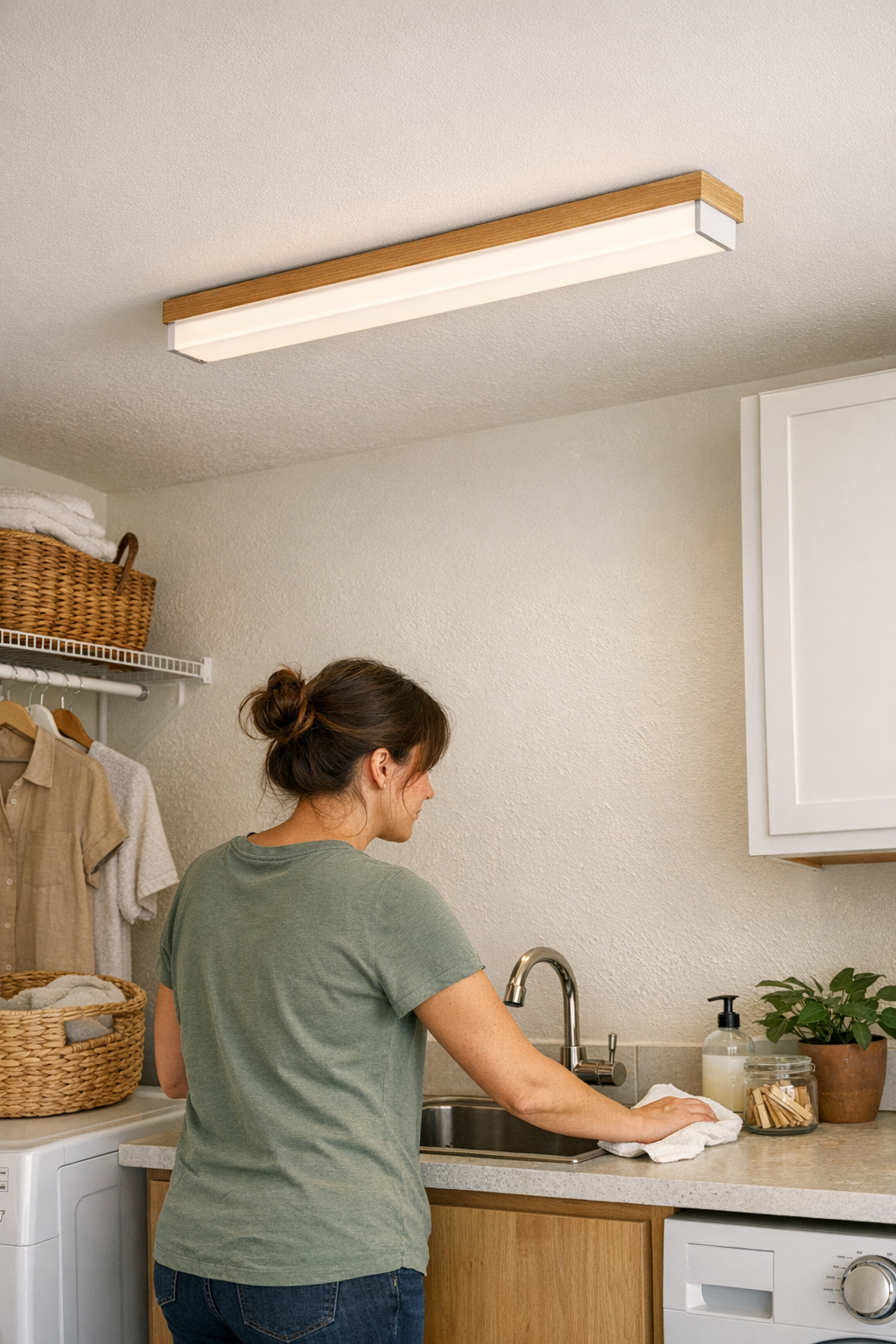
    Imagine swapping an ornate, semi-flush light over your utility counter for a closed, flush mount. Suddenly, shadows flatten out—no more missed drips or stray streaks hiding at the edge. Instead of making a mental note to deep-clean “when there’s time,” you pass a wet cloth over a seamless surface and it’s done. No awkward reaching; no invisible dust waiting for morning sun to expose it. The counter is just there, clearly lit and quick to check. Day after day, the small annoyances that used to slow you down simply stop showing up.

    The Way Dust Changes Light (and Movement)

    Every bit of dust, every patch of foggy residue, does more than look dirty—it’s a physical obstacle, warping and scattering the light itself. Dust on a fixture sends beams off-course, breaking up a steady spread into dim pockets and sudden hot spots that pull your attention or distort your next step. Here’s how this shows up:

    • Above sinks: Critical lighting breaks into uneven zones, creating dark spots just where you need precision—for shaving, washing, or checking skin.
    • Stair landings: Glare bursts off a dusty bulb while corners are lost to shadow, making each step less certain, especially when moving quickly or with arms full.
    • Mirrors: Glass films reflect light unpredictably so a clear view can turn into a guessing game, forcing you to lean in or reposition just to get even lighting on your face.

    Week by week, these small defects build up. A room that looked “bright” with its fresh fixture now undermines what matters most: steady movement and reliable sightlines, especially where floors change or hands are busy.

    Matching Fixture to Routine: What to Consider

    Lighting that feels right on day one can reveal weak spots with every routine. The true test is whether it stands up to moisture, dust, and the constant churn of daily activity. For:

    • Laundry closets and mudrooms, select enclosed, simple designs that can shed lint and outlast humidity. Fewer grooves mean less for dust to grip.
    • Bathrooms—ceilings or mirrors, pick bathroom-rated or damp-rated fixtures with fully sealed domes. These keep out steam and stray particles, preventing haze and stray shadows from ever forming.
    • Hallways and stairs, use flush or semi-flush ceiling lights aimed to blanket the full width. Place them to eliminate both dark zones on the floor and glare at eye level—so every step is predictable, not guesswork.

    These aren’t just little “upgrades”—they remove routine obstacles entirely. In steamy, dusty, or high-traffic spaces, a truly easy-to-clean fixture shrinks cleaning jobs and restores real clarity where you walk, work, and check the details.

    Two Quick Routine-Savers

    • Avoid placing fixtures directly in the path of steam or lint release. Even the best-sealed model stays cleaner longer if it’s not fighting every burst from a showerhead or dryer vent.
    • Choose smooth, closed fixtures for any ceiling or wall light that’s awkward to reach. Over stairs, counters, and narrow passageways, every reduction in dust and grime makes every future cleaning easier—especially when a ladder is a hassle.

    The Long Game: Lighting That Fades Into the Routine

    The best indoor lighting slips out of sight—never blinding, never leaving you in the dark, never demanding more cleaning or attention the longer you live with it. You notice the difference when you stop pausing in shadowy hallways, never hesitate on stairs, or realize you’ve gone weeks without wiping haze from a bathroom fixture. Real improvement isn’t flash; it’s the absence of repeated trouble. Visibility is smoother, movement is confident, and the fixtures just support daily life—silently making routines less demanding.

    Every step through a busy space is a reminder that lighting structure isn’t just style—it’s how easily you move, see details, and trust your spaces to work as expected. The right fixture unmakes old problems, and the frustration of dust, glare, or shadow simply fades. For high-use spots, silent strength and easy upkeep end up mattering most.

    LightHelper Indoor Lighting

  • How Buffet Sideboards Transform Dining Storage for Everyday Efficiency

    A buffet sideboard signals calm, but under repeated use, calm quickly unravels if the storage isn’t built for real routines. The difference between a dining room that works and one that only looks organized shows up fast: a sideboard might look neat after a weekend reset—doors closed, surfaces cleared—but by Wednesday, you’re stacking plates at risky angles, nudging glassware aside, or searching for a tool that vanished into a crowded compartment. The friction isn’t visible at first. It builds as dinner-to-dinner movement slows, hidden storage traps what should be within reach, and the reset drags out—making “looks fine” and “actually works” drift further apart with every use. For most dining zones, the core issue isn’t the amount of storage but whether the structure matches how often—and how awkwardly—your own routines push against it.

    Where Hidden Storage Falls Short in Real Life

    Closed doors and tidy surfaces feel orderly, but inside, hidden storage often creates new problems. The main struggles stand out after a few real meals—moments where the sideboard’s internal setup gets in the way instead of helping:

    • Grabbing a plate but finding it buried under bowls you didn’t intend to stack there.
    • Returning glassware, only to see the shelf is just slightly too low, and you’re left juggling—should you shuffle the whole row or leave the glass stranded?
    • Trying to fit serving utensils but every space is blocked, forcing you to balance them beside a tilting tray or dump them elsewhere for now.

    Each time you put something back, hesitation creeps in. Instead of a smooth routine, returns become a shuffle—squeezing, restacking, or resorting to any open space, even if it’s not where things belong. Surfaces get extra piles “just for now,” internal categories blur, and by week’s end, hidden overflow slows every step. The zone stays visibly tidy but feels bogged down whenever you try to move quickly or keep things sorted.

    Looks Organized—Until Everything Moves

    There’s a visible difference between a calm facade and storage that stands up to daily churn. Sideboards that rely on large, undivided spaces tend to fall apart under pressure: plates tip, utensils wander, and serveware drifts into places reserved for something else. Reset becomes a guessing game after each meal—one shelf fills up, so the next piece gets wedged in at an odd angle. You spot it most when a routine slips: suddenly, opening a door means contending with half-stacked items or moving overflow that never found a home. The entire area remains “neat” on the outside, but under the surface, every category quietly loses its boundary.

    The earliest warning sign is hidden overflow. When shelves or compartments aren’t matched to specific categories—when a shelf is too tall, too shallow, or open-ended—random pieces creep in. That one-off holiday platter never returns to deep storage and lingers all month; gadgets or “occasional use” items muscle into daily-use slots. Soon, every reset takes longer, and you’re left weighing whether to put things away correctly or just get it done. The zone starts missing its own purpose: visible order masks slowed movement and rising frustration.

    How Internal Structure Shapes Everyday Flow

    What fixes the day-to-day bottleneck isn’t more storage but smarter use of what you have. The shift comes from sharply assigning each segment—one shallow shelf fits just your main plates with no scraping; glassware stands upright without overlapping; utensils and servers go in a defined slot or divider, not a loose bin. When every return and grab matches how you actually use things, movement speeds up, and surprises drop. The worst trap? Dedicating a “miscellaneous” section. It absorbs every leftover, becomes impossible to clear, and quickly turns into the new friction point that ruins reset flow. The turning point is always the same: separate categories win, while blended or undefined storage triggers the delays and reshuffling.

    Repeated Friction in Real Use

    Real-world sideboard headaches are rarely dramatic, but they repeat until the area feels like an obstacle course. These patterns make the difference:

    • Doubling back for the same item, since drifting piles have buried what you need or forced it into an unintended spot.
    • Shifting overflow between compartments, instead of confidently returning an item to its own place.
    • Flipping open several doors, just to carve out a spot for one extra plate or bowl—a sign the structure isn’t holding up.

    Individually, these moments are small, but together, they steal time and block routines. What should be a simple after-dinner flow turns into constant adjustment. You may even delay cleaning up or start stacking things elsewhere “temporarily.” A sideboard that requires more thought to return items than to retrieve them signals the setup, not the user, is at fault.

    Tuning Your Setup for Repeatable Order

    Solving these issues isn’t about adding more sideboards or cabinets—it’s about committing to clearly defined zones within what you already have.

    Start by declaring rigid categories. Use shelf heights, riser inserts, and dividers to give each group—dinnerware, glassware, serveware—its own non-negotiable space. Track what repeatedly overflows. Ask: does this piece really belong in the dining zone, or could long-haul and “sometimes” items move to a utility shelf or wall unit elsewhere? Visible separation holds the line against clutter drift.

    If your hosting needs or routines shift, modular sideboards and adjustable interiors buy flexibility. Moveable components can help you reset compartments on the fly—but only if you keep internal categories strict. Flexibility without clear boundaries just enables a more elaborate shuffle, not a better flow.

    Real test: If you notice clutter build up by week’s end, try a “one in, one out” cleanup—remove a single non-essential piece and see how much smoother return and retrieval become. Often it’s volume, not frequency, that sabotages usable order.

    When Structure Matches Routine, Resets Get Lighter

    The most reliable sideboards aren’t those that only look perfect after a deep clean. They’re the ones that make the right compartment so obvious you can put things away half-asleep and still get it right. Every shelf and drawer tells you, by what fits and what doesn’t, what belongs where. No cramming, no shifting piles, no guesswork. Return flow becomes as frictionless as grabbing the item in the first place—no special angle, no hidden balancing act, no stalled cleanup.

    When structure truly matches routine, the dining space is ready as soon as the last meal ends. The next prep begins with everything in the right place—no hunt for a missing server, no silent accumulation of “just for now” clutter. You move through the room, not around bottlenecks. The outside order matches the inside logic, and every repeated cycle—grab, serve, return, reset—feels lighter, even when energy is low or time is tight.

    Sideboards and storage cabinets that fit these patterns—clearly separated zones, easy return paths, capacities that match what you actually use—quiet the lingering friction dining areas often collect. It’s not about a prettier setup, but a structure that stays transparent and responsive as real routines change and pressure builds.

    Find sideboards and inside-storage solutions that support real routines at Gridry.

  • How Kind Storage Systems Simplify Daily Organization Without Extra Effort

    The promise of order hits hard when you first set up those tidy rows of bins and baskets. Everything has its spot, the shelves look photo-ready, and for a moment, your closet feels conquered. But fast forward a few days—morning rush, laundry still warm from the dryer, your bag sliding off the shelf as you reach for a clean shirt. That seamless system? It’s suddenly in your way. The bins that looked perfect are now stubborn, slow, and somehow encourage more chaos with every use.

    When “Organized” Turns Against You

    Early on, new storage gives the illusion of control. Neatly stacked containers and folded piles satisfy in that fresh-start way. But soon enough, daily patterns wear grooves into the setup. Pull out one shirt and the whole row sags; slide a bin forward and socks escape from behind. If grabbing your go-to sweater means emptying half a shelf, the appeal of order fades quickly. Little by little, those bins bought for “just socks” become home to last season’s scarves and a creased grocery bag. By week’s end, you’re stacking things wherever they’ll fit and shoving the closet door shut.

    Micro Headaches That Add Up

    It’s rarely just one dramatic mess—it’s a steady parade of minor irritations. Shelves too deep swallow loose items until they’re out of sight. Stacks topple after you lift one thing from the middle. Deep bins become black holes—whatever goes in disappears under newer, less-used stuff. Before long, the edge of the shelf fills with “for now” clutter: a belt, a paperback, that one glove. What looked organized now requires work just to keep from sliding out of sync.

    Looks Organized—But Does It Work?

    Clutter doesn’t always look messy from a distance. It sneaks in when the system requires constant fiddling. You might spend an afternoon getting your closet in line: bins labeled, categories sharpened, everything stacked. But by the third rushed morning, clean laundry lands wherever there’s space. Need running shorts and a pair of matching socks? You’re foraging blind, upending baskets that were labeled only a week ago—until, defeated by tangled belts, you let things pile up “just to deal with later.”

    Reset Fatigue—When Maintenance Gets Harder

    The most honest test comes after a full week of everyday life. If you’re leaving items on a chair instead of putting them back—because putting them back is genuinely annoying—it’s not a motivation issue. Good storage lets you reset with minimal effort. If you’re forced to restack, refold, or reshuffle every day just to keep up, your closet is working against you, not with you.

    The Real Impact of a Smarter System

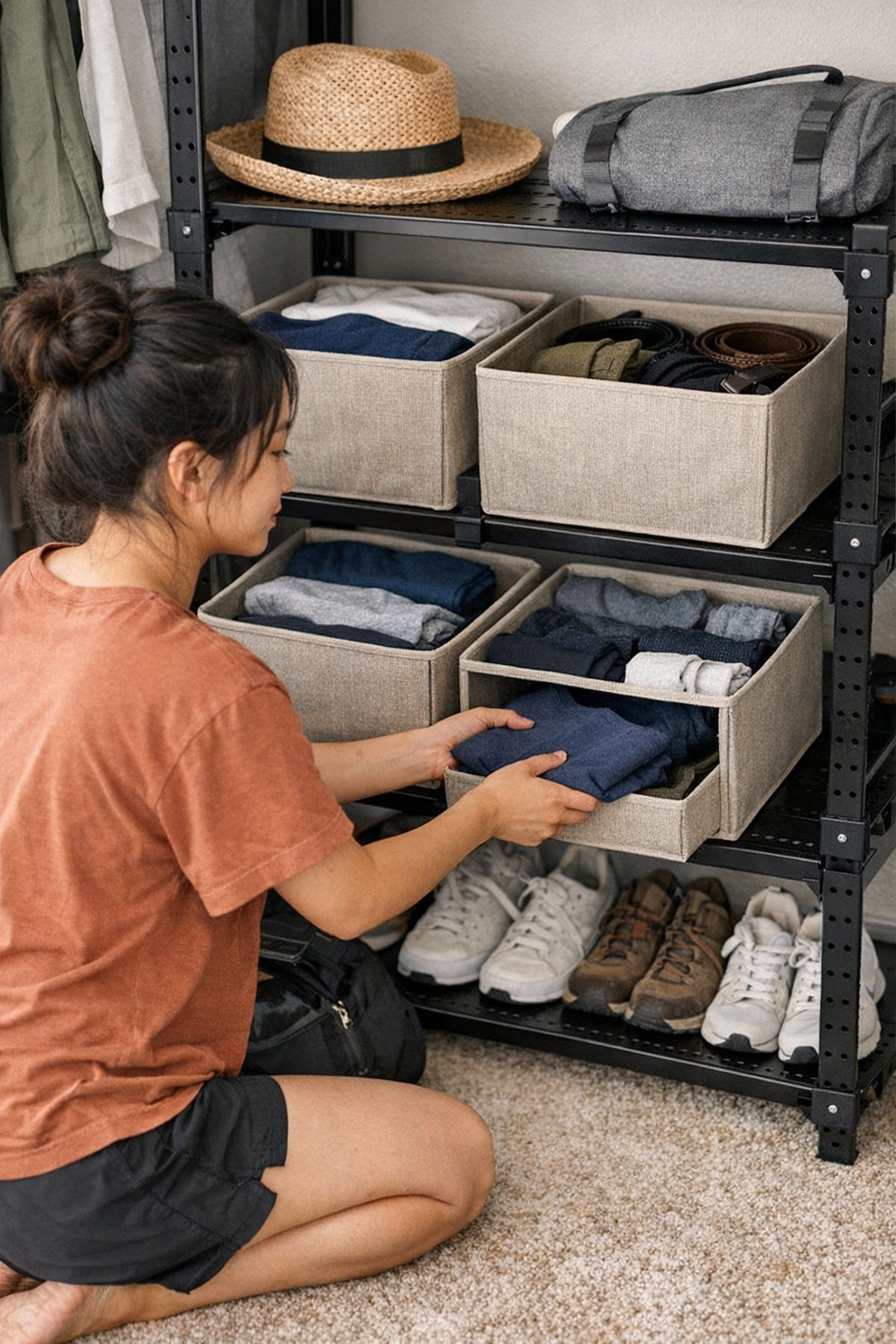
    I swapped a few oversized baskets for several smaller, open-front bins and the effect surprised me. Suddenly, grabbing a shirt didn’t mean moving five things out of the way. Every daily-use item found its own slot. Instead of digging beneath sweatpants to reach for gym socks, I could just glance and grab. The usual creep of clutter slowed, and “putting away” became so simple I barely thought about it—no spillover, less refolding, and the shelf held its shape all week.

    In the Trenches: Mornings Made Faster

    Picture it: You need an undershirt, a tie, and the second black sock—fast, before the clock runs out. With a setup that’s just bins stacked four high, you’re busy unstacking, peeking, and sacrificing neatness for speed. With clear, open bins and labels that actually map to daily life, you reach once for each thing. No accidental avalanche, nothing stuck behind something else—and when things go back, no puzzle to solve. What used to slow you down becomes nearly automatic.

    Spotting the Trouble in Your Setup

    It’s easy to blame yourself, but your storage is often the culprit. Watch for these:

    • Reaching behind bulky bins to fish out small daily items
    • Baskets and shelves growing cluttered after each week—even post-cleanup
    • “Category drift”—when socks wind up with charging cables or shirts wander into shoe territory
    • Baskets that tip or stacks that collapse if you touch the wrong thing
    • Floating piles gathering on the floor or next to doors

    If these annoyances keep recurring, your setup is quietly adding hassle to your routine.

    Why True Fit Matters Over Time

    The best storage gets easier as routines settle. It doesn’t just hide stuff—it makes returning things almost mindless. Systems built on clear categories, easy-open bins, and shelves sized to your actual use reduce the need for discipline or daily clean-up rituals. The more the storage fits what you do, the less thought it takes to keep the space working—and the less likely you’ll find stray clutter taking over again.

    Simple Tweaks That Change Everything

    A total overhaul isn’t required. Small, strategic swaps add up: trade one big bin for a pair of smaller, purpose-driven ones. Add real labels—actual use, not what you wish you had. Use shelf dividers to prevent collapsing stacks, but not so many that you build little prisons for your stuff. The sweet spot is a storage rhythm—flexible enough for real life, sturdy enough to survive messy days.

    Adapting With Your Routine

    Seasons shift, new gear arrives, your family’s needs evolve. When that happens, does your closet morph with you—or does it turn into a jumble zone? Experiment, shift categories, and see where things pile up or slot themselves back. The right system isn’t just about looking organized; it’s about making order frictionless, no matter how chaotic the week gets.

    Good Storage Shows Up on Hard Days

    The real proof isn’t the day you finish setting up—it’s the back-to-back mornings when you don’t have time to think. If, after a whirlwind week, your shelves are still holding firm and nothing has tumbled overboard, you’ve won. The gold standard? Picking up feels effortless, and the urge to “just close the door” never comes back. Your closet doesn’t demand— it quietly works so you can focus on anything else.

    Browse practical systems and solutions at ClosetWorks

  • Why Ending Cat Grooming Early Reduces Fur Mess and Cleanup Time

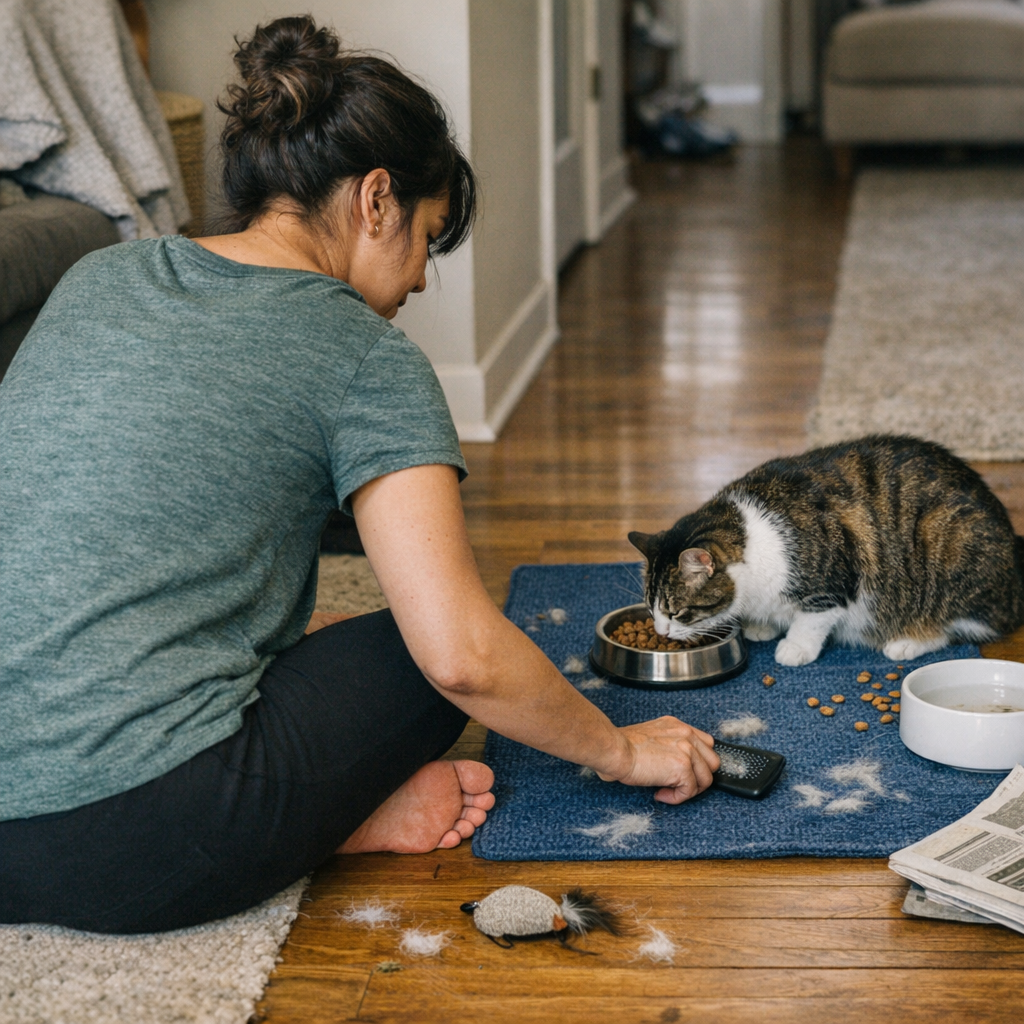
    Indoor cat grooming routines rarely collapse during the brushing itself—it’s the aftermath that trips you up. You end a session a minute early because your cat twitches or squirms, thinking you’ve dodged a meltdown. But by morning, there’s new fur hugging the feeding mat, a shedding drift across the water corner, and your cleaning supplies just out of reach thanks to a grooming comb left “for next time.” A session’s real stopping point shifts everything: cleanup, reset, and how many fixes you have to make mid-routine. That difference is the line between a setup that works and one that quietly falls apart inside your everyday StillWhisker zones.

    Why Your Stopping Point Matters More Than You Think

    Stopping a grooming session isn’t just about your cat’s patience—it’s a fork in tomorrow’s routine. The moment you quit early, loose fur clings to mats and corners that look tidy now but become cluttered in the next reset cycle. Delay too long, and the grooming tools, wipes, and leftover hair migrate into places you’ll trip over. Most routines hide the cost for a day or two, but soon you’re finding fur stuck in crevices around feeding bowls, stray clumps where water mats meet tile, and that familiar pause when you have to wipe down surfaces twice before the room feels “done.”

    Waiting for dramatic signals—a tail flick, a sudden leap away, a pointed glare—feels safe. But those forced finishes add friction everywhere else. Fur lingers in the high-use paths between feeding, water, and your own living space. The brush never makes it back to its shelf, and resets after meals or rests require double the effort. Over time, the “just finish later” compromise becomes a chain of longer, harder cleanups and a routine that drags.

    Real-World Ripples: How Mess Travels After Grooming

    Cat fur spreads by inches and interruptions. Stop brushing at your cat’s first hint of restlessness and you think you’ve contained the mess—only to find, days later, strands camping in every home zone. A missed session means every bowl top-up and water refill becomes a mini-trawl for shed fur stuck to dish rims, mat edges, or flooring gaps. You go to pour fresh water and end up detouring for the lint roller, or a meal becomes another cleanup circuit when you discover a line of fur baked into the floor next to the feeding mat.

    Feeding and Water Areas: The Unplanned Scattering Zone

    The feeding zone is where small grooming slips show up first and worst. A single unfinished session leads to fur edging around the bowl, crumbs clinging to stray hair, and water dish rims that gather shed like magnets overnight. These aren’t one-off annoyances: they turn each refill, each reach for a dish, into a frustrating two-step—wipe, then feed. If supplies aren’t close, you juggle damp wipes through a morning rush, or realize halfway through meal prep that the brush is missing from where you expected to find it.

    The visual mess is only half the problem. Loose hairs join with whatever else collects near food and water, making every zone feel like it needs “just a quick fix” that spirals into a reset loop—extra wipe-downs, more tool searches, and a feeding area that never seems to stay clean past the next meal.

    Shared Walkways and Reset Effort

    Resets slow down not just at the edge of the mat, but along every shared home path. Small misses add up: fur lines edge down baseboards because you paused brushing at an inconvenient moment, or the grooming comb lands near the sofa and stays there. Each run through the living room means cleaning socks, nudging fur clumps with your foot, or squeezing in a mini-vacuum before company arrives. The more often you cut grooming short in favor of convenience, the more the chore grows—not just messier, but slower to catch back up. The routine stops feeling contained…and starts leaking into every other indoor-cat corner you use.

    Short, Calm Sessions: The Subtle Advantage

    Stopping grooming while your cat stays calm—before tension shows up—builds a cleaner, more predictable chain reaction. The session is short, but the benefits stack up where they matter:

    • Less fur in food and water zones. Cleanup finishes in one sweep, not as a multi-area scramble.
    • Tool reset is automatic. The brush returns to its spot; supplies don’t scatter from room to room.
    • Future resets speed up. No wipes stashed mid-way through breakfast, fewer midday surprises when you kneel on stray hair.
    • Cat cooperation holds up. The routine stays neutral territory, not a game of “who leaves first.”

    Even if the session ends before you’ve “finished” every patch, daily flow improves by the end of the week. Feeding areas don’t track fur, water dish rims stop grabbing loose hairs, and the usual search for the missing brush disappears. Instead of persistent, low-grade cleanup, you get a true reset space—one that survives both heavy shed weeks and lazy evenings without backup wipes buried under the mail pile.

    Patterns That Sneak Up: When “Still Acceptable” Isn’t Good Enough

    Most grooming setups look fine until the background fixes stack up. The “acceptable” routine—one extra brush, one more tool left within arm’s reach—creates a nearly invisible workload. Instead of one midday pass, you’re now correcting after every feeding, every lounge, every walkway. Shed fur skips the mat and lands on the baseboard; combs travel from one room to the next, never quite back to storage; cats get twitchier with each session that overstays their patience. The setup seems organized, but function sags with each extra adjustment you have to make on the fly.

    Skip a tool return, stretch the brushing time, or keep the wipes too far out of reach, and you’re trading neat surfaces for constant, low-level work. It doesn’t turn into a mess overnight, but routines creep—more chores, less ease, and an underlying sense that every reset has gotten heavier.

    Grooming Tools and Spaces: Keeping Mess Contained

    Initial setups feel promising—a brush on a washable mat, a quiet corner, the expectation that fur will stay put. But “just a minute more” sessions rarely respect boundaries. Mats migrate, tools drift into shared spaces, and before long, the feeding path or rest areas begin picking up the overflow. The signs aren’t dramatic: a brush abandoned near the kitchen, a pile of wipes stacked on top of other supplies, or a cat rerouting her walkway because her preferred grooming zone is now always occupied or two steps from the litter corner.

    Small Fixes That Help

    Habits that break this chain show up in details:

    • Use a shakeable or washable mat parked out of key walkways. Fewer resets, slower mess travel.
    • Keep wipes or a hand vac within true reach. If you have to search, you’ll forget them or skip cleanup entirely.
    • Pick times that don’t overlap with other resets. Post-dinner works—but not if it butts up against your own tidy-up or feeding prep, turning one routine into an extended juggling act.

    And the most useful rule: end as soon as you see unrest. Delay and the whole room inherits the fallout threefold. Early shutdown means faster home recovery and a setup you don’t have to rethink two days later.

    Cleanup and Reset: The Cycle You Actually Live With

    The real test isn’t the evening after a brush—it’s the next morning, when you move through the space on autopilot and the defects show up. “Looks clean” at a glance means nothing when breakfast prep reveals fur trailed past the mat, the tool in the living room, wipe-downs skipped until lunch, and tangle-ups you didn’t catch last night. Each missed grooming exit means starting your next cleanup half a step behind. Instead of one routine, you’re patching together three—and the satisfaction drops.

    With the right stopping point and a habit of closing before tension hits, grooming and cleanup become a short, contained cycle. No tool hunt. No need for a stack of backup wipes lurking by the water dish. Even on busy weeks, the routines pull back to one reset, not a spiral of mini corrections every time you pass through the cat’s space or prep a meal.

    Choosing Consistency Over Perfection

    There’s no static, showcase-perfect indoor-cat zone—and chasing it guarantees disappointment. Strong setups judge by lived friction: less repeated work, faster resets, and comfort that doesn’t saddle you with after-effects. Ending grooming on a calm note, with tools parked and fur contained, trades the myth of a flawless day for a cycle you can repeat. Meals, water, and shared corners stay clean by default, not just by effort. You get space that asks less extra of you—and a cat who meets new routines without bracing for disruption.

    It’s that small, early decision—choosing the right stopping point over squeezing in just one more brush—that separates a manageable routine from a messy

  • Why Proper Cable Management Transforms Your Lighting Setup

    A room that looks “finished” in photos rarely survives a week of real use without one flaw showing up first: the exposed lighting cable. Maybe it’s a black cord dangling from a wall light, a white line tracing the side of a floating shelf, or a thin wire sagging under a kitchen counter—whatever the type, the story is the same. The moment daily movement begins, that cable pulls every eye and most routines off course. It gathers dust, snags under the wheel of your desk chair, or hangs just close enough that you start working around it. The difference is immediate: lighting that looked smart in setup now interrupts every reach, wipe, or rearrangement. If you catch yourself adjusting the cable more than using the light, you’re living with the most common indoor lighting breakdown there is.

    When a Tidy Space Fails the Real-Use Test

    Lighting setups seem perfect right after install, when shelves sit empty and no device has been charged. But the first time you slide a chair, plug in a laptop, or clean under a fixture, friction starts. A cable that was “tucked” in photos slips into daily view, getting moved, bent, or brushed aside every time the room is actually used. This isn’t just visual noise—it drags down the room’s function in dozens of small, stubborn moments. Cable management quickly shifts from afterthought to the silent breaker of order, efficiency, and comfort. Miss it, and you’ll repeat the same frustrations every day.

    As soon as the cable, not the light, grabs your attention, productivity drops. In compact desks, narrow kitchen counters, or crowded workstations, cord chaos is often the first symptom of a setup failing real use. Cables won’t stay flush, catch crumbs and dust, push objects out of position, or get unplugged by a careless sleeve—each one making the setup feel less finished and more stressful. The problem never fixes itself; instead, it deepens until the cable becomes a permanent, grimy detour in your everyday path.

    Surface Perfection vs. Everyday Movement

    The gap between “looks resolved” and “works day-to-day” is simple:

    • True Hidden Support Holds: Where raceways or cable channels run wall-tight right up to the fixture, cables vanish from experience—even after a week’s worth of spilled coffee, shifting chairs, or new chargers plugged in and out.
    • Half Measures Break Down: Cables looped behind desks or loosely clipped under a shelf always creep forward. Within days, they sag, slip, and snag on anything moving past. The visual order collapses the instant the routine resumes.

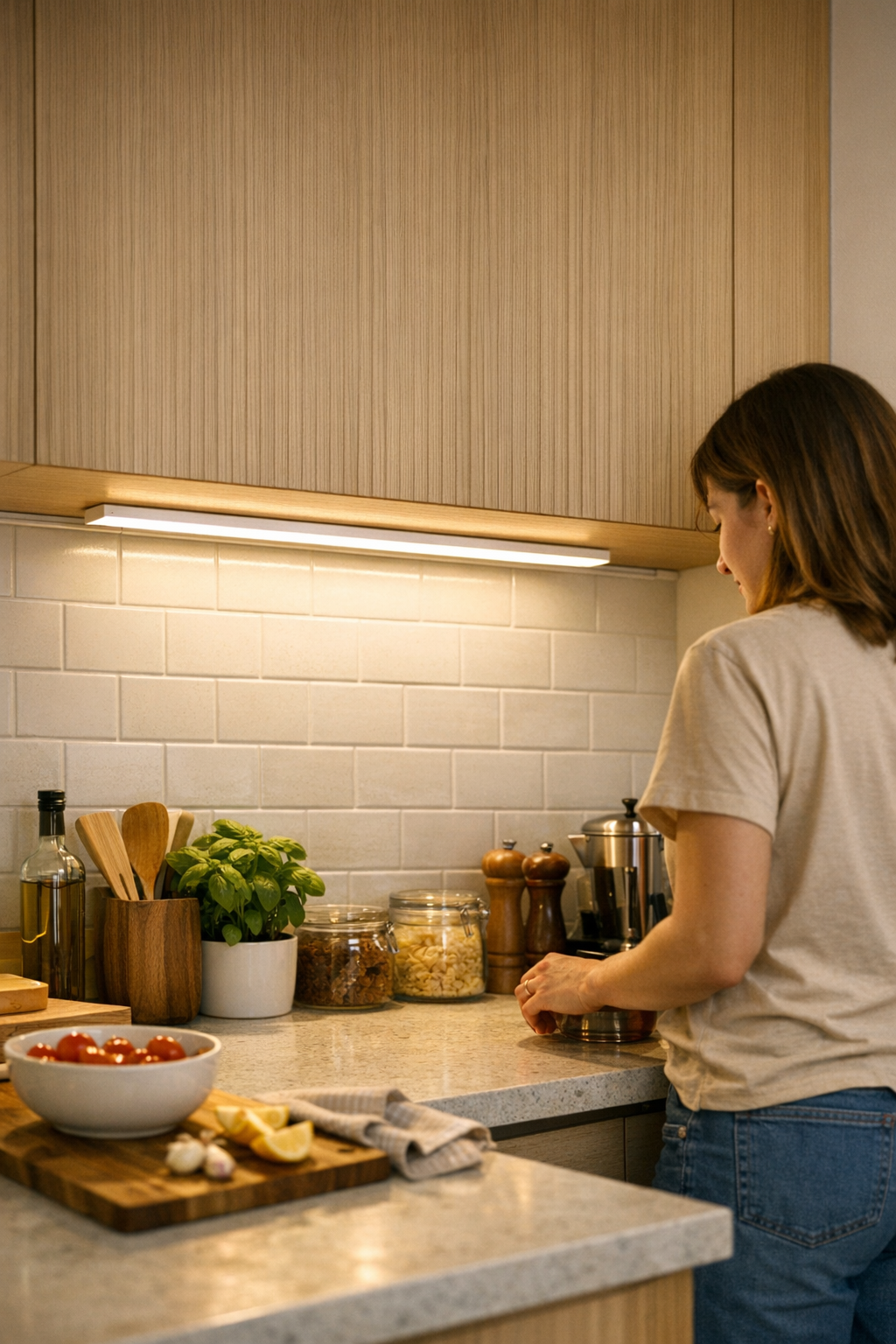
    Picture an under-cabinet LED: With its cable coiled along the open edge, every item—box, bowl, or cleaning hand—nudges it further out, leaving smudges in the wire’s path and tempting every spill or crumb to cluster there. You soon find yourself dodging the sagging cable, wiping twice, and never quite restoring the surface the way you expected.

    Cable Frustration in Shared and Work Spaces

    Lighting in work areas rarely sits untouched. Every time someone shifts a chair, reaches back for a cord, or drops a backpack on the floor, any exposed or half-secured cable becomes the next source of distraction, accident, or slow repair. A wall lamp’s cord left loose will tug at its connection, catch on bags, or cause the fixture to shift out of level. Over days, the routine slips: cleaning gets slower, small accidents repeat, and your workspace feels more fragile, not less.

    Recognizing the Repeated Annoyances

    • Chair back or bag loop catching on a cable end you thought was tucked away
    • Dust lines tracing the path of every exposed cord under shelves and against walls
    • A desktop or work zone that slips from crisp to cluttered in days, always beginning with cable drift

    Anchoring: The Small Move That Makes the Difference

    Solving these ongoing issues rarely means a total overhaul—or ripping out old wiring. Nearly always, the right move is sharper and subtler: secure every visible cable with purpose-built support exactly where the wear happens. Use adhesive raceways, cable tracks, or snap-in channels that run flush along backs of shelves, under edge lips, or down unobtrusive wall lines. When each length is anchored directly to the surface, object collisions and accidental snags disappear. Cleaning feels faster, shelves stay clear, and the cable stops being a daily reset point. Five uses later, you aren’t reminded of the wiring at all—it just doesn’t interfere.

    The real win isn’t invisible cables—it’s cables you never touch or notice, even after a full week of use. A support part that works removes friction without calling attention to itself. If the cable channel or stay is doing its job, you won’t have to adjust or see it with every routine pass. Your light becomes as easy to live with as it looked when installed.

    Questions from Real Setup Friction

    Which Cable Management Works for LED and Under-Cabinet Lighting?

    For linear fixtures and under-cabinet LED runs, adhesive or snap-in cable channels that fully cover and control the line are best. Choose a track deep enough so the cord doesn’t bulge below tight shelves. Always match the path to the real cable length—don’t force bends around corners or cover outlets just for tidiness. Access is as important as appearance, and the best channels disappear into daily use, not just initial setup.

    Is Cable Clutter Still a Problem If the Room Looks Clean?

    Yes—cable clutter is often the first sign a room is sliding back toward disorder, no matter how tidy the rest looks. Every time you swipe a countertop, shift a chair, or reach for a charger, a loose cord drags on the experience. Only cables so well managed you forget to check them actually keep a space feeling finished. Anything less becomes a distraction the first time you return to it.

    What About Safety Concerns from Unmanaged Lighting Cables?

    Unanchored cords aren’t just untidy: in busy or shared areas, they’re a tripping hazard, a source of stray yanks that unplug devices, and a risk for wear or even damage at hard bends or fixture joints. The more people or actions a surface sees, the more critical it is to keep lighting cables properly routed and stable. Untamed wiring doesn’t just look out of place—it makes accidents more likely, cleaning more awkward, and the whole system less durable by design.

    Lighting That Actually Stays Organized Week After Week

    Any lighting—no matter how clean and low-profile at first—will degrade into constant micro-adjustments if its cables aren’t anchored and protected where they’re exposed. Real comfort isn’t the tidy look at install, but the absence of cable irritation on day ten when the surface is full, the chairs are in use, and devices come and go. A setup only becomes dependable when there’s nothing left to drift, snag, or distract you from real tasks.

    Lighting only looks “done” if it stays that way after a week of normal use. The small parts—raceways, tracks, clips, and cable stays—are what separate rooms that merely look settled from rooms that let you live and work in peace. Every cable kept tight and out of your path is one less daily reset, and one more quiet reason your space works smoothly.

    Find practical cable management, mounting, and lighting support tools at LightSupport.

  • How Eliminating Wobble Transforms Your Workshop Storage Stability

    Behind the “perfect” storage facade, the real test begins as soon as the work starts. Garages, basements, cluttered studios—at a glance, everything looks crisp: bins lined up, shelves just-so, carts tucked tight against a still-clean wall. But by Wednesday afternoon, the real rhythm takes over. A tray of screws lands somewhere random, a rolling chest blocks the only clear path, and that corner shelf—supposed to keep things within reach—now harbors a shifting pile you dodge every time you walk by. If you’ve ever built a “modular” system meant to restore order, only to be haunted by daily readjustments and slow, creeping clutter, you already know: what matters isn’t day-one alignment, but how your setup stands up to real, repeat use—loading, grabbing, shuffling, returning—without turning the simplest task into a hassle.

    The Quiet Sabotage: Where Weak Storage Chips Away at Workflow

    The subtle breakdown often starts fast—imperceptible at first, then all at once. Maybe that wall-mounted rail felt rock-steady when empty. But after a week of tools coming off and on, it sags just enough to send a jolt of doubt through your next reach. A rolling cart, smooth on its maiden glide, now bumps and lists over every floor seam, drifting just far enough that you have to pivot it back, again and again, just to clear the cabinet doors. Those micro-wobbles and tiny tilts? They slow you down, force tiny compensations, and start turning the ordered space into a puzzle you keep having to solve.

    Ignore these little shifts, and routines warp. Heavy items get orphaned in safer, less useful places. One bin winds up jammed against the wrong wall, stealing movement from the main aisle. Overflow piles up in a zone you’d sworn would stay clear. What promised to be a fluid path instead becomes a shuffle—resetting the system just to finish what you started, every single time.

    When “Good Enough” Isn’t: Small Flaws, Big Interruptions

    Instructions and marketing never warn you about the day-three surprises: that shelf bowing under an awkwardly loaded toolbox, the floor unit’s one leg floating slightly above the concrete, or casters so undersized they screech and catch after the first actual haul. Instead of supporting your workflow, the system starts dictating awkward workarounds—loading lighter objects where the frame holds, parking rolling storage sideways just so it doesn’t wander, never trusting the upper shelves with anything substantial.

    The effect is everywhere—if you look for it. You nudge a storage cart toward the door, hit a shallow dip, and it veers off so you end up parking it further from reach. Wall units flex when you grab a power tool, so next time you leave it where it’s easier to access, and the “dead zone” expands. Setups that should liberate space quietly fence it off instead. Each extra moment spent moving or bracing a unit, each shortcut you take to avoid a lurch or tip, is another little tax on your flow. Soon, less and less of your organized footprint actually works the way you intended.

    How Looseness Slowly Undermines the System

    Picture the aftermath of a real week: you tidy it all Sunday, but by Wednesday, you’re sidestepping an out-of-place cabinet and digging for a sander on a shelf that now shifts under the weight. The rolling chest you need most ends up wedged across two floor seams, blocking your fastest route and forcing a detour. One catch pan, meant as a quick overflow, gets stashed in the only open patch left—the original plan for wall and floor use already compromised by little slip-ups and awkward resets.

    What started as a rock-solid setup has become a source of friction. Every fresh project means an impromptu clean-up before you can even get started. The more you use it, the more the pieces migrate out of alignment, drawing you into a cycle of fix and reshuffle. Instead of clarity and speed, your reward is a slow crawl back to square one.

    Simple Anchors, Real Gains: Restoring Control

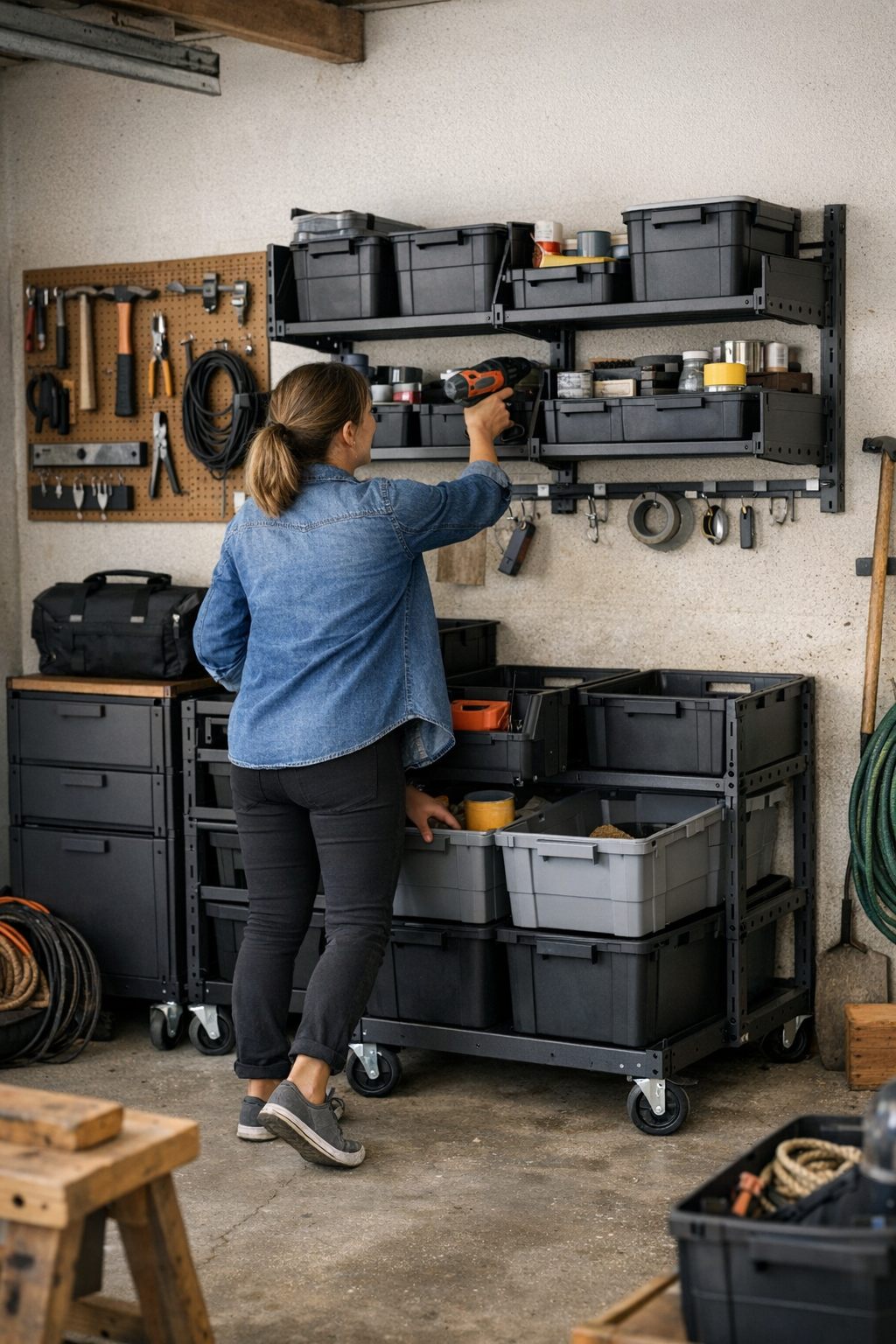
    This isn’t inevitable—nor does it require a full overhaul. The difference comes with a handful of focused fixes. Screw wall shelves into solid studs or masonry and watch the bounce disappear. Swap tiny casters for sturdy, wide wheels and feel the cart track true instead of fishtailing on cracked concrete. Even bracing a wobbly leg or shimming uneven feet transforms the way you navigate the zone: fewer interruptions, less tip-toeing, more willingness to actually use every shelf and bin as intended.

    Small reinforcements restore confidence. Heavy tools go back on high shelves without second-guessing. Rolling bins can finally be parked straight, even in the tightest footprint. Each adjustment chips away at wasted motion, letting every area do the job it’s meant for—no more letting awkward movement win out over usable space.

    Does Your System Still Move the Way You Need?

    Forget the perfect bubble-level reading on assembly day. Here’s the test: Put your normal workload onto the system. Rapidly slide bins off and on. Pull out a rolling chest and try to dock it one-handed between jobs. If you’re bracing units with your hip, constantly nudging pieces back into alignment, or making mental notes to “go easy on that shelf,” your storage is already slowing you down. Each workaround will grow—until you find yourself walking a longer route just to avoid the wobbly section.

    If you’re stacking bins at odd angles “so they won’t slide,” or building up catch-alls in zones meant for clear movement, it’s time to retune the setup—before workarounds become part of the daily script.

    Storage That Fits the Actual Room—Not the Ideal One

    Every real workspace is imperfect: old slabs slope, walls hide soft patches, thresholds catch tiny wheels, and years of small accidents leave dents and dips nobody sees on a floor plan. Wall storage might promise a clear floor but only if the surface and anchors take a beating day after day. Floor units might span the load, but a rock or slope turns them into blockers instead of helpers. Ignore these realities, and the setup itself becomes another obstacle—eating time, not saving it.

    The clever catalog layouts never last past week one. What matters isn’t the stated capacity or look, but how every shelf, bin, and bracket stands up to repeated, slightly messy, daily use—and still gives you the same open, reliable access day after day. You can tell if it’s working: resets take minutes, not whole afternoons, and every bin and tool returns to its home at speed, not after a careful game of shuffleboard with whatever drifted during the week.

    Making Order That Stays: From Looks to Lasting Function

    Some mess builds invisibly—a cabinet that never sits flush, an aisle that loses a foot’s width because a rolling chest keeps wandering, a utility bin that stays in overflow because it’s easier than re-clearing a wobbly shelf. The best setups don’t just tidy up for the photo—they stay aligned with your daily moves. Friction fades: anchored shelves, stable carts, and sturdy bases mean less wasted motion, less mental overhead, and fewer half-hour resets just to clear the area for one new project.

    This is what separates a space that “looks organized” from one that actually works. In a system that holds fast, you stop noticing the storage—because everything you need stays just where you intended. Zones remain clear, cabinets open without wrestling for space, overflow doesn’t claim your walkways, and at the end of even the busiest week, you can reset the room in minutes—not hours—because the foundation is right.

    Visit StackNest for practical, real-world storage solutions.