
Understanding Why Suction Power Drops
It’s a familiar scenario: you power on your blower or vacuum with high hopes, only to realize it’s barely pulling dirt or debris. Whether you’re dealing with fine sawdust from woodworking or collecting leaves clumped inside your garage, that sudden loss of suction can make what should be a straightforward cleanup frustrating and slow.
Many assume the motor is weakening or the machine is simply worn out. While these can be valid reasons, the root cause often goes unnoticed—your vacuum or blower’s filter is fighting a hidden battle.
How Filters Impact Airflow and Performance
Every blower and vacuum relies on a filter to trap dust, particles, and debris to protect the motor and prevent clogging. Over time, these filters accumulate ultra-fine dust that can build up deeply within the filter’s fibers, even when it looks relatively clean on the surface.
This buildup restricts airflow, starving your machine of the air circulation needed for strong suction. The result is a drop in performance, increased strain on the motor, and potentially reduced equipment lifespan.
In real-world use, I’ve seen brand-new vacuums lose half their suction power after just one day spent tackling drywall dust. Especially when dealing with fine particles like MDF or cement dust, cleaning the filter regularly, and more importantly, ensuring it’s functional, becomes critical.
The Hidden Problem of Damp Filters
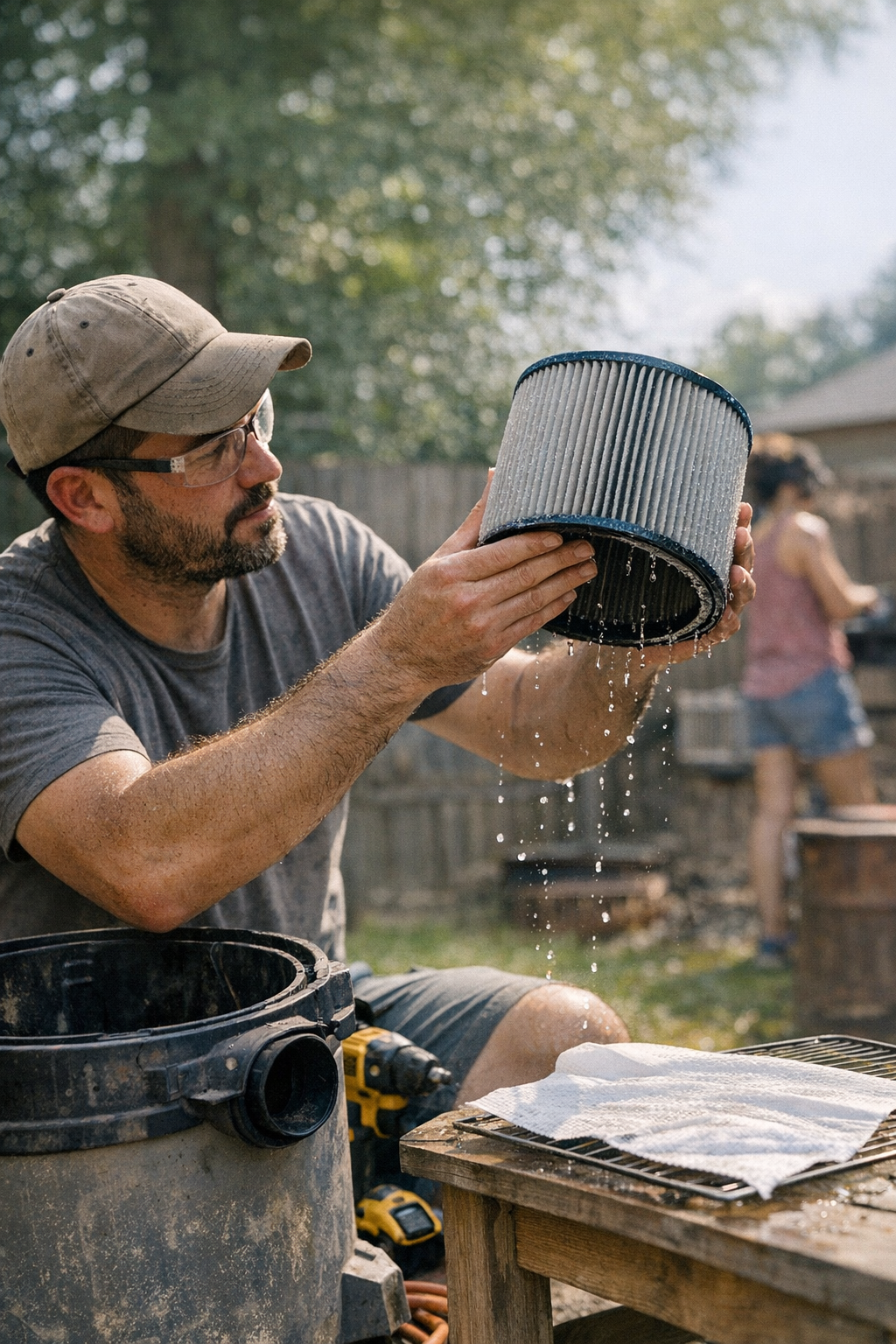
One of the biggest mistakes users make is reinstalling a filter before it is completely dry after washing. It’s tempting to rush and get right back to work, thinking a “mostly dry” filter is fine.
However, moisture trapped inside the filter binds with dust particles and creates a dense clog that chokes airflow. This not only reduces suction dramatically but can also encourage mold growth, leading to unpleasant odors.
A personal experience drives this home: I once quickly rinsed my filter before a big job and replaced it after just 20 minutes of drying. Despite appearances, the filter remained damp inside. My vacuum’s suction was weak, and it took me a full week of troubleshooting before realizing it was the damp filter causing the problems. Once dried fully, suction instantly returned to normal.
Best Practices for Cleaning and Drying Filters
- Allow Full Drying Time: After washing, set your filter in a warm, airy place. Outdoors is ideal, but a well-ventilated indoor area with a fan works well too.
- Position Filters to Maximize Airflow: Place the filter so air circulates through all sides for even drying. Avoid leaving it flat on a surface where moisture can pool.
- Be Patient: Let the filter dry overnight if possible. Only reinstall it when it feels completely dry—both on the surface and deep in the folds.
- Use Low Heat Wisely: If you’re pressed for time, tap out excess water and use a hair dryer on a low heat setting or place the filter near a heater—never directly contact the heat source to avoid damaging the filter material.
- Keep a Spare Filter: Having an extra filter ready means you can swap out a dirty or damp one immediately, avoiding downtime.
Refresh Tip: Change How You View Maintenance Time
When you’re focused on the work ahead, it’s tempting to view maintenance tasks like drying filters as interruptions or delays. Try reframing this routine as an essential investment in your machine’s longevity and your own efficiency.
Think of drying your filter fully not as waiting but as preparing your tool so it performs flawlessly, reduces future breakdowns, and grows your confidence for tough jobs. This small shift in mindset turns patience into a productivity advantage rather than a frustrating pause.
Why This Helps You Work Smarter
Once I made fully drying filters a non-negotiable step, cleanup became noticeably easier. The blower’s motor ran quieter, suction stayed strong throughout the job, and tasks finished faster without repeated passes. There was no more that dusty, musty exhaust smell—just solid, clean power.
Whether you’re a contractor on site or a DIYer at home, clean and dry filters help you get the job done right the first time. Saving time and reducing machine strain add up to real results week after week.
In Summary
Don’t underestimate the critical role your filter plays in your blower or vacuum’s performance. Clogged or damp filters severely cut suction power, cause motor strain, and extend cleanup time.
Make a habit of thoroughly drying your filters after cleaning and only reinstall them when they’re completely moisture-free. This simple but often overlooked step restores airflow, boosts suction, and protects your equipment’s health.
By taking a little extra care with your filter maintenance, you’ll avoid needless frustration, enjoy smoother jobs, and extend the life of the machines that keep your work moving.