
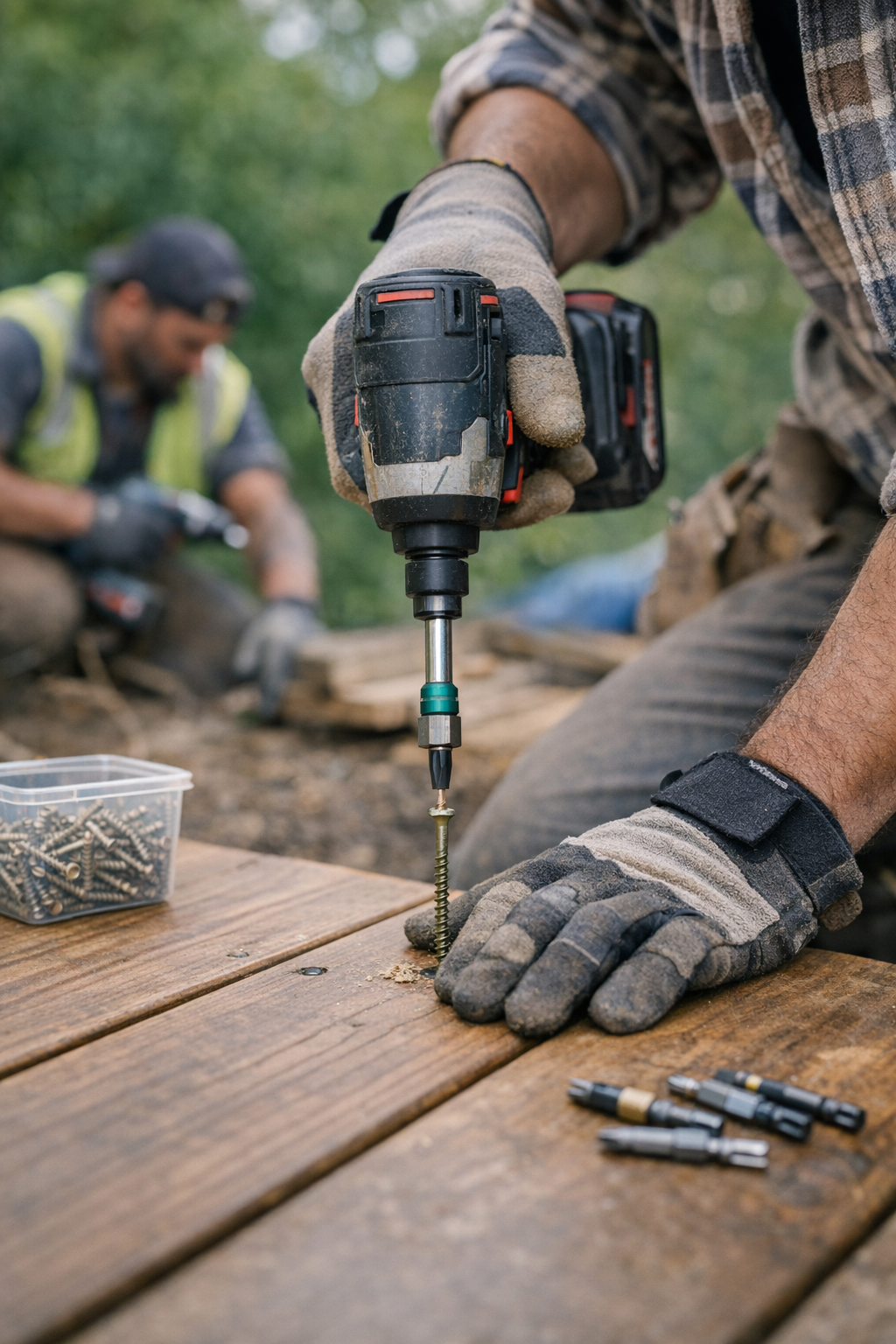
Unlocking Efficiency: The Impact of Bit Selection on Fastening Speed
There’s an almost hypnotic satisfaction in watching an impact driver rhythmically sink screws, whether you’re assembling decks, hanging drywall, or tackling cabinetry. That steady churning sound marks progress and efficiency, turning what could be hours of work into minutes when you use the right tools. But surprisingly, the key to doubling your fastening speed often lies not in upgrading your impact driver, but in choosing the right bit.
Many professionals and DIYers alike invest in powerful impact drivers, expecting major performance leaps. Yet, it’s a common discovery that even a top-tier driver can underperform if paired with a mismatched or worn bit. The often-overlooked secret is that bits play a pivotal role in driving speed, precision, and the prevention of stripped screws.
Why Bit Quality and Fit Matter More Than You Think
Initially, most users rely on inexpensive multi-bit sets or the default bits included with a driver. Standard Phillips #2, square drive, or Torx bits are common choices. Over time, however, issues start cropping up—bits cam out, screws strip, and work slows down. Even the most powerful driver won’t compensate for these setbacks.
Here’s what really happens: a poorly fitting or worn bit fails to engage the screw head properly, leading to slippage and wasted energy. This wasted motion translates into more pauses, more re-drives, and ultimately more time spent. A small investment in the right bit can eliminate these headaches and bring noticeable productivity gains.
Case in Point: Real-World Time Savings
On a cabinet installation I handled last year, switching from a generic Phillips bit to a magnetized, milled Torx bit matched to the screw size cut my assembly time nearly in half. This wasn’t a flashy upgrade—just a precise, fitted bit that reduced cam-out and held screws firmly, so I could keep a steady work rhythm without interruption.
The difference? While the impact driver’s power remained consistent, better bit engagement ensured every screw seated cleanly at the first attempt. This smooth flow reduced wrist strain and gave the finished project a clean, professional appearance.
Choosing the Right Bit Profile for Your Material
Bit profiles significantly influence fastening outcomes, especially depending on the material you’re working with. For example, on pressure-treated lumber or composite decking, a Torx T25 bit drastically reduces cam-out compared to a Phillips head. The star-shaped recess design spreads torque more evenly and generates deeper engagement with the screw.
Many builders have noted cam-out incidents cut by more than half when switching properly sized Torx bits, especially with impact-rated, hardened steel (S2 grade or better) bits. Bits in the 2″ to 3″ length range that are magnetized hold screws securely and reduce drop losses during installation—an invaluable benefit when working overhead or in tight spots.
Impact-Rated vs. Standard Bits
Some bits are simply stamped metal, while others are precisely milled and heat-treated for durability. Using impact-rated bits designed to withstand the high torque and concussive impacts of an impact driver prevents twisting or deformation under load. Over dozens or hundreds of drives, this stability translates to fewer stripped screws and less need for bit replacement.
Tips for Maintaining Bit Performance Over Time
One of the most common, yet avoidable, causes of slowdowns is bit wear. Bits gradually lose their edges, causing more slippage and increasing the torque required to drive screws. If you notice your driver skipping or you have to push unusually hard, it’s time for fresh bits.
Keep a rotation of bits available on larger jobs. Swapping out dull bits before they cause stripped screws saves time and protects your project’s finish.
Match Bit Length and Torque to Your Screws
For thick hardwood or plywood panels, use 2″ to 3″ impact-rated bits sized correctly for your screws. Checking the teeth per inch (TPI) and ensuring bit-screw compatibility can enhance engagement and reduce cam-out.
Refresh Tip: Step Back and Reassess Your Workflow
When you feel stuck or slowed, it’s easy to blame your tools and push harder. Instead, take a moment to reassess. Are you using the right bit for your screws and materials? Does the bit fit snugly without wobble? Can it hold screws magnetically to reduce time spent drops or retrievals?
This subtle shift in perspective—from increasing power to adjusting fit—often yields the biggest gains in speed and quality. It’s a behavioral upgrade that requires no new tools, just an intentional approach to preparation.
Common Mistakes and How to Avoid Them
- Using worn or rounded bits: They increase cam-out and risk ruining faces and edges.
- Ignoring bit fit: Loose fits lead to wasted torque and screw damage.
- Sticking with Phillips on tough materials: Switching to Torx or square drives dramatically reduces slippage.
Real-Life Comparison: Phillips vs. Torx on a Commercial Deck Build
On a recent commercial deck project, two crews worked side-by-side with different bits. The team using Phillips bits replaced bits twice by midday, experienced 20% more stripped screws, and spent extra hours fixing bolt-on post connections. Meanwhile, the crew using properly matched Torx bits finished ahead of schedule, with fewer bit replacements, cleaner results, and less fatigue.
This highlights the measurable impact bit selection has on efficiency and quality in real-world scenarios.
Actionable Tips for Your Next Project
- Before starting, take 10 seconds to match your bit to your screws. Check for wobble and slip at the head.
- Choose magnetized, impact-rated bits tailored to your screw profile and length for better control and fewer drops.
- Keep spare bits on hand and replace them at the first sign of wear to maintain consistent torque transfer.
In summary, the difference between a smooth, efficient fastening job and a frustrating, slow one often comes down to bits—not just the driver. Prioritizing fit, magnetization, and profile matching unlocks a step change in productivity, wrist comfort, and finish quality.
Taking these simple steps before your next build or repair can shave hours off your work time, reduce errors, and save you from costly rework. The smallest upgrade—your bit choice—can truly double your fastening speed.