
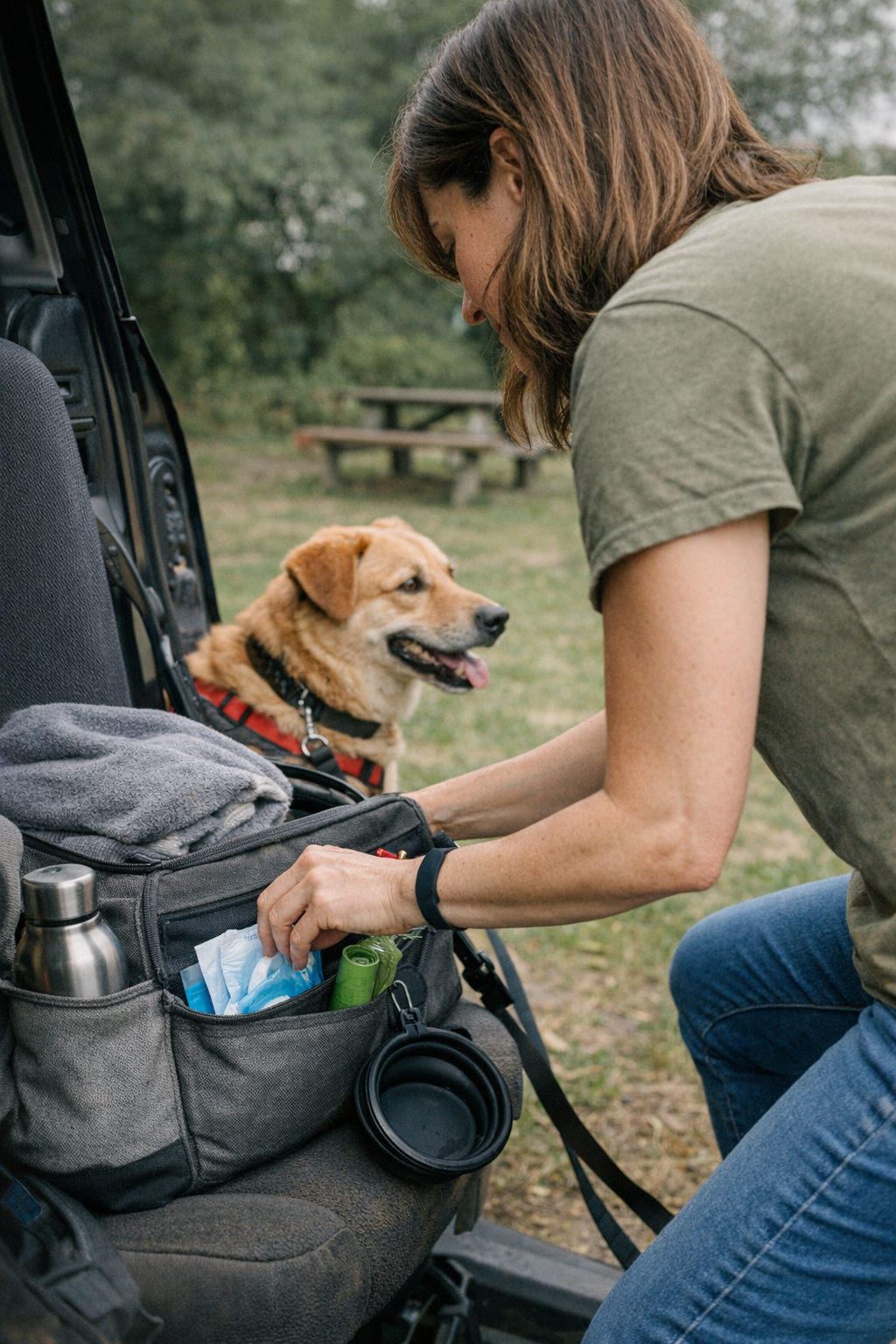
The “organized” pet travel bag lasts about one stop before falling apart under real use. Zippers, pouches, and compartments that impress at home stall you at the curbside—the moment you actually need a wipe, leash, or bowl, they’re never in easy reach. What seemed efficient becomes a series of awkward pauses: ransacking a tidy pouch while your dog whines, digging for cleanup bags already buried, handing off a leash just to unzip another compartment. Most pet owners know this tension—travel gear that promises order, but delivers dozens of friction points each time you try to get moving again. That gap between appearance and actual handling is where most pet setups start to fail, and where PawGoTravel’s world of movement-focused gear comes in.
Looking Ready Does Not Mean Working Smoothly
The illusion of “travel ready” falls apart the first time you reach for something with one hand on a leash. What you packed for neatness—a stack of gear in designated places—works until your bowl wedges under blankets or wipes slide out of sight. Suddenly, your most-used items trade places with things you’ll barely touch all day:
- The leash slides beneath the comfort blanket, forcing a full shuffle to yank it free.
- Collapsible bowl gets pinned against wipes, blocking both at once.
- Cleanup bags “right on top” at departure end up trapped under shuffling after the first rest break.
Each return to your seat-side routine exposes another layer of messy overlap. Fumbling through stacked zippers and deep pockets with a restless dog turning circles isn’t a rare nuisance—it’s the rule, not the exception. The kitchen-counter calm of your setup fades the moment you hit real-world movement speed.
Where Repeated Use Exposes Weak Spots
Try making it through three roadside stops without getting stalled. Even with a “packed kit,” early control erodes fast. At Stop One, your bowl fills, paws wipe, leash seems easy to stow. By Stop Two, the wipes have disappeared behind a crumpled comfort item, the leash-carry loop hooks the seatbelt, and the bowl has migrated to the wrong pouch. Each pause stretches into a forced reshuffle—sense of readiness drops, and your pet’s impatience rises by the minute.
After a handful of stops, you can’t ignore how an “organized” look turns clumsy in repeat use. You lose time, flow, and patience with each small workaround. So does your dog, now antsy from waiting through every scramble.
Small Problems Become Habitual Frustrations
None of these snags feels dramatic, but they don’t go away. Instead, they build up:
- Always swapping layers to fish out one quick-use item, knowing it’ll get repacked wrong after.
- Guessing wrong on which compartment holds the right gear, wasting precious seconds and having to rezip everything.
- Cleanup bags dropping behind comfort gear just when a mess happens—so you juggle both pet and pouch, one-handed, at the worst moment.
- Every return-to-seat meaning one more “clean reset” instead of a simple toss-and-go.
These aren’t just physical delays—they grind down your patience and your trip’s pace. By the afternoon, what started as “organized” becomes a cycle of fumbled restarts and missed rhythms, making you dread each stop.
Design Around Movement—Not Just Appearance
It’s not how packed your travel bag looks; it’s how instantly you can move again after stopping. Immaculate slot-by-slot organization only works when you have two free hands—and no urgent need. The friction adds up because:
- Overly partitioned setups force you to unclip, unzip, and navigate layers—impossible when balancing a leash, keys, and an impatient dog.
- Stacked layouts bury your high-frequency essentials under low-use extras, guaranteeing a repack or a mess at every stop.
- Blended pockets (pet stuff and owner items together) create daily collisions—reaching for your phone jostles the wipes, and you’re back to rearranging, again.
With each unscheduled pause, setups prized for being “visually tidy” reveal their flaw. Instead of helping you move, they slow you down—retrieving, shifting, and re-zipping instead of grabbing and going. You recover from your gear, not with it.
What Actually Works Over a Full Day of Pet Travel?
The best setups aren’t always pretty—they’re built for pressure. Make your highest-demand items visible and grabbable with one reach.
- Stash wipes, cleanup bags, and water bowls at the exterior, seat-side, or in the topmost pouch. Skip the nesting; skip deep zippers—access beats order.
- Favor a slightly roomy outer pocket over a photo-ready arrangement. Loose but reachable is worth more than stacked but slow, especially with your leash hand busy.
- Expect to return certain items (like bowls and sanitizer) to “grab again” spots, not their home slots. Your setup should flow, not demand a tidy reset every single time.
This may mean your bag looks jumbled, but if you never pause to rummage, it’s working. The reward is simple: more moving, fewer restarts, and a routine that doesn’t collapse the minute things get wet, messy, or out of order.
Minute-by-Minute: A Real Travel Scene
Picture pulling over for a fast break—dog desperate for water, you for a wipe. With a flow-first setup, there’s no hunt: unzip, reach out, use. No “once-a-day” supplies blocking the items you grab hourly. You close up and roll out with a single toss, not another repacking session. When you repeat this across a dozen stops, patience extends—nothing slows you or your dog from jumping back into motion. Your bag didn’t get bigger; it just started working with your habits, not against them.
When “Prepared” Still Feels Slow—Spotting the Pattern
The real cost appears after a few journeys: if every stop turns into a gear reshuffle, your “organized kit” is built for storage, not travel. Warning signs surface quickly:
- You keep grabbing for the same thing, only to hit a wall—or find it buried again.
- You’re forced to empty out half the bag for one high-frequency item, every single time.
- Your at-home sorting logic can’t survive car seat chaos, random messes, or side-of-the-road interruptions.
- Comfort extras smooth one moment, but add steps and block fast returns in the next.
Genuine control isn’t “everything in a place.” It’s having the right things instantly in play, no matter how many stops you make. Any setup should flex for quick movement, not just storage snapshots.
The Small, Repeated Wins of Movement-First Travel Gear
Shift your structure and you’ll notice new wins:
- Cleanup matches your trip, not the other way around—mess is handled in motion, not in extra pauses.
- Impulse stops (muddy park, spilled bowl, urgent leash switch) don’t force an entire unpacking—the right item always waits up front.
- No more scrambling, reassembling, or hunting beneath comfort layers—quick access means routines that survive all-day use, not just morning confidence.
- Your attention (and your pet’s patience) holds up—because every restart feels natural, not like starting from scratch.
No setup makes pet travel perfect. The next snag always finds its way in. But each move toward a movement-first design makes the gap between looking packed and actually traveling smoother—and that difference becomes non-negotiable once you’ve lived it. Smoother trips, less delay, and a pet that moves with you, not just beside you.
Find practical pet travel gear designed for real-world movement and seat-side control at PawGoTravel.