
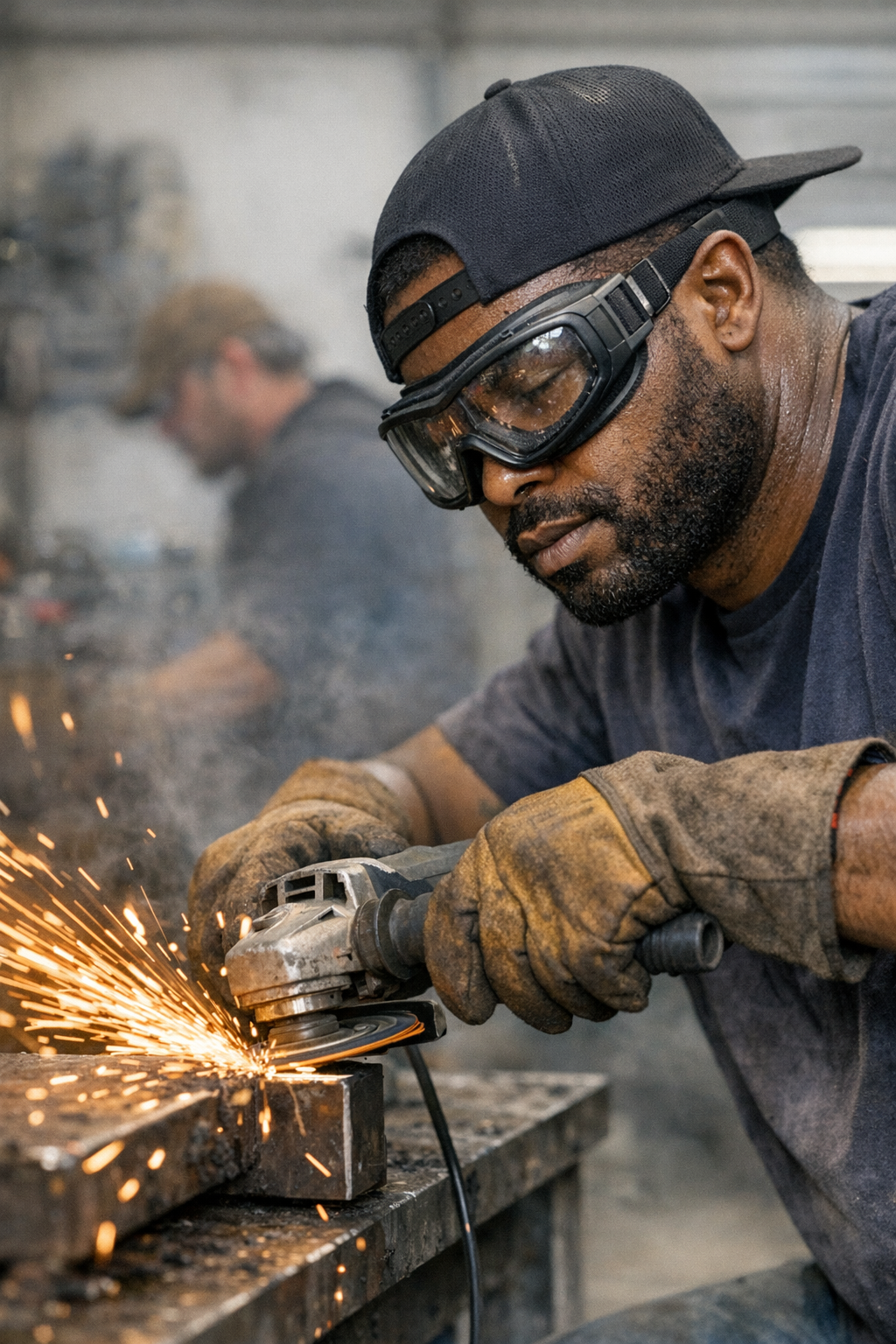
The grind doesn’t pause for comfort—not when the sparks are flying, dust is everywhere, and your eyes sting before lunch. In the thick of a shop or garage, whether you’re running a cutoff wheel, sanding down weld spatter, or drilling out a broken bolt, eye protection becomes the only thing between you and a hard stop. Every routine task—chasing weld lines on a frame, carving away stubborn rust, swapping a fresh blade into the grinder—becomes a pressure test for your safety gear. If your protection fails, you feel it long before you finish the job.
When Safety Glasses Get Outworked
Most glasses and goggles look solid at first—clean, impact-rated, and unassuming while you knock off the first round of slag. But by the third battery swap or the fourth sanding pass, trouble sneaks in. Grinding dust creeps through vent holes, fog streaks the lens after an hour in humid air, and suddenly wiping your glasses every ten minutes is baked into your routine. Try drilling overhead or cutting at an awkward angle, and you’ll notice how fast debris finds the path of least resistance.
This friction snowballs quick. As vision blurs and sting sets in, every stop-and-wipe slows the pace. You miss details—a wandering drill bit, a crooked cut, a spatter rougher than it looks. Halfway through the shift, your eyes are burning, the lens is scratched, and fine work feels like guesswork. The discomfort doesn’t just hurt—it steals your accuracy and rhythm one gritty blink at a time.
Open Frames, Open Invitations for Dust
The truth: most “shop-ready” glasses aren’t built for a full day’s worth of sparks, fines, and flying grit. Catalog photos miss the reality—workbenches stacked with tools, air pulsing with metal and sawdust, ventilation thick with past jobs. Minutes after starting, side gaps on open glasses let in swirling debris. Try cutting fasteners near a wall or grinding overhead, and fine particulate drifts in with the air. Every cramped fix or awkward cut turns eyewear gaps into a direct line for trouble.
Once the first grain gets past, it’s a slippery slope—constant blinking, stops for relief, a quick dash to the sink. Over one morning, the rhythm is gone. You’re trading focus for eye drops, and tough angles only make problems worse. You feel the toll well before the job’s done.
Side-by-Side: Standard Glasses vs. Sealed Goggles
The difference cuts in when the work stacks up. Put in hours prepping welds, or run a grinder until arms buzz, and you’ve run both: open glasses leave you in a fog of lens wipes and cleanup breaks. Switch to sealed goggles—especially with a foam gasket and a solid anti-fog coating—and the cycle breaks. No more surprise grit in the eye or washed-out sight lines. Suddenly, finishing a tricky edge or lining up bolts is less about fighting debris and more about finishing the task clean.
Why Anti-Fog Actually Matters
Anyone pushed through a muggy shop knows: fog is more than hype. Whether it’s the heat from cutting through channel iron or just thick summer air, cheap coatings fog fast, forcing you to peel off protection or risk working blind. Real anti-fog lenses, paired with a full gasket, can cut downtime from every half-hour to a rare midday break for a quick swipe. That’s the shift: not magic, but steady, clear vision that lets you grind, cut, and drill without planned interruptions.
And no, sealed goggles don’t have to suffocate. Take two minutes to tweak the strap—not too tight, just enough to close the gaps. Suddenly, it’s not a fight for comfort. Your eyes stay fresher over a four-hour weld prep, not because you’re lucky, but because grit and sweat never got in. Those rare cleanings? Now they’re preventative, not desperate firefights.
Confined Corners and Bad Airflow Make It Worse
Shops aren’t airy studios. Cram behind the chop saw, fix something under a workbench, or angle in close to fasten a bracket and the air thickens. Extraction fans can’t hit every corner, and suspended fines hang in the stillness. In these dead spots, even brand-new glasses can’t cope—grit settles, gaskets gap, irritation builds. Red eyes become routine, and what seemed like overkill in the catalog becomes minimum spec by the end of a long week in cramped quarters.
Spot the Warning Signs
If you’re counting cleaning breaks, blinking out grit, or getting the familiar burn by mid-shift, your eyewear is tapped out. Tradespeople recognize it immediately: detail work gets sloppier, time adds up lost to cleaning, and you’re rushing when focus should be sharpest. Waiting until problems stack up just means longer cleanup, wasted consumables, and sometimes even redoing rushed work—the hidden cost of inadequate eye protection.
Real Payoff: Consistency and Confidence on the Job
The proof shows in real projects. On a multi-day fabrication job, one switch to high-seal, anti-fog goggles meant no more lost minutes to cleaning or chasing debris. The crew rolled through weld setup and abrasive passes without breaking stride. Eyes were less raw, details sharper, battery swaps faster. The final cleanup? Focused on dusting the bench, not nursing an avoidable eye strain. That’s not a miracle—it’s what happens when the gear finally matches the mess of real shop life.
Pro Tip: Fit Matters More Than Spec Sheets
Don’t overtighten. Foam-seal goggles only need to be snug—enough to close the gap, not enough to dig in. Adjust, look for daylight leaking around the edge, and back off at the first sign of pressure. Tuck a microfiber near the tool station for quick maintenance, and get in the habit of checking the seal whenever you shift hats, masks, or headbands. Little rituals add up to steady all-day comfort and grind sessions without distractions.
The Bottom Line for Working Shops
Tool upgrades aren’t about the spec sheet—they’re about surviving the longest days without letting old frustrations creep back in. The right eye protection in messy, demanding shop conditions isn’t an extravagance; it’s the safeguard that keeps your work sharp, your routine smooth, and your eyes ready for one more round of sparks and sawdust. The gain isn’t superhuman speed—it’s stubborn consistency and clarity that’s hard to notice until you lose it.
Seeing dust sneaking in, frequent lens wipes, or the first red-tinged warning signals? That’s your cue. Sealed, anti-fog goggles aren’t overkill—they’re what lets you work the shop instead of fighting through it, every pass, every long day.