
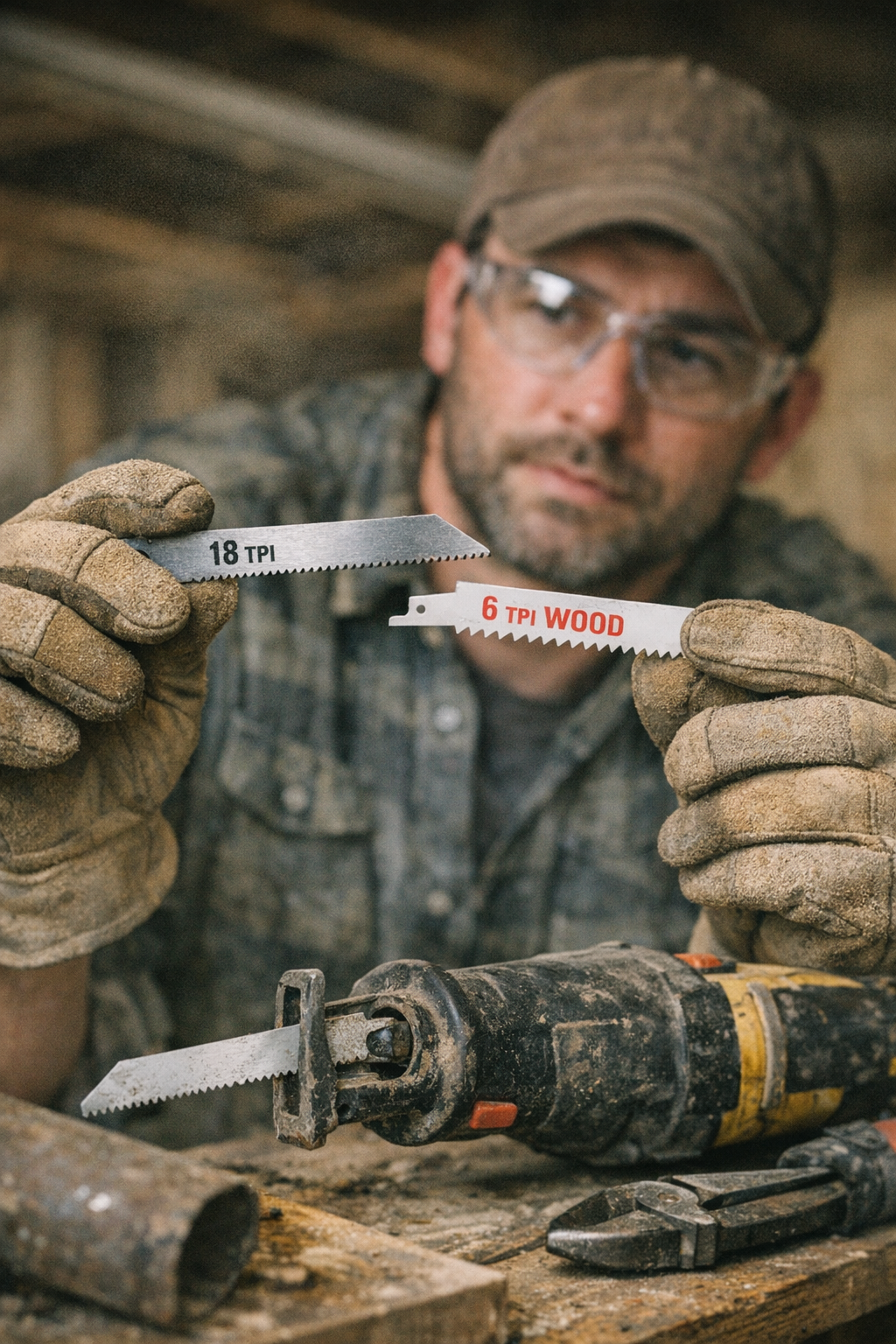
You know it the instant your saw starts fighting you—the job just got longer and rougher, and it’s not your hands or the tool that slipped. It’s the blade. One buzz too many through a corroded pipe, one shudder as teeth catch the wrong grain, and suddenly you’re stuck finessing every inch. Whether you’re breaking down a stack of pressure-treated studs in a muggy crawlspace or making a desperate, awkward cut through steel conduit by flashlight, the wrong blade turns a quick job into a slow grind—sometimes literally.
That Moment You Realize the Blade Isn’t Right
It’s never when you first pull the trigger—you always feel it a few seconds late. There’s a subtle drag, maybe less sawdust spraying, or you hear the saw bog down halfway through the cut. Sometimes it’s the smell—acrid, metallic, maybe a hint of burned wood or steel. Doesn’t matter if you’re sweating through demo by noon or swapping blades out of frustration at midnight; once you’re mid-cut, the blade you picked makes or breaks your momentum. And usually, when you realize you’ve picked wrong, it’s already cost you time and rhythm you won’t get back.
The Difference You Can Feel (and Sometimes Regret)
Metal and wood reciprocating saw blades don’t just look a little different—they work in completely different moods. Wood blades: Large, hooked teeth (6–10 TPI) blast through framing like there’s a deadline, huge chips flying. Metal blades: Finer, tightly packed teeth (14–24+ TPI), built to grind steadily through conduit or rebar, not splinters. The distinction isn’t just in TPI and steel grade—you can feel it with a finger: one set of teeth spikes, the other almost sandpaper-smooth.
Get it wrong and you pay for it. Run a wood blade over pipe and you’ll stall, overheat, maybe even warp the blade in a few inches. Try pulling a metal blade through treated 2×4 and it smokes and squeals, burning both your patience and the wood itself. The telltale pile of chips versus fine metallic dust, a blue tint creeping toward the teeth after metal work, is all evidence of a blade that’s outmatched by the job—or a job outlasting your tools.
What Really Happens on Real Jobsites
Shop lights are rare. You’re cutting between joists overhead, or bracing yourself on muddy plywood to finish a cut in the rain before dark. Too often, you grab whatever blade’s already loaded, hoping for good enough—until you hit a hidden nail with a wood blade and turn sharp teeth to useless nubs in three seconds. Or force a slow-cutting steel blade through old pine, where it bind and scorches a ragged track instead of slicing clean.
The cost is rarely just a ruined blade—it’s the lost flow, the extra grip strength needed when the saw kicks, and the fatigue as each mistake slows you down. When it happens, the whole pace of the job shifts. You start looking for spares, arguing with coworkers over the last decent blade, or end up carving lopsided edges just to get through and move on. No schedule or battery lasts through a fight with the wrong blade.
Learning Blade Selection the Hard Way
It took too many stalls, burnt blades, and aching wrists before I started matching blade and job with more discipline. A few habits that finally stuck:
- When ripping out framing or demoing lumber: Reach for a 6–8 TPI wood blade. It pulls itself straight through beams and wall studs without bogging down, keeping you in control, especially on awkward overhead cuts.
- For conduit, light steel, or EMT: Go with a bi-metal blade, 14–18 TPI. The finer teeth cut cleanly, with less edge flaring and fewer sparks, instead of chewing the metal apart and burning out after a few holes.
One lesson I learned the expensive way: Never start a tricky cut with the saw at full speed, especially in metal. Squeeze the trigger slow and let the teeth grab before ramping up. It feels slower, but saves blades—and your grip—from sudden stalling and violent rebounds. Rushing at top speed (2200–3000 strokes per minute) just cooks the blade in seconds. That’s not a theory—I’ve trashed brand new blades in a single cut, all because impatience got the better of me.
“Universal” Blades Always Underperform When It Counts
No one wants to haul two dozen blades across a jobsite. Universal blades sound great—one version for wood and metal—but in real work, they’re always the compromise. You get splintered, slow cuts in wood and dull, dragging performance in steel. You end up tired and frustrated and the blades don’t last half as long. There’s no shortcut: the right blade for each task is worth the switch—even if you end up juggling blades with gloved hands in the dark.
Blade Wear: Catch It Before It Trashes the Work
Sometimes a bend or missing tooth is obvious. More often, it’s a creeping increase in vibration or the saw grabbing at the start of every stroke. A blade that heats fast or takes on a bluish tint after steel work is warning you the edge is mostly gone. Ignore those hints, and you’ll waste more time straightening out crooked, scorched cuts than you did saving money on blades. Swapping a blade early beats fighting a tool that’s working against you for the rest of the day.
Fast Blade Picks for the Most Common Cuts
- Steel or conduit up to 1/4″: A 14–18 TPI metal blade cuts with control and endurance. Ideal for EMT and thicker pipes where you need smooth progression, not stalling or sparking halfway through.
- Thin-gauge metals: If there’s any chatter, a 24 TPI or finer blade will glide instead of bind, making sheet metal less of a headache.
- Lumber, fast demo, or decking: A 6–10 TPI wood blade keeps the tool moving fast and straight, so you end up with clean cuts and less wear on your arms.
Small Habit, Big Difference
Too many people treat blade choice as an afterthought, something you sort out when things start going wrong. But every pro knows: choose right, and you get smoother cuts, less stalling, and fewer battery swaps, especially late in the day when everyone’s tired. Five minutes spent checking blades and matching TPI, a quick touch to test those teeth, and you’re less likely to fight through another afternoon of avoidable rework.
It won’t make you invincible, but it does keep the work moving—and that always matters more than theory or specs. If you’re counting on your saw for rough cuts and clean results, the right blade is what makes the difference between going home with energy… or frustration.
Find blades made for your kind of work—and gear built to keep up—at Gumboll.