
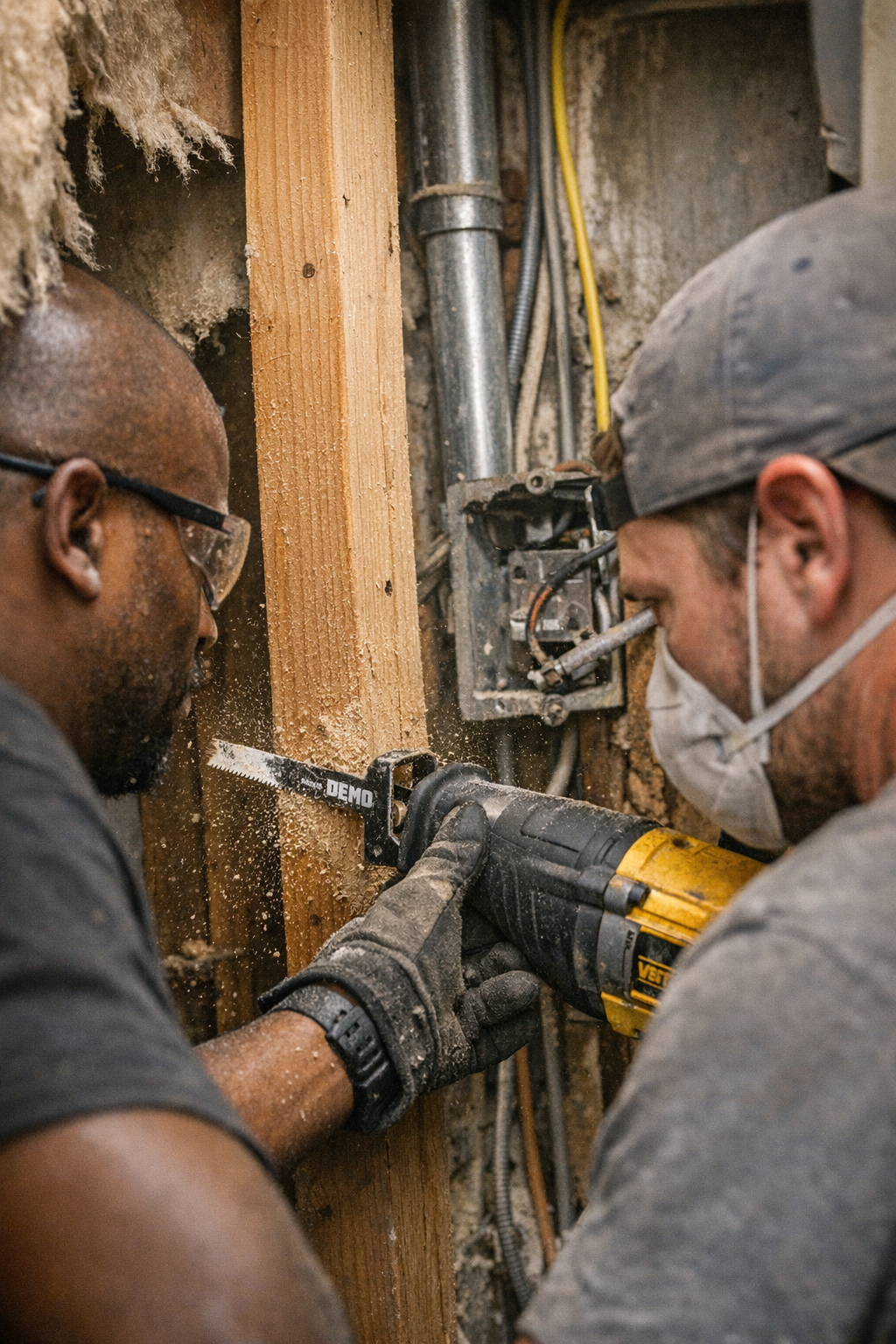
Demolition in cramped quarters is a test of both nerve and muscle. One minute you’re wedged inside a closet, drywall dust settling in your hair, arm jammed against a stud, saw thrumming so close to your chest you can feel each vibration through your ribs. In tight, awkward spots, the saw’s shudder isn’t just uncomfortable—it’s the difference between making a clean cut or ending up with burning forearms, bent blades, and extra repair work before you can even think about moving on.
Why Saw Vibration Stops Work When You Least Expect It
If you’ve ever tried to maneuver a reciprocating saw while half-crawled behind a water heater, you know the stakes: high vibration strips away precision and energy, second by second. The whole tool can rattle loose in your hand just when you need a controlled finish. Bracing for the next lurch as the blade binds or skitters, you’re not just fighting the material—you’re fighting the tool itself. There’s never enough elbow room. Pipes wait to get nicked, wires hang in the way, and all you feel is pressure to get out before anyone notices the delay.
Vibration fades into the background on wide-open demo jobs. In the crawlspaces and closets, it’s the silent enemy that drains speed and control.
The Fix Starts at the Trigger: Speed, Blade Choice, and Setup in Tight Spots
Cranking up saw speed is the rookie mistake. Under pressure, the typical reflex is to max out strokes per minute. In reality, that’s a recipe for the saw to buck and chatter—burning out your grip and mangling the cut line. Dialing down to around 1,800 SPM, with orbital mode off or at its lowest, reduces the shockwaves and lets the blade eat steadily into the work.
I used to rush, thinking speed was progress. But slowing things down let the blade seat into the cut—less bouncing, less wild arm fatigue. The less you chase the tool, the less likely you are to slip and need extra patching later.
The 6 TPI Demolition Blade: Underrated for Keeping Cuts Clean (and Less Painful)
Packages promise every blade is “demo-ready,” but that promise dissolves when you’re working overhead or saw-twisting through doubled-up studs. Higher TPI blades (the ones that buzz and scream) just skated over wood, especially with hidden nails. I switched to a 6 TPI demolition blade—chunkier teeth, thicker body. Combine that with a slower SPM, and the difference stood out fast. The blade chomped through framing without wandering, and the tool’s feedback evened out—less unpredictability, fewer missed cuts.
On older hardwood, the cut tracked straight and finished fast. Softer sheet goods or underlayment still threw curveballs, sometimes bogging or shaking more than expected. Even with the right blade and speed, you end up reading each new material—there’s no one-setting-fits-all. Some pieces demand patience or a mid-job blade swap.
Jobsite Reality: Vibration Surprises, Missed Cuts, and the Small Fixes That Help
You don’t always get to practice changes in a calm moment—it’s when insulation’s falling in your face, or you’re jostling for space with another tradesperson who just started up the shop vac. Cut too quickly, and the saw shimmies off its line; squeeze the trigger too hard, and the blade jumps, slapping your wrist. Instinct wants to clamp down harder, but that just pumps the shakes deeper into your arm and forces you to waste time chasing accuracy.
It’s not just about comfort—it’s about doing clean work, the first time. Forced corrections blow clouds of dust into your cut. Rough edges slow the project because you have to patch, sand, or explain to the next crew why the hole is too wide. Extra fatigue creeps in the longer you fight the tool, and the crew can read the struggle before you even look up.
When “Slower” Actually Means Smoother, Faster, and Less Fatigue
It took enough beat-up fingertips and stuttered cuts to learn: in cramped demolition, patience is the shortcut. Back off to 1,800 SPM, run a demo-grade blade, and you’ll get more control, less numbness, and almost no tangled-up mistakes. It’s not glamorous—cuts take a few seconds longer. But fewer jagged gouges and less do-over work add up. Sawing slower lets the teeth bite, the blade stops skating, and you end up with holes placed exactly where you want them, not where vibration pushes them.
No setup’s perfect. Some awkward plates or old caked-on nails still bounce the tool, no matter how much you adjust. But the combination of right speed, sturdy blade, and a relaxed grip consistently trims back soreness and post-job fix-it lists.
Hand Pressure: The Trick to Making the Saw Work, Not Fight
I lost count of how often I tried to muscle my way past vibration—wrists locked, knuckles white, hands gassed after a few cuts. The real breakthrough came from a steady, neutral grip—just enough to guide, never to strangle. When you let the tool ride, keep the shoe firm against the surface, and avoid gripping like you’re wringing out a rag, the wobbles fade. That stable shoe contact matters more than squeezing harder. Over-gripping just makes you lose finesse, and it amplifies every jump.
Adapting in Real Time: Materials Change, Techniques Adjust
Vibration control isn’t some fixed checklist you check off with every project. Sometimes, you hit a run of joists that cut smoothly—until you find a patch of layered plywood that bounces every tooth. That’s when you adjust without thinking: lighten up, change angle, clear out packed sawdust, or pause to swap a dull blade. The best routines aren’t fancy: quick brushes to keep the shoe clean, checking tightness before tough cuts, and swapping in a sharper blade a little sooner than your old habits suggest.
These small habits save your hands—and your workflow. Less downtime, more accuracy, and a lot less of that feeling where every bone in your hand aches by lunch.
Lessons That Stick: How Smart Adjustments Keep Tools Working with You
There’s no secret setting that erases all vibration or makes tight demolition effortless. But tuning your speed, swapping the blade for the job, and paying attention to how the tool “feels” are real advantages—especially when inches matter.
If you feel the saw drifting, or the vibration ramps up, that’s your signal to adjust—don’t just power through it. Most improvement happens by reading your own fatigue, re-gripping, slowing down, or pausing to check a blade. You finish smarter, not more tired, and the jobsite sees less wasted motion and cleaner results.
On your next tight patch or awkward demo, try this: start slow, set up with the right blade, and let the tool’s feedback guide you. You’ll feel the difference—in your arms, and in the finished cut.