
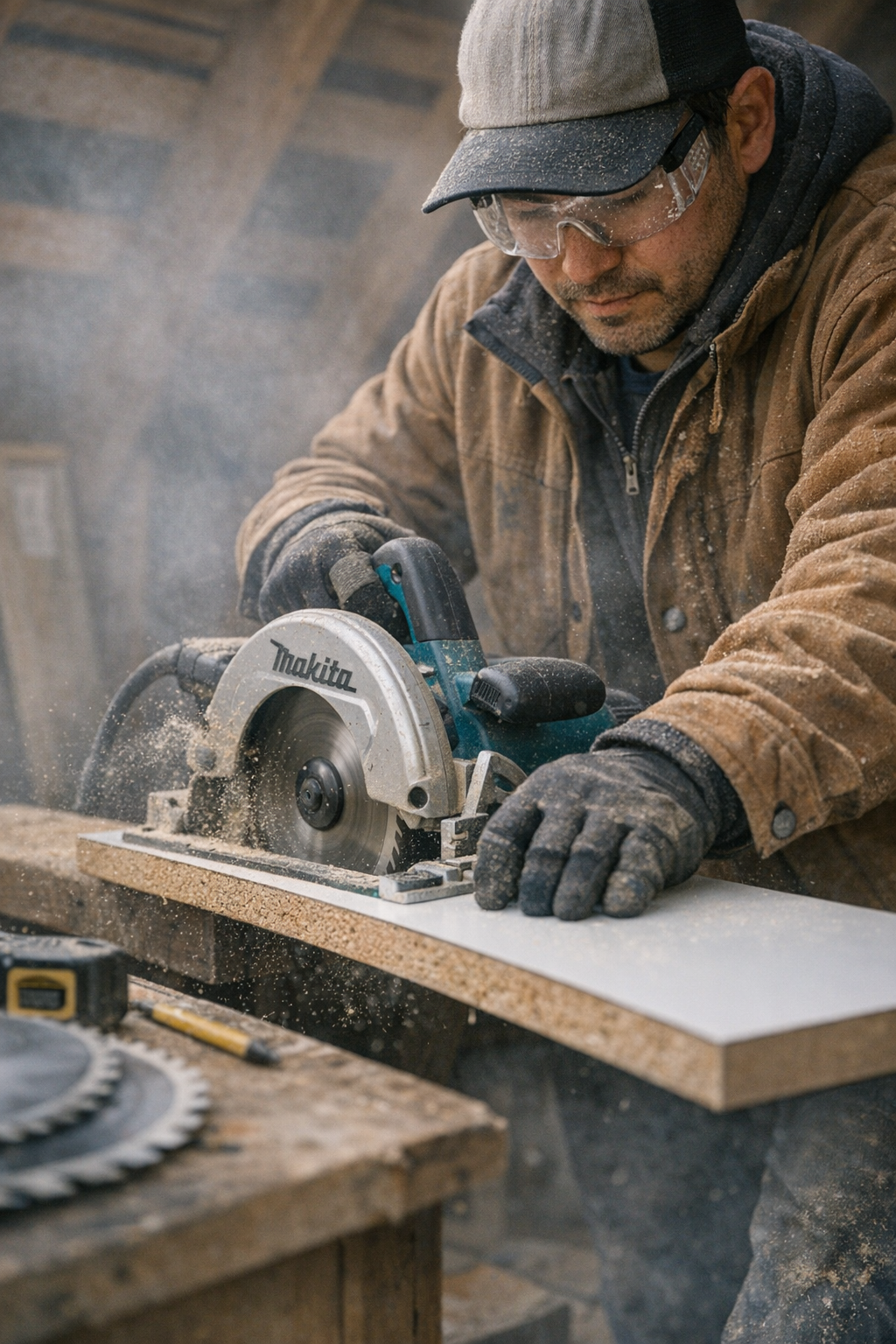
The difference hits your hand before your eyes ever notice the edge. Pre-dawn at the jobsite, breath fogging and boots crunching across plywood, your first cut sets the tone for the day—a ripping whine, a blade biting in, sawdust spraying across your gloves. But as you guide the saw through a length of spruce, something feels off: a hitch, a vibration, a snag where you expect a glide. You stop, eyeing the cut. It looks fine at a glance, but as your thumb runs along the edge, you catch that telltale roughness—not quite a splinter, but enough to slow you down. You know what caused it. Too much speed, wrong blade, wrong approach—and now, another pass with sandpaper or a repair you didn’t plan for.
More Than Looks: Why a Clean Finish Actually Matters
Jobsite logic says fast is good and sharp is best. But real work makes different demands. Two pieces ripped seconds apart by the same saw can look almost identical from across the room. But you know the difference in seconds: a smooth, finished edge—or one that drags an old shirt, catches on a joint, or needs an awkward fix before paint or stain. Finish quality isn’t just a detail; it’s the unspoken line between a job that moves and a job that stalls. The speed isn’t right for every board, and every cut is a chance to get ahead or lose time.
Sometimes you catch the warning signs—a little resistance, a spike in vibration, the blade whining as it bogs down—or you don’t, and end up scrubbing out chips until your shoulder aches. Even a fresh blade is only as good as the speed and material allow. You feel it most on long days, when the line between “good enough” and “needs another pass” gets a little too narrow for comfort.
Blade Speed: Control or Chaos?
You won’t find a perfect RPM on a sticker or in some manual. The real difference shows up in the workflow—when everything lines up and cut edges need nothing but a quick dust-off, or when you spend precious time chasing splinters and fixing burn marks.
Softwood sheets? High speed cuts clean, minimal tear-out, all day. But push plywood too fast, or run plastic laminates at full throttle, and you’ll feel—even before you see—things start to head south. A faint scorched line here, a flake of veneer there—problems that stack up over a shift. On hardwoods, too much speed leaves a shadowed burn you can’t sand out. On melamine, that “efficiency” means a rough, jagged band that refuses to disappear no matter how much you try to blend it.
Blade speed is a moving target—tune it wrong and the job fights back. The real clue isn’t always in the edge’s appearance. Instead, it’s the subtle change in the saw’s pitch, the way the handle buzzes, the extra muscle it takes to keep things straight.
Switching Gears: Fixing the Problem Mid-Cut
Imagine a tight crawlspace in January, attic insulation clinging to your hoodie, an old circular saw sending heat up your wrist. Running through OSB? Fast and steady, no problem. Then it’s time for a built-in shelf—glossy laminate on MDF. Suddenly the saw kicks, splintering the laminate and spraying chips everywhere. You pause, frustration simmering. The fix? Dial back to 2,200 RPM, swap in an 80-tooth finishing blade. The difference is instant: the next cut leaves a cool, glassy edge, not a mess of repairs. What would’ve eaten your lunch break is now just a couple quick passes of a sanding sponge—if that.
Why “Fast” Isn’t Always Better
Instinct says run hot, get it done. But every seasoned worker knows the creeping cost of mistakes made in the name of speed. Tough oak and fir might need the extra RPMs just to keep from splintering, but laminate and melamine punish impatience—just a hair too quick, and you’re left with chipped edges, heat-blued marks, and plastic that gums up the blade.
All it takes is a quick check—speed, blade, material. Ignore it, and your shortcut becomes overtime. These are the fixes that cost you more than minutes; they drain your focus, push fatigue into your wrists, and turn a smooth day into a slog of touch-ups no one wants to revisit.
The Hidden Price of a Bad Edge
Most tradespeople can remember the job where “just one more cut” at full speed went sideways. Ripping white melamine at max RPM leaves a brown scar down the edge—too late to angle it away. You sand and fill, but it never matches. A client checks your work, running a hand over the edge, and you read their pause. The lesson lands hard: time saved on the saw gets tripled at the workbench, and the only thing faster than a rough cut is a story that follows you to the next site.
It’s a cycle broken only by experience—realizing where to shave time, and where to stop and get it right.
Adapting in Real Time: Noticing the Right Signals
Skill grows in the seconds between steps—listening, feeling, adjusting. Every trade teaches you to read the machine: a change in blade pitch, a vibration traveling up through your grip, slight resistance in the middle of a sheet. Don’t wait for the splintered proof. Before new material, stop for sixty seconds. Switch from the all-purpose 24-tooth to a finer 60- or 80-tooth blade. Drop the RPM for laminates. That moment of attention keeps the workflow tight—skips the frustration of backtracking when the cut betrays you late in the day.
You’ll miss sometimes—everyone does. Not every shoe needs a perfect shine and not every shelf needs a mirror edge. But knowing how to tune blade and speed to the real job, not the ideal, stacks up to hours saved and repairs avoided. When your hands say the edge isn’t right, trust them over your eyes—every time.
Quick Jobsite Habit That Saves Hours
Switching from plywood to something delicate? Stop for a test cut on scrap, no matter how behind you feel. One wasted offcut now is worth ten times the time it’ll take fixing a bad run after break.
The Payoff: Not Just Smoother Edges, But Smoother Days
The more hours you log behind a saw—or a drill, or a sander—the more you recognize that small adjustments separate a steady workflow from a day plagued by stops and repairs. Prepping bit changes, setting the right speed, listening for the machine’s warning signs: none of these are about perfection, but about keeping the work moving. Muscle memory is earned, but it’s the discipline to pause and check that keeps fatigue at bay and control in your hands.
Listen to your tools, slow down when the job calls for it, and trust what your hands are telling you—because the only thing worse than a rough edge is spending your weekend making up for it.