
The Quiet Before You Leave: The Myth of a Perfectly-Packed Carry-On
Every traveler knows that particular hush—the hour before departure, when your carry-on stands zipped and squared off by the door. On the kitchen counter, your coffee cools while you mentally trace every pocket and pouch, convinced you’ve predicted every need. Your charger’s packed. Your passport’s zipped into its sleeve. You stand in your own front hallway, feeling briefly in control. But that sense of readiness is a kind of illusion—one that unravels the minute you drag your bag into the friction of real transit.
Once you hit the airport, the clean logic of your packing disappears into baggage lines, shuffling crowds, and overhead bins snapping shut. The calm, methodical confidence you had at home buckles under the pressure of movement: boarding pass in one hand, bag handle in the other, your mind keeping inventory. As you scan the crowd pressing toward security, old familiar doubts close in: Did I pack my essentials where I can grab them? Will I have to check this bag after all—risking seeing it vanishing down a conveyor, never quite the same when you get it back?
In the Grind: Where Travel Organization Actually Cracks
Leave your house, and suddenly the bag becomes heavier. Small annoyances multiply—from balancing your coffee on top of a rolling suitcase, to digging out your wallet at curbside while your jacket keeps slipping off your shoulder. There’s that first real-world test: standing at the taxi or shuttle, fumbling with zippers you thought were perfectly organized just minutes before. Your headphone cord tangles. The bag squeaks as you set it down. Little things that didn’t matter in your living room now demand attention at every stop.
Inside the terminal, every step is delayed by logistics. Watch how quickly you abandon your careful system when you can’t find your ID at security or you need your charger mid-walk. A carry-on with overcrowded or mixed-up compartments is a headache accelerator: you unzip and expose a tumble of receipts from previous trips, snack wrappers, and a boarding pass that’s migrated to the wrong sleeve. You see fellow travelers pulling exactly what they need from a neatly labeled pouch and feel envy—realizing just how wide the gap is between “packed” and “prepared.”
The Bin Battle: Losing What Felt Secure
The final test: waiting to board, eyes tracking which group gets called next. You see it play out at every gate—the nervous scan for overhead space, people clutching their bags just a little tighter, calculating whether their carry-on will make the cut. There’s no drama like watching an airline attendant start gesturing for bags to be gate-checked. In a split second, your self-sufficiency can vanish: the bag that worked at home now gets whisked away, your plan for in-flight comfort traded for a claim ticket. The reading glasses you meant to keep handy and the medication you thought would stay close are now somewhere in the cargo hold.
No organizer can guarantee you beat the gate-check lottery, but you see the seasoned travelers take quiet measures: pouches pulled and tucked into jacket pockets, essentials stripped out before boarding. That’s not paranoia, it’s pattern recognition—you can count how many trips it took to learn what matters most is having the right handful of items accessible when bags go out of reach.
In the Cabin: Where Packing Choices Get Exposed
The plane settles into its slow, pressurized hum. Now your bag sits, awkward and remote, crammed in a bin over someone else’s seat or jammed beneath your feet, occupying precious legroom. This is when every shortcut or packing mistake reveals itself—whether you can grab your headphones with one hand while still buckled, or end up digging under an avalanche of toiletries and laptop cords while jostling elbows with your seatmate. The aisle is narrow, space is personal, and the bag that promised flexibility now demands contortions and apologies.
Look around and you’ll see the pattern repeated: parents unpacking entire pouches in search of pacifiers, business travelers rooting for a pen at customs, someone awkwardly halfway into the aisle retrieving a snack before the cart blocks them in. Here, being able to retrieve—or completely miss—just one small item can set the tone for the next few hours. When a carry-on’s compartments actually match your movement, the difference is immediate: no frantic digging, no upending contents onto your lap mid-flight.
Quick Habits for Taming Carry-On Chaos
If you travel enough, a few patterns stick:
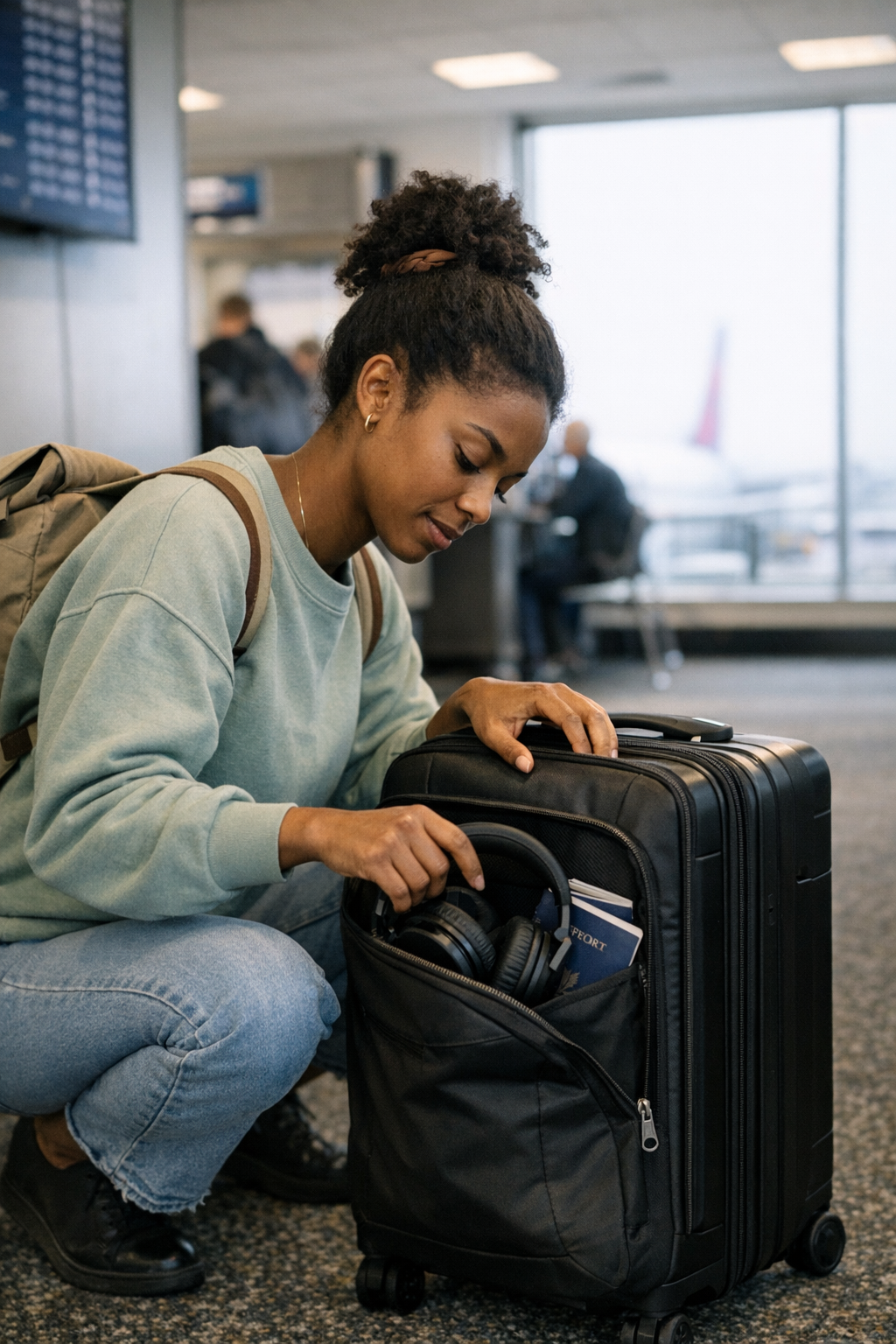
- Pack your must-haves where your hand lands first. That means a side pouch for your passport, a slim inner organizer for medication, or a zipped case for headphones—anything you could grab in the dark if you had to.
- One-handed access, every time. If you need to hold up the boarding line while unzipping three flaps, your system is already failing you. Every truly useful travel organizer pays off the moment you’re forced to multi-task (one hand on coffee, one on bag).
- Repack, don’t just reload. Between connections, take a minute to reset your bag. Move the things you actually used into your main compartment, banish trash, and make sure nothing has migrated to the bottom. Those sixty seconds of attention prevent the “emptying the bag in public” routine later.
These aren’t refinements for the obsessively organized—they’re battle scars from enough missed connections and lost pens to know that what you can actually reach, you use. And what you can’t, you end up stressed about.
The Subtle Win: Ending the Trip With Everything You Need—Still With You
Most trips don’t feel seamless. Bags still sometimes get gate-checked, and no arrangement is immune from unexpected turbulence or wild layovers. But each improvement—each pocket you can reach in ten seconds, each essential that stays put instead of sliding beneath a pile of shirts—pulls your travel life back from the brink of disorder. It’s not about showing off a color-coded suitcase; it’s about landing with your sense of control intact, and with your basic comforts not left to chance.
The real story of a decent carry-on isn’t in never facing friction—it’s in overcoming it a bit cleaner each time. When you finally come home, dragging your familiar bag over the threshold, every mark on the handle and scratch on the corner is a reminder: your setup worked just well enough. With a handful of habits and a smarter way to organize, you bent the usual chaos back in your favor—and got everything important home, right where it belongs.