
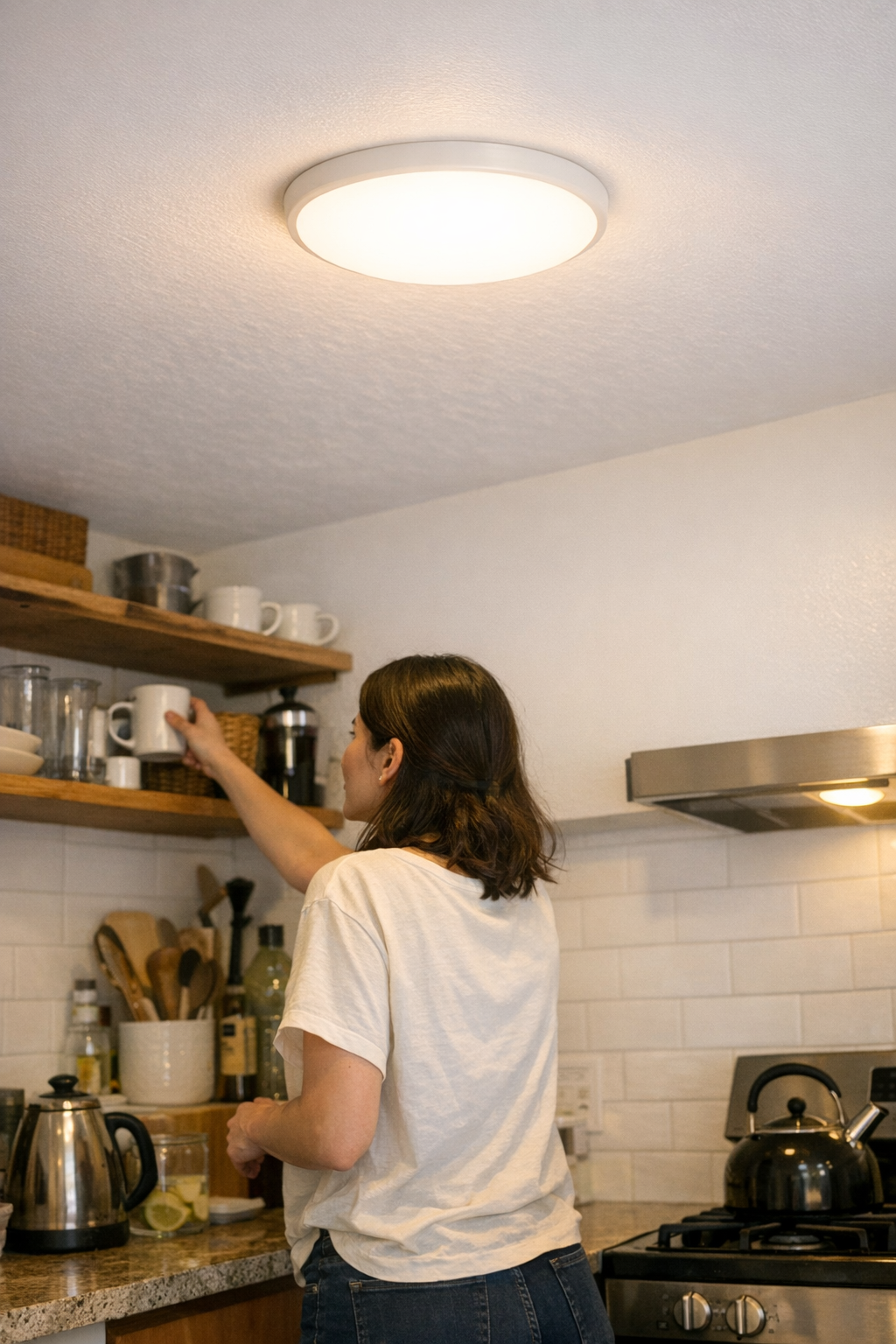
Discovering Comfort in Low Ceilings with Flush Mount Lighting
Waking up just past six, I notice immediately how close the hallway ceiling feels—so low I can almost brush it with my fingertips. This sensation becomes most pronounced in the narrow stretch just outside the bathroom door. In spaces with low ceilings, every inch of headroom counts. Overhead fixtures, in particular, have a significant impact on the feel of the environment, especially when transitioning from a half-awake state across a cold tile floor.
Flush mount lighting plays a crucial role in shaping this experience. By sitting close and snug against the ceiling, these lights provide soft, even illumination without intruding on the limited vertical space. Our hallway’s flush mount light bathes the area in a warm glow, diffuse enough to avoid harsh glare or reflections in mirrors, and without any dangling parts that could require you to duck or sidestep.
Why Flush Mount Lights Matter in Low-Ceiling Spaces
Flush mount fixtures are designed to maximize headroom by hugging the ceiling rather than hanging down. This simple design choice means you avoid bumping your head on light fixtures or having to awkwardly maneuver around them. In tight spots such as hallways, kitchens, or closets, this unobtrusive presence allows natural movement without interruption.
Contrast this with hanging pendants or chandeliers, which usually require higher ceilings or more clearance. In lower-ceiling homes, these fixtures risk becoming obstacles—casting awkward shadows, interfering with lines of sight, or simply feeling oversized and out of place.
If you’ve experienced knocking your shoulder against a hanging light or carefully ducking beneath a fixture to reach a bathroom cabinet, you know how frustrating these issues can be. Flush mount lighting eliminates these concerns by providing ample, even light while preserving the space above your head.
Mornings Made Easier: The Everyday Practicality of Flush Mount Fixtures
By seven in the morning, the kitchen comes alive with familiar rhythms: dishes stacked on the counter, the kettle beginning to whistle, family members passing by for towels or breakfast items. It’s in these busy, often cramped moments that flush mount fixtures shine—literally and figuratively.
Their position close to the ceiling means the light quietly fills the whole space, illuminating corners and surfaces without drawing attention to itself. Unlike pendants that command space and can obstruct access to shelves or cabinets, flush mounts remain unobtrusive and dependable.
Practical considerations arise too: placing the light switch conveniently near entrances makes it easy to turn on lights without fumbling or scanning overhead for obstacles. This enhances everyday flow, allowing you to navigate your kitchen and hallways swiftly and safely.
Actionable Tip: Evaluate Your Light Switch Placement
Consider repositioning or installing additional switches near main entry points to rooms with low ceilings. This simple change reduces awkward moments of stumbling in the dark or reaching for fixtures strategically.
Light Performance Throughout the Day: Avoiding Harsh Shadows and Glare
As daylight fills the space, flush mount fixtures complement natural light by balancing brightness without creating harsh contrasts. The diffuse light they provide minimizes glare on floors and reflective surfaces, preventing sharp shadows that can catch your eye or cause spatial confusion.
Leaving a flush mount light on when sunlight wanes or in shaded corners fills in those subtle gaps and ensures visibility. Conversely, improperly placed or overly bright fixtures can create blotchy lighting, with intense pools of brightness surrounded by dark shadows—a challenge especially noticeable in narrow hallways and tiled kitchen floors.
Maintaining Balance: Seeing the Importance of Shadow and Light
The details of lighting often go unnoticed until they disrupt our interaction with the space. Shadow plays a vital role in spatial perception, but unbalanced light and shadow can make simple tasks like chasing a sock under the table or finding the approach to stairs more difficult and potentially unsafe.
Flush mount lighting achieves a natural balance, pushing shadows toward their proper places along edges and corners while keeping pathways bright and open. This harmonious interplay keeps rooms feeling welcoming and straightforward, without visual confusion.
Refresh Tip: Observe Your Space at Different Times
Spend a few minutes in each room during morning, midday, and evening to identify spots where shadows fall awkwardly or light feels either too harsh or too dim. This practice sharpens your awareness and helps you make targeted improvements to your lighting scheme, enhancing both comfort and safety.
Evening Ambiance and Subtle Control
As evening descends, having dimmable flush mount lights offers gentle control over ambiance. Lowering the brightness softens reflections on kitchen backsplashes and countertops, creating a welcoming atmosphere that’s easy on the eyes and perfectly suited for winding down.
Unlike pendants or directional spots that can throw hard light onto small areas, flush mounts offer broad coverage, making it easier to see without harsh contrasts—ideal when looking for keys, preparing for bed, or navigating home quietly after dark.
Why This Matters: The Invisible Fixture That Makes All the Difference
The best lighting in low-ceiling homes is often the kind you hardly notice—fixtures that provide necessary illumination without becoming focal points. Flush mount lighting embodies this principle, fitting seamlessly into everyday life and removing obstacles rather than creating them.
By choosing the right fixtures and paying attention to layout, switch placement, and light quality, you make your home easier to navigate and more comfortable day in and day out. This steady, subtle relief improves your connection to your living spaces.
For inspiration and ideas on lighting suited for low-ceiling spaces, explore carefully curated collections that focus on function and form.