
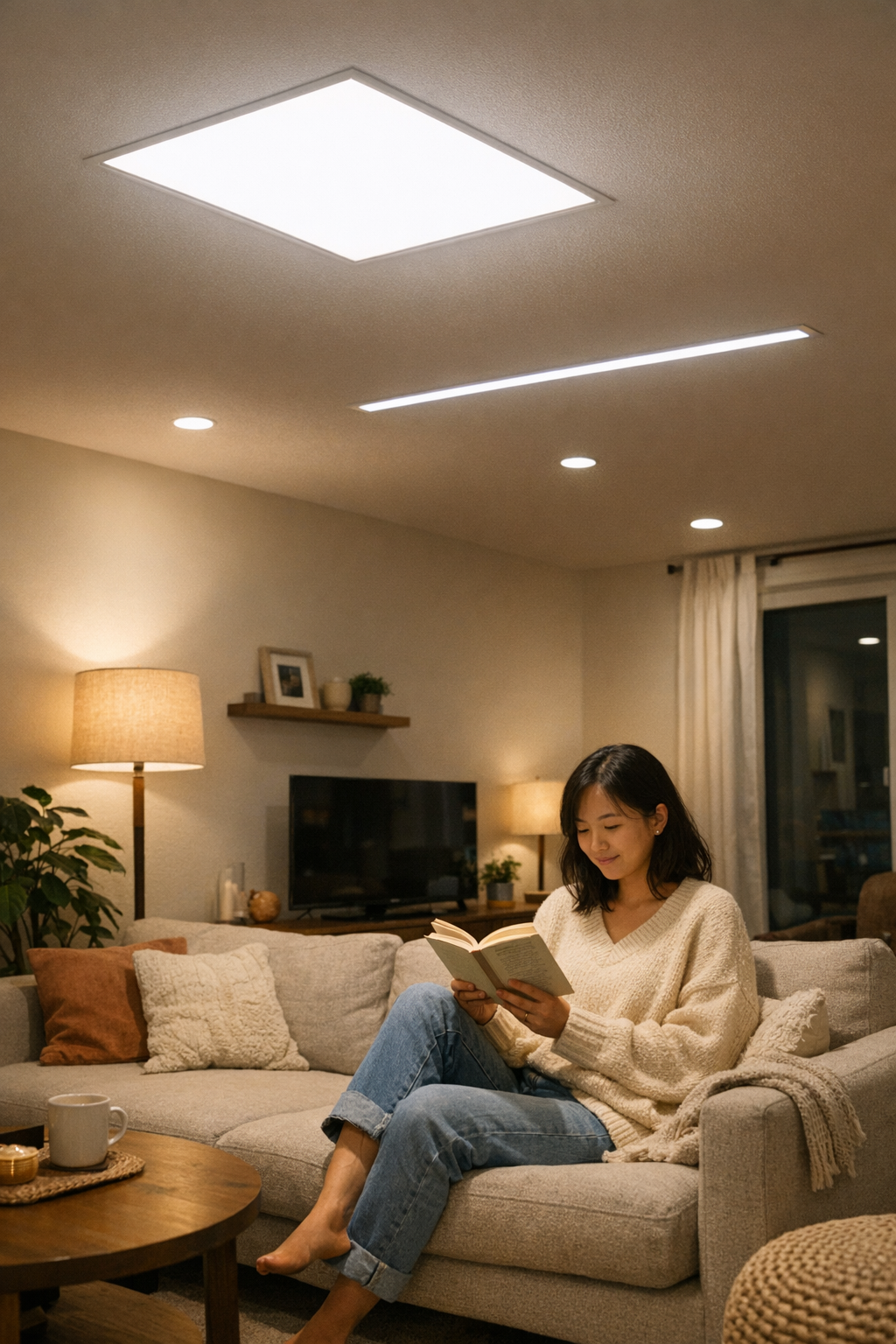
Transforming Your Living Room with Ceiling Lighting
Every morning, many of us encounter living spaces that feel static—equipped yet lacking a certain vitality. It’s common to have rooms filled with clean surfaces and neutral light without an inviting or energizing atmosphere. This is usually not due to clutter or poor design but often results from how natural and artificial lighting interact with the room’s architecture.
Take for example a living room that, despite being neat and orderly, feels paused under old ceiling lights. Light pools in isolated sections while other areas remain dim and uninspired. The ceiling, low and unvaried, limits how light moves around the space, leading to uneven illumination and a sensation that the room isn’t quite awake.
Why Ceiling Lighting Matters More Than You Think
Swapping outdated ceiling lights for linear and panel fixtures can dramatically redefine the quality of light and the room’s energy. Unlike a single overhead bulb, these fixtures distribute light evenly across the entire ceiling plane. This eliminates harsh bright spots and continues to provide clear, diffuse light that follows the room’s flow and activities throughout the day.
One of the immediate practical advantages is removing the intense glare hotspot that can be uncomfortable during activities like reading or working on a laptop. With more uniform lighting, glare reduces substantially, making it easier to interact with devices or read materials without straining your eyes or constantly adjusting your position. This smoother light distribution also softens shadows, helping make the room feel more open and spacious regardless of the sun’s progress across the sky.
The Psychological Impact of Even Lighting
Lighting directly influences mood and comfort. Uneven, glaring, or dim lighting can create tension or fatigue without us even realizing it. Well-balanced ceiling lighting provides a stable and gentle environment that allows occupants to move freely without discomfort or distractions caused by poor visibility. It reduces the need for additional lamps or multiple sources, simplifying the room’s layout and giving it a lighter visual footprint.
Making the Most of Your Lighting Upgrade
Here are some practical tips to maximize the benefits of improved ceiling lighting in your living area:
- Integrate dimmer switches: Adjusting light intensity according to the time of day and activity enhances comfort. Bright light supports work or detailed tasks, while softer lighting suits relaxation or watching television.
- Consider fixture placement: Arrange linear or panel lights to follow the longest axis of the room. This helps the light cover more surface evenly and supports the natural flow through the space.
- Balance natural and artificial light: Use window treatments like sheers or adjustable blinds to moderate sunlight, preventing harsh contrast between daylight and ceiling light.
Freshen Your Space: A Subtle Lighting Perspective Shift
When redesigning your lighting, consider shifting the focus from how bright the light is to where and how it lands. Instead of aiming for maximum illumination, think about the mood you want to foster and how the light interacts with surfaces, colors, and daily routines. For example, a uniform ambient layer paired with targeted task lighting balances function and atmosphere without overwhelming the senses.
Try moving houseplants or artwork into areas where the new lighting creates gentle highlights rather than spotlight glare. This subtle refresh can change your perception of the room and encourage a renewed appreciation for everyday surroundings.
Lighting and Everyday Life: Enhancing Functionality and Comfort
Beyond aesthetics, thoughtful ceiling lighting improves safety and utility. Well-lit staircases and hallways prevent trips, while glare-free kitchens make food prep less tiring. Even small details like clearly visible keys, shoes, or mail on a table become easier to manage, contributing to a sense of control and calm in your home environment.
In the evening, diffuse lighting prevents eye strain when shifting from screen use to conversation or reading. Instead of harsh brilliance or fluctuating shadows, the room transitions smoothly into night mode. The whole space supports relaxation and winding down, rather than demanding attention or adjustment.
Conclusion: Lighting as the Foundation of a Living Space
In sum, upgrading your ceiling lighting is about more than brightness or style—it’s a change that quietly supports every moment spent in the room. From the first morning light to late-night routines, the right fixtures can enhance the flow, comfort, and safety of your living environment.
Over time, these improvements become so natural they fade into the background, letting you focus on the people and activities that truly matter. The living room becomes not just a room to occupy, but a dynamic part of your daily rhythm.