
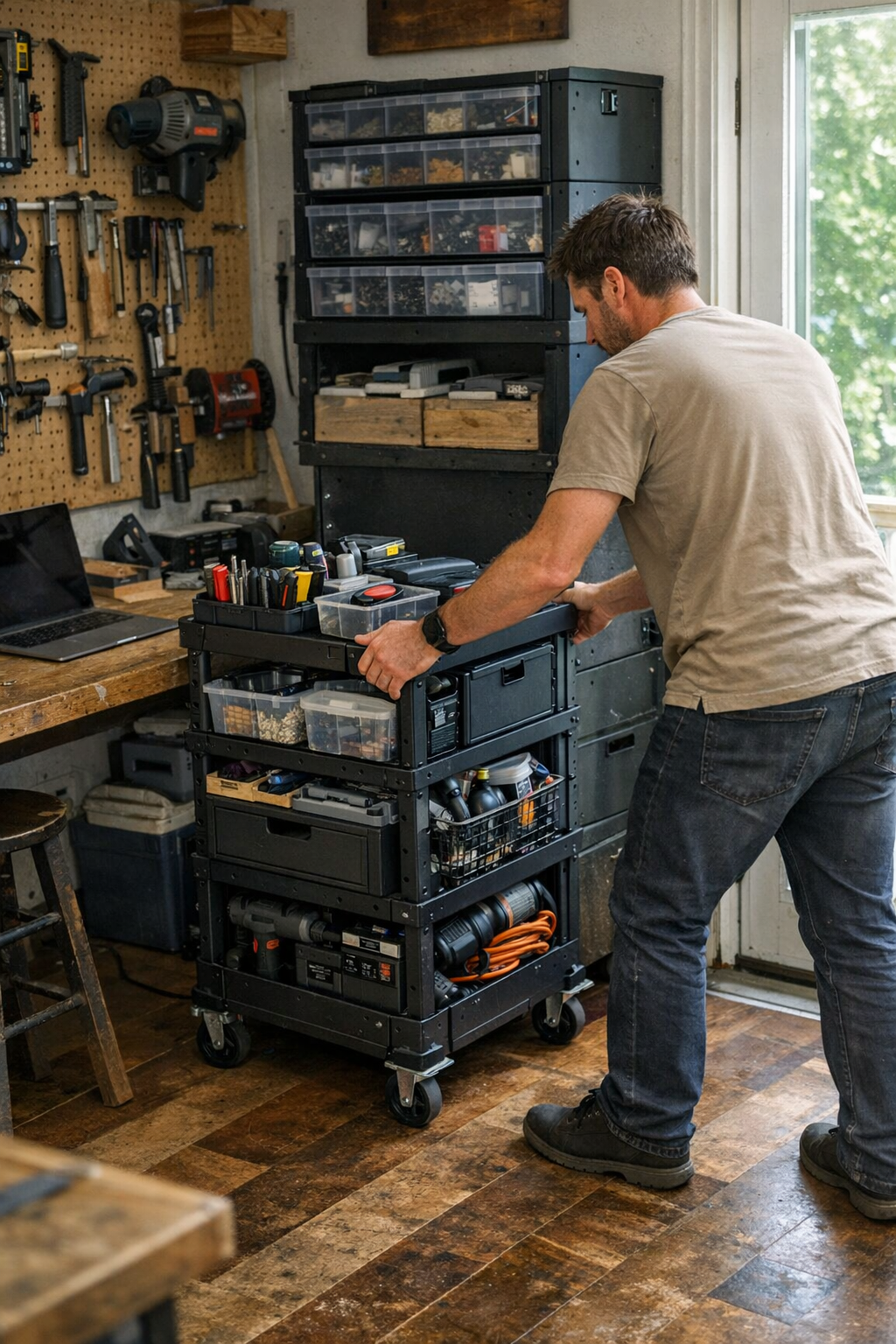
When I first stepped into the idea of making my garage a true workspace, I was convinced that choosing smaller storage options would automatically lead to a more efficient setup. But it wasn’t until I heard the clattering echo of a loose clamp hitting the pegboard that I started questioning if “compact” really meant “better.” What really shifted my perspective was embracing a modular rolling cart that I could customize, rearrange, and reposition according to my daily projects and workspace needs.
The Flexibility of a Modular Rolling Cart in a Tight Space
One of the biggest benefits of a modular rolling cart is the way it adapts to small garages and limited workspaces. Instead of forcing a static, “final” arrangement, it keeps every inch flexible and available for change. In practice, this means that each project starts with deciding the cart’s position—out of the car’s way but still bathed in natural light, close enough for easy glove retrieval but not blocking doorways.
Setup usually begins with a bare frame. I snap trays and bins on, hand-tighten each piece, and tailor the cart for whatever weekend project I’m tackling. Some days, the cart rolls along effortlessly, its handles cool and smooth. Other times, especially on humid days, the plastic trays catch slightly, tempting me to set the cart aside for “just a moment.” These small pauses influence how the entire project flows.
Learning Through Movement and Placement
Rolling the cart over concrete often creates a gritty sound as its wheels roll over tiny cracks or transition points in the garage floor. I found that the tools and materials closest to the cart are the ones I end up using most often. Those stashed further away, no matter how handy they seem on paper, tend to get forgotten or left untouched.
This realization motivated frequent adjustments—re-slotting bins, repositioning trays—to keep the cart perfectly aligned with my ongoing work. Some days it carries a heavy bag of hardware; other times, just a lightweight notepad and a roll of zip ties. The ability to rotate and adapt my setup keeps me actively engaged and productive.
Managing the Risks: Avoiding Common Pitfalls
Of course, having a rolling cart isn’t without its challenges. For me, one close call was nearly disastrous. I had rolled the cart a bit too close to the garage door’s swing, and as I cut a plank, the cart nudged the door rail slightly, causing a tape measure to nearly fall off. That moment sharpens your focus in a way no checklist can.
From that day, I adopted a new routine: selecting a dedicated “parking” spot for the cart, away from active walkways and door arcs, and making sure all trays and loose items were secured to prevent any slipping. By lowering pegboard hooks and securely fastening trays, I reduced potential jams and improved stability without changing the overall look of the space.
The Ritual of Parking and Organizing
At the end of a workday, especially as twilight nears and sawdust clings to my shoes, there’s a satisfying relief in rolling the cart to its spot. No checklist, no fuss—just a gentle alignment of bins, flattening toolboxes, and maneuvering the cart past areas where it might have snagged before. That click as it fits into its corner almost signals the task’s completion.
The modular design’s simplicity means trays remain snug if not overloaded. Heavy items like boots or wet gloves may cause a sag, but swapping contents among bins keeps everything balanced and accessible.
Actionable Tip: Prioritize Accessibility with Your Rolling Cart Setup
To maximize efficiency, place your most-used items on the top trays or within easy reach. Periodically reassess and adjust bin placements—think of it as a soft reset that keeps your workspace aligned with your current projects and preferences.
Refreshing Your Workflow: A Shift in Perspective
If you’re feeling stale or cramped in your workspace, try a simple refresh: push your cart into an alternate spot for a day or two. Experiment with changing the cart’s orientation or rotating the trays. A minor adjustment can revive your enthusiasm and reveal new ways to optimize your flow. The key is to treat your rolling cart as an evolving system, not a fixed fixture.
Why Movement Drives Productivity
This movement-centric approach brings a subtle but powerful change to how the space feels. The ritual of positioning, locking, and “parking” the cart creates natural breaks between work and rest, mentally framing your workflow with cues that help you focus or pause as needed.
Conclusion: Let Your Rolling Cart Adapt to You
Far beyond being just a storage solution, a modular rolling cart transforms your garage workspace into an adaptable, dynamic area that responds to your projects and habits. Instead of battling clutter or awkward layouts, you gain freedom to move, experiment, and customize your setup. The cart isn’t bulky when it’s parked thoughtfully; it feels like a trusted companion marking the boundaries between work and downtime.
With regular tweaks and a mindful approach to placement and load, your rolling cart becomes more than a tool—it becomes pivotal in shaping how productive, organized, and enjoyable your workspace can be.