
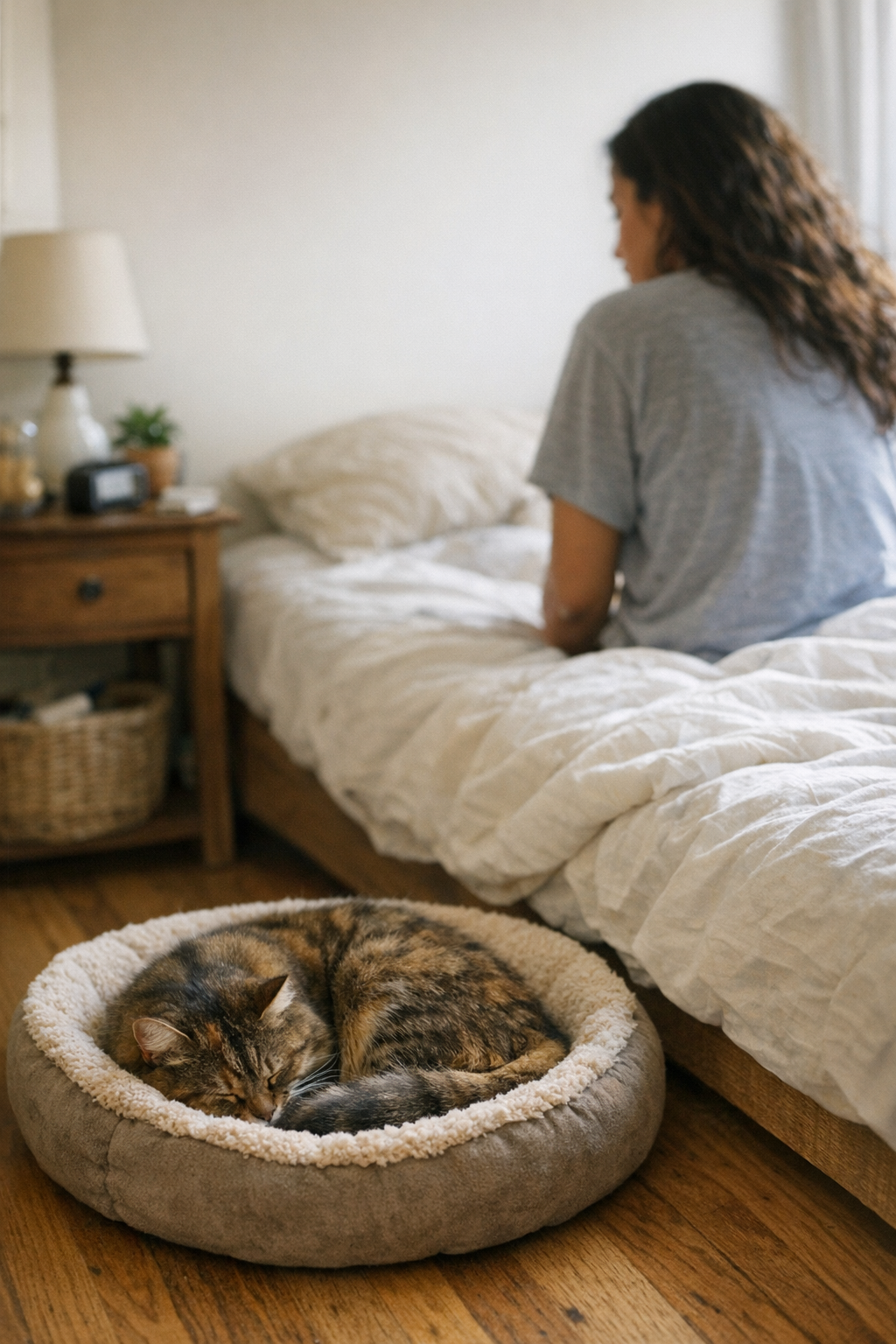
Finding Calm in Consistency: How Keeping Your Cat’s Environment Stable Improves Their Well-Being
Sometimes the smallest changes in how we care for our cats can unlock more restful nights for them—and quieter mornings for us. One often overlooked adjustment is maintaining a steady environment, such as leaving the bed or furniture in place instead of shifting it around frequently. This seemingly simple habit can transform your cat’s sense of security and comfort, leading to longer naps, reduced anxiety, and a more predictable daily rhythm for both of you.
Why Stability Matters to Indoor Cats
Cats are creatures of habit. Their well-being is deeply tied to their environment’s consistency because it helps them feel secure. Frequent changes—like moving furniture, litter boxes, or sleeping areas—can cause stress and lead to behaviors like hiding, restlessness, or even aggression. When a cat’s surroundings remain familiar, they know where to find resources, which areas are safe, and what to expect throughout the day.
In the case of moving the bed regularly to clean underneath, it might seem like a good idea to maintain a tidy home. However, this constant shifting interrupts your cat’s safe spots and can make them wary of their usual resting places. Instead, leaving the bed in place encourages them to settle deeply and feel more grounded.
Observing the Positive Effects of a Steady Environment
One noticeable change when the environment is stable is how a cat’s naps become longer and deeper. For example, when you stop moving the bed, you might notice your cat stretching out lazily in a sun-warmed corner, slow-blinking in contentment. These slow blinks are a key sign of trust and relaxation.
This steadiness also fosters other calming behaviors, such as the cat using their grooming brush more regularly or drinking water in a predictable spot. Cats prefer routine and feel more secure when their resources—their food, water, litter box, and sleeping spots—are consistently located. This, in turn, can reduce the amount of shedding and the need for excessive cleanup, as your cat is less skittish and more at ease.
Creating a Calm Daily Routine for Your Cat
Alongside preserving the room layout, establishing a daily care routine is essential. This includes feeding at regular times, keeping the litter box clean with a fresh liner added thoughtfully, and providing quiet time for rest. Being mindful of your cat’s natural rhythms will help you know when they want to play versus when they need to sleep.
After several hours of rest, engaging your cat with gentle play is a great way to provide exercise and mental stimulation. Simple toys like a feather wand or laser pointer can inspire lively bursts of activity, helping your cat maintain a healthy weight and reducing boredom. Following playtime, returning to the quiet, consistent environment allows them to settle quickly.
Refresh Tip: Embrace the Power of Observing Small Details
To deepen your bond and support your cat’s comfort, try this simple but effective approach: spend a few minutes daily just observing your cat. Noticing how they use different areas, their preferred spots for drinking and grooming, or subtle signals like a slow blink or tail twitch can reveal much about their current mood and needs. This mindfulness refreshes your perspective, shifting the focus from chores to connection.
By tuning into these little details, you can make small adjustments that improve your cat’s daily experience, such as leaving a favorite blanket undisturbed or repositioning a toy to their preferred corner. This kind of responsive care nurtures calmness and well-being.
Implementing a Home Setup That Supports Calm Living
Beyond leaving the bed stationary, consider other elements of your home setup that contribute to your cat’s comfort:
- Consistent Litter Box Placement: Always keep litter boxes in quiet, low-traffic areas to invite use without stress.
- Water Stations: Refresh water at regular intervals and place bowls or fountains where your cat naturally comes and goes.
- Sleeping and Hiding Spots: Provide cozy blankets, safe corners, or elevated beds where your cat can retreat undisturbed.
- Reduced Clutter: Minimize frequent rearrangements that can unsettle your cat’s navigation and nesting choices.
By cultivating a calm and predictable home, you not only ease your cat’s anxiety but also create a sanctuary that benefits everyone in the household.
In Summary: The Peace of Predictability
Leaving things as they are may seem like a minor decision, but for an indoor cat, it’s a profound kindness. Stabilizing your cat’s environment allows their natural rhythms to flourish. They sleep longer, rest more deeply, and display softer, more trusting behaviors. You’ll find the home quieter, the care routine simpler, and the shared moments richer.
As the day winds down and your cat curls up quietly on their favorite blanket, purring softly beside you, it’s clear: sometimes the best care comes down to embracing stillness and letting your cat choose calm.